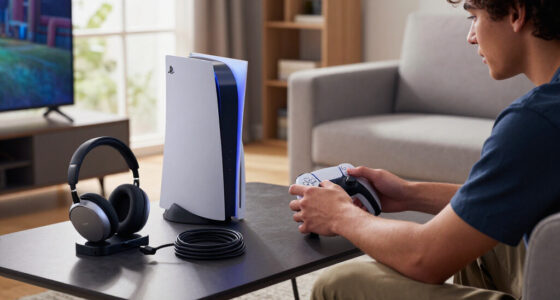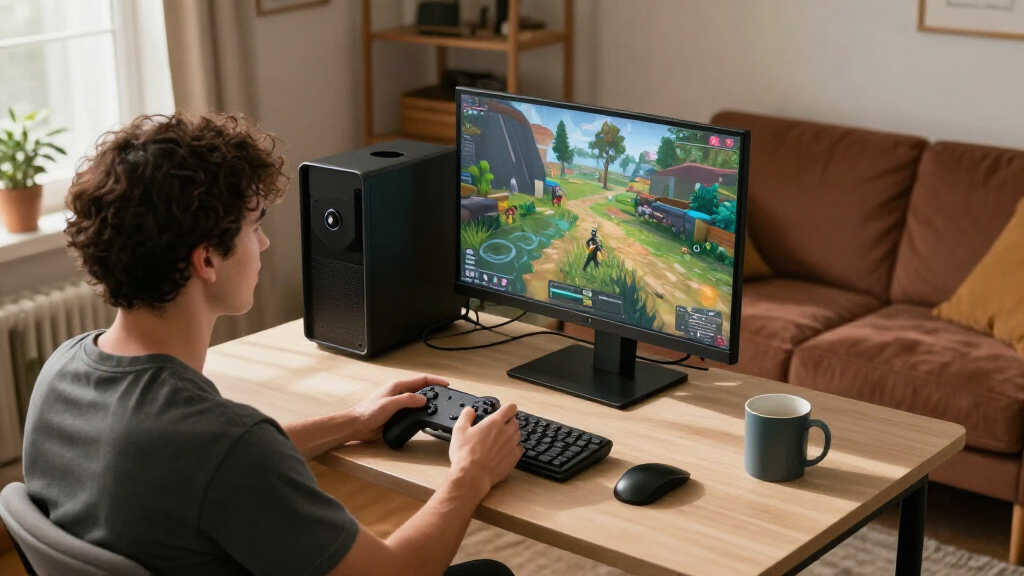

The best Steam gaming PCs balance graphics performance, memory, and storage around the games you actually play. I’d put the STORMCRAFT Falcon forward as the overall pick for its RTX 5070 and Ryzen 7 7800X3D, while the MSI Codex Z2 stands out for its RTX 5070, 32GB of RAM, and 2TB SSD. For a capable alternative with a lower graphics tier, the CyberPowerPC Gamer Master pairs a Ryzen 7 8700F with an RTX 5060 Ti. The main tradeoffs are graphics headroom versus upfront component compromises, plus storage capacity and room to upgrade. Read on for the full breakdown and a guide to matching a PC to your Steam library.

Get the latest gadgets delivered free with Prime
- Fast, free delivery on millions of items
- Prime Video, Amazon Music and more included
- Member-only deals all year
Complete the kit



Key Takeaways
- The RTX 5070 systems lead this lineup: STORMCRAFT combines that GPU with a Ryzen 7 7800X3D, while MSI adds 32GB of RAM and a 2TB SSD.
- The MSI Codex Z2 is the most balanced high-spec option on paper: its memory and storage give a large game library more breathing room than the 1TB and 16GB configurations.
- The CyberPowerPC Gamer Master offers a middle ground: its RTX 5060 Ti and Ryzen 7 8700F suit buyers who want a newer CPU platform without stepping up to an RTX 5070 system.
- RTX 3050 PCs are entry-level choices here: ASUS TUF T500 and Byte Depot pair this GPU with different CPU and memory details, but neither matches the graphics tier of the RTX 5060 Ti or RTX 5070 picks.
- The RX 580 and GTX 1070 desktops are older-platform alternatives: their 16GB RAM and 512GB SSD configurations may fit modest game lists, but buyers should weigh graphics age and upgrade flexibility carefully.
| ASUS TUF T500 (2025) Gaming Desktop PC |  | Best Compact Steam PC | Processor: Intel Core i5-13420H | Graphics: NVIDIA GeForce RTX 3050 | Memory: 16GB DDR5, 4800 MHz; maximum 16GB | VIEW LATEST PRICE | See Our Full Breakdown |
| Gaming Desktop PC with Ryzen 7 4700LE, Radeon RX 580, 16GB RAM, and 512GB SSD |  | Best Entry-Level 1080p Pick | Processor: AMD Ryzen 7 4700LE, 8 cores and 16 threads; 3.5 GHz, boost up to 4.2 GHz | Graphics: AMD Radeon RX 580, 8GB GDDR5 | Memory: 16GB DDR4, 3200 MHz | VIEW LATEST PRICE | See Our Full Breakdown |
| MSI Codex Z2 Gaming Desktop |  | Best Premium Performance | Processor: AMD Ryzen 7 8700F, 8 cores and 16 threads, up to 5.0 GHz | Graphics: NVIDIA GeForce RTX 5070 | Memory: 32GB DDR5, 6000 MHz; maximum 96GB | VIEW LATEST PRICE | See Our Full Breakdown |
| Volt X3 V1.2 Gaming Desktop PC |  | Best for a Showpiece Setup | Processor: AMD Ryzen 5 2600, 6 cores and 12 threads, up to 3.9 GHz | Graphics: NVIDIA GTX 1070, 8GB GDDR5; manufacturer may vary | Memory: 16GB DDR4 3200 MHz, 2 × 8GB dual-channel | VIEW LATEST PRICE | See Our Full Breakdown |
| CyberPowerPC Gamer Master Gaming Desktop |  | Best Upgrade-Friendly Midrange Pick | Processor: AMD Ryzen 7 8700F, 8 cores, listed at 4.1 GHz | Chipset: AMD B850 | Graphics: NVIDIA GeForce RTX 5060 Ti, 8GB | VIEW LATEST PRICE | See Our Full Breakdown |
| Byte Depot Gamer Xtreme Gaming Desktop PC, Intel Core i7, 32GB RAM, 1TB SSD, GeForce RTX 3050, Windows 11 Pro |  | Best for Memory-Heavy Multitasking | Processor: Intel Core i7 quad-core, 3.4GHz base, up to 3.9GHz Turbo Boost | Graphics: NVIDIA GeForce RTX 3050 with GDDR6 memory | Memory: 32GB | VIEW LATEST PRICE | See Our Full Breakdown |
| STORMCRAFT Falcon Gaming PC with RTX 5070 and Ryzen 7 7800X3D |  | Best for High-Performance Gaming | Processor: AMD Ryzen 7 7800X3D | Graphics: NVIDIA GeForce RTX 5070 12GB | Memory: 32GB DDR5 6000MHz RGB; maximum 256GB | VIEW LATEST PRICE | See Our Full Breakdown |
| Steam gaming PC | Processor | Graphics | Memory | Storage |
|---|---|---|---|---|
| ASUS TUF T500 | Intel Core i5-13420H | NVIDIA GeForce RTX 3050 | 16GB DDR5, 4800 MHz; maximum 16GB | 512GB M.2 NVMe PCIe 4.0 SSD |
| Gaming Desktop PC with Ryzen 7 | AMD Ryzen 7 4700LE, 8 cores and 16 threads; 3.5 GHz, boost up to 4.2 GHz | AMD Radeon RX 580, 8GB GDDR5 | 16GB DDR4, 3200 MHz | 512GB SSD |
| MSI Codex Z2 Gaming Desktop | AMD Ryzen 7 8700F, 8 cores and 16 threads, up to 5.0 GHz | NVIDIA GeForce RTX 5070 | 32GB DDR5, 6000 MHz; maximum 96GB | 2TB M.2 NVMe SSD |
| Volt X3 V1.2 Gaming Desktop PC | AMD Ryzen 5 2600, 6 cores and 12 threads, up to 3.9 GHz | NVIDIA GTX 1070, 8GB GDDR5; manufacturer may vary | 16GB DDR4 3200 MHz, 2 × 8GB dual-channel | 512GB NVMe SSD |
| CyberPowerPC Gamer Master Gami | AMD Ryzen 7 8700F, 8 cores, listed at 4.1 GHz | NVIDIA GeForce RTX 5060 Ti, 8GB | 16GB DDR5, 4800 MHz; maximum supported 192GB | 1TB PCIe 4.0 NVMe SSD |
| Byte Depot Gamer Xtreme Gaming | Intel Core i7 quad-core, 3.4GHz base, up to 3.9GHz Turbo Boost | NVIDIA GeForce RTX 3050 with GDDR6 memory | 32GB | 1TB SSD; listing varies between SATA and M.2 NVMe |
| STORMCRAFT Falcon Gaming PC wi | AMD Ryzen 7 7800X3D | NVIDIA GeForce RTX 5070 12GB | 32GB DDR5 6000MHz RGB; maximum 256GB | 1TB NVMe SSD |
More Details on Our Top Picks
ASUS TUF T500 (2025) Gaming Desktop PC
The ASUS TUF T500 suits players who want a modest-footprint desktop for a focused Steam library of lighter games and older favorites. Its Core i5-13420H, RTX 3050, and 16GB of DDR5 make it a more current-feeling everyday setup than the older GTX 1070 in the Volt X3, while its 13-pound weight and compact listed dimensions make placement easier than the larger MSI Codex Z2. The tradeoff is a firm ceiling: the RTX 3050 is aimed at more modest gaming demands, and the listed 16GB maximum memory leaves no room for a memory upgrade. The 512GB SSD can also fill quickly as a Steam library grows. Tool-less panels help with maintenance, but they do not remove those upgrade limits.
Pros:- Compact 13-pound chassis is easier to place than the MSI Codex Z2 tower.
- 16GB DDR5 memory and PCIe 4.0 NVMe storage support responsive everyday use.
- Tool-less side panels make routine maintenance more approachable.
- Copper heatpipes, a 90mm fan, and MIL-STD-810H chassis certification are specified.
Cons:- RTX 3050 is a modest graphics option compared with the RTX 5070 in the MSI Codex Z2.
- Listed maximum memory of 16GB prevents a RAM upgrade.
- 512GB SSD leaves limited room for a large Steam library.
Best for: Steam players with limited desk or floor space who mainly play lighter, older, or less demanding games and want easy case access.
Not ideal for: Players seeking demanding modern games at high settings, a large installed library, or a desktop they can expand beyond 16GB of memory.
- Processor:Intel Core i5-13420H
- Graphics:NVIDIA GeForce RTX 3050
- Memory:16GB DDR5, 4800 MHz; maximum 16GB
- Storage:512GB M.2 NVMe PCIe 4.0 SSD
- Operating system:Windows 11 Pro
- Dimensions and weight:6.12 × 11.67 × 14.05 inches; 13 pounds
- Display outputs:HDMI, DisplayPort
- Chassis:MIL-STD-810H certified; tool-less side panels
Our verdict“Choose the ASUS TUF T500 for a compact, straightforward Steam desktop for lighter gaming, not for demanding graphics or future memory expansion.”
Gaming Desktop PC with Ryzen 7 4700LE, Radeon RX 580, 16GB RAM, and 512GB SSD
This white tower is the lineup’s straightforward entry-level 1080p option: the Radeon RX 580 has 8GB of graphics memory, and the 8-core Ryzen 7 4700LE can handle games alongside school, office, and everyday applications. Wi-Fi 6 is useful if Ethernet is not available, while the 512GB SSD gets the system and games loading without relying on a hard drive. Compared with the CyberPowerPC Gamer Master, however, this system has older graphics hardware and less storage; it is better framed around a lighter Steam library and settings adjustments than demanding new releases. The listing itself notes that tuning image quality and frame rate may be needed. Buyers also get no stated storage expansion capacity, so 512GB could become a constraint.
Pros:- Dedicated Radeon RX 580 graphics card has 8GB of GDDR5 memory.
- Eight-core, 16-thread processor supports gaming and multitasking.
- Wi-Fi 6 provides a current wireless connection option.
- SSD storage supports faster startup and loading than a mechanical drive.
Cons:- The RX 580 is older hardware and the listing suggests settings may need adjustment.
- 512GB storage can be restrictive for several large games.
- The listed Windows version is not specified beyond Windows.
Best for: First-time PC gamers who want a Windows tower for 1080p Steam games, schoolwork, and general home use, and are comfortable adjusting game settings.
Not ideal for: Players who want demanding new games at high settings, a large game library stored locally, or newer graphics hardware like the CyberPowerPC’s RTX 5060 Ti.
- Processor:AMD Ryzen 7 4700LE, 8 cores and 16 threads; 3.5 GHz, boost up to 4.2 GHz
- Graphics:AMD Radeon RX 580, 8GB GDDR5
- Memory:16GB DDR4, 3200 MHz
- Storage:512GB SSD
- Operating system:Windows
- Wireless:Wi-Fi 6
- Motherboard:A520M-A PRO
- Video outputs:DisplayPort, HDMI
Our verdict“Pick this tower for accessible 1080p gaming and everyday tasks if you accept older graphics hardware and some settings tuning.”
MSI Codex Z2 Gaming Desktop
The MSI Codex Z2 is the performance leader among these five systems, pairing an RTX 5070 with a Ryzen 7 8700F, 32GB of DDR5, and a 2TB NVMe SSD. That combination gives Steam players more graphics headroom and much more room for installed games than the ASUS TUF T500 or the CyberPowerPC Gamer Master. It is the clearest fit for demanding titles, multitasking, and a 4K-capable display setup, with HDMI and DisplayPort outputs and a listed maximum resolution of 3840 × 2160. The cost of that capability is a larger, heavier tower, and the two memory slots limit flexibility compared with the CyberPowerPC’s stated 192GB maximum. It also runs Windows 11 Home rather than Pro, which may not suit buyers who need Pro-specific business features.
Pros:- RTX 5070 provides the strongest listed graphics hardware in this five-PC batch.
- 32GB DDR5 memory and a 2TB NVMe SSD provide generous out-of-box capacity.
- Ryzen 7 8700F has 8 cores and 16 threads for gaming and background tasks.
- Four system fans, Wi-Fi 6, Bluetooth, HDMI, and DisplayPort are included.
Cons:- At 21.3 pounds and 19 inches tall, it needs more room than the ASUS TUF T500.
- Only two memory slots are listed, limiting slot-based upgrade flexibility.
- Windows 11 Home may not meet buyers’ business needs for Windows 11 Pro.
Best for: Steam players who want substantial graphics performance, ample installed-game storage, and 32GB of memory for demanding games and multitasking.
Not ideal for: Buyers with tight space, those who need Windows 11 Pro, or users prioritizing the broadest stated memory expansion over included capacity.
- Processor:AMD Ryzen 7 8700F, 8 cores and 16 threads, up to 5.0 GHz
- Graphics:NVIDIA GeForce RTX 5070
- Memory:32GB DDR5, 6000 MHz; maximum 96GB
- Memory slots:2
- Storage:2TB M.2 NVMe SSD
- Operating system:Windows 11 Home
- Cooling:Air cooling with ARGB cooler and four system fans
- Dimensions and weight:16 × 8.38 × 19 inches; 21.3 pounds
- Display outputs:HDMI, DisplayPort; maximum listed resolution 3840 × 2160
Our verdict“Choose the MSI Codex Z2 if you want the strongest graphics and largest included SSD here and have room for a full-size tower.”
Volt X3 V1.2 Gaming Desktop PC
The Volt X3 V1.2 puts more emphasis on a distinctive desk setup than on leading-edge Steam performance. Its white glass case, four synchronized ARGB fans, and LCD system monitor make temperatures and utilization visible, while Wi-Fi, Bluetooth, USB-C, and Windows 11 Pro add useful everyday features. The GTX 1070 has 8GB of graphics memory, so it remains a dedicated-card option for older and less demanding games; compared with the ASUS TUF T500’s RTX 3050, though, its platform is older and the listed Ryzen 5 2600 is a more modest six-core processor. The manufacturer of the GTX 1070 may vary, and the 512GB SSD is small for a growing library. I’d choose it for the case and monitoring features, not as the strongest long-term performance pick.
Pros:- Glass panels, four synchronized ARGB fans, and an LCD display give the case a distinctive setup-focused design.
- GTX 1070 has 8GB of dedicated GDDR5 graphics memory.
- 16GB DDR4 is configured as dual-channel 2 × 8GB.
- Includes Wi-Fi, Bluetooth, USB-C, Windows 11 Pro, and a one-year limited hardware warranty.
Cons:- The GTX 1070 manufacturer may vary, making the exact card source less predictable.
- Ryzen 5 2600 and GTX 1070 are older components than those in the ASUS TUF T500.
- 512GB SSD may not hold a large Steam library.
Best for: Players building a white, RGB-lit gaming setup who value a visible system-monitor display and mostly play older or less demanding Steam games.
Not ideal for: Buyers seeking newer graphics hardware, predictable graphics-card sourcing, ample game storage, or a system focused on demanding modern releases.
- Processor:AMD Ryzen 5 2600, 6 cores and 12 threads, up to 3.9 GHz
- Graphics:NVIDIA GTX 1070, 8GB GDDR5; manufacturer may vary
- Memory:16GB DDR4 3200 MHz, 2 × 8GB dual-channel
- Storage:512GB NVMe SSD
- Cooling:120mm CPU cooler and four synchronized ARGB fans
- Display:LCD shows CPU and GPU temperatures and utilization
- Connectivity:Wi-Fi, Bluetooth, USB-C, USB 3.0, USB 2.0
- Operating system:Windows 11 Pro 25H2, installed and activated
- Warranty:One-year limited hardware warranty and technical support
Our verdict“Choose the Volt X3 for a visually distinctive older-game setup with a system-monitor screen, rather than for newer hardware or extensive storage.”
CyberPowerPC Gamer Master Gaming Desktop
The CyberPowerPC Gamer Master balances a current Ryzen 7 processor and RTX 5060 Ti graphics with a 1TB PCIe 4.0 SSD, making it a more rounded everyday Steam system than the older RX 580-based desktop in this list. Its 16GB of DDR5 is less generous than the MSI Codex Z2’s 32GB, but the stated maximum of 192GB gives buyers a much higher memory ceiling than the MSI’s 96GB maximum or the ASUS TUF T500’s 16GB limit. Wi-Fi 6, Bluetooth 5.3, and included keyboard and mouse help make setup simpler. The tradeoff is that the graphics card has 8GB, and Windows 11 Home is installed; the included accessories also do not change its smaller starting memory capacity. This is a flexible middle ground, not the batch’s highest-performance pick.
Pros:- Ryzen 7 8700F and RTX 5060 Ti offer a newer platform than the RX 580-based desktop.
- 1TB PCIe 4.0 NVMe SSD provides more room than the 512GB drives in several alternatives.
- Stated maximum supported memory of 192GB leaves substantial upgrade headroom.
- Includes Wi-Fi 6, Bluetooth 5.3, keyboard, and mouse.
Cons:- 16GB DDR5 is less than the 32GB included with the MSI Codex Z2.
- RTX 5060 Ti has 8GB of graphics memory, while the MSI Codex Z2 is the stronger graphics option here.
- Windows 11 Home may not suit buyers who need Windows 11 Pro.
Best for: Steam players who want newer midrange graphics, 1TB of included storage, bundled basic peripherals, and substantial stated room for future memory upgrades.
Not ideal for: Buyers who want 32GB of memory immediately, the strongest listed graphics card, or Windows 11 Pro for business features.
- Processor:AMD Ryzen 7 8700F, 8 cores, listed at 4.1 GHz
- Chipset:AMD B850
- Graphics:NVIDIA GeForce RTX 5060 Ti, 8GB
- Memory:16GB DDR5, 4800 MHz; maximum supported 192GB
- Storage:1TB PCIe 4.0 NVMe SSD
- Operating system:Windows 11 Home
- Wireless:Wi-Fi 6, Bluetooth 5.3
- Video outputs:1 HDMI, 2 DisplayPort
- Included accessories:Keyboard, mouse, power cord
Our verdict“Choose the CyberPowerPC Gamer Master for a newer, upgrade-oriented Steam desktop with 1TB storage, provided 16GB of starting memory is enough.”
Byte Depot Gamer Xtreme Gaming Desktop PC, Intel Core i7, 32GB RAM, 1TB SSD, GeForce RTX 3050, Windows 11 Pro
I’d place the Byte Depot Gamer Xtreme among the more accessible Steam-ready options for buyers who value multitasking capacity over graphics headroom. Its 32GB of RAM gives you room to keep a game, voice chat, and other applications open, while the RTX 3050 is a more modest gaming GPU than the RTX 5070 in the STORMCRAFT Falcon or MSI Codex Z2. That makes the Byte Depot better suited to mainstream play than demanding high-resolution settings. The 1TB SSD offers useful space for a game library, but the listing conflicts on whether it is SATA or M.2 NVMe, so storage speed is unclear. Its quad-core i7, with a listed maximum boost of 3.9GHz, is another limitation for demanding modern games. Wi-Fi 6, a tempered-glass case, and included peripherals round out a practical setup, though stronger graphics-focused alternatives offer more room to grow.
Pros:- 32GB of memory supports gaming alongside chat and other applications.
- 1TB SSD provides more storage capacity than several lower-capacity options in the roundup.
- Wi-Fi 6, Bluetooth 5.2, and Gigabit LAN offer flexible networking.
- Includes a keyboard and mouse, with airflow-focused cooling and a tempered-glass case.
Cons:- RTX 3050 offers less graphics headroom than the RTX 5070 in the STORMCRAFT Falcon and MSI Codex Z2.
- The listing conflicts on whether the 1TB SSD is SATA or M.2 NVMe.
- The quad-core processor’s listed 3.9GHz maximum boost may limit performance in demanding games.
Best for: Steam players who want 32GB of memory, included keyboard and mouse, and a ready-to-use desktop for mainstream gaming and multitasking.
Not ideal for: Buyers targeting demanding games at high resolutions or settings, or anyone who wants clear confirmation of SSD type and a stronger processor.
- Processor:Intel Core i7 quad-core, 3.4GHz base, up to 3.9GHz Turbo Boost
- Graphics:NVIDIA GeForce RTX 3050 with GDDR6 memory
- Memory:32GB
- Storage:1TB SSD; listing varies between SATA and M.2 NVMe
- Operating system:Windows 11 Pro
- Connectivity:Wi-Fi 6, Bluetooth 5.2, Gigabit LAN
- Graphics outputs:1× HDMI, 1× DisplayPort
- Included accessories:Gaming keyboard and mouse
Our verdict“Choose the Byte Depot if you want a 32GB, peripheral-inclusive Steam desktop for mainstream gaming, but skip it for demanding graphics or a clearly specified storage drive.”
STORMCRAFT Falcon Gaming PC with RTX 5070 and Ryzen 7 7800X3D
The STORMCRAFT Falcon is the performance-focused choice in this pair: its RTX 5070 12GB and Ryzen 7 7800X3D give it a much stronger gaming foundation than the Byte Depot’s RTX 3050 and quad-core i7. For Steam players who want more graphics capability and a processor suited to demanding games, that difference matters more than the shared 32GB memory capacity. The 32GB DDR5 and 1TB NVMe SSD make a capable starting configuration, while 360mm liquid cooling and an 850W Gold-rated power supply support the high-performance components. Wi-Fi 6E, USB-C, and included keyboard and mouse add convenience. The tradeoffs are physical size and Windows 11 Home rather than the Byte Depot’s Pro edition; the 18.5-inch-long tower needs room, and its 1TB drive may feel limiting for a large library. I’d choose this over the Byte Depot for gaming performance, not compactness.
Pros:- RTX 5070 12GB and Ryzen 7 7800X3D provide a substantially stronger gaming platform than the Byte Depot’s RTX 3050 and quad-core processor.
- 32GB DDR5 memory and a 1TB NVMe SSD provide a fast, capable starting configuration.
- 360mm liquid cooling and an 850W 80 Plus Gold power supply suit the high-performance components.
- Wi-Fi 6E, Bluetooth 5.3, USB-C, and included keyboard and mouse add useful connectivity and setup convenience.
Cons:- The 18.5 x 9 x 16.9-inch tower needs more desk or floor space than a compact setup may allow.
- The included 1TB SSD may be restrictive for players with large installed libraries.
- Runs Windows 11 Home, while the Byte Depot includes Windows 11 Pro.
Best for: Steam players seeking a high-performance desktop for demanding games, streaming, video editing, or VR who have room for a full-size tower.
Not ideal for: Buyers with a small desk, a preference for a compact PC, or a need for more than 1TB of built-in storage without adding a drive.
- Processor:AMD Ryzen 7 7800X3D
- Graphics:NVIDIA GeForce RTX 5070 12GB
- Memory:32GB DDR5 6000MHz RGB; maximum 256GB
- Storage:1TB NVMe SSD
- Cooling:360mm all-in-one liquid cooler
- Power supply:850W 80 Plus Gold
- Operating system:Windows 11 Home
- Connectivity:Wi-Fi 6E, Bluetooth 5.3, USB-C, USB 2.0, USB 3.0
- Dimensions:18.5 x 9 x 16.9 inches
Our verdict“Choose the STORMCRAFT Falcon for a substantially stronger gaming platform and modern connectivity if you can accommodate its full-size tower.”
How We Picked
I compared each desktop by how well its listed components fit the demands of a Steam gaming library: graphics hardware received the most weight, followed by processor capability, RAM, storage capacity, and the likely usefulness of the configuration as games and libraries grow. I also looked at how clearly each system serves a different buyer, from someone seeking higher-end gaming headroom to someone who wants a basic desktop for lighter games. The listed specifications are the basis for these comparisons; the ranking does not assume unprovided details such as exact cooling performance, motherboard layout, or upgrade access.
The STORMCRAFT Falcon ranks first for its RTX 5070 and Ryzen 7 7800X3D pairing, while the MSI Codex Z2 follows closely with the same GPU class plus more specified memory and storage. The CyberPowerPC comes next with an RTX 5060 Ti, then the RTX 3050 systems, which are better suited to modest expectations. Older GPUs place the Ryzen 7 4700LE/RX 580 and Ryzen 5 2600/GTX 1070 systems lower. Where listings omit details, I avoid treating those unknowns as advantages.
| Steam gaming PC | Operating system |
|---|---|
| ASUS TUF T500 | Windows 11 Pro |
| Gaming Desktop PC with Ryzen 7 | Windows |
| MSI Codex Z2 Gaming Desktop | Windows 11 Home |
| Volt X3 V1.2 Gaming Desktop PC | Windows 11 Pro 25H2, installed and activated |
| CyberPowerPC Gamer Master Gami | Windows 11 Home |
| Byte Depot Gamer Xtreme Gaming | Windows 11 Pro |
| STORMCRAFT Falcon Gaming PC wi | Windows 11 Home |
Factors to Consider When Choosing Best Steam Gaming PCs
Before choosing among these PCs, match the hardware to your games and how you use Steam. A desktop that suits indie games and older releases may feel limiting with newer, graphics-heavy titles; buying far beyond your needs can leave capability unused. These factors help separate useful headroom from specs that merely sound impressive.
Match the GPU to Your Games and Display
The graphics card usually sets the clearest boundary on visual quality and gaming headroom. Think about the resolution and refresh rate of your monitor, then check requirements for the most demanding games you plan to play rather than relying on one familiar title. An RTX 5070 system offers a higher graphics tier in this lineup than the RTX 5060 Ti and RTX 3050 PCs, but a buyer who mostly plays 2D or older games may not benefit from paying for that difference. Avoid choosing by GPU name alone: a listing may leave out power limits, cooling, or other details that affect real-world behavior. If those details matter to your setup, verify them with the seller before buying.
Treat RAM and Storage as Separate Decisions
RAM helps the PC keep games and background tasks active, while SSD capacity determines how many large installs fit before you need to manage space. This roundup ranges from 16GB configurations to the MSI’s 32GB, and from 512GB SSDs to a 2TB drive. A large Steam library can fill a smaller SSD quickly, especially when several modern games are installed at once. Do not assume a second drive can be added easily; the product listing may not specify spare slots, drive bays, or installation access. Check those details if future expansion is part of your plan.
Balance the Processor Against the Graphics Card
A fast processor can help in CPU-heavy games, busy simulations, and multitasking, but it cannot make a lower-tier graphics card behave like a stronger one. For most buyers, the GPU should set the starting point, with the CPU chosen to keep pace with the types of games they play. The STORMCRAFT’s Ryzen 7 7800X3D and RTX 5070 pairing is the clearest high-performance combination listed here, while other systems trade down in graphics capability or provide less complete component details. Be cautious about comparisons based on processor model names alone; generation and power configuration can matter. When a listing gives only a broad label, look for the exact model before deciding.
Check Upgrade Access Before Counting on Future Changes
Upgrade plans are only useful when the case, power supply, motherboard, and cooling can support them. A desktop may have an appealing processor and graphics card yet offer little room for a future GPU, extra storage, or memory expansion. This roundup does not provide full upgrade details for every model, so I would not rank any system on assumed expandability. Ask whether RAM is installed in accessible slots, whether storage connections remain available, and what power supply is included. If clear upgrade options are a priority, favor a listing with those details spelled out rather than treating a standard desktop case as proof.
Account for the Whole Setup, Not Just the Tower
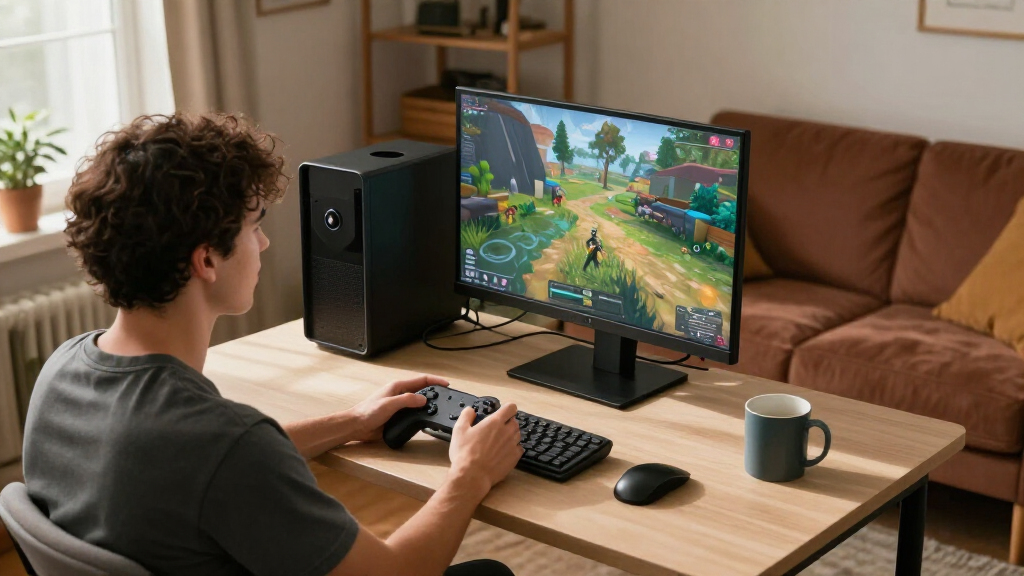
A gaming PC is only part of the experience: the monitor, headset, controller, keyboard, and network connection can all affect how comfortable Steam gaming feels. A powerful graphics card may be wasted on a display that cannot show the resolution or refresh rate you want, while a modest PC may be a sensible match for a basic monitor and lighter games. Also check whether Windows, wireless networking, and the accessories you need are included; product names and headline specs do not answer every setup question. Compare the total capability of your existing equipment before choosing a higher graphics tier. This helps prevent paying for performance that your display or game library cannot use.
Frequently Asked Questions
Is an RTX 3050 gaming PC enough for my Steam library?
It can suit a library centered on indie titles, older releases, and games with modest graphics demands. The ASUS TUF T500 and Byte Depot both list an RTX 3050, so they sit below the RTX 5060 Ti and RTX 5070 systems in this roundup. For newer, visually demanding games or a high-resolution display, the stronger GPU options offer more headroom. Check the requirements of your most demanding games and compare them with the exact PC configuration before deciding. Also check whether the model’s memory and storage meet your needs, since those differ across the two RTX 3050 listings.
Should I choose the MSI Codex Z2 or the STORMCRAFT Falcon?
Both list an RTX 5070, so the choice comes down to the other disclosed components and the details you can confirm. The MSI specifies a Ryzen 7 8700F, 32GB of DDR5 RAM, and a 2TB SSD, which makes its memory and storage setup clear for buyers with large libraries. The STORMCRAFT lists a Ryzen 7 7800X3D alongside the same GPU, a combination that points toward buyers prioritizing the processor pairing. The STORMCRAFT listing provides less information about memory and storage, so verify those items before purchase. Choose based on the full configuration, not the GPU match alone.
Is 512GB of SSD storage enough for Steam games?
It may be enough if you keep a small selection of games installed and do not mind uninstalling titles to make room. Larger libraries and modern games can consume that capacity quickly, so 1TB or 2TB offers more convenience between downloads and installs. In this roundup, several systems list 512GB, while the Byte Depot and CyberPowerPC specify 1TB and the MSI lists 2TB. A stated capacity does not tell you whether another drive can be added. Check the expansion options if you expect your installed library to grow.
Is it worth paying more for 32GB of RAM instead of 16GB?
More RAM can help when you run demanding games alongside a browser, voice chat, or other applications, and it leaves more room for future software demands. A 16GB system can still be a reasonable fit for a focused gaming setup, particularly if your games are not especially demanding. The MSI Codex Z2 is the only model in this list that explicitly specifies 32GB, giving it an advantage for buyers who want more memory headroom from the start. Still, RAM capacity should not outweigh a graphics card that better fits your games. Confirm whether memory can be expanded before treating 16GB as a permanent limitation.
Should I buy an older GPU PC or a newer RTX 3050 model?
For a new purchase, compare the exact games you play and the condition and support details of the system rather than assuming an older card is automatically the better bargain. The Ryzen 7 4700LE/RX 580 and Ryzen 5 2600/GTX 1070 desktops may appeal to buyers with modest expectations, but both use older graphics hardware than the RTX 3050 options listed here. The ASUS and Byte Depot also differ in their specified processors and memory, so the GPU is not the only distinction. Check current driver support, the exact power supply, and whether the PC is new or refurbished if that information is available. For newer graphics-heavy games, I would favor the stronger GPU tier when the rest of the configuration fits your needs.
Conclusion
For the strongest all-around pairing listed, I’d choose the STORMCRAFT Falcon as best overall, while the MSI Codex Z2 is my pick for buyers who want an RTX 5070 system with clearly specified 32GB RAM and 2TB storage. The CyberPowerPC Gamer Master is the best middle-ground choice for a newer Ryzen 7 platform and RTX 5060 Ti. For beginners with lighter game libraries, the ASUS TUF T500 or Byte Depot Gamer Xtreme offers an RTX 3050 configuration, though I’d compare their exact CPU, memory, and storage needs before settling on one. Buyers focused on older or less demanding games can look at the RX 580 or GTX 1070 desktops, but should verify condition and upgrade details. If your priority is a large Steam library, the MSI’s 2TB SSD is the clearest fit; if you need higher graphics headroom, start with one of the RTX 5070 PCs.