
Choosing the best NVIDIA RTX graphics cards in 2027 requires balancing raw rasterization power with the new capabilities of the RTX 50-series architecture. My top overall recommendation is the ASUS TUF Gaming GeForce RTX 5080, which offers the best balance of cooling performance, build quality, and price-to-performance ratio for high-end gamers. For those prioritizing professional workflows or VRAM capacity, the Nvidia RTX 2000 ADA remains a standout for workstation tasks, while the ASUS Dual GeForce RTX 5060 Ti serves as the best entry point for 1440p gaming. The main tradeoff you will face is between the newer GDDR7 memory bandwidth of the 50-series and the established driver stability of older models. Continue reading to see how these options stack up against each other and which one fits your specific build constraints.

Get the latest gadgets delivered free with Prime
- Fast, free delivery on millions of items
- Prime Video, Amazon Music and more included
- Member-only deals all year
Complete the kit



Key Takeaways
- The RTX 5080 dominates the high-end segment, but cooling solutions vary wildly between the MSI Suprim Liquid and air-cooled ASUS TUF variants.
- Entry-level options like the RTX 3050 are now niche products; the RTX 5060 Ti offers significantly better longevity for modern titles.
- Professional cards like the Nvidia RTX 2000 ADA command a premium for certified drivers and stability, not just raw gaming speed.
- White-themed builds have matured, with the ASUS ROG Astral RTX 5080 offering a premium aesthetic without sacrificing thermal headroom.
- Power efficiency has improved in the 50-series, making the RTX 5070 Ti a sweet spot for users with constrained power supplies or cooling.
| ASUS Dual GeForce RTX 3050 6GB GDDR6 OC Edition Gaming Graphics Card |  | Best Compact Entry-Level Pick | GPU: NVIDIA GeForce RTX 3050 | Memory: 6GB GDDR6 | GPU clock speed: 1500 MHz | VIEW LATEST PRICE | See Our Full Breakdown |
| Nvidia RTX 2000 ADA 16GB Graphics Card |  | Best for Compact Professional Workstations | GPU series: NVIDIA Quadro | Memory: 16GB GDDR6 | Form factor: Half-height, dual-slot | VIEW LATEST PRICE | See Our Full Breakdown |
| ASUS Dual GeForce RTX 5060 Ti 16GB GDDR7 OC Edition Gaming Graphics Card |  | Best Balanced Gaming Upgrade | Architecture: NVIDIA Blackwell | Memory: 16GB GDDR7 | Design: 2.5-slot | VIEW LATEST PRICE | See Our Full Breakdown |
| MSI Gaming RTX 5080 16G SUPRIM Liquid SOC Graphics Card |  | Best Liquid-Cooled Premium Pick | GPU: NVIDIA GeForce RTX 5080 | Memory: 16GB GDDR7 | Memory interface: 256-bit | VIEW LATEST PRICE | See Our Full Breakdown |
| PNY NVIDIA GeForce RTX 5080 Epic-X RGB OC Triple-Fan Graphics Card |  | Best Air-Cooled RTX 5080 for Feature-Rich Builds | GPU: NVIDIA GeForce RTX 5080 | Architecture: NVIDIA Blackwell | Memory: 16GB GDDR7 | VIEW LATEST PRICE | See Our Full Breakdown |
| ASUS Prime GeForce RTX 5070 12GB GDDR7 OC Edition Gaming Graphics Card |  | Best Compact RTX 5070 | GPU: NVIDIA GeForce RTX 5070 | Memory: 12GB GDDR7 | Boost clock: 2587 MHz | VIEW LATEST PRICE | See Our Full Breakdown |
| NVIDIA GeForce RTX 5080 Founders Edition |  | Best Founders Edition RTX 5080 | GPU: NVIDIA GeForce RTX 5080 | Architecture: Blackwell | Memory: 16GB GDDR7 | VIEW LATEST PRICE | See Our Full Breakdown |
| ASUS ROG Astral GeForce RTX 5080 16GB GDDR7 White OC Edition Graphics Card |  | Best Premium-Cooling RTX 5080 | GPU: NVIDIA GeForce RTX 5080 | Memory: 16GB GDDR7 | GPU clock: 2790 MHz | VIEW LATEST PRICE | See Our Full Breakdown |
| ASUS TUF Gaming GeForce RTX 5080 16GB GDDR7 BTF OC Edition Graphics Card |  | Best RTX 5080 for BTF Builds | GPU: NVIDIA GeForce RTX 5080 | Memory: 16GB GDDR7 | Boost clock: 2730 MHz | VIEW LATEST PRICE | See Our Full Breakdown |
| ASUS Prime NVIDIA GeForce RTX 5070 Ti 16GB GDDR7 OC Edition Gaming Graphics Card |  | Best Compact RTX 5070 Ti | GPU: NVIDIA GeForce RTX 5070 Ti | Memory: 16GB GDDR7 | GPU clock: 2452 MHz | VIEW LATEST PRICE | See Our Full Breakdown |
| MSI Gaming GeForce RTX 3060 Ventus 2X 12G OC V1 Graphics Card |  | Best for 1080p Builds on a Tighter Power Budget | GPU: NVIDIA GeForce RTX 3060 | Architecture: NVIDIA Ampere | Memory: 12GB GDDR6 | VIEW LATEST PRICE | See Our Full Breakdown |
| MSI Gaming RTX 5080 16G Ventus 3X OC Black Graphics Card |  | Best Straightforward High-End RTX 5080 | GPU: NVIDIA GeForce RTX 5080 | Memory: 16GB GDDR7 | Memory interface: 256-bit | VIEW LATEST PRICE | See Our Full Breakdown |
| ASUS TUF Gaming GeForce RTX 5080 16GB GDDR7 OC Edition Graphics Card | 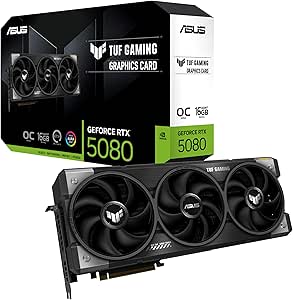 | Best for Durability and Cooling Headroom | Architecture: NVIDIA Blackwell | Memory: 16GB GDDR7 | Boost clock: 2730 MHz | VIEW LATEST PRICE | See Our Full Breakdown |
| ASUS ProArt GeForce RTX 5080 16GB GDDR7 OC Edition Graphics Card |  | Best RTX 5080 for Creator Workstations | Architecture: NVIDIA Blackwell | Memory: 16GB GDDR7 | Boost clock: 2730 MHz | VIEW LATEST PRICE | See Our Full Breakdown |
| NVIDIA RTX graphics card | Memory | GPU | Dimensions | Maximum resolution |
|---|---|---|---|---|
| ASUS Dual GeForce RTX 3050 6GB | 6GB GDDR6 | NVIDIA GeForce RTX 3050 | 7.9 x 4.7 inches | — |
| Nvidia RTX 2000 ADA 16GB Graph | 16GB GDDR6 | — | 2.7 inches high x 6.6 inches long | 3840 x 2160 |
| ASUS Dual GeForce RTX 5060 Ti | 16GB GDDR7 | — | — | — |
| MSI Gaming RTX 5080 16G SUPRIM | 16GB GDDR7 | NVIDIA GeForce RTX 5080 | 10.5 x 4.4 inches | 7680 x 4320 |
| PNY NVIDIA GeForce RTX 5080 Ep | 16GB GDDR7 | NVIDIA GeForce RTX 5080 | 12.94 x 5.42 inches; 2.99-slot | 7680 x 4320 |
| ASUS Prime GeForce RTX 5070 12 | 12GB GDDR7 | NVIDIA GeForce RTX 5070 | 12 x 5 inches | 3840 x 2160 |
| NVIDIA GeForce RTX 5080 Founde | 16GB GDDR7 | NVIDIA GeForce RTX 5080 | — | 3840 x 2160 |
| ASUS ROG Astral GeForce RTX 50 | 16GB GDDR7 | NVIDIA GeForce RTX 5080 | 14.1 x 5.9 inches | 7680 x 4320 |
| ASUS TUF Gaming GeForce RTX 50 | 16GB GDDR7 | NVIDIA GeForce RTX 5080 | 13.7 x 5.7 inches | — |
| ASUS Prime NVIDIA GeForce RTX | 16GB GDDR7 | NVIDIA GeForce RTX 5070 Ti | 12 x 5 inches | — |
| MSI Gaming GeForce RTX 3060 Ve | 12GB GDDR6 | NVIDIA GeForce RTX 3060 | — | 7680 x 4320 |
| MSI Gaming RTX 5080 16G Ventus | 16GB GDDR7 | NVIDIA GeForce RTX 5080 | — | 7680 x 4320 |
| ASUS TUF Gaming GeForce RTX 50 | 16GB GDDR7 | — | 348mm long, 3.6 slots | — |
| ASUS ProArt GeForce RTX 5080 1 | 16GB GDDR7 | — | — | — |
More Details on Our Top Picks
ASUS Dual GeForce RTX 3050 6GB GDDR6 OC Edition Gaming Graphics Card
I’d choose this ASUS when a short, two-slot card matters more than high-end gaming headroom. At 7.9 inches long, it’s a better fit for a compact build than the larger RTX 5080 cards in this roundup, while its dual Axial-tech fans and IP5X dust resistance address cooling and upkeep in a small case. The RTX 3050 supports ray tracing and AI-enhanced graphics, but its 6GB of GDDR6 is the main compromise: demanding games and high-resolution settings can run into memory limits sooner than on the 16GB RTX 5060 Ti or RTX 5080 options. I’d treat this as a modest gaming upgrade, not a card for maximizing visual settings or long-term performance headroom. Its HDMI output is also a simpler connection set than the fuller display options listed for the higher-tier cards.
Pros:- Compact 7.9-inch length and two-slot design suit smaller cases.
- Dual Axial-tech fans provide active cooling.
- IP5X dust resistance helps limit dust ingress.
- Supports ray tracing and AI-enhanced graphics.
Cons:- 6GB of GDDR6 offers less memory headroom than the 16GB options in this roundup.
- A lower-tier choice for demanding gaming compared with the RTX 5060 Ti and RTX 5080 cards.
- Listed video output interface is HDMI, with no additional outputs specified.
Best for: Small-form-factor PC builders who want an NVIDIA RTX card for everyday gaming and have limited case clearance.
Not ideal for: Gamers targeting demanding titles at high settings or buyers who need more than 6GB of graphics memory.
- GPU:NVIDIA GeForce RTX 3050
- Memory:6GB GDDR6
- GPU clock speed:1500 MHz
- Fans:2
- Design:Two-slot
- Dimensions:7.9 x 4.7 inches
- Dust resistance:IP5X
- Maximum display resolution:3840 x 2160
Our verdict“Choose this ASUS for a compact, modest RTX gaming build, but step up to the RTX 5060 Ti if you need substantially more memory headroom.”
Nvidia RTX 2000 ADA 16GB Graphics Card
This RTX 2000 Ada is the specialist choice here: I’d place it in a compact workstation for creative or visualization tasks, rather than treat it as a direct gaming alternative to the ASUS Dual RTX 5060 Ti. Its 16GB of GDDR6 and half-height, dual-slot form factor make it attractive when an application needs substantial graphics memory but a full-height card won’t fit. It supports displays up to 4K, though the listed output is Mini DisplayPort, so buyers should check their monitor connections before choosing it. The single blower fan keeps the card’s design compact, but concentrates cooling in a way that may be less appealing under sustained load than the multi-fan gaming cards. I’d skip it for a gaming-first system: its professional positioning and limited listed connectivity make the RTX 5060 Ti a more straightforward gaming pick.
Pros:- 16GB of GDDR6 provides room for memory-intensive professional workloads.
- Half-height, dual-slot form factor suits space-constrained workstations.
- Supports maximum resolution up to 3840 x 2160.
- Blower cooling keeps the card’s cooling design self-contained.
Cons:- Professional orientation makes it less suited to buyers seeking a gaming-focused card.
- Single-fan blower cooling may be less appealing for sustained heavy workloads.
- Mini DisplayPort is the only listed video output interface.
Best for: Creative professionals and workstation builders who need 16GB of graphics memory in a half-height, dual-slot card.
Not ideal for: Gaming-focused buyers or users whose monitors lack Mini DisplayPort connections.
- GPU series:NVIDIA Quadro
- Memory:16GB GDDR6
- Form factor:Half-height, dual-slot
- Dimensions:2.7 inches high x 6.6 inches long
- Thermal solution:Blower active fan
- Fans:1
- Video output interface:Mini DisplayPort
- Maximum resolution:3840 x 2160
Our verdict“Pick the RTX 2000 Ada for a compact professional workstation that needs 16GB of memory, not as a substitute for the gaming-oriented RTX 5060 Ti.”
ASUS Dual GeForce RTX 5060 Ti 16GB GDDR7 OC Edition Gaming Graphics Card
I see this ASUS as the middle ground for buyers who want a current-generation gaming card without moving to a large RTX 5080. Its 16GB of GDDR7 offers far more memory capacity than the ASUS Dual RTX 3050’s 6GB, which gives demanding games and creative workloads more room to work. The 2.5-slot design is still worth checking against your case and neighboring expansion cards, but it’s less imposing than the nearly 13-inch PNY RTX 5080. ASUS also includes dual BIOS for choosing between quieter and performance-focused operation, plus 0dB fan technology for periods when active cooling isn’t needed. The tradeoff is that the supplied specs don’t list clock speed, power requirements, or dimensions, so I’d verify fit and system compatibility before buying. It’s the sensible step up from an entry-level RTX card, not the top-tier option in this group.
Pros:- 16GB of GDDR7 offers much more memory capacity than the RTX 3050 pick.
- Dual BIOS provides quiet and performance operating choices.
- 0dB technology allows quiet operation when active fan cooling is not needed.
- Axial-tech fans and dual ball bearings are specified for the cooling system.
Cons:- The 2.5-slot design may not fit compact cases or tight expansion layouts.
- The supplied product data does not specify dimensions or clock speed.
- Buyers seeking the highest-tier performance in this lineup should compare it with the RTX 5080 models.
Best for: Gamers upgrading from an older or entry-level GPU who want 16GB of GDDR7 and a less imposing card than an RTX 5080.
Not ideal for: Small-case builders who cannot accommodate a 2.5-slot card, or buyers who specifically want RTX 5080-class hardware.
- Architecture:NVIDIA Blackwell
- Memory:16GB GDDR7
- Design:2.5-slot
- Fan design:Axial-tech
- Cooling technology:0dB technology
- Fan bearings:Dual ball bearings
- BIOS options:Dual BIOS
Our verdict“Choose this ASUS for a balanced 16GB gaming upgrade with configurable cooling, provided your case can handle its 2.5-slot design.”
MSI Gaming RTX 5080 16G SUPRIM Liquid SOC Graphics Card
The MSI SUPRIM LIQUID is for buyers who want an RTX 5080 with liquid cooling rather than the conventional triple-fan approach used by the PNY RTX 5080 Epic-X. Its 16GB of GDDR7, listed 2760 MHz GPU clock, and 256-bit memory interface put it in the high-end segment for gaming and visualization, while support for displays up to 7680 x 4320 adds flexibility for high-resolution setups. Liquid cooling can appeal to builders prioritizing thermal management, but it also means the cooling arrangement needs space and planning beyond simply fitting a card into a slot. The product data lists one fan and dimensions of 10.5 by 4.4 inches, but doesn’t specify radiator dimensions or installation requirements; I’d confirm those details before choosing it over the PNY’s simpler triple-fan design. This is a premium, system-planning-heavy option, not the easy fit for a basic build.
Pros:- Liquid cooling is designed for thermal management in a high-performance build.
- 16GB of GDDR7 and a 256-bit memory interface suit demanding workloads.
- Listed 2760 MHz GPU clock speed.
- Supports maximum resolution up to 7680 x 4320.
Cons:- Liquid cooling adds installation and space-planning needs compared with the PNY triple-fan card.
- Radiator dimensions and installation requirements are not specified in the supplied data.
- The listed one-fan count does not describe the full cooling setup, so buyers should verify system requirements.
Best for: Enthusiasts building a high-performance RTX 5080 system who specifically want a liquid-cooled graphics card.
Not ideal for: Builders with limited cooling-system space or buyers who prefer a conventional air-cooled card like the PNY RTX 5080 Epic-X.
- GPU:NVIDIA GeForce RTX 5080
- Memory:16GB GDDR7
- Memory interface:256-bit
- GPU clock speed:2760 MHz
- Cooling:Liquid cooling
- Video outputs:3 x DisplayPort 2.1a, HDMI 2.1b
- Maximum resolution:7680 x 4320
- Dimensions:10.5 x 4.4 inches
Our verdict“Pick the MSI SUPRIM LIQUID if liquid cooling is a priority for your RTX 5080 build and you can confirm the installation space first.”
PNY NVIDIA GeForce RTX 5080 Epic-X RGB OC Triple-Fan Graphics Card
Among these five, I’d point demanding gamers and creators toward the PNY RTX 5080 when they want a conventional air-cooled card with explicit fit and output details. Its 16GB of GDDR7, Blackwell architecture, and listed 2775 MHz boost speed put it in a higher performance tier than the ASUS Dual RTX 5060 Ti, while three axial fans take a different approach from the liquid-cooled MSI SUPRIM LIQUID. The tradeoff is physical: at 12.94 inches long and 2.99 slots thick, it needs a roomy case and careful clearance checks. Customizable ARGB lighting adds visual flexibility, but it won’t matter to buyers who prioritize a discreet build. The listed 7680 x 4320 maximum resolution and PCIe 5.0 support round out a card aimed at high-end systems, not compact PCs or modest upgrades.
Pros:- 16GB of GDDR7 and Blackwell architecture target demanding gaming and creative workloads.
- Three axial fans provide an air-cooled alternative to the MSI SUPRIM LIQUID.
- Listed boost speed is 2775 MHz.
- Customizable ARGB lighting and support for up to 7680 x 4320 displays.
Cons:- 12.94-inch length and 2.99-slot thickness require a spacious case.
- The large triple-fan design is less suitable for compact builds than the ASUS Dual RTX 5060 Ti.
- RGB features add little for buyers who prefer an understated system.
Best for: Enthusiast gamers and creators with a spacious desktop who want an air-cooled RTX 5080 with RGB lighting.
Not ideal for: Small-case builders, buyers avoiding large cards, or anyone seeking a modest upgrade rather than high-end RTX 5080 hardware.
- GPU:NVIDIA GeForce RTX 5080
- Architecture:NVIDIA Blackwell
- Memory:16GB GDDR7
- Boost speed:2775 MHz
- Memory interface:256-bit
- Cooling:3 axial fans
- Dimensions:12.94 x 5.42 inches; 2.99-slot
- Maximum resolution:7680 x 4320
- Interface:PCIe 5.0
Our verdict“Choose the PNY Epic-X for a spacious high-end PC that needs an air-cooled RTX 5080, and choose the MSI SUPRIM LIQUID if liquid cooling is your priority.”
ASUS Prime GeForce RTX 5070 12GB GDDR7 OC Edition Gaming Graphics Card
The ASUS Prime RTX 5070 OC suits builders who want a current-generation gaming GPU without giving up as much case space as many high-end cards demand. Its 2.5-slot design is comparatively restrained, and three axial-tech fans plus a phase-change thermal pad are intended to manage heat in that narrower layout. The 12GB of GDDR7 and 2587 MHz boost clock make it a more capable step up from entry-level choices such as the ASUS Dual RTX 3050, while the 16GB ASUS Prime RTX 5070 Ti offers more memory headroom for demanding games and creative workloads. That makes this a practical middle-ground pick, not the strongest option here. At 12 inches long, it still needs a careful case-fit check, and its 12GB capacity may limit its appeal for buyers focused on especially memory-heavy workloads.
Pros:- 2.5-slot profile is more build-friendly than the larger RTX 5080 cards in this roundup.
- 12GB of GDDR7 provides a modern memory setup for gaming.
- Three axial-tech fans and a phase-change thermal pad support cooling.
- Dual BIOS offers performance and quieter operating modes.
Cons:- 12GB of memory gives less headroom than the ASUS Prime RTX 5070 Ti’s 16GB.
- Its 12-inch length can still rule it out for genuinely compact cases.
- A 2.5-slot card still takes substantial expansion-slot space.
Best for: Small-form-factor PC builders who want a modern RTX 5070 for gaming and can accommodate a 12-inch, 2.5-slot card.
Not ideal for: Buyers who need 16GB of graphics memory for demanding workloads, or owners of very short cases that cannot fit a 12-inch card.
- GPU:NVIDIA GeForce RTX 5070
- Memory:12GB GDDR7
- Boost clock:2587 MHz
- Cooling:3 fans; 2.5-slot design
- Video outputs:DisplayPort, HDMI
- Maximum resolution:3840 x 2160
- Dimensions:12 x 5 inches
- Warranty:3 years
Our verdict“Choose this Prime RTX 5070 if you want a relatively space-conscious current-generation gaming card, but step up to the 5070 Ti for 16GB memory.”
NVIDIA GeForce RTX 5080 Founders Edition
The RTX 5080 Founders Edition is the straightforward choice for buyers who want a high-end NVIDIA card without choosing among the larger, feature-heavy partner designs. Its 16GB of GDDR7, 2806 MHz boost clock, Blackwell architecture, and support for full ray tracing and DLSS 4 target demanding gaming and creative work. Compared with the ASUS ROG Astral RTX 5080, this Founders Edition avoids making elaborate cooling hardware or a distinctive white finish the main attraction; the Astral instead advertises a vapor chamber and a higher listed maximum resolution. The tradeoff is that the available product details provide little guidance on dimensions or cooling arrangement, so case fit and airflow deserve extra attention. It is also a power-hungry class of card, making it a poor match for modest systems.
Pros:- 16GB of GDDR7 suits demanding games and graphics workloads.
- Blackwell architecture supports full ray tracing and DLSS 4.
- 2806 MHz listed boost clock is higher than the ASUS ROG Astral RTX 5080’s listed 2790 MHz.
- HDMI and DisplayPort outputs support a range of display setups.
Cons:- High power consumption calls for robust system power and cooling.
- The supplied product details do not list dimensions, complicating case-fit checks.
- It offers fewer cooling and build details than the ASUS ROG Astral and TUF models.
Best for: Enthusiasts and creators who want an NVIDIA-designed RTX 5080 with 16GB GDDR7 and current ray-tracing and DLSS features.
Not ideal for: Small-case builders or owners of systems without robust power delivery and cooling, especially if they need confirmed card dimensions before buying.
- GPU:NVIDIA GeForce RTX 5080
- Architecture:Blackwell
- Memory:16GB GDDR7
- Boost clock:2806 MHz
- Features:Full ray tracing, DLSS 4, AI performance enhancements
- Video outputs:HDMI, DisplayPort
- Interface:PCI Express 4.0
- Maximum resolution:3840 x 2160
Our verdict“Pick the Founders Edition for a direct, NVIDIA-branded RTX 5080, provided your case, power supply, and cooling can handle a high-end card.”
ASUS ROG Astral GeForce RTX 5080 16GB GDDR7 White OC Edition Graphics Card
The ASUS ROG Astral RTX 5080 White OC is the premium cooling-focused choice among these RTX 5080s. Its vapor chamber, metal shroud and backplate, and high-airflow fan design are aimed at builders who want substantial cooling hardware around a demanding GPU. The listed 2790 MHz clock is slightly below the Founders Edition’s 2806 MHz, so the case for this model is its cooling and construction rather than the highest stated clock. It also lists two HDMI 2.1b and three DisplayPort 2.1b outputs, plus a maximum resolution of 7680 x 4320. Those features come with real fit costs: at 14.1 inches long and 5.9 inches wide, it needs a roomy case, and its listed weight of 6.3 pounds makes support and installation worth planning. Buyers who prefer a simpler card should compare the Founders Edition.
Pros:- Vapor chamber and multi-fan cooling design target demanding gaming loads.
- Metal diecast shroud and backplate provide a substantial build.
- Five listed outputs include HDMI 2.1b and DisplayPort 2.1b connections.
- 16GB GDDR7 and listed maximum resolution of 7680 x 4320 support high-end display use.
Cons:- 14.1-inch length and 5.9-inch width require a spacious case.
- At 6.3 pounds, the card may need careful installation and support.
- Its listed 2790 MHz clock is below the Founders Edition’s 2806 MHz.
Best for: Enthusiasts building a spacious desktop who prioritize elaborate cooling, a reinforced premium build, and multiple modern display connections.
Not ideal for: Compact-case builders, buyers seeking the highest listed boost clock, or anyone unwilling to accommodate a 6.3-pound graphics card.
- GPU:NVIDIA GeForce RTX 5080
- Memory:16GB GDDR7
- GPU clock:2790 MHz
- Cooling:Vapor chamber; 3 listed fans
- Video outputs:2 x HDMI 2.1b, 3 x DisplayPort 2.1b
- Maximum resolution:7680 x 4320
- Dimensions:14.1 x 5.9 inches
- Weight:6.3 pounds
- Warranty:3 years
Our verdict“Choose the ROG Astral if cooling hardware and premium construction matter more than a smaller footprint or the highest listed boost clock.”
ASUS TUF Gaming GeForce RTX 5080 16GB GDDR7 BTF OC Edition Graphics Card
The ASUS TUF RTX 5080 BTF OC earns its place through its distinctive power-connection flexibility, rather than a claim to the highest clock in this group. Its detachable GC-HPWR adapter is designed for standard and BTF motherboard setups and is rated to handle up to 1000 watts, giving builders a way to choose between connection styles. The 16GB GDDR7 GPU and listed 2730 MHz boost clock trail the Founders Edition’s 2806 MHz, while its rugged components and three-fan cooling point toward a durability-focused build. This card also specifies an 850W recommended PSU, so the flexibility at the GPU connection does not mean the whole system can use a modest power supply. At 13.7 inches long and 5.7 inches wide, it is far less suited to small cases than the ASUS Prime RTX 5070 Ti.
Pros:- Detachable GC-HPWR adapter supports standard and BTF motherboard configurations.
- 16GB GDDR7 and Blackwell architecture target demanding gaming and graphics work.
- Three fans and durable components suit a performance-focused desktop.
- Lists two HDMI 2.1b and three DisplayPort 2.1b outputs.
Cons:- The listed recommended PSU is 850W, limiting suitability for lower-power systems.
- 13.7-inch length and 5.7-inch width rule out many compact cases.
- Its 2730 MHz listed boost clock is lower than the Founders Edition’s 2806 MHz.
Best for: Builders with a compatible BTF motherboard—or a standard board who value the detachable GC-HPWR adapter—and a spacious case with an 850W PSU.
Not ideal for: Small-PC builders, users with lower-capacity power supplies, or buyers focused on the highest listed RTX 5080 clock.
- GPU:NVIDIA GeForce RTX 5080
- Memory:16GB GDDR7
- Boost clock:2730 MHz
- Power connection:Detachable GC-HPWR adapter, rated up to 1000W
- Recommended PSU:850W
- Video outputs:2 x HDMI 2.1b, 3 x DisplayPort 2.1b
- Cooling:3 fans
- Dimensions:13.7 x 5.7 inches
- Warranty:3 years
Our verdict“Choose this TUF model if BTF connection support and rugged construction fit your build, and skip it if you need a compact card or have a smaller power supply.”
ASUS Prime NVIDIA GeForce RTX 5070 Ti 16GB GDDR7 OC Edition Gaming Graphics Card
The ASUS Prime RTX 5070 Ti OC is the practical step up for buyers who want more memory than the 12GB ASUS Prime RTX 5070 without moving to one of the much larger RTX 5080 cards. Its 16GB of GDDR7 gives games and creative applications more memory headroom, while the 2.5-slot design and 12-inch length keep it comparatively manageable for a 5070 Ti. Three axial-tech fans and a phase-change thermal pad are intended to help control temperatures in that slimmer layout. Its listed 2452 MHz GPU clock is lower than the 5070’s stated 2587 MHz, so the stronger case here is the GPU tier and extra memory rather than the clock figure alone. The card still needs a 750W PSU with a 16-pin connector, and its size may be too much for the smallest cases.
Pros:- 16GB GDDR7 provides more memory capacity than the ASUS Prime RTX 5070’s 12GB.
- 2.5-slot design is more space-conscious than the RTX 5080 options in this roundup.
- Three axial-tech fans and a phase-change thermal pad support cooling.
- Listed maximum resolution reaches 7680 x 4320.
Cons:- Requires a 750W minimum PSU and a 16-pin power connector.
- Its 12-inch length still limits fit in very small cases.
- The listed 2452 MHz GPU clock is lower than the Prime RTX 5070’s 2587 MHz.
Best for: Compact-desktop builders and gamers who want a 16GB RTX 5070 Ti in a comparatively restrained 2.5-slot design.
Not ideal for: Budget-focused buyers, owners of systems without a 750W PSU and 16-pin connector, or builders with cases shorter than 12 inches of card clearance.
- GPU:NVIDIA GeForce RTX 5070 Ti
- Memory:16GB GDDR7
- GPU clock:2452 MHz
- Memory clock:2527 MHz
- Cooling:3 axial-tech fans; 2.5-slot design
- Video outputs:3 x DisplayPort 1.4a, 2 x HDMI 2.1b
- Dimensions:12 x 5 inches
- Power requirement:Minimum 750W PSU with 16-pin connector
- Warranty:3 years
Our verdict“Pick this Prime RTX 5070 Ti for 16GB memory and a relatively compact design, as long as your case and power supply meet its requirements.”
MSI Gaming GeForce RTX 3060 Ventus 2X 12G OC V1 Graphics Card
The RTX 3060 Ventus 2X is the accessible choice in this group, trading the newer architecture and higher performance of the RTX 5080 cards for a more modest Ampere GPU with 12GB of GDDR6. That memory capacity gives it room for games and creative projects that can strain cards with less VRAM, while the compact dual-fan design is a simpler fit than the 348mm, 3.6-slot ASUS TUF RTX 5080. Its 1807 MHz boost clock, ray tracing hardware, and Tensor Cores support modern graphics features, though this is not the pick for demanding high-resolution gaming at the level the RTX 5080 models target. The tradeoff is an older, lower-performance tier; choose it for a more restrained build, not as a substitute for a premium 4K card. Check case clearance and system power needs before buying.
Pros:- 12GB GDDR6 memory gives games and creative workloads more capacity than many entry-level cards.
- Dual Torx Twin Fans provide active cooling in a two-fan design.
- Includes ray tracing and Tensor Cores on NVIDIA Ampere architecture.
- Three DisplayPort 1.4a outputs and one HDMI 2.1 output support several display setups.
Cons:- Ampere architecture and RTX 3060 performance sit well below the RTX 5080 options here.
- The listing does not provide card dimensions, making case-fit checks harder.
- Power consumption and system requirements are not specified.
Best for: 1080p gamers and budget-conscious creators who want 12GB of VRAM and NVIDIA ray tracing features without building around an RTX 5080.
Not ideal for: Buyers targeting demanding 4K gaming, the latest Blackwell features, or performance close to the RTX 5080 models in this roundup.
- GPU:NVIDIA GeForce RTX 3060
- Architecture:NVIDIA Ampere
- Memory:12GB GDDR6
- Memory interface:192-bit
- Boost clock:1807 MHz
- Interface:PCIe 4.0 x16
- Video outputs:3 x DisplayPort 1.4a, 1 x HDMI 2.1
- Maximum resolution:7680 x 4320
Our verdict“Choose this Ventus 2X for a more modest gaming or creative PC that benefits from 12GB of VRAM, but pick an RTX 5080 for high-end performance.”
MSI Gaming RTX 5080 16G Ventus 3X OC Black Graphics Card
The MSI RTX 5080 Ventus 3X OC is the direct high-performance choice for buyers who want Blackwell-class gaming without the extra durability and tuning emphasis of the ASUS TUF RTX 5080 OC. Its 16GB of GDDR7 and listed 2640 MHz clock are aimed at demanding games and graphics workloads, while three fans offer a conventional air-cooled approach rather than the liquid-cooling setup of MSI’s RTX 5080 SUPRIM Liquid. DisplayPort 2.1a and HDMI 2.1b provide modern display connections, and the card supports resolutions up to 7680 x 4320. The main compromise is practical rather than exotic: an RTX 5080 calls for a compatible, high-power system, and this product’s listing does not provide dimensions or a power-supply requirement. It is a less specialized pick than ProArt, but still needs careful build planning.
Pros:- 16GB GDDR7 memory supports demanding games and graphics workloads.
- Listed 2640 MHz GPU clock provides an overclocked configuration.
- Three-fan thermal design avoids the need for a liquid-cooling loop.
- DisplayPort 2.1a and HDMI 2.1b offer modern display connectivity.
Cons:- Requires a compatible high-power system, with no specific PSU wattage listed.
- Card dimensions are not provided, complicating case-clearance checks.
- Less tailored to creators seeking the ProArt card’s USB Type-C connection.
Best for: Enthusiast gamers and graphics users seeking an air-cooled RTX 5080 with GDDR7 and current display outputs, without prioritizing creator-specific features.
Not ideal for: Small-case builders or anyone with a lower-power system, since the listing gives no card dimensions or specific power requirements.
- GPU:NVIDIA GeForce RTX 5080
- Memory:16GB GDDR7
- Memory interface:256-bit
- GPU clock speed:2640 MHz
- Video outputs:3 x DisplayPort 2.1a, HDMI 2.1b
- Maximum resolution:7680 x 4320
- Warranty:3 years
Our verdict“Pick the Ventus 3X OC if you want a conventional air-cooled RTX 5080 and have a case and power supply suited to a high-end GPU.”
ASUS TUF Gaming GeForce RTX 5080 16GB GDDR7 OC Edition Graphics Card
The ASUS TUF RTX 5080 OC pairs Blackwell performance with a build focused on cooling and physical protection. Its three Axial-tech fans, fin array, phase-change thermal pad, and included GPU bracket are useful for a large, heavy card that may benefit from extra support. Compared with the MSI Ventus 3X RTX 5080, the TUF listing gives much more detail about components and maintenance-minded features, including a protective PCB coating and Auto-Extreme manufacturing. The listed 2730 MHz boost clock and 16GB of GDDR7 place it among the high-end choices here, while GPU Tweak III adds software-based tuning. The tradeoff is substantial space and power demand: at 348mm and 3.6 slots, it will not suit many compact cases, and the stated PSU requirement is 850W with a 16-pin connection.
Pros:- Three Axial-tech fans and a fin array provide a substantial air-cooling setup.
- GPU bracket helps support the card’s 4.3-pound weight.
- Protective PCB coating and phase-change thermal pad add durability-focused details.
- GPU Tweak III supports performance tuning.
Cons:- 348mm length and 3.6-slot thickness rule out many compact cases.
- Requires an 850W PSU and 16-pin 12V-2×6 connector.
- Its premium, feature-rich build is more than buyers seeking a straightforward RTX 5080 may need.
Best for: Enthusiast gamers building in a spacious case who value robust cooling, a support bracket, and detailed hardware protection features.
Not ideal for: Small-form-factor builders or systems without an 850W PSU and 16-pin 12V-2×6 connector.
- Architecture:NVIDIA Blackwell
- Memory:16GB GDDR7
- Boost clock:2730 MHz
- Power requirement:850W PSU
- Power connector:16-pin 12V-2×6
- Dimensions:348mm long, 3.6 slots
- Weight:4.3 lbs
- Cooling:Three Axial-tech fans and fin array
- Additional features:GPU bracket, protective PCB coating, phase-change thermal pad, Auto-Extreme manufacturing, GPU Tweak III
Our verdict“Choose the TUF RTX 5080 OC for a spacious, high-power build where cooling and added physical protection matter more than compact dimensions.”
ASUS ProArt GeForce RTX 5080 16GB GDDR7 OC Edition Graphics Card
The ASUS ProArt RTX 5080 OC is the creator-oriented alternative to the more rugged ASUS TUF RTX 5080 OC. It shares Blackwell architecture, 16GB of GDDR7, and a listed 2730 MHz boost clock, but its standout choice is connectivity: USB Type-C joins the display options for workflows that benefit from a versatile connection. A 2.5-slot profile is slimmer than the TUF’s 3.6-slot design, which can make workstation layouts easier, though this is still a substantial graphics card rather than a compact option. The MaxContact heatsink, vapor chamber, and phase-change thermal pad are designed to manage heat, but the product data does not state dimensions, power requirements, or the exact video-output configuration. Choose ProArt for its creator-focused fit and connectivity, not on the assumption that it outperforms another RTX 5080.
Pros:- 16GB GDDR7 and Blackwell architecture target demanding graphics workloads.
- USB Type-C adds a distinctive connection option for creator-oriented setups.
- 2.5-slot design is slimmer than the ASUS TUF RTX 5080’s 3.6-slot profile.
- Vapor chamber, MaxContact heatsink, and phase-change thermal pad form a detailed cooling system.
Cons:- Exact card dimensions and power requirements are not supplied.
- The listing does not specify the complete video-output configuration.
- Creator-specific features may be unnecessary for buyers focused only on gaming.
Best for: Video editors, designers, and workstation builders who want an RTX 5080 with USB Type-C, a creator-focused design, and a slimmer slot profile than the TUF model.
Not ideal for: Buyers who need stated card dimensions, a confirmed PSU requirement, or a clearly listed full set of video outputs before planning a build.
- Architecture:NVIDIA Blackwell
- Memory:16GB GDDR7
- Boost clock:2730 MHz
- Default clock:2700 MHz
- Size:2.5-slot
- Connectivity:USB Type-C
- Cooling:MaxContact heatsink with vapor chamber
- Thermal pad:Phase-change GPU thermal pad
Our verdict“Pick the ProArt RTX 5080 if USB Type-C and a creator-focused 2.5-slot design matter more to your workstation than the TUF model’s protection features.”
How We Picked
I evaluated these fourteen graphics cards by analyzing their architectural efficiency, thermal management capabilities, and specific use-case suitability. Rather than looking solely at benchmark scores, I weighed the price-to-performance ratio against physical dimensions and noise levels, as these factors often dictate real-world satisfaction. The ranking prioritizes cards that offer a clear advantage in either gaming frame rates or professional workflow stability, ensuring each pick serves a distinct buyer profile.
Special attention was paid to the transition from GDDR6 to GDDR7 memory in the RTX 50-series, assessing whether the bandwidth increase justifies the cost over previous generations. I also compared cooler designs, favoring those with robust vapor chambers or liquid cooling solutions for high-TDP cards like the RTX 5080. This approach ensures the recommendations reflect not just peak performance, but sustained reliability under load.
| NVIDIA RTX graphics card | GPU |
|---|---|
| ASUS Dual GeForce RTX 3050 6GB | NVIDIA GeForce RTX 3050 |
| Nvidia RTX 2000 ADA 16GB Graph | — |
| ASUS Dual GeForce RTX 5060 Ti | — |
| MSI Gaming RTX 5080 16G SUPRIM | NVIDIA GeForce RTX 5080 |
| PNY NVIDIA GeForce RTX 5080 Ep | NVIDIA GeForce RTX 5080 |
| ASUS Prime GeForce RTX 5070 12 | NVIDIA GeForce RTX 5070 |
| NVIDIA GeForce RTX 5080 Founde | NVIDIA GeForce RTX 5080 |
| ASUS ROG Astral GeForce RTX 50 | NVIDIA GeForce RTX 5080 |
| ASUS TUF Gaming GeForce RTX 50 | NVIDIA GeForce RTX 5080 |
| ASUS Prime NVIDIA GeForce RTX | NVIDIA GeForce RTX 5070 Ti |
| MSI Gaming GeForce RTX 3060 Ve | NVIDIA GeForce RTX 3060 |
| MSI Gaming RTX 5080 16G Ventus | NVIDIA GeForce RTX 5080 |
| ASUS TUF Gaming GeForce RTX 50 | — |
| ASUS ProArt GeForce RTX 5080 1 | — |
Factors to Consider When Choosing Best NVIDIA RTX Graphics Cards
Selecting a GPU involves more than picking the highest number on the spec sheet. You must consider how the card interacts with your existing system, your monitor resolution, and your specific workload demands. The following factors will help you navigate the complex landscape of the current NVIDIA lineup.
VRAM Capacity and Memory Type
Modern games and creative applications are increasingly memory-hungry. While 8GB was once standard, 16GB of VRAM has become the comfortable baseline for high-resolution gaming and heavy multitasking. The shift to GDDR7 in the RTX 50-series provides higher bandwidth, which helps maintain high frame rates in texture-heavy titles. However, do not assume that more VRAM automatically means better performance; the memory bus width and clock speeds are equally important. If you plan to keep your PC for several years, prioritizing a card with at least 12GB to 16GB is a safer bet than chasing a slightly faster core with less memory.
Thermal Design and Case Compatibility
High-performance GPUs generate significant heat, and the cooling solution dictates whether your system runs silent or sounds like a jet engine. Triple-fan designs and liquid-cooled variants, such as the MSI Suprim Liquid, offer superior thermal headroom but require larger cases with adequate airflow. Before purchasing, measure your case’s GPU clearance and check the card’s dimensions, including the backplate and any aesthetic shrouds. A card that thermally throttles due to poor case airflow will perform worse than a lower-tier card with an efficient cooler. Always verify that your case supports the length and width of your chosen model to avoid installation headaches.
Power Supply Requirements and Efficiency
The RTX 50-series introduces new power connectors and higher transient power spikes compared to previous generations. You must verify that your power supply unit (PSU) has sufficient wattage and the correct native 12V-2×6 connector to avoid using unreliable adapters. While the 50-series is more efficient per watt, the peak power draw of flagship cards can still stress older PSUs. Check the manufacturer’s recommended PSU wattage for each card, and aim for a unit that exceeds this recommendation to handle system-wide loads safely. Neglecting this aspect can lead to system crashes during intense gaming sessions or professional rendering tasks.
Software Features and Driver Stability
NVIDIA’s value proposition extends beyond hardware; features like DLSS 4, ray tracing, and CUDA cores are major selling points. Gamers benefit from DLSS upscaling, which boosts frame rates while maintaining image quality, while creators rely on CUDA acceleration for video editing and 3D rendering. Professional cards, such as the RTX 2000 ADA, offer certified drivers for specific enterprise applications, ensuring stability in critical workflows. If you primarily game, consumer GeForce drivers are sufficient and often receive more frequent game-ready optimizations. For professional use, the stability of Quadro/RTX professional drivers is worth the premium, preventing crashes during long render jobs.
Frequently Asked Questions
Is the RTX 5060 Ti worth buying over the RTX 3050?
Yes, the RTX 5060 Ti is a far better investment for most users in 2027. The RTX 3050 is an entry-level card that struggles with modern AAA titles at high settings, often requiring significant resolution scaling. The RTX 5060 Ti, with its newer architecture and GDDR7 memory, offers substantially higher bandwidth and better ray tracing performance. It supports the latest DLSS versions and provides a much longer lifespan for 1080p and 1440p gaming. Unless you are on an extremely tight budget and only play esports titles, the 5060 Ti is the clear choice.
Do I need liquid cooling for an RTX 5080?
You do not strictly need liquid cooling, but it offers distinct advantages for the RTX 5080. High-end GPUs generate considerable heat, and liquid-cooled models like the MSI Suprim Liquid maintain lower core temperatures and quieter noise levels under sustained load. However, high-quality air coolers like the ASUS TUF and ROG Astral are also highly effective and simpler to install. Liquid cooling adds complexity, potential leak risks, and requires case compatibility for radiators. If you have a well-ventilated case and prefer simplicity, a premium air-cooled model is a safer and equally capable option.
Why is the Nvidia RTX 2000 ADA more expensive than gaming cards?
The Nvidia RTX 2000 ADA is priced higher because it targets professional workstations rather than gamers. It features certified drivers for specific enterprise applications like CAD, BIM, and scientific simulation, ensuring stability and accuracy that consumer drivers may not guarantee. These cards often include additional VRAM and ECC (Error Correcting Code) memory support, which is critical for data integrity in long-running tasks. For pure gaming, a consumer GeForce card offers much better value. You are paying for reliability, software certification, and specific hardware features required in professional environments.
Can I mix different generations of RTX cards in one system?
Technically, you can install multiple NVIDIA GPUs in one system, but it is rarely recommended for gaming or general use. Mixing generations, such as an RTX 3060 and an RTX 5070, can lead to driver conflicts and unpredictable performance scaling. Modern games and applications are optimized to utilize a single powerful GPU rather than multiple weaker ones. Multi-GPU setups like SLI have been deprecated in gaming, offering no benefit and often causing stuttering. Unless you are running specific professional workloads that support multi-GPU rendering, stick to a single, powerful card for the best experience.
What is the best RTX card for 4K gaming in 2027?
For consistent 4K gaming, the RTX 5080 is the best choice among the options listed. It provides the necessary compute power and bandwidth to handle ray tracing and high-resolution textures without relying too heavily on upscaling. The RTX 5070 Ti can handle 4K, but you may need to lower some settings or use aggressive DLSS modes in demanding titles. If you have a larger budget, the 5080 ensures you can play the latest releases at maximum settings. For most enthusiasts, the 5080 strikes the right balance between performance and availability.
Conclusion
Choosing the right best NVIDIA RTX graphics cards depends entirely on your specific needs and budget. For the majority of high-end gamers, the ASUS TUF Gaming GeForce RTX 5080 is the best overall pick, offering excellent cooling and performance without the excessive bulk of liquid coolers. If you are a professional user requiring certified drivers and stability, the Nvidia RTX 2000 ADA is the ideal choice, despite its higher cost. For those building a new system on a mid-range budget, the ASUS Dual GeForce RTX 5060 Ti provides the best value for 1440p gaming. Finally, if you prioritize aesthetics and have a compatible case, the ASUS ROG Astral RTX 5080 offers a premium look and feel. Evaluate your monitor resolution, case size, and power supply before making your final decision to ensure a seamless build.
Halloween Picks
halloween
As an affiliate, we earn on qualifying purchases.