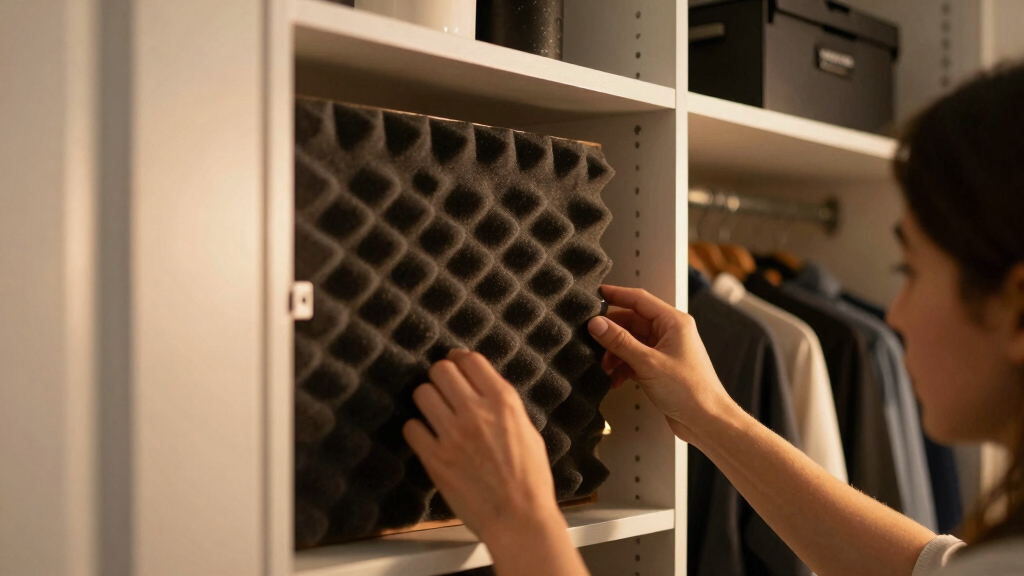

📊 Full opportunity report: Acoustic Dampening, Placement, and the “Rig in the Closet” Setup on ThorstenMeyerAI.com — validation score, market gap, and execution plan.

Get the latest gadgets delivered free — and shop member deals
- Fast, free delivery on millions of items
- Access to Prime Big Deal Days deals on October 6–7
- Prime Video, Amazon Music and more included
TL;DR
Moving your high-power rig into a closet significantly reduces noise and reflections. Proper placement, sealing gaps, and strategic use of absorption materials improve sound quality and isolation. Heat management is essential for safe operation.
Moving a high-power AI or gaming rig into a closet or another room is the most effective method to drastically reduce noise and reflections, according to industry experts. For detailed strategies, see the original analysis.
Experts emphasize that relocating the rig far from the user’s ears minimizes sound leakage and echo more effectively than solely adding foam or acoustic panels. Proper placement involves positioning the microphone away from reflective surfaces and treating reflection points such as behind the mic, side walls, and ceiling. Sealing gaps around the door and walls with weatherstripping enhances sound isolation, preventing noise leaks and echo.
However, placing a powerful rig in an enclosed space raises heat management concerns. To prevent overheating, ventilation solutions like exhaust fans, vents, and ducted airflow are recommended. Using DIY materials such as blankets, rugs, and foam strategically can improve acoustic quality without over-treating the space, but balancing sound absorption with heat dissipation is key.
Acoustic dampening
& the rig in the closet.
The most powerful noise fix isn’t a material — it’s a floor plan. A rig you can’t hear because it’s in another room beats any amount of foam. Tap the approaches in Part 1 to see what actually works.
(another room)
(levers 1–4)
(door / barrier)
(acoustic foam)
Contain the noise, not the heat
Why Proper Setup Is Critical for Noise and Heat Control
This approach is vital for content creators, AI developers, and gamers who need quiet, controlled environments for recording or processing. Effective placement and insulation reduce ambient noise, improve audio clarity, and prevent hardware overheating, ensuring better performance and quieter operation.
acoustic soundproofing foam panels for gaming rig
As an affiliate, we earn on qualifying purchases.
As an affiliate, we earn on qualifying purchases.
The Evolution of Closet Rig Setups and Acoustic Strategies
Many users have historically struggled with echo and noise when setting up high-powered rigs in small spaces. Industry advice now emphasizes that relocating the hardware into a closet or separate room can be more effective than adding acoustic treatment alone. Proper placement, sealing, and heat management have become standard recommendations, reflecting a shift from superficial dampening strategies to holistic room treatment.
"Relocating your rig into a closet or another room can cut noise significantly more than just adding foam panels."
— Thorsten Meyer, acoustic consultant
closet soundproofing door weatherstripping kit
As an affiliate, we earn on qualifying purchases.
As an affiliate, we earn on qualifying purchases.
Uncertainties About Optimal Material Coverage and Ventilation
While general guidelines exist, the exact percentage of wall coverage with acoustic panels and the most effective ventilation configurations vary based on room size and hardware specifics. The balance between sound deadening and heat dissipation remains a nuanced challenge, with ongoing experimentation needed to determine best practices for different setups.
computer ventilation exhaust fan for heat management
As an affiliate, we earn on qualifying purchases.
As an affiliate, we earn on qualifying purchases.
Next Steps for Effective Closet Rig Optimization
Future developments will likely include more precise guidelines for material coverage and ventilation setups tailored to specific hardware and room sizes. Users are encouraged to experiment with placement and sealing techniques while monitoring temperatures to optimize their setups. Industry experts plan to release detailed case studies and best-practice guides in the coming months.
soundproofing materials for PC closet setup
As an affiliate, we earn on qualifying purchases.
As an affiliate, we earn on qualifying purchases.
Key Questions
Is moving my rig into a closet enough to eliminate noise?
Relocating the rig into a closet significantly reduces noise and reflections, but complete silence requires sealing gaps and possibly additional soundproofing. Proper placement and insulation are essential for optimal results.
How do I prevent my hardware from overheating in a closet?
Implement ventilation solutions such as exhaust fans, vents, and ducted airflow. Using temperature monitoring and possibly cooling accessories like liquid coolers can help maintain safe operating temperatures.
What materials are best for acoustic treatment in small spaces?
Thick foam panels, moving blankets, rugs, and bass traps in corners are effective. Covering about 20-30% of the walls and sealing the door with blankets or foam improves sound quality and isolation.
Can I treat my closet with DIY materials instead of professional panels?
Yes, DIY materials like blankets, quilts, and rugs can improve acoustics if placed strategically. However, for optimal results, combining DIY treatments with proper placement and sealing is recommended.
What is the difference between dampening and soundproofing?
Dampening materials absorb reflections and echo within a space, improving sound clarity. Soundproofing blocks sound from entering or escaping the room. Both are important but serve different purposes.
Source: ThorstenMeyerAI.com
Fall Picks
fall essentials
As an affiliate, we earn on qualifying purchases.