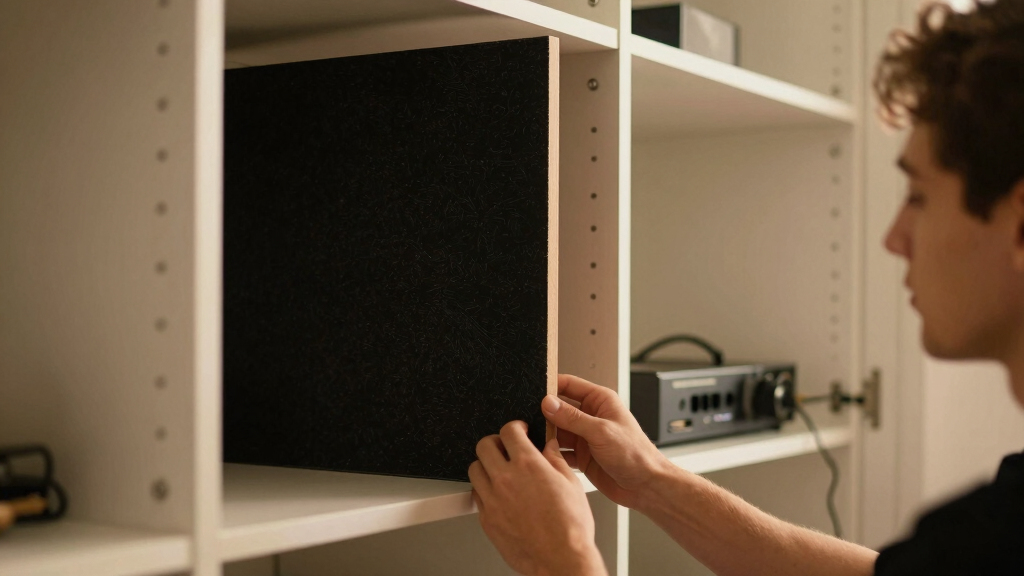

📊 Full opportunity report: Acoustic Dampening, Placement, and the “Rig in the Closet” Setup on ThorstenMeyerAI.com — validation score, market gap, and execution plan.

Get the latest gadgets delivered free — and shop member deals
- Fast, free delivery on millions of items
- Access to Prime Big Deal Days deals on October 6–7
- Prime Video, Amazon Music and more included
TL;DR
Placing AI workstations in separate rooms or closets significantly reduces noise. Proper ventilation is essential to prevent heat buildup in sealed spaces. Acoustic foam alone is less effective than strategic placement.
Moving high-power AI workstations out of the immediate workspace into separate rooms or closets is the most effective way to reduce noise, according to technical experts. This approach is particularly relevant as AI workloads grow more demanding and noise becomes a significant concern for users.
Experts emphasize that the most impactful method for noise reduction is to physically distance the workstation from the user, such as placing it in another room or a dedicated closet. This strategy eliminates airborne noise transmission entirely, making acoustic treatment largely unnecessary.
However, placing a powerful, heat-generating machine in a sealed space requires careful ventilation. Without proper airflow, heat can accumulate, causing thermal throttling and increased fan noise, which defeats the purpose of placement. Active ventilation, including quiet exhaust fans or ducted airflow, is recommended to maintain safe operating temperatures.
Acoustic foam and other dampening materials are less effective than strategic placement but can be used to soften reflections within a room if placement alone isn’t feasible. Mechanical decoupling, such as rubber feet or anti-vibration pads, can also reduce structure-borne noise transmitted through floors or desks.
Acoustic dampening
& the rig in the closet.
The most powerful noise fix isn’t a material — it’s a floor plan. A rig you can’t hear because it’s in another room beats any amount of foam. Tap the approaches in Part 1 to see what actually works.
(another room)
(levers 1–4)
(door / barrier)
(acoustic foam)
Contain the noise, not the heat
Why Placement and Ventilation are Critical for Quiet AI Workstations
Effective noise management for AI workstations impacts user comfort, productivity, and equipment longevity. Moving the rig away from the workspace minimizes noise without expensive acoustic treatments and simplifies setup. Proper ventilation ensures that high heat loads do not compromise hardware performance or safety, making this approach both practical and scalable for professional environments.
As an affiliate, we earn on qualifying purchases.
High-Power AI Workstations and Noise Challenges
As AI workloads increase, so does the power consumption and heat output of dedicated inference rigs, often exceeding 600W. Traditionally, users have relied on acoustic foam and case dampening to reduce noise, but these methods offer limited results compared to physical separation. Experts like Thorsten Meyer highlight that the most effective noise reduction leverages distance and isolation, especially since many AI tasks are performed remotely via network connections, making local noise less critical.
Previous discussions have focused on case modifications and soundproofing; however, the trend toward placing rigs in separate rooms or specialized cabinets reflects a shift toward more practical, scalable solutions that prioritize heat dissipation and noise containment simultaneously.
"The most effective noise reduction is moving the rig out of your workspace entirely, into another room or closet, where acoustic treatment becomes unnecessary."
— Thorsten Meyer
As an affiliate, we earn on qualifying purchases.
Remaining Uncertainties About Sealed Closets and Heat Management
It is still unclear how different ventilation configurations impact long-term hardware reliability in sealed or semi-sealed environments. The optimal balance between soundproofing and airflow, especially in DIY setups versus engineered cabinets, remains an area for further testing and standardization.
soundproof room divider for office
As an affiliate, we earn on qualifying purchases.
As an affiliate, we earn on qualifying purchases.
Next Steps for Quiet, Cool AI Workstation Deployment
Future developments may include standardized, affordable soundproof cabinets with integrated temperature control designed specifically for high-power AI rigs. Ongoing research will likely refine best practices for ventilation and placement, making quiet operation more accessible. Users should monitor hardware temperature and noise levels closely when implementing these strategies.
silent exhaust fan for computer room
As an affiliate, we earn on qualifying purchases.
As an affiliate, we earn on qualifying purchases.
Key Questions
Is acoustic foam effective for reducing noise from AI workstations?
Acoustic foam mainly softens reflections within a room and does little to block airborne noise or structure-borne hum. It is less effective than strategic placement and proper isolation.
Can I put my AI rig in a closet without overheating it?
Yes, if the closet has proper ventilation, including active exhaust fans or ducted airflow, to prevent heat buildup. Without adequate airflow, heat can cause throttling and hardware damage.
What are the best ways to isolate noise without moving the rig?
Use anti-vibration pads, rubber feet, or grommets to reduce structure-borne noise, and consider soundproof barriers or acoustic panels to dampen airborne sound within the room.
Are specialized soundproof cabinets worth the cost?
For high-power, continuous workloads, purpose-built soundproof cabinets with integrated cooling are effective but can be expensive. They combine noise suppression with heat management for optimal performance.
What should I consider when ventilating a sealed space for my AI rig?
Ensure there is active airflow with quiet exhaust fans or ducting, and monitor ambient temperature regularly. Proper ventilation prevents heat buildup and maintains hardware health.
Source: ThorstenMeyerAI.com
Fall Picks
fall essentials
As an affiliate, we earn on qualifying purchases.