
📊 Full opportunity report: Build vs Buy a Prebuilt AI Workstation on ThorstenMeyerAI.com — validation score, market gap, and execution plan.

Get the latest gadgets delivered free — and shop member deals
- Fast, free delivery on millions of items
- Access to Prime Big Deal Days deals on October 6–7
- Prime Video, Amazon Music and more included
TL;DR
In 2026, the traditional cost advantage of building your own AI workstation has diminished due to component shortages and price spikes. Buyers now face a complex trade-off between cost, time, thermal control, and warranty when choosing between DIY and prebuilt options.
In 2026, the longstanding rule that building a custom AI workstation is always cheaper than buying prebuilt has been overturned due to rising component costs and shortages, making the decision more complex for buyers.
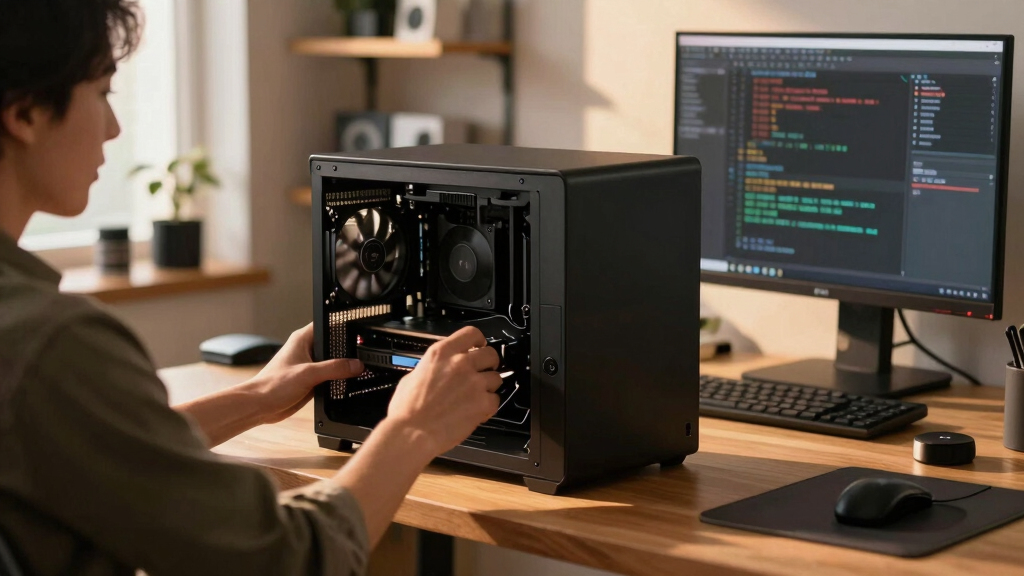
Component shortages and price spikes across DDR5 RAM, GPUs, and SSDs have increased the cost of building a DIY AI workstation, often surpassing prebuilt options. Major vendors like BIZON, Puget, and Lambda now offer prebuilt systems with validated thermals, water-cooling, and extensive testing, often at prices competitive with or lower than DIY parts. These prebuilt systems include warranty coverage and ready-to-run AI stacks, reducing setup time for professionals. Conversely, DIY builders can still customize and optimize their systems, pulling thermal levers such as undervolting, cooling, and airflow tuning, but this requires time, expertise, and risk management. The choice hinges on whether users value control and learning or convenience and warranty, especially as market conditions shift the cost calculus.Build vs buy
an AI workstation.
The real question behind this whole series: do you pull the five heat-and-noise levers yourself, or buy a prebuilt where the vendor pulled them for you? And in 2026, the old “building is cheaper” rule has broken. Match your situation in Part 3.
Why Market Shifts Are Changing the Build vs Buy Decision
The recent spike in component prices and shortages has made DIY building less economically advantageous than before, challenging the decades-old assumption that building is always cheaper. For professionals and enthusiasts, this shift means re-evaluating whether the time and effort spent on DIY are justified, or if paying a premium for prebuilt systems with validated thermals, warranties, and quick deployment offers better value. This change impacts procurement strategies for AI research, enterprise deployment, and hobbyist projects, as the cost-benefit balance evolves.
As an affiliate, we earn on qualifying purchases.
Component Market Disruptions and Their Impact on AI Workstation Costs
Over the past year, shortages of DDR5 RAM, high-end GPUs, and SSDs have driven prices upward. Bulk purchasing by prebuilt manufacturers allowed them to secure components before prices surged, enabling them to offer systems at prices that are now difficult for DIY builders to match. Previously, building a system costed roughly $1,000–$1,250, but current market conditions push these costs higher. Meanwhile, prebuilt vendors perform extensive thermal validation, burn-in testing, and cooling optimization, providing a turnkey solution with warranty coverage. This market dynamic has shifted the traditional cost advantage of DIY, making the decision more about control and convenience than price alone.
"The old rule that building is always cheaper no longer holds in 2026. Component shortages and price spikes have leveled the playing field, sometimes favoring prebuilt systems."
— Thorsten Meyer, AI hardware expert
As an affiliate, we earn on qualifying purchases.
Remaining Questions About Cost and Performance Advantages
It is still unclear how future component prices will evolve, and whether DIY builders can regain cost advantages through alternative sourcing or new hardware releases. Additionally, the long-term reliability and thermal performance of prebuilt systems versus custom builds under different workloads are still being evaluated. Market volatility and supply chain adjustments could also alter the current balance.
As an affiliate, we earn on qualifying purchases.
Upcoming Market Trends and Decision-Making Factors
As 2026 progresses, the market will likely see further stabilization or continued volatility in component prices. Buyers should monitor vendor offerings, component availability, and pricing trends. For DIY enthusiasts, investing in thermal management tools and learning more about system tuning may remain valuable, but for professionals seeking reliability and speed, prebuilt options are expected to become increasingly competitive. Future developments may include new GPU architectures and supply chain innovations that could shift the cost dynamics again.
professional AI workstation warranty
As an affiliate, we earn on qualifying purchases.
As an affiliate, we earn on qualifying purchases.
Key Questions
Is building my own AI workstation still cheaper in 2026?
Not necessarily. Due to component shortages and price spikes, prebuilt systems often match or beat the cost of DIY builds today, especially when factoring in thermal validation and warranty.
What are the main advantages of buying a prebuilt AI workstation?
Prebuilts offer plug-and-play convenience, validated thermals, extensive testing, warranty coverage, and faster deployment, making them attractive for professional use.
Can I still customize and upgrade a prebuilt system?
Yes, many prebuilt systems are designed for future upgrades, but the extent varies by vendor. Customization options are generally more limited compared to building your own from scratch.
How do thermal management and noise levels compare between DIY and prebuilt systems?
Prebuilts often come with optimized cooling and water-cooling options validated under load, resulting in quieter, cooler operation. DIY builds require manual tuning and expertise to achieve similar results.
What should I consider if I want to build my own AI workstation in 2026?
You should evaluate component costs, your thermal management skills, time investment, and whether the potential savings outweigh the effort and risks involved.
Source: ThorstenMeyerAI.com
Fall Picks
fall essentials
As an affiliate, we earn on qualifying purchases.