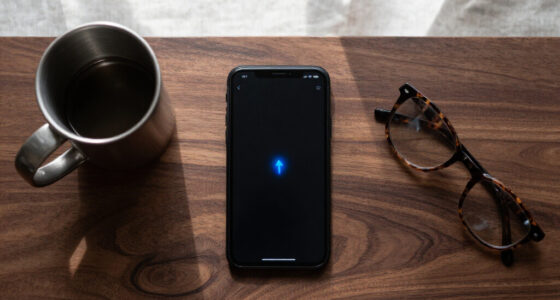
Choosing a portable power bank is a tradeoff between carrying less weight and having more backup power. The most useful comparison for many buyers is a 10,000mAh model against a 20,000mAh model: the first suits a commute or a day out, while the second better handles long travel, several devices, or repeated top-ups. Capacity alone does not tell the whole story. Actual usable energy is lower than the printed rating, and charging speed, ports, size, and airline rules can change which one makes sense. Choose 10,000mAh if a phone is your main concern and you value a small bag. Choose 20,000mAh if you need more than one recharge or want to keep a tablet, headphones, or another device going as well.

Get the latest gadgets delivered free with Prime
- Fast, free delivery on millions of items
- Prime Video, Amazon Music and more included
- Member-only deals all year

INIU 10000mAh 45W Fast Charging Portable Charger
- ✔ Capacity: 10,000mAh
- ✔ Maximum output: 45W
- ✔ Ports: 2 USB-C, 1 USB-A

Miady 2-Pack Slim 10000mAh Portable Charger
- ✔ Capacity: 10,000mAh per bank
- ✔ Quantity: 2 banks
- ✔ Weight: 7.68 ounces per bank

IAPOS 60000mAh 22.5W Fast Charge Portable Charger
- ✔ Capacity: 60,000mAh
- ✔ Maximum output: 22.5W
- ✔ Device count: Up to 5 simultaneously, as stated
At a Glance
| Criteria | 10,000mAh portable power banks | 20,000mAh portable power banks | Winner |
|---|---|---|---|
| Portability | Usually lighter and slimmer; easier to carry daily | Bulkier and heavier; takes more bag space | A |
| Phone recharges | Typically around one to two phone charges, depending on phone and conversion losses | Typically around two to four phone charges, depending on phone and conversion losses | B |
| Multi-device use | Can charge more than one device, but has less reserve for repeated use | More reserve for phones, tablets, and accessories over a longer day | B |
| Charging speed | Depends on model; compact capacity does not inherently mean slower charging | Often offers more ports or higher output, but check the particular model | Depends |
| Recharge time | Often quicker to refill than a comparable 20,000mAh bank at the same input power | Usually takes longer to recharge, especially with a low-power input | A |
| Travel suitability | Generally below common airline capacity limits; check the Wh rating and carrier rules | Many are within common limits, but capacity in Wh and airline rules matter | Depends |
| Value | Better when you need modest backup and portability | Better when frequent recharging or multiple devices would otherwise be a problem | Depends |
INIU 10000mAh 45W Fast Charging Portable Charger
The INIU is the clearest all-round choice here because it keeps a 10,000mAh capacity in a relatively light 0.23kg body while listing a 45W maximum output. That combination suits a phone-first commute better than the IAPOS, whose much larger reserve comes with considerably more weight. It also has three ports—two USB-C and one USB-A—so we can accommodate a mix of newer and older charging cables.Its included 0.4-foot braided USB-C cable is detachable, a useful distinction from IAPOS’s integrated 3-in-1 lead. We can swap the INIU cable if it is damaged, though its short length may be awkward when using a phone while charging. The supplied details claim fast charging for several devices, but real speeds depend on device compatibility and the cable in use. Miady’s two-pack offers more banks to distribute between bags, yet this INIU is the more capable individual charger based on the listed output.Capacity is the limit. At 10,000mAh, this is a daily reserve rather than a multi-day power source, and its relatively high output does not add energy to the battery itself. Buyers planning extended camping without access to a wall outlet should look at the IAPOS instead. For a smaller carry that can also serve tablets and compatible handhelds, the INIU makes the most balanced trade.
Pros:
- 45W maximum output is the highest listed among these picks.
- Three ports include two USB-C and one USB-A.
- Detachable braided USB-C cable can be replaced independently.
- 0.23kg weight and 0.5-inch thickness suit everyday carry.
Cons:
- 10,000mAh capacity is modest for multi-day trips.
- Included 0.4-foot cable may limit how comfortably a device can be used while charging.
- The provided specifications do not state the bank’s watt-hour rating.
Best for: Commuters and travelers who want one lightweight bank for phones and occasional compatible tablets or handheld devices.
Not ideal for: People who need several days of device charging between outlets or want an especially long cable while charging.
Bottom line: We recommend the INIU for everyday portability when a fast, versatile 10,000mAh bank matters more than a large reserve.
“We recommend the INIU for everyday portability when a fast, versatile 10,000mAh bank matters more than a large reserve.”
Miady 2-Pack Slim 10000mAh Portable Charger
Miady’s case is straightforward: we get two separate 10,000mAh banks, one black and one white, each slim enough to carry in a bag. That makes this set more flexible than buying one larger bank when two people need backup, or when we want to leave one charged at home and take the other out. The INIU is the more capable single unit on listed output and cable serviceability; Miady’s advantage is having a second complete charger ready.Each bank is described with dual USB-A ports and a USB-C port, and the USB-C connection handles both input and output. The listing’s feature summary says four ports, while the product description describes three charging outputs; the practical interpretation is a set of multiple output and input connections, but the precise per-unit port arrangement is worth confirming before purchase. The set includes two USB-C cables, with no Lightning cable. It is described as slim at 5.5 × 2.6 × 0.6 inches and 7.68 ounces per bank, so it is portable, though not as light as the INIU by the supplied weights.The main compromise is charging performance information. No maximum wattage or fast-charging protocol is specified, so we cannot place it alongside INIU’s stated 45W output for speed-sensitive devices. The pair also does not mean 20,000mAh in one unit: each bank must be carried and connected separately. Pick Miady when redundancy and sharing are more valuable than a faster single charger.
Pros:
- Two independent 10,000mAh banks support sharing or keeping a spare.
- USB-C supports both charging the bank and powering a device.
- Slim 0.6-inch profile is suitable for a purse or backpack.
- Two USB-C cables are included.
Cons:
- No maximum output wattage is provided in the supplied specifications.
- Each bank has less capacity than the 60,000mAh IAPOS.
- No Lightning cable is included, and the port-count details are inconsistent.
Best for: Couples, families, students, or travelers who want two independent phone banks and a charged spare.
Not ideal for: Buyers prioritizing high-output fast charging, a single high-capacity bank, or a clearly documented per-port power profile.
Bottom line: We’d choose Miady when having two modest-capacity chargers ready is more useful than maximizing speed or capacity in one unit.
“We’d choose Miady when having two modest-capacity chargers ready is more useful than maximizing speed or capacity in one unit.”
IAPOS 60000mAh 22.5W Fast Charge Portable Charger
When outlet access is uncertain, the IAPOS offers a very different kind of portability: 60,000mAh of stated capacity in a unit weighing 15.5 ounces. That reserve is six times the capacity of either 10,000mAh option on paper, making it the most suitable pick here for long outdoor outings, shared charging, or emergency backup. It also leads the lineup with support for up to five devices at once, counting its integrated cable alongside the three listed ports.The built-in 3-in-1 cable has USB-C, iOS, and Micro-USB connectors, which can reduce cable clutter when a group carries a mix of devices. In comparison, INIU includes a replaceable USB-C cable and has a higher listed output at 45W; IAPOS lists 22.5W maximum, so its appeal is reserve and convenience rather than top speed. A digital percentage display also makes remaining capacity easier to read than Miady’s LED indicator lights.Its scale deserves attention. At nearly a pound, this is better carried in a backpack than slipped into a pocket, and the large capacity may be unnecessary for a normal workday. The product description’s “up to 10 full charges” is a claim, not a guarantee; device battery size and conversion losses affect actual results. The supplied information does not state a watt-hour rating, so travelers should check the product label and applicable airline requirements before flying. Choose it when capacity outweighs weight.
Pros:
- 60,000mAh capacity provides the largest reserve in this comparison.
- Can charge up to five devices at once according to the product description.
- Integrated 3-in-1 cable covers USB-C, iOS, and Micro-USB connectors.
- Digital display shows remaining charge as a percentage.
Cons:
- 15.5-ounce weight is substantially heavier than the two 10,000mAh choices.
- 22.5W maximum output is below INIU’s stated 45W.
- Watt-hour rating is not included in the supplied specifications.
Best for: Campers, travelers on extended itineraries, and households seeking a large shared backup for several devices.
Not ideal for: Pocket-carry commuters, speed-focused users, or air travelers who need a clearly stated watt-hour rating before packing.
Bottom line: We recommend the IAPOS when a long-lasting shared reserve matters more than light weight or the fastest listed output.
“We recommend the IAPOS when a long-lasting shared reserve matters more than light weight or the fastest listed output.”
As an Amazon Associate we earn from qualifying purchases.
Key Differences
The biggest practical gap is how often you need to find a wall outlet. A 10,000mAh bank is a sensible reserve for a phone that starts the day charged and needs a boost later. A 20,000mAh bank adds a larger cushion for navigation, video, hotspot use, or a second device. Neither will deliver its full printed capacity to a phone: voltage conversion and heat account for losses, and phone battery size varies. Treat recharge counts as estimates, not promises.
The price of the larger reserve is physical bulk and a longer refill. If the bank lives in a pocket or small everyday bag, the compact option is more likely to come along. If it stays in a travel bag and supports several devices, the added capacity can prevent charging interruptions. Charging speed is a separate specification: compare USB-C input and output ratings, supported charging standards, and port combinations rather than assuming the larger bank is faster.
Detailed Comparison
Portability (10,000mAh portable power banks wins — major)
The 10,000mAh bank wins by a clear, practical margin in everyday carry. Models vary, but less capacity generally means less weight and less space in a pocket or small bag. A 20,000mAh bank is still portable, though it is more noticeable on a walk or commute. The difference matters most when you carry it routinely; if it will stay in luggage, capacity may matter more.
Phone recharges (20,000mAh portable power banks wins — major)
The 20,000mAh option wins for total phone energy, usually by a substantial margin. A 10,000mAh model often provides about one to two charges, while 20,000mAh can often manage two to four. These are rough ranges: power conversion loses energy, and a large phone, heavy use, or charging while using the device reduces the number. For a single afternoon top-up, the smaller bank can be enough; for a weekend or long travel day, the larger one provides more headroom.
Multi-device use (20,000mAh portable power banks wins — major)
The 20,000mAh bank is the stronger choice when a phone is not the only device. It can support repeated phone top-ups alongside headphones, a tablet, or another small USB device. The 10,000mAh model can charge multiple devices if it has the ports, but sharing a limited reserve means less power left for each. This is a major difference for travelers or people working away from an outlet, and a small one for someone carrying only a phone.
Charging speed (moderate difference)
There is no dependable capacity-based winner. Speed depends on the bank’s maximum output, the device’s charging standard, cable, and whether multiple ports are being used. Some 10,000mAh banks support fast USB-C charging; some 20,000mAh models do too, but the larger capacity does not guarantee it. Compare the wattage and supported protocols on the exact products. For a quick phone top-up, a smaller fast-output bank may beat a larger basic one.
Recharging the bank (10,000mAh portable power banks wins — moderate)
The 10,000mAh option generally wins on turnaround time because it has less energy to take in. Actual refill time depends on the bank’s input rating, charger, cable, and charging profile; a high-capacity model with strong input support may refill faster than a basic compact one. Still, if you regularly drain the bank and need it ready again soon, capacity can mean a longer wait. Check input wattage before buying.
Travel suitability (moderate difference)
This is a close call because both sizes can work for travel. The 10,000mAh bank is easier to carry and is typically well below common airline limits. A 20,000mAh bank offers more useful reserve on long journeys, but travelers should check its watt-hour rating and the airline’s current rules; restrictions are based on energy rating and may vary. Power banks are generally carried in the cabin, not checked baggage. Verify the printed Wh figure rather than relying only on mAh.
Value for money (moderate difference)
Neither capacity is automatically the better deal. The 20,000mAh model often costs more, but that premium can be worthwhile if it replaces multiple top-ups or keeps several devices usable. The 10,000mAh bank is better value for a buyer who rarely needs more than a partial phone recharge; paying for unused capacity adds weight without improving that routine. Compare price alongside output, input, build quality, and warranty, not capacity alone.
10,000mAh portable power banks: Pros and Cons
Pros:
- Lighter and easier to carry every day
- Usually quicker to refill than an equivalent larger bank
- Enough backup for many commutes and day trips
- Often costs less
Cons:
- Less reserve for repeated phone charging
- Limited headroom when several devices need power
- May run out during long trips or heavy phone use
20,000mAh portable power banks: Pros and Cons
Pros:
- More energy for multiple phone charges
- Better suited to several devices or extended time away from outlets
- Can reduce the need to ration power during travel
Cons:
- Heavier and bulkier in a pocket or small bag
- Can take longer to recharge
- Costs more, and the added capacity may go unused
Who Should Choose What
Choose 10,000mAh portable power banks if:
- You mainly carry a phone and want a backup for a commute or day out.
- A slim, light bank is more likely to be carried than a larger one.
- You can recharge the bank regularly and do not need several full phone top-ups.
Choose 20,000mAh portable power banks if:
- You take long trips or spend full days away from wall outlets.
- You need to support a phone plus a tablet, headphones, or another device.
- You use power-intensive features such as navigation, hotspot, or video for extended periods.
Skip both if: You need to power a laptop or other high-draw equipment for extended periods; check the device’s required USB-C output and energy needs, and consider a higher-capacity power station if a bank cannot meet them.
Value for Money
Pay more for 20,000mAh when the extra reserve solves a recurring problem: several devices to charge, long stretches without outlets, or a phone that often needs multiple top-ups. In those cases, the added weight and cost can be worthwhile because one bank covers more of the day. For ordinary phone backup, a good 10,000mAh model is often the better value. Prioritize reliable capacity, useful USB-C output, and enough input power to refill it on your schedule. A low-cost high-capacity bank with slow output or poor specifications may be a worse buy than a smaller, better-equipped one.
Final Verdict
For most people who want an everyday phone backup, choose a 10,000mAh power bank: it is easier to carry, usually costs less, and covers common top-up needs. Choose 20,000mAh if you routinely charge multiple devices, travel for long stretches, or cannot count on finding an outlet. The deciding factor is how many charges you actually need between opportunities to recharge. If that answer is usually one, keep the lighter bank; if it is several, the larger capacity earns its place.
Frequently Asked Questions
How many times can a 10,000mAh power bank charge a phone?
Often about one to two times, but there is no exact count without knowing the phone and bank. Energy is lost as voltage is converted, and phone battery sizes vary. Heavy use while charging also reduces the amount that reaches the battery.
Is a 20,000mAh power bank allowed on a plane?
Many 20,000mAh banks fall within common airline limits, but check the watt-hour rating printed on the product and the rules for your airline and route. Keep power banks in cabin baggage and confirm current carrier guidance before departure.
Does a higher-capacity power bank charge a phone faster?
No. Capacity describes stored energy, while charging speed depends on output wattage, charging protocols, the phone, and the cable. Compare those specifications on the specific bank and phone.
Should I buy a 10,000mAh or 20,000mAh power bank for travel?
Choose 10,000mAh for lighter day trips and a phone top-up. Choose 20,000mAh for long travel days or several devices, provided its watt-hour rating fits your airline’s rules and you are comfortable carrying the extra weight.