The best cloud gaming handhelds combine comfortable controls, a clear screen, and reliable access to the services and games you want. I rank the Logitech G Cloud as the best overall fit for a streaming-first buyer, while the Razer Edge stands out for its detachable tablet design and the AYN Odin 2 Portal for shoppers who also want more local gaming flexibility. The main tradeoffs are screen size versus portability, streaming focus versus onboard performance, and whether a device’s software and controls suit your preferred services. Several entries share similar hardware or appear as duplicate listings, so model details matter when comparing them. Read on for the full breakdown and a buying guide to help match a handheld to your play habits.

Get the latest gadgets delivered free with Prime
- Fast, free delivery on millions of items
- Prime Video, Amazon Music and more included
- Member-only deals all year
Complete the kit



Key Takeaways
- The Logitech G Cloud is the clearest streaming-first pick in this lineup; buyers who also want broader local play should compare it with Android handhelds such as the AYN Odin 2 Portal.
- Screen size changes the use case: the 7-inch Logitech G Cloud, Razer Edge, and MANGMI Pocket Max favor a larger view, while the 3.5-inch AYANEO Pocket VERT models are easier to carry but less suited to text-heavy games.
- High refresh rate is not a substitute for a strong streaming setup. The 144Hz displays on the MANGMI Pocket Max and AYANEO KONKR Pocket FIT may benefit supported content, but home network quality and service latency remain central to streamed play.
- Several entries are duplicate or near-duplicate listings. The MANGMI Pocket Max appears twice, as do the AIR X and Pocket VERT families, so buyers should verify the exact configuration rather than treating each listing as a distinct device.
- The ONEXPLAYER 3 is the outlier, not the default cloud pick. Its PC-style hardware and 1TB SSD suit buyers who want a broader local-play option, while a lighter streaming-oriented handheld is a simpler match for cloud sessions.
| abxylute OnePro Cloud Gaming Handheld |  | Best for Multi-Platform Streaming | Platform: Android | Display: 7-inch 1080p touchscreen, 60Hz | Storage: 64GB | VIEW LATEST PRICE | See Our Full Breakdown |
| Razer Edge Wi-Fi Gaming Tablet with Kishi V2 Pro (Renewed) |  | Best for High Refresh Rate | Processor: Snapdragon G3X Gen 1 | Display: 6.8-inch 144Hz AMOLED FHD+ | Controller: Razer Kishi V2 Pro (16 buttons) | VIEW LATEST PRICE | See Our Full Breakdown |
| AYN Odin 2 Portal Base Handheld Gaming Console |  | Best Overall | Processor: Qualcomm Snapdragon 8 Gen 2 (8 cores) | GPU: Adreno 740 | Display: 7-inch OLED, 1080p, 120Hz, 800 nits | VIEW LATEST PRICE | See Our Full Breakdown |
| MANGMI AIR X Android Handheld Game Console |  | Best Budget Pick | Processor: Snapdragon 662 octa-core, up to 2.1 GHz | Display: 5.5-inch FHD IPS, 1080p, 400 nits | RAM: 4GB | VIEW LATEST PRICE | See Our Full Breakdown |
| AYANEO Pocket VERT Android Handheld Gaming Console |  | Best Compact for Retro & Cloud | Processor: Snapdragon 8+ Gen 1 | Display: 3.5-inch LCD, 1440 × 1600, 615 PPI | RAM: 12GB | VIEW LATEST PRICE | See Our Full Breakdown |
| MANGMI Pocket Max Android Gaming Handheld, 7-Inch 144Hz AMOLED Display, Snapdragon 865, 8GB RAM, 128GB Storage |  | Best for a Big, Vivid Screen | Display: 7-inch 1920 × 1080 AMOLED, 144Hz | Processor and graphics: Snapdragon 865, Adreno 650 | Memory: 8GB LPDDR4X | VIEW LATEST PRICE | See Our Full Breakdown |
| AYANEO KONKR Pocket FIT Android Handheld Gaming Console, 6-Inch 144Hz Display |  | Best Performance-Focused Pick | Display: 6-inch 1920 × 1080 IPS touchscreen, 144Hz | Processor: Qualcomm Snapdragon G3 Gen 3, up to 15W peak performance | Memory: 16GB LPDDR5X | VIEW LATEST PRICE | See Our Full Breakdown |
| AYANEO KONKR Pocket FIT Android Handheld Gaming Console, 6-Inch 144Hz Display |  | Best Value Configuration | Display: 6-inch 1920 × 1080 IPS touchscreen, 144Hz | Processor: Qualcomm Snapdragon G3 Gen 3, up to 15W peak performance | Memory: 12GB LPDDR5X | VIEW LATEST PRICE | See Our Full Breakdown |
| MANGMI Pocket Max Gaming Handheld, 7-inch 144Hz AMOLED, Snapdragon 865, 8GB RAM, 128GB Storage |  | Best for Swappable Controls | Display: 7-inch 1920 × 1080 AMOLED, 144Hz | Processor and graphics: Qualcomm Snapdragon 865, Adreno 650 | Memory and storage: 8GB LPDDR4X, 128GB UFS 3.1 | VIEW LATEST PRICE | See Our Full Breakdown |
| Logitech G Cloud Gaming Handheld |  | Best for Cloud-First Beginners | Display: 7-inch 1920 × 1080 touchscreen, 60Hz, 16:9 | Platform and storage: Android, 64GB | Supported services: Xbox Cloud Gaming, NVIDIA GeForce NOW, Steam Link, Google Play apps | VIEW LATEST PRICE | See Our Full Breakdown |
| Retroid Pocket 5 Android Handheld Game Console, 128 GB, 5.5-Inch 1080p Touchscreen, Black | 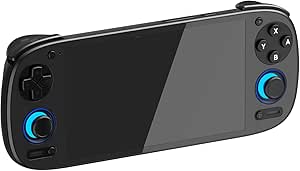 | Best Balanced Compact Pick | Operating system: Android 13 | Processor: Snapdragon 865 | Memory: 8GB | VIEW LATEST PRICE | See Our Full Breakdown |
| ONEXPLAYER 3 Gaming Handheld PC, 32GB RAM, 1TB SSD |  | Best Premium Windows Streaming Hub | Operating system: Windows 11 | Processor: Intel Arc G3 Extreme | Graphics: Intel Arc B390 integrated graphics | VIEW LATEST PRICE | See Our Full Breakdown |
| MANGMI AIR X Android Handheld Gaming Console, 5.5-inch FHD IPS, Snapdragon 662, 4GB RAM, 64GB Storage |  | Best Lightweight Entry-Level Pick | Operating system: Android 14 | Processor: Qualcomm Snapdragon 662 | Memory: 4GB LPDDR4X | VIEW LATEST PRICE | See Our Full Breakdown |
| AYANEO Pocket VERT Android Handheld Gaming Device, 3.5-Inch Display, 8GB RAM, 128GB Storage |  | Best Compact Vertical Handheld | Operating system: Android 14 | Processor: Snapdragon 8+ Gen 1 | Memory: 8GB LPDDR5 | VIEW LATEST PRICE | See Our Full Breakdown |
| cloud gaming handheld | Display | Storage | Processor | Controls |
|---|---|---|---|---|
| abxylute OnePro Cloud Gaming H | 7-inch 1080p touchscreen, 60Hz | 64GB | — | Hall-effect joysticks, ABXY buttons |
| Razer Edge Wi-Fi Gaming Tablet | 6.8-inch 144Hz AMOLED FHD+ | — | Snapdragon G3X Gen 1 | — |
| AYN Odin 2 Portal Base Handhel | 7-inch OLED, 1080p, 120Hz, 800 nits | 128GB (microSD expandable) | Qualcomm Snapdragon 8 Gen 2 (8 cores) | — |
| MANGMI AIR X Android Handheld | 5.5-inch FHD IPS, 1080p, 400 nits | 64GB (microSD expandable) | Snapdragon 662 octa-core, up to 2.1 GHz | RGB Hall-effect joysticks, linear Hall triggers |
| AYANEO Pocket VERT Android Han | 3.5-inch LCD, 1440 × 1600, 615 PPI | 256GB | Snapdragon 8+ Gen 1 | Gamepad, dual-mode touchpad, diamond-cut shoulder buttons |
| MANGMI Pocket Max Android Gami | 7-inch 1920 × 1080 AMOLED, 144Hz | 128GB UFS 3.1, microSD expansion | — | — |
| AYANEO KONKR Pocket FIT Androi | 6-inch 1920 × 1080 IPS touchscreen, 144Hz | 512GB UFS 4.0 | Qualcomm Snapdragon G3 Gen 3, up to 15W peak performance | Hall-effect triggers, gyro support, linear haptics |
| AYANEO KONKR Pocket FIT Androi | 6-inch 1920 × 1080 IPS touchscreen, 144Hz | 256GB UFS 4.0 | Qualcomm Snapdragon G3 Gen 3, up to 15W peak performance | — |
| MANGMI Pocket Max Gaming Handh | 7-inch 1920 × 1080 AMOLED, 144Hz | — | — | Magnetic swappable D-pad and face buttons, TMR joysticks, Hall-effect triggers, 6-axis gyro |
| Logitech G Cloud Gaming Handhe | 7-inch 1920 × 1080 touchscreen, 60Hz, 16:9 | — | — | Gamepad controls, haptics, gyroscope, remappable controls |
| Retroid Pocket 5 Android Handh | 5.5-inch 1080p touchscreen | 128GB, expandable by microSD | Snapdragon 865 | — |
| ONEXPLAYER 3 Gaming Handheld P | 8.8-inch AMOLED, 1920 × 1200 | 1TB PCIe 4.0 SSD | Intel Arc G3 Extreme | — |
| MANGMI AIR X Android Handheld | 5.5-inch 1920 × 1080 IPS LCD, 450 nits | 64GB eMMC, expandable by microSD | Qualcomm Snapdragon 662 | Hall effect joysticks and triggers; 6-axis gyroscope |
| AYANEO Pocket VERT Android Han | 3.5-inch LCD, 1440 × 1600, 615 PPI | 128GB UFS 3.1, expandable by microSD | Snapdragon 8+ Gen 1 | — |
More Details on Our Top Picks
abxylute OnePro Cloud Gaming Handheld
The abxylute OnePro is the most service-agnostic handheld in this lineup, supporting Xbox Cloud Gaming, NVIDIA GeForce NOW, Amazon Luna, PlayStation Now, and Boosteroid out of the box. Where the AYN Odin 2 Portal leans on raw power for local emulation, the OnePro focuses entirely on streaming, so its 7-inch 1080p touchscreen and 60Hz refresh rate are tuned for latency-sensitive cloud play rather than high-frame-rate local titles. The Hall-effect joysticks and ergonomic grip make long sessions comfortable, and at 430 g it’s lighter than the Razer Edge with its Kishi V2 Pro attached. The tradeoff is that everything depends on Wi-Fi quality — a weak connection will undermine the experience, and there’s no cellular option for on-the-go play. For a dedicated cloud gamer who juggles multiple services, this is the most versatile pick.
Pros:- Supports five major cloud gaming services plus remote play
- Lightweight 430 g body with Hall-effect joysticks
- 7-inch 1080p touchscreen with ergonomic grip
- Over eight hours of stated battery life
Cons:- Streaming quality is entirely dependent on Wi-Fi strength
- Unknown software update support timeline
Best for: Cloud gamers subscribed to multiple streaming services who want one device that works across Xbox, GeForce NOW, Luna, and PlayStation without switching hardware.
Not ideal for: Players who prioritize local game libraries or offline play — the OnePro is nearly useless without a stable Wi-Fi connection.
- Platform:Android
- Display:7-inch 1080p touchscreen, 60Hz
- Storage:64GB
- Weight:430 g
- Battery life:Over 8 hours
- Connectivity:Wi-Fi, HDMI, USB
- Controls:Hall-effect joysticks, ABXY buttons
- Included accessories:Carrying case, cable
Our verdict“Buy the abxylute OnePro if you’re a multi-service cloud gamer who values flexibility and comfort over raw local processing power.”
Razer Edge Wi-Fi Gaming Tablet with Kishi V2 Pro (Renewed)
The Razer Edge stands out for its 6.8-inch 144Hz AMOLED FHD+ touchscreen, which delivers noticeably smoother motion than the 60Hz panels on the abxylute OnePro or the MANGMI AIR X. That refresh rate matters most for fast-paced cloud titles where frame pacing and input responsiveness are critical. The Snapdragon G3X Gen 1 chip is purpose-built for Android gaming, and the bundled Razer Kishi V2 Pro controller adds HyperSense haptics and 16 buttons for a console-like feel. Compared with the AYN Odin 2 Portal, the Edge is more portable once the controller is detached, but it’s a renewed product with only a 90-day warranty, and there’s no cellular option — Wi-Fi only. If you’re willing to accept refurbished condition for a high-refresh-rate streaming experience, this is a compelling choice.
Pros:- 144Hz AMOLED display for fluid cloud gaming
- Snapdragon G3X Gen 1 optimized for Android gaming
- Includes Razer Kishi V2 Pro with HyperSense haptics
- Supports Android, PC, Xbox, and cloud services
Cons:- Renewed unit with only a 90-day limited warranty
- No cellular connectivity option
- Controller attachment makes it bulkier than a slate-style handheld
Best for: Competitive cloud gamers who want the smoothest possible visuals and a dedicated controller without paying for a full handheld PC.
Not ideal for: Buyers who prefer new hardware with a longer warranty or need cellular connectivity for streaming away from home.
- Processor:Snapdragon G3X Gen 1
- Display:6.8-inch 144Hz AMOLED FHD+
- Controller:Razer Kishi V2 Pro (16 buttons)
- Connectivity:Wi-Fi
- Dimensions:10.24 x 3.35 x 1.34 inches
- Warranty:90-day limited
- Compatible devices:Android, PC, Xbox
Our verdict“Pick the Razer Edge if high refresh rate is your priority and you’re comfortable with a refurbished device for the price advantage.”
AYN Odin 2 Portal Base Handheld Gaming Console
The AYN Odin 2 Portal earns the top spot because it balances cloud gaming performance with local capability better than any other device here. Its 7-inch 1080p OLED touchscreen at 120Hz beats the Razer Edge’s AMOLED in color accuracy (155% sRGB, 100,000:1 contrast) and matches the abxylute OnePro’s size while offering double the refresh rate. Under the hood, the Snapdragon 8 Gen 2 and Adreno 740 GPU handle both streaming and demanding Android titles, and the 8,000mAh battery with 27W USB-C charging outlasts the MANGMI AIR X’s 5,000mAh cell. Wi-Fi 7 and Bluetooth 5.3 future-proof connectivity, while active cooling keeps thermals in check during long sessions. The main drawback is that games aren’t preloaded, and 128GB of storage may feel tight — but the microSD slot mitigates that. For a do-everything handheld that won’t feel outdated soon, this is the pick.
Pros:- 7-inch 1080p OLED with 120Hz refresh rate and 800 nits
- Snapdragon 8 Gen 2 + Adreno 740 for smooth performance
- 8,000mAh battery with 27W fast charging
- Wi-Fi 7 and active cooling system
Cons:- No games preloaded — you must install from Google Play
- 128GB storage may require a microSD card for large libraries
Best for: Enthusiasts who want a premium Android handheld that excels at both cloud streaming and local Android gaming, with a display that rivals dedicated gaming tablets.
Not ideal for: Budget-conscious buyers or those who prefer a smaller, more pocketable device — the Odin 2 Portal is a full-size handheld.
- Processor:Qualcomm Snapdragon 8 Gen 2 (8 cores)
- GPU:Adreno 740
- Display:7-inch OLED, 1080p, 120Hz, 800 nits
- RAM:8GB
- Storage:128GB (microSD expandable)
- Battery:8,000mAh, 27W USB-C charging
- Connectivity:Wi-Fi 7, Bluetooth 5.3
- Weight:430 g
Our verdict“Choose the AYN Odin 2 Portal if you want the best all-around cloud gaming handheld with a stunning OLED screen and enough power for local titles.”
MANGMI AIR X Android Handheld Game Console
The MANGMI AIR X is the most affordable way into cloud gaming without sacrificing essential features. Its 5.5-inch 1080p IPS touchscreen at 400 nits is smaller than the abxylute OnePro’s 7-inch panel, but it still delivers crisp visuals for streaming. The Snapdragon 662 processor is noticeably weaker than the AYN Odin 2 Portal’s Snapdragon 8 Gen 2 — you’ll see stutter in heavier Android games — but for pure cloud streaming, the load is on the server, so the chip matters less. Hall-effect joysticks and triggers provide precise control, and the 5,000mAh battery claims up to eight hours of play. The catch is 64GB of storage, which fills up quickly if you install many apps, though microSD expansion helps. Active cooling and RGB lighting are nice extras at this price point. If you’re new to cloud gaming and want to test the waters without a big investment, this is the sensible entry.
Pros:- 1080p IPS touchscreen with 400 nits and 100% sRGB
- Hall-effect joysticks and triggers for accurate input
- MicroSD expansion and Wi-Fi screen mirroring
- 5,000mAh battery rated for up to 8 hours
Cons:- Snapdragon 662 is underpowered for local gaming
- 64GB storage is limited for a large app library
- Unknown software update support
Best for: First-time cloud gamers on a tight budget who want a functional handheld with Hall-effect sticks and a decent screen without premium cost.
Not ideal for: Performance-focused players who plan to run local Android games — the Snapdragon 662 will struggle with demanding titles.
- Processor:Snapdragon 662 octa-core, up to 2.1 GHz
- Display:5.5-inch FHD IPS, 1080p, 400 nits
- RAM:4GB
- Storage:64GB (microSD expandable)
- Battery:5,000mAh, up to 8 hours
- Controls:RGB Hall-effect joysticks, linear Hall triggers
- Connectivity:Wi-Fi, USB
- Cooling:Single-fan active cooling
Our verdict“Buy the MANGMI AIR X if you’re just starting with cloud gaming and want a low-risk, budget-friendly device with the essentials.”
AYANEO Pocket VERT Android Handheld Gaming Console
The AYANEO Pocket VERT is a niche pick that shines for retro gamers who also dabble in cloud streaming. Its 3.5-inch LCD with a 1440 × 1600 resolution and 615 PPI is exceptionally sharp — far denser than the 1080p panels on the MANGMI AIR X or abxylute OnePro — though the small size means text and UI elements can feel cramped in modern cloud titles. The Snapdragon 8+ Gen 1 and 12GB RAM are overkill for a screen this size, but they ensure zero lag when streaming or running emulators. AYASpace software allows key mapping and performance tuning, which is a boon for retro games that need custom controls. The CNC metal body and glass front feel premium, but the description’s inconsistency about materials (metal vs. plastic) is a minor red flag. If you want a pocketable device that handles both classic games and cloud streaming with ease, this is a unique option.
Pros:- Ultra-sharp 3.5-inch display at 615 PPI
- Snapdragon 8+ Gen 1 with 12GB RAM for smooth performance
- AYASpace key mapping and performance adjustments
- Active cooling and 6,000mAh battery
Cons:- Compact screen may feel small for cloud gaming
- Material description is inconsistent (metal/glass vs. plastic)
Best for: Retro gaming enthusiasts who want a high-resolution, pocketable Android handheld that can also handle cloud streaming and benefit from per-game key mapping.
Not ideal for: Players who prefer large screens for modern cloud titles — the 3.5-inch display is too small for comfortable long sessions.
- Processor:Snapdragon 8+ Gen 1
- Display:3.5-inch LCD, 1440 × 1600, 615 PPI
- RAM:12GB
- Storage:256GB
- Battery:6,000mAh
- Cooling:Active air cooling
- Controls:Gamepad, dual-mode touchpad, diamond-cut shoulder buttons
- Material:CNC metal body and glass front (specs also list plastic)
Our verdict“Pick the AYANEO Pocket VERT if you prioritize portability and retro emulation, with cloud gaming as a secondary use case.”
MANGMI Pocket Max Android Gaming Handheld, 7-Inch 144Hz AMOLED Display, Snapdragon 865, 8GB RAM, 128GB Storage
The MANGMI Pocket Max suits cloud players who want a generous display without moving to a tablet-and-controller setup. Its 7-inch 1080p AMOLED panel gives streamed games more room and stronger contrast than the 6-inch IPS screen on the AYANEO KONKR Pocket FIT, while Wi-Fi 6 supports a modern home network. The Snapdragon 865 is an older platform than the KONKR’s Snapdragon G3 Gen 3, so I’d choose the AYANEO for a newer performance-focused Android handheld and this MANGMI for screen size and OLED color.
TMR sticks and Hall-effect triggers add durable-feeling control hardware, and the 8,000mAh battery helps with longer sessions. The tradeoffs are its plastic body and a listing that describes it for indoor use; its 144Hz panel also won’t make a cloud stream exceed the service’s own frame-rate limits.
Pros:- 7-inch 1080p AMOLED display offers more screen area and contrast than the 6-inch AYANEO KONKR Pocket FIT.
- Wi-Fi 6 supports fast wireless networking for cloud and PC streaming.
- TMR joysticks, Hall-effect triggers, and a 6-axis gyro provide a broad control set.
- 8,000mAh battery, active cooling, and 27W charging support extended play.
Cons:- Snapdragon 865 is an older processor than the KONKR Pocket FIT’s Snapdragon G3 Gen 3.
- Plastic construction feels less premium than a metal-bodied alternative.
- The product listing specifies indoor use, limiting its appeal for gaming on the move.
Best for: Cloud gamers who mainly play at home and want a large OLED screen for streamed games, video, and Android apps.
Not ideal for: Players who need a rugged or travel-oriented handheld, or who prioritize a newer processor over screen size.
- Display:7-inch 1920 × 1080 AMOLED, 144Hz
- Processor and graphics:Snapdragon 865, Adreno 650
- Memory:8GB LPDDR4X
- Storage:128GB UFS 3.1, microSD expansion
- Operating system:Android 13
- Wireless:Wi-Fi 6, Bluetooth 5.1
- Battery and charging:8,000mAh, 27W charging
- Controls and ports:TMR joysticks, Hall-effect triggers, 6-axis gyro, USB-C video output, 3.5mm audio
Our verdict“Choose this MANGMI if a larger OLED screen matters more to your home streaming setup than newer processing hardware or travel-ready construction.”
AYANEO KONKR Pocket FIT Android Handheld Gaming Console, 6-Inch 144Hz Display
For a cloud handheld that can also handle demanding Android games, I’d put the AYANEO KONKR Pocket FIT ahead of the Snapdragon 865 MANGMI Pocket Max. Its Snapdragon G3 Gen 3, 16GB of LPDDR5X memory, and 512GB of UFS 4.0 storage make this the more capable and roomier package for local play, downloads, and switching between apps. Those extras matter less when a game is streamed, but they give the AYANEO more flexibility beyond cloud services.
The 6-inch 1080p, 144Hz IPS touchscreen is sharper and more compact than the MANGMI’s 7-inch AMOLED, but it offers less screen area and not the same display technology. Hall-effect triggers, gyro support, linear haptics, active cooling, and 40W charging round out a feature-rich build. Its plastic construction is a compromise, and buyers who mainly stream may be paying in bulk and capability for power they rarely use.
Pros:- Snapdragon G3 Gen 3 and 16GB LPDDR5X memory provide more headroom for local Android gaming than the Snapdragon 865 MANGMI Pocket Max.
- 512GB UFS 4.0 storage leaves more room for games and media than the MANGMI’s 128GB.
- 144Hz Full HD touchscreen pairs with Hall-effect triggers, gyro support, and linear haptics.
- 8,000mAh battery and 40W PD charging support longer sessions and faster top-ups.
Cons:- The 6-inch IPS screen is smaller and lacks the AMOLED display of the 7-inch MANGMI Pocket Max.
- Plastic construction does not offer a premium-material feel.
- Its performance and storage advantages may bring little benefit to buyers who only stream games.
Best for: Android handheld players who want to combine cloud streaming with local games and need generous memory and storage.
Not ideal for: Cloud-only players who prefer a larger OLED screen and have little use for the extra local gaming capacity.
- Display:6-inch 1920 × 1080 IPS touchscreen, 144Hz
- Processor:Qualcomm Snapdragon G3 Gen 3, up to 15W peak performance
- Memory:16GB LPDDR5X
- Storage:512GB UFS 4.0
- Battery and charging:8,000mAh, 40W PD fast charging
- Controls:Hall-effect triggers, gyro support, linear haptics
- Cooling:Slim fan and copper heat spreader
- Dimensions:10.2 × 5.2 × 2 inches
Our verdict“Pick the 16GB KONKR Pocket FIT if you want cloud gaming plus stronger local Android play and ample built-in storage in a compact handheld.”
AYANEO KONKR Pocket FIT Android Handheld Gaming Console, 6-Inch 144Hz Display
This 12GB KONKR Pocket FIT keeps the same Snapdragon G3 Gen 3 platform, 6-inch 144Hz screen, battery, and charging setup as the 16GB version, but trims memory to 12GB and storage to 256GB. For cloud gaming, that’s a sensible balance: streamed games depend more on the connection and service than on a large local library, while 256GB of UFS 4.0 storage still gives Android apps and downloads room. Compared with the MANGMI Pocket Max, it has a newer processor and faster charging, but a smaller IPS display instead of a 7-inch AMOLED.
The Hall-effect triggers, gyro, linear haptics, and active cooling give it useful versatility for local games and emulation too. I’d favor the 16GB AYANEO configuration for heavier multitasking or a bigger installed library. This version’s stated software-update support date is unknown, and its wireless listing omits Wi-Fi and Bluetooth versions, leaving less clarity for buyers planning around network compatibility.
Pros:- Same Snapdragon G3 Gen 3 platform as the 16GB version, with a 144Hz Full HD touchscreen.
- 256GB UFS 4.0 storage balances local apps and downloads without the larger version’s 512GB capacity.
- Hall-effect triggers, gyro, linear haptics, and active cooling support varied game styles.
- 8,000mAh battery with 40W PD charging is well suited to extended sessions.
Cons:- The 6-inch IPS display is smaller than the 7-inch AMOLED on the MANGMI Pocket Max.
- Software update-support date is listed as unknown.
- The product details do not specify Wi-Fi or Bluetooth versions.
Best for: Cloud-first players who also want Android games and emulation, but don’t need the 16GB model’s extra memory and storage.
Not ideal for: Buyers who need confirmed wireless specifications, known update-support details, or a larger OLED screen.
- Display:6-inch 1920 × 1080 IPS touchscreen, 144Hz
- Processor:Qualcomm Snapdragon G3 Gen 3, up to 15W peak performance
- Memory:12GB LPDDR5X
- Storage:256GB UFS 4.0
- Battery and charging:8,000mAh, 40W PD fast charging
- Controls and haptics:Hall-effect triggers, gyro support, wide-frequency linear motor
- Cooling:Cooling fan and copper heat spreader
- Wireless:Wi-Fi and Bluetooth; versions not specified
Our verdict“Choose this configuration if you want the KONKR’s newer platform and fast charging without needing 16GB memory or 512GB storage.”
MANGMI Pocket Max Gaming Handheld, 7-inch 144Hz AMOLED, Snapdragon 865, 8GB RAM, 128GB Storage
This Retro White MANGMI Pocket Max shares its core screen, processor, memory, and battery specifications with the black Pocket Max in this roundup. Its distinguishing feature is magnetic, swappable D-pad and face buttons, a useful fit for players who alternate between layouts or genres. For cloud gaming, both MANGMI versions offer a larger 7-inch 1080p AMOLED panel than the 6-inch AYANEO KONKR Pocket FIT, while the AYANEO has the newer Snapdragon G3 Gen 3 and more memory.
Wi-Fi 6, TMR joysticks, Hall-effect triggers, and active cooling make the feature set broad for streaming and Android play. The 8,000mAh battery helps with long sessions, though 27W charging is slower than the KONKR’s 40W PD option. The Snapdragon 865 is an older chip, and the product listing leaves its software update-support date unknown. I’d choose this over the other MANGMI only if the swappable controls are a real advantage for your games.
Pros:- Magnetic swappable D-pad and face buttons offer layout flexibility not listed for the other MANGMI Pocket Max.
- 7-inch 1080p AMOLED screen gives streamed games more room than the 6-inch AYANEO KONKR Pocket FIT.
- Wi-Fi 6, TMR joysticks, Hall-effect triggers, and a 6-axis gyro support versatile play.
- 8,000mAh battery, active cooling, microSD expansion, and USB-C video output add practical flexibility.
Cons:- Snapdragon 865 is older than the KONKR Pocket FIT’s Snapdragon G3 Gen 3.
- 27W charging is slower than the AYANEO’s 40W PD charging.
- Software update-support date is listed as unknown.
Best for: Players who stream and play Android games across genres and want to change their D-pad and face-button layout.
Not ideal for: Buyers who don’t need swappable controls and would rather have a newer processor, faster charging, or clearer software-support details.
- Display:7-inch 1920 × 1080 AMOLED, 144Hz
- Processor and graphics:Qualcomm Snapdragon 865, Adreno 650
- Memory and storage:8GB LPDDR4X, 128GB UFS 3.1
- Operating system:Android 13
- Controls:Magnetic swappable D-pad and face buttons, TMR joysticks, Hall-effect triggers, 6-axis gyro
- Wireless:Wi-Fi 6, Bluetooth 5.1
- Battery and charging:8,000mAh, 27W fast charging
- Expansion and ports:microSD, USB-C video output, 3.5mm audio
Our verdict“Pick this MANGMI over its close sibling if swappable controls matter to you; otherwise, their shared core hardware makes the other color a comparable choice.”
Logitech G Cloud Gaming Handheld
The Logitech G Cloud makes the clearest case for buyers who want a handheld focused on streaming rather than high-end local Android performance. It supports Xbox Cloud Gaming, GeForce NOW, Steam Link, and Google Play apps, with a 7-inch 1080p touchscreen and familiar integrated gamepad controls. Compared with the MANGMI Pocket Max, it trades the 144Hz AMOLED panel and faster listed Wi-Fi standard for a stated battery life of over 12 hours under specified streaming conditions and a lighter 463g body.
That focused approach makes the G Cloud easier to match to a cloud-play routine, but it depends on a stable internet connection; the hardware cannot make a weak network feel responsive. Its 60Hz display also has a lower refresh rate than both MANGMI models and either AYANEO KONKR. At 64GB, built-in storage is limited for local Android games, and some features require subscriptions or compatible services.
Pros:- Supports Xbox Cloud Gaming, GeForce NOW, Steam Link, and Google Play apps.
- 7-inch 1080p touchscreen provides a larger view than the 6-inch AYANEO KONKR Pocket FIT.
- Lightweight 463g design and stated 12-plus-hour battery life under specified streaming conditions.
- Gamepad controls include haptics, a gyroscope, and remapping.
Cons:- A stable internet connection is required for its intended cloud-gaming use.
- 60Hz screen has a lower refresh rate than the 144Hz MANGMI Pocket Max and AYANEO KONKR Pocket FIT.
- 64GB storage limits space for local games, and some services or features require subscriptions or compatible games.
Best for: New cloud-gaming handheld buyers who mainly stream from supported services at home or on reliable Wi-Fi.
Not ideal for: Players who often game offline, want a high-refresh display, or need substantial storage for local Android titles.
- Display:7-inch 1920 × 1080 touchscreen, 60Hz, 16:9
- Platform and storage:Android, 64GB
- Supported services:Xbox Cloud Gaming, NVIDIA GeForce NOW, Steam Link, Google Play apps
- Wireless:Wi-Fi, Bluetooth; supports up to 800+ Mbps over 5GHz Wi-Fi
- Battery life:12+ hours under specified streaming conditions
- Weight:463g
- Controls:Gamepad controls, haptics, gyroscope, remappable controls
- Included:Power adapter, USB-A to USB-C cable, user documentation
Our verdict“Choose the G Cloud if you want a lightweight, streaming-first device with broad service support and can rely on a stable network.”
Retroid Pocket 5 Android Handheld Game Console, 128 GB, 5.5-Inch 1080p Touchscreen, Black
The Retroid Pocket 5 is a practical middle ground for cloud gaming: its 5.5-inch 1080p touchscreen is easier to carry than the larger ONEXPLAYER 3, while its Wi-Fi 6 connection and responsive gamepad controls suit streaming from cloud services. Android 13 also gives it access to gaming apps and emulators, so it can do more than stream, though games are not preloaded and setup is part of the purchase. Its Snapdragon 865 and 8GB of memory make this a more capable all-rounder than the entry-level MANGMI AIR X, but neither handheld offers the roomy screen of a 7-inch option. The 5000mAh battery and microSD slot add flexibility for travel. One notable caveat: after extended inactivity, battery protection mode may require a long charging period before the device starts normally.
Pros:- 5.5-inch 1080p touchscreen offers a sharp image in a portable form.
- Wi-Fi 6 supports cloud gaming over compatible wireless networks.
- Android supports cloud gaming apps, app stores, and emulators.
- MicroSD expansion complements the included 128GB storage.
Cons:- No games are preloaded, so buyers need to install and configure their own library.
- Battery protection mode may require at least eight hours of charging after long inactivity.
- The 5.5-inch screen is less spacious for streamed games than larger handhelds such as the ONEXPLAYER 3.
Best for: Android handheld buyers who want a portable device for cloud streaming, app-based games, and emulation without moving to a Windows handheld PC.
Not ideal for: Players who want a large screen for streaming or expect a ready-to-play library, since the display is 5.5 inches and no games are included.
- Operating system:Android 13
- Processor:Snapdragon 865
- Memory:8GB
- Storage:128GB, expandable by microSD
- Display:5.5-inch 1080p touchscreen
- Battery:5000mAh
- Wireless connectivity:Wi-Fi 6 and Bluetooth 5.1
Our verdict“Choose the Retroid Pocket 5 if you want a compact Android handheld that balances cloud streaming with local gaming and emulation.”
ONEXPLAYER 3 Gaming Handheld PC, 32GB RAM, 1TB SSD
The ONEXPLAYER 3 is the premium choice here for buyers who want cloud gaming alongside a full Windows handheld PC. Its 8.8-inch, 144Hz AMOLED display gives streamed games more room than the Retroid Pocket 5’s 5.5-inch screen, and VRR can help keep motion smooth when frame delivery varies. Windows 11 also opens access to PC game launchers, while 32GB of memory and a 1TB SSD leave far more room for installed games and multitasking than the Android handhelds in this group. That flexibility comes with a larger, more involved setup: this is less pocketable than the MANGMI AIR X, and the included package lacks the optional keyboard and controller connector. For cloud-first buyers, its PC-level hardware may be more than they need.
Pros:- Large 8.8-inch AMOLED screen provides ample space for streamed games.
- 144Hz refresh rate with VRR supports smoother-feeling motion.
- Windows 11 provides access to PC game launchers as well as cloud gaming services.
- 32GB memory and a 1TB SSD offer substantial capacity for installed games and multitasking.
Cons:- Larger screen and PC-oriented design make it less portable than compact Android handhelds.
- Magnetic keyboard and controller connector are sold separately.
- Windows PC capability can add setup and software complexity for buyers focused only on cloud streaming.
Best for: PC gamers who want a large-screen handheld for cloud services and Windows game libraries, plus the option to use it as a tablet.
Not ideal for: Travelers seeking a light, compact cloud-only device or buyers who want a keyboard and all detachable-controller accessories included.
- Operating system:Windows 11
- Processor:Intel Arc G3 Extreme
- Graphics:Intel Arc B390 integrated graphics
- Display:8.8-inch AMOLED, 1920 × 1200
- Refresh rate:144Hz with VRR
- Memory:32GB LPDDR5X
- Storage:1TB PCIe 4.0 SSD
- Battery:85Wh
- Connectivity:Wi-Fi 7, Bluetooth 5.4, dual USB-C 4.0, USB-A 3.2, and microSD
Our verdict“Pick the ONEXPLAYER 3 if you want cloud gaming on a large display without giving up the flexibility of a Windows handheld PC.”
MANGMI AIR X Android Handheld Gaming Console, 5.5-inch FHD IPS, Snapdragon 662, 4GB RAM, 64GB Storage
The MANGMI AIR X makes the most sense for buyers who want a light Android device for casual cloud sessions rather than demanding local games. At 286g, it is easier to carry than the larger ONEXPLAYER 3, and its 5.5-inch 1080p IPS display keeps the device compact while offering a clear view of streamed play. Hall effect joysticks and triggers are a useful control choice for frequent gaming, while active cooling is designed to manage heat during longer sessions. The limits are clear beside the Retroid Pocket 5: this model has a Snapdragon 662, 4GB of RAM, and just 64GB of built-in storage, so demanding Android games and large local libraries are a weaker fit. Its Wi-Fi 5 connection is also a step below the Retroid’s Wi-Fi 6 for wireless headroom.
Pros:- Light 286g body is easy to carry for commutes and travel.
- 5.5-inch 1080p IPS display provides a clear image for streamed play.
- Hall effect joysticks and triggers are designed to resist stick drift.
- MicroSD expansion and video output add storage and display flexibility.
Cons:- Snapdragon 662 and 4GB RAM limit its fit for demanding Android games.
- 64GB of built-in storage can fill quickly without a microSD card.
- Wi-Fi 5 is a less capable wireless specification than the Retroid Pocket 5’s Wi-Fi 6.
Best for: First-time handheld buyers who prioritize a lightweight Android device for cloud streaming, casual games, and emulation of lighter titles.
Not ideal for: Players who want demanding local Android games, larger onboard storage, or the stronger wireless specification and performance of the Retroid Pocket 5.
- Operating system:Android 14
- Processor:Qualcomm Snapdragon 662
- Memory:4GB LPDDR4X
- Storage:64GB eMMC, expandable by microSD
- Display:5.5-inch 1920 × 1080 IPS LCD, 450 nits
- Battery:5000mAh
- Wireless connectivity:Wi-Fi 5 and Bluetooth 5.0
- Weight:286g
- Controls:Hall effect joysticks and triggers; 6-axis gyroscope
Our verdict“Choose the MANGMI AIR X if low carry weight and straightforward cloud play matter more to you than demanding local performance.”
AYANEO Pocket VERT Android Handheld Gaming Device, 3.5-Inch Display, 8GB RAM, 128GB Storage
The AYANEO Pocket VERT is the specialist pick for buyers who want cloud access in a compact, vertical-format handheld. Its Snapdragon 8+ Gen 1, 8GB of RAM, and active cooling give it more headroom than the MANGMI AIR X for Android games, while Wi-Fi 6E and USB-C video output add useful connection options. The 3.5-inch, 1440 × 1600 display is unusually sharp, and the metal-and-glass body gives this device a distinct, durable-feeling design. But high resolution does not make a small screen large: cloud games designed around wide layouts may feel cramped, especially compared with the Retroid Pocket 5’s 5.5-inch display. Its vertical format is also less natural for many streamed games. I’d choose it for portability and compact controls, not as a universal cloud-gaming screen.
Pros:- Snapdragon 8+ Gen 1 and 8GB RAM provide more headroom than the MANGMI AIR X.
- High-resolution 3.5-inch display packs a sharp image into a compact design.
- Wi-Fi 6E, USB-C video output, and microSD expansion offer flexible connections.
- Programmable controls, touchpad, gyro, and linear haptics add input options.
Cons:- Small 3.5-inch screen can make cloud game interfaces and text harder to view.
- Vertical screen format may be awkward for many landscape-oriented streamed games.
- Compact form offers less viewing area than the Retroid Pocket 5’s 5.5-inch display.
Best for: Players who want a powerful, pocketable Android handheld for vertical-format games, retro play, and occasional cloud streaming.
Not ideal for: Buyers who mainly stream widescreen PC or console games and want a larger display that suits landscape play.
- Operating system:Android 14
- Processor:Snapdragon 8+ Gen 1
- Memory:8GB LPDDR5
- Storage:128GB UFS 3.1, expandable by microSD
- Display:3.5-inch LCD, 1440 × 1600, 615 PPI
- Battery:6000mAh
- Wireless connectivity:Wi-Fi 6E and Bluetooth 5.2
- Video output:USB-C
- Body:CNC metal with glass front
Our verdict“Choose the Pocket VERT if portability and a vertical handheld layout matter more to you than a large screen for cloud streaming.”
How We Picked
I ranked these handhelds by how well their design suits cloud gaming: comfort during longer sessions, screen size and clarity, built-in controls, portability, and the flexibility to use streaming services alongside local games. I also weighed the listed platform and hardware against the likely buyer: a device built around streaming has a different job from a powerful handheld PC or an Android console designed for mixed use.
The order favors clear use cases over headline specifications. A large, streaming-friendly handheld ranks ahead of a more specialized option when it appears easier to recommend to a broad cloud-gaming audience; compact models earn a place for portability, while premium or PC-oriented picks need to offer a distinct reason to choose them. The supplied list includes repeated and closely related product listings, so I treat those as configuration checks rather than separate category leaders. I do not infer unlisted details such as battery life, network performance, or service compatibility.
Factors to Consider When Choosing Best Cloud Gaming Handhelds
Cloud handhelds can look similar while serving different routines. I would start with how and where you play, then check the service requirements and control layout before comparing processor names or refresh rates.
Match the handheld to your streaming service
Before choosing hardware, confirm that your preferred cloud service supports the device’s operating system, browser, app, and controller input. Some services work best through a dedicated app, while others may depend on browser access or account settings that can change. A device running Android offers broad app flexibility, but that does not guarantee every service behaves identically. Check whether the games you play need touch input, mouse-like controls, or specific button mapping. Buyers who mainly use a console’s remote-play feature should check that setup separately from a cloud subscription. This simple compatibility check can prevent a capable handheld from becoming an awkward fit for your library.
Treat your network as part of the purchase
A handheld cannot compensate for a weak or congested connection, so think about where you plan to stream before paying for a higher-spec model. At home, the router’s location and competing devices can affect responsiveness; away from home, public Wi-Fi may introduce interruptions or login barriers. Test the service on a phone or computer in your usual play locations if possible. A stable connection often matters more to perceived smoothness than a display’s maximum refresh rate. If travel is the main goal, check whether your games and services offer offline options, since cloud play depends on a working connection. This is a common source of disappointment for buyers who focus only on the handheld itself.
Choose screen size around your games and bag
A larger display makes small interface text and detailed scenes easier to read, but it can make the device less convenient to carry and hold for long periods. A compact screen is more travel-friendly, yet can make strategy menus, subtitles, and remote desktop-style interfaces feel cramped. Consider the games you actually stream rather than judging screen size from video playback alone. Aspect ratio and resolution also affect how games fit on screen, so a bigger panel is not automatically a better match. If you mostly play at home, comfort and readability may outweigh pocketability. For commuting, a smaller device can be the one you reach for more often.
Prioritize controls and ergonomics over raw specs
Cloud gaming sends inputs over a network, which makes dependable, comfortable controls especially important during long sessions. Check the stick layout, button spacing, trigger feel, and whether the grips suit your hand size. A detachable controller can make a tablet-style device more flexible, but it also adds parts to carry and keep connected. Touchscreen controls may work for menus but are a poor stand-in for physical buttons in many action games. Do not assume a newer processor will make a streamed game feel more responsive; network delay still plays a major role. Pick the control arrangement that suits your main genres and how long you tend to play.
Decide how much local gaming you really need
Some handhelds are primarily screens and controls for games running elsewhere; others can install Android games or run a wider range of local software. More local capability can make a device useful when Wi-Fi is unavailable, but it may add weight, setup work, and storage decisions. A handheld PC offers a different kind of flexibility from an Android streaming device and may demand more configuration. Be realistic about whether you will install and manage local games or mostly stream from a service. If streaming is nearly all you do, paying for hardware aimed at demanding local play may not improve your daily experience. If you want one device for both jobs, check software support and storage before choosing.
Compare exact configurations and support details
Product names can cover multiple memory, storage, screen, or controller configurations, and this roundup includes repeated listings that make that distinction especially relevant. Confirm the exact model number and included accessories before ordering; similar names do not prove identical hardware. Check how storage can be expanded and whether the device receives software updates that matter to your services. For a renewed device, review the seller’s condition description, return terms, and included components. Accessories such as a case or charger can also affect the real-world setup, even when they do not change streaming performance. A careful configuration check is more useful than comparing a single headline specification.
Frequently Asked Questions
Is a cloud gaming handheld worth buying if I already own a phone and controller?
It can be, if you want a dedicated screen, integrated controls, and a setup that does not require attaching a phone to a separate controller each time. A phone may already stream games well, so the main benefit of a handheld is convenience and a more game-focused layout rather than guaranteed better streaming quality. Compare your current phone’s screen size, battery demands, and comfort with the handheld you are considering. If you play only occasionally, a phone controller may be enough. If you regularly play longer sessions, a purpose-built device may feel more comfortable and ready to use.
Will a 144Hz screen make cloud games feel smoother?
Not by itself. A high refresh rate can help when the streamed image and service support a suitable frame rate, but network stability, encoding, and input delay also shape how play feels. If the service streams at a lower frame rate, the panel’s maximum refresh rate may bring little practical benefit. Buyers should compare display quality and controls alongside their home connection rather than treating refresh rate as a promise of lower latency. For many cloud players, a reliable Wi-Fi setup matters more than the highest panel specification.
Should I choose an Android handheld or a Windows handheld for cloud gaming?
If cloud streaming is your main activity, an Android handheld may offer a simpler, lighter setup, depending on the apps and services you use. A Windows handheld can run a wider range of PC software and local games, but that flexibility may bring extra setup and a less console-like routine. The ONEXPLAYER 3 is the PC-style option in this lineup, while most other picks focus on Android or streaming-oriented use. Decide whether you expect to install PC games or mainly launch a streaming app. The platform should follow your library, not just a processor comparison.
Can I play cloud games while traveling without Wi-Fi?
Cloud gaming requires an internet connection, so a handheld cannot stream games in areas without usable Wi-Fi or mobile data. A phone hotspot may work, but performance and data use depend on your carrier, signal, and plan. If offline travel play matters, look for local games supported by the handheld and download them before leaving. This changes the choice: a device with useful local-play capability may suit travel better than a streaming-only setup. Check game-specific offline support, since not every installed game can be played without a connection.
How should I compare duplicate or similar product listings in this roundup?
Start with the exact model name and configuration, then compare the screen, memory, storage, chipset, and included controller or accessories shown in the listing. This roundup contains repeated MANGMI Pocket Max and AIR X listings, plus two Pocket VERT configurations, so the names alone are not enough to identify what differs. Confirm whether a listing is renewed, which can affect condition and included parts. Check the manufacturer’s specifications and the seller’s return terms before choosing between near-matches. If the listed details do not establish a meaningful difference, treat the products as the same family rather than separate performance tiers.
Conclusion
For a best overall cloud-first choice, I would start with the Logitech G Cloud, which is the most straightforward fit for buyers who want a dedicated streaming handheld. The best value direction is a practical Android option such as the MANGMI AIR X when its listed configuration and service support match your needs; verify the exact listing because this model appears more than once. For a best premium, mixed-use pick, compare the AYN Odin 2 Portal with the ONEXPLAYER 3: the former is the more natural Android handheld choice, while the latter suits buyers who specifically want PC flexibility. Beginners should favor the G Cloud’s streaming-first role over hardware they will need to configure for several jobs. For compact play, consider the AYANEO Pocket VERT; for a large, high-refresh display, look at the MANGMI Pocket Max or KONKR Pocket FIT. Match your service, network, and preferred controls first, then choose the device whose tradeoffs fit your routine.