
TL;DR
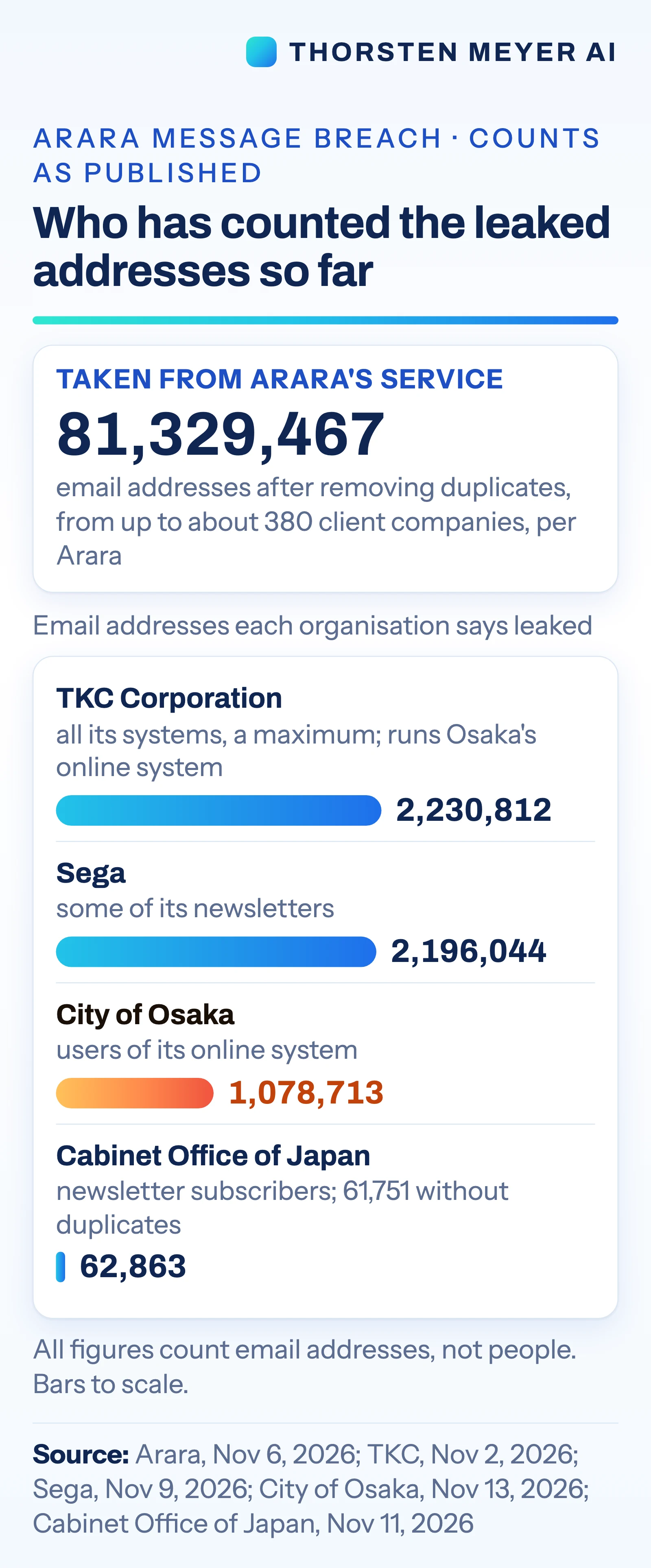
The City of Osaka said on November 13 that 1,078,713 email addresses used by its administrative online system were exposed after unauthorized access to Arara Message, an email service used by system provider TKC Corporation. Osaka and TKC say only addresses were affected; the number of people represented is unknown.
The City of Osaka confirmed on November 13 that 1,078,713 email addresses associated with its administrative online system were exposed after unauthorized access to Arara Message, an email service used by system provider TKC Corporation. Osaka and TKC say the exposed information was limited to email addresses; they say email contents and application data were not leaked.

Get the latest gadgets delivered free with Prime
- Fast, free delivery on millions of items
- Prime Video, Amazon Music and more included
- Member-only deals all year
The city says the affected addresses belong to people who received messages from info-osaka-online@city.osaka.lg.jp between July 1 and October 31, 2026. Those messages covered account registration and changes, logins, applications, application status updates and announcements. Osaka says a notice sent to all registered users on September 16 accounts for the high number of addresses identified.
According to the city, TKC matched information supplied by the external email service against the system’s records to determine which addresses were associated with Osaka users. TKC says Arara provided it with the leaked addresses on November 4. The city said it could not tell individuals whether a particular address was affected and that individual notices were still under consideration.
Arara said 81,329,467 email addresses were taken from its service in total, involving up to about 380 client companies. That figure counts addresses, not people. Osaka has not published a count of unique individuals affected, and the total across Arara’s clients should not be read as a count of people.
Why the Address Exposure Matters
An exposed email address can make a person easier to target with phishing messages that imitate a government service. Osaka warned users to be alert for fraudulent emails claiming to come from the city. The risk is heightened when a message refers to a real service or recent activity, although the source material does not establish that attackers have used the Osaka addresses for targeted scams.
The incident also shows how information can be exposed through a supplier that a public agency relies on to deliver routine messages. Osaka says it has asked TKC for a detailed account of the cause, the scope and steps to prevent a repeat, and will review its handling of personal information in external services and its coordination with vendors.
For users, the city’s guidance is practical: treat unexpected messages claiming to be from Osaka with suspicion, do not enter passwords or payment details through a link in an email, and check information through the city’s website. The available account does not say that passwords, payment details or application records were exposed in this incident.
Products Worth Considering

Amazon Kindle Paperwhite (2024), 16 GB, 7-inch Display, Black

Bose TV Speaker Compact Soundbar with Bluetooth and HDMI-ARC, Black

Amazon Kindle Scribe (16GB) with Premium Pen, Tungsten
As an affiliate, we earn on qualifying purchases.
How the Vendor Breach Reached Osaka
Osaka’s administrative online system is run by TKC Corporation, which used Arara Message to deliver emails. The city and TKC say they have found no break-in at the city’s own system or TKC’s systems; the unauthorized access occurred at the email service further along the supplier chain. This account comes from the city and the companies involved.
The reported timeline began on October 22, when Arara briefly stopped its service in response to a PHP vulnerability, according to TKC. Arara confirmed unauthorized access on October 28. On October 31, it shut down the service, and Osaka’s system could no longer send email from about 5:40 p.m. TKC told the city on November 2 that user addresses might have been exposed. TKC said on November 4 that only email addresses were affected and that it had received the data from Arara; Osaka published its final count and warning on November 13.
The affected period is broader than the outage: Osaka identifies addresses of recipients of messages sent from July through October. The city’s explanation is that a message went to every registered user on September 16, adding many addresses to the set it later matched against the information from TKC.
“Users’ email addresses, 1,078,713 records.”
— City of Osaka, November 13 notice, translated from Japanese
What Osaka Has Not Identified
The city has not disclosed how many unique people the 1,078,713 addresses represent. Arara’s larger total is also a count of addresses across its service, not a count of individuals. Osaka says it cannot confirm whether a specific address was affected, and it was still considering whether to contact affected users directly.
The source material does not identify the party that gained unauthorized access or explain how the access occurred in detail. Osaka and TKC say they have found no intrusion into their own systems, but the account does not include an independent technical review of that conclusion. It also does not establish whether exposed addresses have since been used in scams.
Osaka Reviews Vendor Safeguards
Osaka says it has requested a detailed report from TKC on the incident’s cause, scope and prevention measures. The city also says it will review how external services handle personal information, the safety measures applied to those services and how it coordinates with vendors. It has not said when those reviews or the requested report will be complete.
For now, users can check notices through the city’s website and avoid opening unexpected links that request credentials or payment information. The city’s public information does not provide a way to check an individual address against the exposed data.
Key Questions
How many Osaka email addresses were exposed?
Osaka confirmed 1,078,713 email addresses associated with its administrative online system. The city has not said how many unique people those addresses represent.
What information does Osaka say was leaked?
The city and TKC say the exposed information was limited to email addresses. They say email contents, My Number personal identification numbers and application data were not leaked.
Who may be affected?
Osaka identifies recipients of messages from info-osaka-online@city.osaka.lg.jp sent between July 1 and October 31, 2026. A notice sent to all registered users on September 16 contributed to the total. The city says it cannot confirm whether an individual address was affected.
What should people do about emails claiming to be from Osaka?
Treat unexpected messages with caution. Do not enter a password or payment information through an email link; check notices through the City of Osaka’s website instead.
Source: Thorsten Meyer AI