
🔍 Read the full analysis: Bangladesh Forms Garment Wage Board: The Story Beyond Dhaka on ThorstenMeyerAI.com

Get the latest gadgets delivered free with Prime
- Fast, free delivery on millions of items
- Prime Video, Amazon Music and more included
- Member-only deals all year
TL;DR
Bangladesh named a six-member board on Nov. 1 to recommend a new minimum wage for garment workers, as protests disrupted hundreds of factories. Workers are seeking 30,000 taka a month, compared with the current 12,500-taka floor; the board has not announced a meeting date or deadline.
Bangladesh appointed a six-member garment wage board on Nov. 1 as protests over pay disrupted hundreds of factories, putting a formal wage review under way while workers demand 30,000 taka a month. The current minimum is 12,500 taka, in force since December 2023; the board has not yet announced when it will meet or when it will propose a new rate.
The Ministry of Labour and Employment issued two notifications under the Bangladesh Labour Act, according to The Daily Star. The board includes a chair, an independent member, two employer representatives and two worker representatives. Its chair is Sheikh Ashfaqur Rahman. The independent member is University of Dhaka public administration professor Mosleh Uddin Ahmed. The employer members are Asif Ayub of the Bangladesh Employers’ Federation and BGMEA director ABM Shamsuddin. Worker representatives are Anwar Hossain of Bangladesh Jatiyatabadi Sramik Dal and Babul Akhter of the Bangladesh Garment and Industrial Workers Federation.
The appointment came amid a sharp escalation in protests. BGMEA, the garment manufacturers’ association, reported that 529 of 2,134 factories across five industrial regions were disrupted on Nov. 1, with 987,190 workers leaving their workplaces. The Daily Star reported the figures from the association’s situation report. They describe walkouts and disrupted operations, not factories closed by owners. Reuters reported that police used tear gas and water cannon after bricks were thrown; a police vehicle and a police box were set on fire, and Border Guard Bangladesh personnel were deployed.
Factories reopened on Monday, Nov. 2, Reuters reported, although owners remained concerned about more unrest. Labour and Employment Minister Ariful Haque Choudhury said the board followed discussions with worker representatives and industry leaders. He urged workers to return and warned that prolonged disruption could delay export shipments and payments from foreign buyers, according to Reuters and Al Jazeera.
Pay Disputes Reach Export Supply Chains
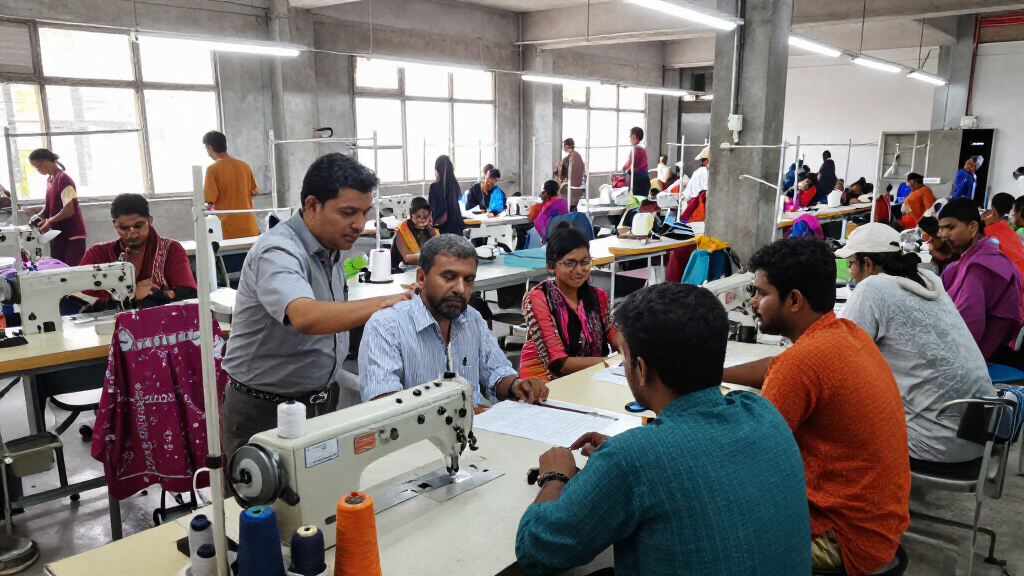
The board’s work affects workers’ ability to meet household costs and the reliability of an industry central to Bangladesh’s exports. Worker Mahin Hossain told Reuters that after rent, “there is very little left for food, our children’s education and other essential expenses.” The demand of 30,000 taka is more than double the existing minimum, but the final wage will depend on the board’s deliberations and the government’s next steps.
The disruption also carries consequences for factories and international buyers. Choudhury warned that extended stoppages could delay shipments and payments. Reuters reported that employers object to the demand, saying it has “no logical or mathematical basis,” while workers say the current floor does not cover living costs. Both sides and an economist quoted by Reuters pointed to pressure from buyers over the prices they pay suppliers. The immediate scale of walkouts shows why wage negotiations matter beyond the factory gates: production interruptions can reach sourcing schedules and export commitments.
Products Worth Considering

Samsung 34-Inch Odyssey G5 Ultra-Wide Curved Gaming Monitor

Apple Watch Series 12 GPS 46mm Smartwatch

Bose QuietComfort Headphones (2nd Gen), Wireless Over-Ear Noise-Cancelling Headphones, Hazelnut Taupe
As an affiliate, we earn on qualifying purchases.
A Review Due Under New Rules
The current minimum wage took effect in December 2023. The Daily Star reported that a 2026 amendment to the Labour Act shortened the interval between minimum-wage reviews from five years to three, making a review due sooner than under the earlier schedule. The board’s appointment therefore follows both a change in labour law and weeks of mounting street protests.
The Daily Star reported on Oct. 21 that workers had been blocking roads since mid-October. Protester Sharifa Begum said their demand was “either to lower the prices of essential commodities or raise our wages.” On Oct. 31, about 30 factories around Ashulia declared holidays, according to Ashulia Industrial Police superintendent Mohammad Mominul Islam Bhuiyan; police said clashes there injured several people, including officers. The following day, blockades and confrontations spread across Dhaka and Gazipur.
Pay negotiations also take place amid questions about who bears higher labour costs. An International Labour Organization survey from 2016 found that Bangladeshi suppliers said only 17 percent of their customers were willing to reflect minimum-wage increases in the prices they paid. Separately, research cited by the Centre for Policy Dialogue has warned that automation could put up to 1.22 million garment jobs at risk. These are relevant pressures, but neither sets the wage the new board will recommend.
“After paying rent, there is very little left for food, our children’s education and other essential expenses.”
— Mahin Hossain, garment worker, speaking to Reuters
Board Schedule and Wage Remain Open
The notifications name the board members but, according to The Daily Star, do not give a first meeting date, a deadline for recommending a wage or a date for announcing a revised structure. The eventual minimum, how quickly the board will reach a recommendation and whether workers will accept it are all unknown.
The reported factory figures also have limits: BGMEA’s count covers factories in five industrial regions and records workplaces where workers left or operations were disrupted. It should not be read as a count of factories shut by management or as a nationwide count of every garment workplace. Reuters reported factories had reopened on Nov. 2, but the extent and duration of any further walkouts were not established in the available reports.
Next Steps in Wage Deliberations
The board chair is to work with the other members to determine a minimum wage, according to the ministry notifications reported by The Daily Star. The next visible milestone will be the board’s first meeting and the publication of a timetable or proposed wage structure; neither had been announced in the reports available on Nov. 2.
In the meantime, factories have resumed operations, but Reuters said owners remained watchful for further unrest. Workers, employers and the government face the task of moving the dispute from street protests into negotiations. Whether the process produces a new wage acceptable to workers, and whether buyers contribute through higher supplier prices, remain unresolved.
Key Questions
What did Bangladesh announce?
The government named a six-member board on Nov. 1 to work on a new minimum wage for garment workers.
How much are workers demanding?
Workers are seeking 30,000 taka per month. The current minimum wage is 12,500 taka and has applied since December 2023.
How many factories were affected by the protests?
BGMEA reported that 529 of 2,134 factories in five industrial regions were disrupted on Nov. 1, with 987,190 workers leaving their workplaces. The figures are the association’s report.
When will the board meet or set a new wage?
No first meeting date or deadline was included in the notifications, according to The Daily Star. A recommendation date and the final wage remain unknown.
Were factories still closed on Nov. 2?
Reuters reported that factories reopened on Nov. 2, though owners remained concerned about further unrest. Reports did not establish whether additional walkouts would follow.
Source: ThorstenMeyerAI.com