📊 Full opportunity report: Assessing Movement In Young Athletes With Computer Vision on IdeaNavigator AI — validation score, market gap, and execution plan.

Get the latest gadgets delivered free with Prime
- Fast, free delivery on millions of items
- Prime Video, Amazon Music and more included
- Member-only deals all year
TL;DR
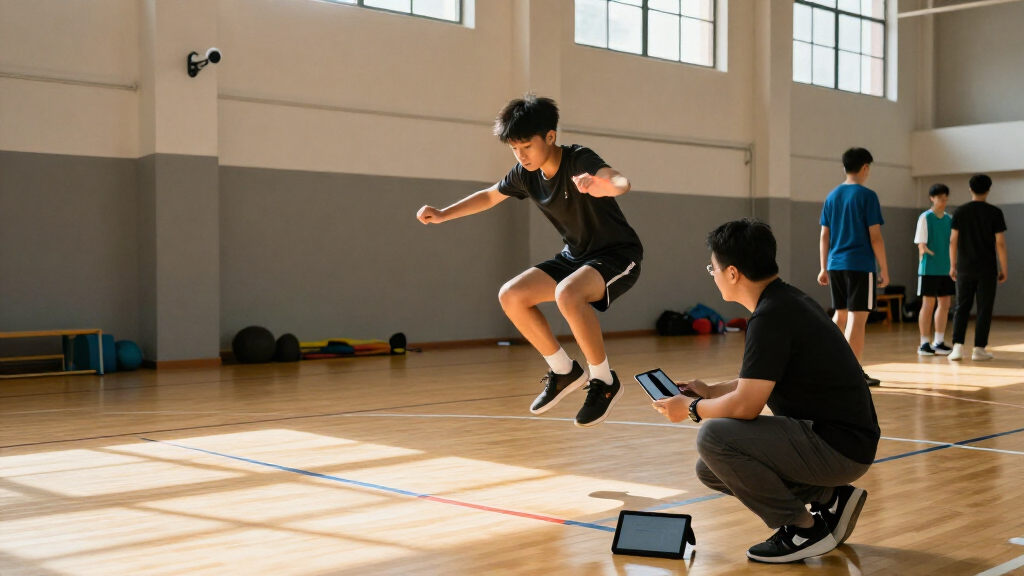
IdeaNavigator AI has outlined a proposed app that would use phone video and pose-estimation models to compare young athletes’ movements with reference mechanics. The concept has not been shown to be validated: its proposed first test is a baseball-hitting pilot in which certified coaches review grades for 100 children.
IdeaNavigator AI has proposed a phone-based app that would assess young athletes’ movements from video and compare them with reference mechanics, with a first test focused on baseball hitting. The concept is aimed at families whose children practice without a private coach, but no completed product, accuracy results or pilot findings are reported.
The proposed app would let a user film an athletic repetition, then overlay the child’s movement against reference mechanics derived from professional athletes. It would grade selected checkpoints, such as hip rotation, release angle and stride, and recommend one drill aimed at the largest identified gap. The proposal describes pose-estimation models running on phones as making this kind of feedback feasible, but provides no model name, test data or measured accuracy for children.
The suggested initial customer is a parent of a young athlete practicing without a private coach. The business model under consideration is a family subscription for each sport, with a separate coach tier for team use. IdeaNavigator AI’s proposed validation step is a baseball-hitting pilot involving 100 children, with certified coaches comparing the app’s grades with their own assessments. That is a proposed test, not a reported study or result.
The underlying concern in the concept is that young players may repeat swings, throws or running strides without timely feedback. IdeaNavigator AI says private coaching can cost $75 to $150 per session, presenting an automated tool as a more accessible supplement. The proposal does not provide a survey or other evidence quantifying how common missed form corrections are, or establish that the proposed app would reduce coaching costs or injury risk.
A Lower-Cost Option for Practice
If the app can grade movements reliably, it could give families a way to review practice between coaching sessions and help players identify a specific technique to work on. A single drill recommendation per session could make feedback easier to act on than a long list of corrections. For teams, a coach-facing tier could offer another way to review repetitions, though the proposal does not specify how team use would work.
The central question is whether a phone-based system can assess children’s movements accurately enough to provide useful feedback across different bodies, ages and skill levels. Professional reference mechanics are not automatically a measure of safety or ideal technique for every child. If grades are misleading, users could practice the wrong adjustment or mistake a numerical score for expert assessment. The idea’s commercial appeal and potential value therefore depend on validation, not just the availability of computer vision.
As an affiliate, we earn on qualifying purchases.
From Phone Video to Form Scores
The concept sits within youth sports training technology, applying pose estimation—the use of computer vision to identify body position and movement in images or video—to sports practice. Its proposed workflow is narrow: record a repetition, compare selected motion checkpoints with reference profiles, and offer one targeted drill. It does not describe a general-purpose coaching system or say that the app would replace an in-person coach.
IdeaNavigator AI frames the timing around pose-estimation models that can run on phones. However, the proposal supplies no named model, independent evaluation, benchmark results or product demonstration. It also does not identify which professional reference motions would be used or how they would be adapted for a child’s age and development. Those details matter because an app’s ability to detect a body position is different from evidence that its coaching advice is correct.
pose estimation sports training device
As an affiliate, we earn on qualifying purchases.
As an affiliate, we earn on qualifying purchases.
Accuracy, Safety and Evidence
No pilot results are available, and the proposal does not report whether an app has been built. It remains unclear how the system would define a passing grade, choose professional reference movements, or account for differences in age, body size, experience and individual technique. The suggested coach audit could compare app scores with professional judgments, but the plan does not specify the scoring method, how disagreements would be handled, or what result would count as successful validation.
The concept also makes no demonstrated finding that automated feedback prevents injuries, improves performance or substitutes for coaching. Its mention of injury risk is a rationale for exploring the idea, not evidence of an outcome. Details about privacy and handling video of children, subscription pricing, sport coverage and whether feedback would be reviewed by a coach are also not provided.
As an affiliate, we earn on qualifying purchases.
A 100-Child Coach Review
The next step proposed by IdeaNavigator AI is a baseball-hitting pilot with 100 children. Certified coaches would assess the app’s grades against their own evaluations. No schedule, participating coaches, recruitment details or results have been announced in the material provided.
Any reported findings would need to clarify how closely the grades matched coach assessments and whether performance varied by age or experience. Further information on safety guidance, video privacy and the limits of the app’s recommendations would help families judge whether it is suitable for independent practice. Until those details and test results exist, the idea should be treated as a product proposal awaiting validation, not an established training tool.
Source: IdeaNavigator AI
athlete movement analysis software
As an affiliate, we earn on qualifying purchases.
As an affiliate, we earn on qualifying purchases.
Key Questions
Is the youth sports app available now?
The information describes a proposed app concept. It does not report a launch, working product or public availability.
How would the app assess an athlete?
The proposed workflow uses phone video and pose estimation to compare a movement with reference mechanics, grade selected checkpoints and suggest one drill per session.
Has the app been shown to grade movements accurately?
No accuracy results are reported. The proposed validation plan is for certified coaches to review grades in a 100-child baseball-hitting pilot.
Would the app replace a private coach?
The concept is framed as a practice aid for families without a private coach, but there is no evidence that it can replace in-person coaching. Its recommendations and limitations have not yet been validated.
Could the app prevent sports injuries?
Injury risk is part of the rationale for the idea, but no evidence is provided that the proposed app would reduce injuries or improve safety.
Source: IdeaNavigator AI
Halloween Picks
halloween
As an affiliate, we earn on qualifying purchases.