TL;DR

Get the latest gadgets delivered free with Prime
- Fast, free delivery on millions of items
- Prime Video, Amazon Music and more included
- Member-only deals all year
AI SRE tools are gaining attention as AI-assisted coding increases deployment activity and companies report more on-call pages. Current products mainly help investigate incidents and triage alerts; autonomous production fixes remain a disputed and unproven goal, with accuracy and business impact still difficult to measure.
AI SRE tools are moving from conference demos into practical incident-response work, as companies contend with rising on-call pages linked to faster software deployment. A report by The Pragmatic Engineer, based on conversations with vendors and engineers, finds that today’s systems mainly help investigate incidents and triage alerts; letting an agent make and ship production changes without human review remains a contested prospect, not an established practice.
The report describes growing interest in tools from Rootly, incident.io and ResolveAI, alongside companies building internal systems. It also cites OpenAI’s Sevbot and an engineer at ING who said the bank was developing its own AI SRE. These examples indicate adoption activity, but the report does not provide usage figures or independently verified performance results for those systems.
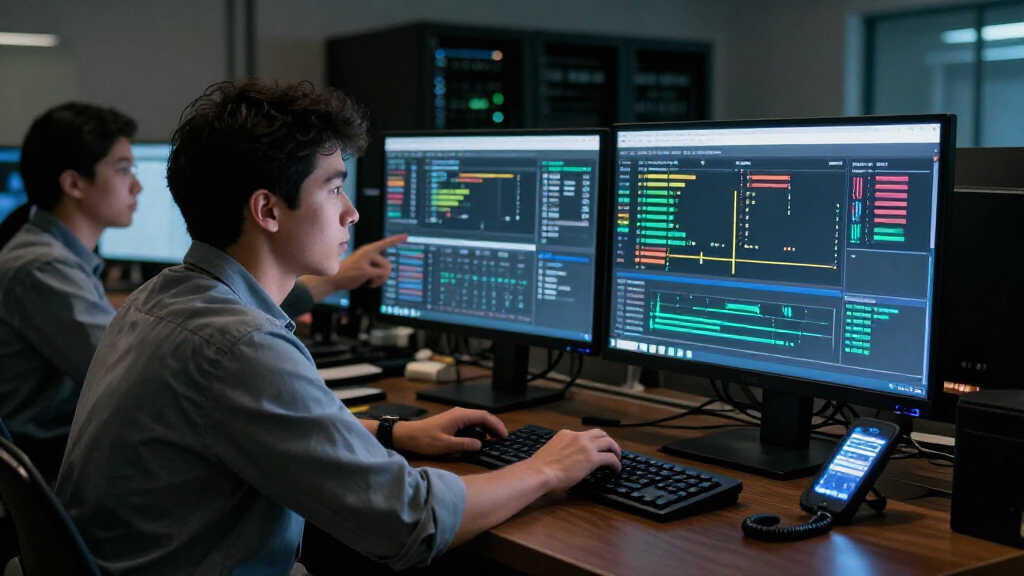
In practice, an AI incident tool can work across chat platforms such as Slack or Teams, gather information from operational systems, and suggest possible causes for an alert. Some systems use multiple agents to investigate different leads, with engineers steering the work. Vendors also describe adding a “context layer” — company-specific knowledge and memory — to make investigations more relevant. The report says that verifying hypotheses with separate agents or different models, and testing against past incidents, are among the approaches teams use to improve results.
The report points to data from Rootly showing that pages have risen compared with a year earlier, with outside-business-hours pages nearly doubled. It also says many companies have seen pull-request frequency double or more over the same period, attributing the increase in changes to AI coding tools. Those figures are presented in the report as industry observations, not as a controlled demonstration that AI coding alone caused more incidents. More deployments can create more opportunities for failure, but the failure risk of each change also matters.
On-Call Under More Deployment Pressure
If deployment activity rises while incident rates also increase, engineering teams may face more alerts and less time to investigate each one. AI-assisted triage could help by gathering evidence and narrowing possible causes faster, allowing human responders to focus on decisions and fixes. That could change the on-call role without removing it.
The tradeoff is that faster investigation is not the same as dependable remediation. A mistaken diagnosis or automated change could worsen an outage, so teams must decide which actions an agent may take, what requires approval, and how to measure whether the tool is helping. The report also raises a deskilling risk: if engineers rely on automated diagnosis, they may get less practice responding directly. Incident-response exercises are one way to keep those skills current.
Products Worth Considering

LG 34GX90SA-W 34-inch Ultragear WQHD OLED Curved Gaming Monitor

Logitech MX Master 4 for Mac, Ergonomic Bluetooth Mouse with Haptic Feedback, Ultra-Fast Scrolling, USB-C Charging, for MacOS, iPadOS, Windo

Jackery HomePower 3600 Plus Portable Power Station, 3584Wh, 3600W
As an affiliate, we earn on qualifying purchases.
From Demo to Incident Triage
At Microsoft’s BUILD conference in May 2025, a stage demonstration of Azure SRE Agent showed an alert being investigated and a fix shipped without waking a human on-call engineer. The report’s author questioned whether teams would permit that level of unsupervised control in production. The report says the topic received little attention after the event, before renewed interest surfaced among vendors and engineering teams.
“AI SRE” has become a common label for AI-supported on-call tools, although the report says vendors and practitioners find it imperfect: site reliability engineering covers much more than responding to alerts. Other labels, such as automated incident-investigation agents, have not caught on as widely. The author also discloses being an investor in incident.io and says the companies discussed did not pay for inclusion.
““The fully autonomous agents demoed on conference stages are still not a reality.””
— The Pragmatic Engineer report
Accuracy and Autonomy Remain Open
The report does not establish how often current AI SRE tools correctly identify root causes, reduce incident duration or prevent repeat failures. It says accuracy is difficult to measure and depends on a company’s systems and engineering practices; a tool’s success on one team may not transfer to another. Backtesting and evaluation can help, but the report does not offer a common industry benchmark or comparative results.
It is also unclear how widespread production use is, how much of the reported rise in pages comes from AI-driven development, and whether the tools reduce the total burden on responders. Vendor statements and individual company projects show interest, not proof of broad effectiveness. The report describes fully autonomous fixes as not yet a reality, while the safety and governance requirements for any future deployment remain unsettled.
Testing Tools Against Real Incidents
The next test for these systems is whether engineering teams can show reliable gains in their own environments: faster investigation, fewer unnecessary pages, or improved incident outcomes without unsafe changes. Teams are likely to keep agents in supervised roles while they evaluate performance against past incidents and set boundaries for actions in production.
For on-call engineers, the near-term shift is more likely to be AI-supported triage than the disappearance of the pager. The report anticipates that engineers may eventually receive fewer low-value pages, while the incidents that reach them could still be difficult. How quickly that balance changes — and whether the tools deliver measurable benefits — remains to be seen.
Key Questions
What does AI SRE mean?
AI SRE is a loose industry term for AI-supported reliability and incident-response tools. The systems described in the report mainly investigate alerts, gather operational context and help engineers triage incidents.
Can AI SRE agents fix outages without a human?
The report says fully autonomous production fixes shown in conference demonstrations are not yet routine reality. Whether an agent should make code or production changes without human approval remains debated.
Why are companies looking at these tools now?
The report links interest to increased software deployment activity and rising on-call pages. More changes can mean more chances for incidents, although the report does not show that AI coding tools alone caused the increase.
Do AI SRE tools work?
Some teams and vendors are building and using systems for investigation and triage, but the report provides no standardized benchmark proving how much they improve incident outcomes. Results and accuracy may differ by company.
Could AI SRE reduce engineers’ skills?
The report identifies a possible deskilling risk if engineers get less hands-on incident-response experience. It points to incident simulations as one way teams could maintain those skills.
Source: newsletter.pragmaticengineer.com