
TL;DR

Get the latest gadgets delivered free — and shop member deals
- Fast, free delivery on millions of items
- Access to Prime Big Deal Days deals on October 6–7
- Prime Video, Amazon Music and more included
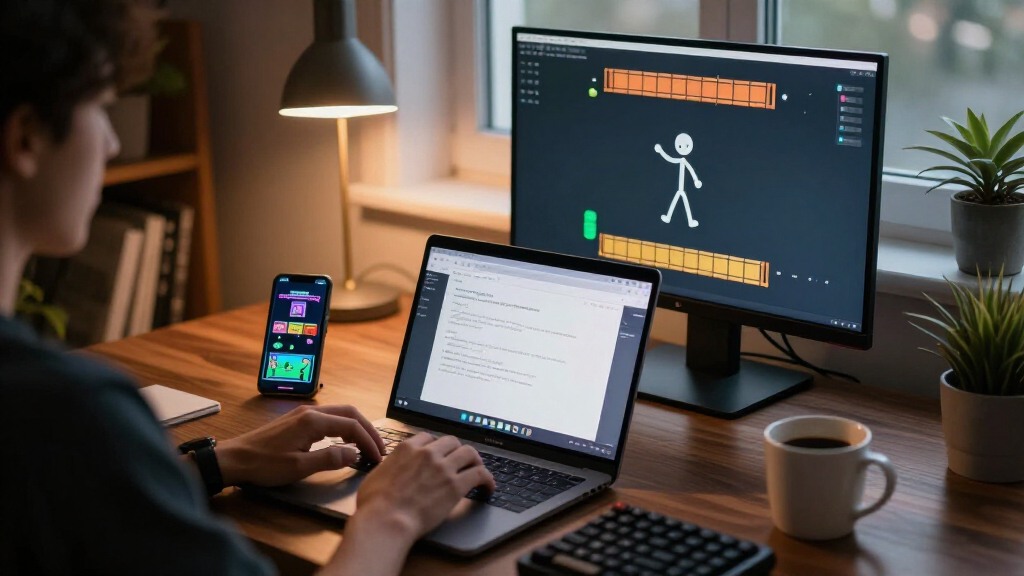
Developer Thorsten Meyer gave an AI model one open-ended prompt to build its own stickman game. Within a day, Claude Opus 5.5 had produced BEATDOWN, a rhythm-based stickman brawler, plus an eight-game ‘Stickman Arcade’ and a stick-figure animator — roughly 24,500 lines of dependency-free JavaScript, playable free in browsers and on phones.
A single open-ended prompt — “make your own stickman game” — produced a playable rhythm brawler in under an hour and, by the end of the same day, an entire free browser arcade of nine games and a stick-figure animator, according to developer Thorsten Meyer. The headline game, BEATDOWN, is a beat-timed stickman fighter that now anchors what Meyer calls the Stickman Arcade, playable in any browser and on phones at no cost.
BEATDOWN’s central mechanic is timing rather than button speed. Every attack is judged against a soundtrack generated live in the browser: on-beat hits deal 1.5× damage, and landing four consecutive on-beat hits triggers a bonus “FOUR ON THE FLOOR” shockwave. Enemies telegraph attacks one beat before they strike, letting players counter with a well-timed guard. Rhythm is described as a bonus, not a requirement — off-beat play can still clear waves, it simply deals less damage and sounds thinner.
The roster spans twelve original fighters, each a musical archetype — Drummer, Conductor, DJ, Bassist, Punk, Soprano, MC, Jazz Cat, Shredder, Virtuoso, Beatboxer and Producer. Each carries a passive ability, two specials, a cooldown skill and an ultimate called the DROP, for sixty abilities in total. Performance is tracked through a “Groove” rank that climbs from MUTE to FEVER, adding musical layers as play improves.
The wider arcade adds eight games on a shared engine: Stickman Dismount, Pose-Off, Beat Runner, Noir Heist, Band Defense, Stickman Boxing, Head Soccer and Beat Skate — several of which also use rhythm mechanics, such as Beat Skate’s double points for landing tricks on the beat. A tenth card, Stickman Animator, lets users pose stick figures joint-by-joint, add in-between frames, and export looping GIFs or sprite sheets. All nine art styles — from CHALK and RISO to PIXEL and NOIR — redraw the entire game, including menus, hit effects and lettering.
According to Meyer, the entire arcade contains no image or audio files: every visual, bass line and sound effect is generated by code at runtime. The codebase is about 24,500 lines of plain JavaScript with zero dependencies, including the animator’s own GIF encoder. The games collect no data; progress is stored locally in the player’s browser.
One AI Prompt, One Stickman Game, And An Arcade By Evening
Developer Thorsten Meyer gave Claude Opus 5.5 a deliberately loose brief — “make your own stickman game” — with no clone and no tutorial project. By the end of the same day: BEATDOWN, a rhythm-based stickman brawler, an eight-game Stickman Arcade, and a stick-figure animator. All free, in any browser.
How the day unfolded
According to Meyer’s account, the AI model returned BEATDOWN first, then wrote a shared game kit and engine guide before building out the rest of the arcade.
The Loose Brief
One open-ended prompt: build its own take on a genre everyone knows. No clone, no tutorial project.
BEATDOWN First
Playable in under an hour; live on Meyer’s site in under two, he says.
Steering, Not Coding
Meyer answered the model’s questions, sent screenshots of games he liked, and kept asking for more.
Full Arcade
A shared engine, eight more games, seven venues, multiple modes — plus the Stickman Animator.
BEATDOWN: timing over button speed
Every attack is judged against a soundtrack generated live in the browser. Rhythm is a bonus, not a requirement — off-beat play still clears waves, it just deals less damage and sounds thinner.
On-Beat Damage
Hits landing on the beat deal 1.5× damage. Enemies telegraph attacks one beat ahead, inviting well-timed counters with a guard.
Four on the Floor
Four consecutive on-beat hits trigger a bonus “FOUR ON THE FLOOR” shockwave that clears the room with style.
Groove Rank
Performance climbs a “Groove” ladder that adds musical layers as play improves — the soundtrack literally rewards you.
Twelve fighters, sixty abilities
Each fighter is a musical archetype carrying a passive ability, two specials, a cooldown skill and an ultimate called the DROP.
| Fighter | Archetype | Kit | Rhythm-Linked |
|---|---|---|---|
| Drummer | Percussion | Passive · 2 specials · skill · DROP | ✓ YES |
| Conductor | Classical lead | Passive · 2 specials · skill · DROP | ✓ YES |
| DJ | Turntable | Passive · 2 specials · skill · DROP | ✓ YES |
| Bassist | Low-end grooves | Passive · 2 specials · skill · DROP | ~ PARTIAL |
| Punk / Soprano / MC | Vocalists | Passive · 2 specials · skill · DROP | ~ PARTIAL |
| Jazz Cat · Shredder · Virtuoso | Instrumentalists | Passive · 2 specials · skill · DROP | ✓ YES |
| Beatboxer · Producer | Studio archetypes | Passive · 2 specials · skill · DROP | ✓ YES |
Nine more cards on a shared engine
Eight additional games plus the Stickman Animator, all built on the AI-written shared game kit. Several lean on the same rhythm DNA — Beat Skate doubles your points for landing tricks on the beat.
♩ = rhythm mechanics · Animator: pose figures joint-by-joint, add in-between frames, export looping GIFs or sprite sheets
Direct from the developer
“Everything was built by Claude (Opus 5.5), the AI model, in one day. I wrote no code.”
— Thorsten Meyer“There are no image files and no audio files. Every fighter, venue, drum, bass line and sound effect is generated by code while you play.”
— Thorsten Meyer“BEATDOWN was playable in under an hour and live on my site in under two.”
— Thorsten Meyer“I gave an AI model a deliberately loose brief: make your own stickman game. No clone, no tutorial project, just its own take on a genre everyone knows.”
— Thorsten MeyerClaims resting on the developer’s account
The one-day timeline, the “no code by Meyer” claim, and the 24,500-line figure are all self-reported and not independently verified. Prompt iteration, screenshots and feedback are a form of design input even when no code is hand-written.
- The source post was written with AI assistance and carries affiliate links — promotional framing warrants caution.
- “Finished, arcade-ready” quality can only be confirmed by playing.
- Cross-browser and device consistency is unverified until tried.
What readers want to know
Q1What is BEATDOWN?
A stick-figure brawler built entirely by an AI model, in which every attack is judged against a procedurally generated soundtrack. On-beat hits deal 1.5× damage, and playing well adds musical layers and raises your Groove rank from MUTE to FEVER.
Q2How much did the AI actually build?
According to Meyer, everything: all nine games, the animator and roughly 24,500 lines of dependency-free JavaScript were written by Claude Opus 5.5 in one day. He says he wrote no code and only steered the model. These claims have not been independently verified.
Q3Is the arcade free, and what do I need to play it?
Yes — the games run free in any modern browser, including on phones with touch controls. No downloads, no accounts, no data collection; progress is stored locally in your browser.
Q4What are the nine art styles?
CHALK, RISO, PIXEL, NOIR and more — each style redraws the entire game, including menus, hit effects and lettering, all generated by code at runtime.
A One-Day Benchmark for AI Code Generation
The project is a concrete data point in the debate over how much software an AI model can build unsupervised. Meyer states he wrote no code himself: he steered the model by answering its questions, sending screenshots of games he liked, and repeatedly asking for more. BEATDOWN was playable in under an hour and live on his site in under two, he says.
For readers, the arcade is a free, browser-playable demonstration of that capability — a multi-game product with original characters, nine rendering styles, procedural music and a built-in animation tool, assembled in a working day. For developers, it illustrates a shift in role from writing code to directing an AI collaborator, at least on a self-contained project with modest performance requirements.
From One Brawler to Ten Cards in a Day
Meyer says he gave the AI model, Claude Opus 5.5 by Anthropic, a deliberately loose brief: no clone of an existing game and no tutorial project, just its own take on a genre everyone knows. The model returned BEATDOWN first.
He then kept extending the request. According to his account, the AI wrote a shared game kit and an engine guide for the arcade, then built out the additional games — each with its own rules across seven venues (Rooftop, Subway, Strobe Rave, Record Store, Festival Mud, Cruise Ship and a final stage) and multiple modes, including a TOUR campaign with bosses, a timed BOSS RUSH, a two-minute BLITZ, a shared daily seeded run, a practice SOUNDCHECK mode, and local VERSUS for two players on one keyboard or two gamepads.
The post carrying this account was itself created with the assistance of AI, Meyer notes, and his site includes affiliate links.
“I gave an AI model a deliberately loose brief: make your own stickman game. No clone, no tutorial project, just its own take on a genre everyone knows.”
— Thorsten Meyer, developer
Claims Resting on the Developer’s Account
The one-day build timeline, the claim that Meyer wrote no code, and the 24,500-line figure are all attributed to Meyer himself and have not been independently verified. The AI’s contribution cannot be cleanly separated from his steering decisions — prompt iteration, screenshots and feedback are a form of design input even when no code is hand-written.
The source post is also promotional in nature: it was written with AI assistance, sits on Meyer’s own site, and carries affiliate advertising, which is a reason to treat framing such as the finished, arcade-ready quality of the games with some caution until tried. Whether the games run consistently across browsers and devices is something readers can only confirm by playing them.
Where the Arcade Goes From Here
Readers can try the Stickman Arcade now — Meyer says all ten cards, including BEATDOWN and the animator, run free in any browser and on phones, with no accounts or downloads required.
For the project itself, the natural open questions are whether Meyer continues expanding it with new games, fighters or art styles, and whether the “steer, don’t code” workflow he describes scales to larger, longer-running projects. His account may also prompt similar experiments from other developers testing what current AI models can build from a single open-ended prompt in a single working day.
Key Questions
What is BEATDOWN?
A stick-figure brawler built entirely by an AI model, in which every attack is judged against a procedurally generated soundtrack. On-beat hits deal 1.5× damage, and playing well adds musical layers and raises your Groove rank from MUTE to FEVER.
How much did the AI actually build?
According to developer Thorsten Meyer, everything: all nine games, the animator and roughly 24,500 lines of dependency-free JavaScript were written by Claude Opus 5.5 in one day. Meyer says he wrote no code and only steered the model with questions, screenshots and follow-up requests. These claims have not been independently verified.
Is the arcade free, and what do I need to play it?
Yes — the games are free and run in any modern browser, including on phones with touch controls. There are no downloads, no accounts, and no data collection; progress is stored locally in your browser.
What are the nine art styles?
CHALK, RISO, LASER, SHEET, ZINE, PIXEL, BRUSH, BLUEPRINT and NOIR. Switching styles redraws everything — fighters, venues, hit effects, lettering and menus — and the chosen style carries across the whole arcade.
Can two people play together?
Yes. BEATDOWN’s VERSUS mode supports two players on one keyboard or two gamepads in best-of-three, 60-second rounds. Head Soccer also supports two players, and playing alone pits you against a computer opponent that attacks on the beat.
Source: Thorsten Meyer AI
Fall Picks
fall essentials
As an affiliate, we earn on qualifying purchases.