
Choosing the right Wi-Fi mesh systems can feel overwhelming given the rapid shift to Wi-Fi 7. My top overall pick is the TP-Link Deco BE63 Pro for its balance of speed and future-proofing, while the Amazon eero 7 stands out for effortless setup. The main tradeoff today is between raw bandwidth in new standards and the stability of mature Wi-Fi 6 networks. I break down which models offer the best value for your specific home size and internet plan.

Get the latest gadgets delivered free with Prime
- Fast, free delivery on millions of items
- Prime Video, Amazon Music and more included
- Member-only deals all year
Complete the kit


Key Takeaways
- Wi-Fi 7 adoption has made the TP-Link Deco BE63 Pro the new baseline for high-performance home networking.
- Tri-band configurations are no longer just for luxury homes; they are essential for dense device environments to prevent backhaul congestion.
- The Amazon eero 7 offers the most streamlined ecosystem integration, though it lacks the advanced customization of TP-Link and NETGEAR.
- Dual-band Wi-Fi 7 options like the Deco BE25 provide a cost-effective entry point without sacrificing the new MLO benefits.
- Legacy Wi-Fi 5 systems remain viable only for basic streaming and browsing, not for multi-gigabit internet plans.
| TP-Link Deco 7 Pro BE67 Tri-Band Wi-Fi 7 Mesh System, 3-Pack |  | Best Premium Performance | Wi-Fi Standard: Wi-Fi 7 (802.11be) | Total Bandwidth: Up to 14 Gbps | Coverage: Up to 8,100 sq. ft. | VIEW LATEST PRICE | See Our Full Breakdown |
| TP-Link Deco BE63 Pro Tri-Band Wi-Fi 7 Mesh System, 2-Pack |  | Best Mid-Range Wi-Fi 7 | Wi-Fi Standard: Wi-Fi 7 (802.11be) | Combined Speed: Up to 10,000 Mbps | Coverage: Up to 5,800 sq. ft. | VIEW LATEST PRICE | See Our Full Breakdown |
| TP-Link Deco XE75 AXE5400 Tri-Band Wi-Fi 6E Mesh System, 3-Pack |  | Best for Current Gen Devices | Wi-Fi Standard: Wi-Fi 6E (802.11ax) | Combined Speed: Up to 5,400 Mbps | Coverage: Up to 7,200 sq. ft. | VIEW LATEST PRICE | See Our Full Breakdown |
| Amazon eero 7 Dual-Band Wi-Fi 7 Mesh Router, 3-Pack |  | Best for Smart Home Integration | Wi-Fi Standard: Wi-Fi 7 (802.11be) | Bands: Dual-band (2.4 GHz, 5 GHz) | Coverage: Up to 6,000 sq. ft. | VIEW LATEST PRICE | See Our Full Breakdown |
| TP-Link Deco X55 AX3000 Wi-Fi 6 Mesh System, 3-Pack |  | Best Value for Large Homes | Wi-Fi Standard: Wi-Fi 6 (802.11ax) | Combined Speed: AX3000 (up to 3,000 Mbps) | Coverage: Up to 6,500 sq. ft. | VIEW LATEST PRICE | See Our Full Breakdown |
| TP-Link Deco S4 AC1900 Dual-Band Wi-Fi 5 Mesh System, 3-Pack |  | Best Budget Entry-Level Mesh | Wi-Fi Standard: Wi-Fi 5 (802.11ac) | Coverage: Up to 5,500 sq. ft. | Device Capacity: Up to 100 devices | VIEW LATEST PRICE | See Our Full Breakdown |
| Amazon eero Pro 7 Tri-Band Wi-Fi 7 Mesh Router, 3-Pack |  | Best for Smart Home Integration | Wi-Fi Standard: Wi-Fi 7 (802.11be) | Coverage: Up to 6,000 sq. ft. | Ports: Two 5 GbE ports per router | VIEW LATEST PRICE | See Our Full Breakdown |
| TP-Link Deco 7 Pro BE10000 Tri-Band Wi-Fi 7 Whole-Home Mesh System, 3-Pack |  | Best High-Performance Value | Wi-Fi Standard: Wi-Fi 7 (802.11be) | Coverage: Up to 7,600 sq. ft. | Ports: Four 2.5 Gbps ports + USB 3.0 | VIEW LATEST PRICE | See Our Full Breakdown |
| NETGEAR Orbi 970 Series WiFi 7 Mesh System, 3-Pack | 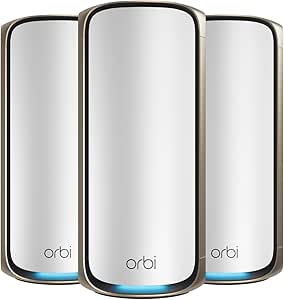 | Best Premium Performance | Wi-Fi Standard: Wi-Fi 7 (802.11be) | Coverage: Up to 10,000 sq. ft. | Ports: 10 Gbps WAN/LAN + 2.5 Gbps LAN | VIEW LATEST PRICE | See Our Full Breakdown |
| TP-Link Deco BE25 Wi-Fi 7 Dual-Band Mesh System, BE5000, 2-Pack |  | Best Compact Wi-Fi 7 Starter | Wi-Fi Standard: Wi-Fi 7 (802.11be) | Coverage: Up to 4,600 sq. ft. | Ports: Two 2.5 Gbps ports per unit | VIEW LATEST PRICE | See Our Full Breakdown |
| Amazon eero 6+ Wi-Fi 6 Mesh System, 3-Pack |  | Best for Alexa-Centric Homes | Wi-Fi Standard: Wi-Fi 6 (802.11ax) | Coverage: Up to 4,500 sq. ft. | Max Internet Speed: Up to 1 Gbps | VIEW LATEST PRICE | See Our Full Breakdown |
| NETGEAR Orbi 770 Series WiFi 7 Tri-Band Mesh System, 3-Pack |  | Best Premium Performance | Wi-Fi Generation: Wi-Fi 7 | Frequency Band: Tri-band | Max Speed: Up to 11 Gbps | VIEW LATEST PRICE | See Our Full Breakdown |
| NETGEAR Orbi 370 Series WiFi 7 Mesh System, 3-Pack |  | Best Balanced Wi-Fi 7 Upgrade | Wi-Fi Generation: Wi-Fi 7 | Frequency Band: Dual-band | Max Speed: Up to 5 Gbps | VIEW LATEST PRICE | See Our Full Breakdown |
| TP-Link Deco X15 Wi-Fi 6 Mesh System, AX1500, 3-Pack |  | Best Budget Wi-Fi 6 Value | Wi-Fi Standard: Wi-Fi 6 (AX1500) | Coverage: Up to 5,600 sq. ft. | Max Speed: Up to 1.5 Gbps | VIEW LATEST PRICE | See Our Full Breakdown |
| TP-Link Deco 7 BE5000 Dual-Band Wi-Fi 7 Mesh System |  | Best High-Capacity Wi-Fi 7 | Wi-Fi Standard: Wi-Fi 7 (BE5000) | Frequency Band: Dual-band | Max Speed: Up to 5 Gbps | VIEW LATEST PRICE | See Our Full Breakdown |
| Wi-Fi mesh system | Coverage | Wi-Fi Standard | Device Capacity | Ports |
|---|---|---|---|---|
| TP-Link Deco 7 Pro BE67 Tri-Ba | Up to 8,100 sq. ft. | Wi-Fi 7 (802.11be) | Up to 200 devices | 1x 10 Gbps, 1x 2.5 Gbps, 1x 1 Gbps, USB 3.0 per unit |
| TP-Link Deco BE63 Pro Tri-Band | Up to 5,800 sq. ft. | Wi-Fi 7 (802.11be) | Over 200 devices | 4x 2.5 Gbps WAN/LAN, USB 3.0 per unit |
| TP-Link Deco XE75 AXE5400 Tri- | Up to 7,200 sq. ft. | Wi-Fi 6E (802.11ax) | Up to 200 devices | 3x Gigabit Ethernet per unit |
| Amazon eero 7 Dual-Band Wi-Fi | Up to 6,000 sq. ft. | Wi-Fi 7 (802.11be) | — | 2x 2.5 GbE auto-sensing ports per router |
| TP-Link Deco X55 AX3000 Wi-Fi | Up to 6,500 sq. ft. | Wi-Fi 6 (802.11ax) | Up to 150 devices | 3x Gigabit Ethernet per unit |
| TP-Link Deco S4 AC1900 Dual-Ba | Up to 5,500 sq. ft. | Wi-Fi 5 (802.11ac) | Up to 100 devices | 2 Gigabit Ethernet ports per unit |
| Amazon eero Pro 7 Tri-Band Wi- | Up to 6,000 sq. ft. | Wi-Fi 7 (802.11be) | 600+ devices | Two 5 GbE ports per router |
| TP-Link Deco 7 Pro BE10000 Tri | Up to 7,600 sq. ft. | Wi-Fi 7 (802.11be) | 200+ devices | Four 2.5 Gbps ports + USB 3.0 |
| NETGEAR Orbi 970 Series WiFi 7 | Up to 10,000 sq. ft. | Wi-Fi 7 (802.11be) | 200 devices | 10 Gbps WAN/LAN + 2.5 Gbps LAN |
| TP-Link Deco BE25 Wi-Fi 7 Dual | Up to 4,600 sq. ft. | Wi-Fi 7 (802.11be) | — | Two 2.5 Gbps ports per unit |
| Amazon eero 6+ Wi-Fi 6 Mesh Sy | Up to 4,500 sq. ft. | Wi-Fi 6 (802.11ax) | — | — |
| NETGEAR Orbi 770 Series WiFi 7 | Up to 8,000 sq. ft. | — | Up to 100 devices | — |
| NETGEAR Orbi 370 Series WiFi 7 | Up to 6,000 sq. ft. | — | Up to 70 devices | — |
| TP-Link Deco X15 Wi-Fi 6 Mesh | Up to 5,600 sq. ft. | Wi-Fi 6 (AX1500) | Up to 120 devices | — |
| TP-Link Deco 7 BE5000 Dual-Ban | Up to 6,600 sq. ft. | Wi-Fi 7 (BE5000) | Over 150 devices | — |
More Details on Our Top Picks
TP-Link Deco 7 Pro BE67 Tri-Band Wi-Fi 7 Mesh System, 3-Pack
This system stands out for its raw throughput capacity, making it the strongest option for households with heavy 4K streaming or large file transfers. With 10 Gbps ports and Multi-Link Operation, it handles future-proof connectivity better than the Deco BE63 Pro, which lacks the higher-speed WAN port. However, this power comes with a higher barrier to entry; you need compatible Wi-Fi 7 client devices to truly utilize the 14 Gbps bandwidth, unlike the Deco XE75 which works well with current Wi-Fi 6E hardware. It is overkill for average users but ideal for tech enthusiasts who want to maximize their gigabit-plus internet plans.Pros:- Includes 10 Gbps WAN/LAN ports for future-proof wired connectivity
- Tri-band Wi-Fi 7 with Multi-Link Operation for reduced latency
- Covers up to 8,100 sq. ft. with three units
- Supports up to 200 devices simultaneously
Cons:- Requires Wi-Fi 7 compatible clients to access top-tier speeds
- Significantly more expensive than Wi-Fi 6 or 6E alternatives
Best for: Power users with gigabit-plus internet plans and multiple Wi-Fi 7 capable devices who need maximum bandwidth for 4K/8K streaming and gaming.
Not ideal for: Budget-conscious buyers or those with standard internet plans under 1 Gbps, as they won’t utilize the extreme speed capabilities.
- Wi-Fi Standard:Wi-Fi 7 (802.11be)
- Total Bandwidth:Up to 14 Gbps
- Coverage:Up to 8,100 sq. ft.
- Ports:1x 10 Gbps, 1x 2.5 Gbps, 1x 1 Gbps, USB 3.0 per unit
- Device Capacity:Up to 200 devices
- Key Feature:Multi-Link Operation (MLO)
Our verdict“Choose this if you have the hardware to exploit Wi-Fi 7 speeds and need the absolute highest performance available.”
TP-Link Deco BE63 Pro Tri-Band Wi-Fi 7 Mesh System, 2-Pack
This model offers a practical entry into Wi-Fi 7 without the premium price tag of the Deco BE67. While the BE67 focuses on extreme 10 Gbps ports, the BE63 Pro balances speed with 2.5 Gbps connectivity, which is sufficient for most current high-end internet plans. It covers 5,800 sq. ft., which is less than the three-unit XE75, so larger homes may need to add a unit. Compared to the eero 7, it provides better wired options with four ports per unit, but it requires a separate modem, adding to the initial setup complexity.Pros:- Four 2.5 Gbps ports per unit for extensive wired backhaul options
- Tri-band Wi-Fi 7 support for improved congestion management
- AI roaming helps maintain stable connections between nodes
- Includes HomeShield security suite for network protection
Cons:- Smaller coverage area (5,800 sq. ft.) compared to 3-pack rivals
- Requires a separate modem for most ISPs
Best for: Homeowners with 2.5 Gbps internet plans who want Wi-Fi 7 features and robust wired connectivity without paying for 10 Gbps ports.
Not ideal for: Users with homes larger than 6,000 sq. ft. or those who prefer an all-in-one gateway solution without a separate modem.
- Wi-Fi Standard:Wi-Fi 7 (802.11be)
- Combined Speed:Up to 10,000 Mbps
- Coverage:Up to 5,800 sq. ft.
- Ports:4x 2.5 Gbps WAN/LAN, USB 3.0 per unit
- Device Capacity:Over 200 devices
- Security:TP-Link HomeShield
Our verdict“A balanced choice for medium-sized homes that need Wi-Fi 7 readiness and strong wired connectivity.”
TP-Link Deco XE75 AXE5400 Tri-Band Wi-Fi 6E Mesh System, 3-Pack
The Deco XE75 hits a sweet spot for performance and price by leveraging Wi-Fi 6E rather than the newer Wi-Fi 7. Its dedicated 6 GHz band acts as a high-speed backhaul, ensuring that traffic between nodes doesn’t choke the main network, a feature the dual-band eero 7 lacks. While the Deco BE63 Pro offers future-proofing, the XE75 delivers immediate benefits for existing Wi-Fi 6E laptops and phones. It covers 7,200 sq. ft., making it more suitable for larger layouts than the two-unit BE63, though it lacks the multi-gigabit ports of the premium Wi-Fi 7 models.Pros:- Dedicated 6 GHz band serves as a fast wireless backhaul
- Covers up to 7,200 sq. ft. with three units
- Supports up to 200 devices with low latency
- Integrates with Alexa for voice-controlled guest Wi-Fi
Cons:- Only 1 Gbps Ethernet ports limit wired backhaul speed
- Requires Wi-Fi 6E devices to benefit from the 6 GHz band
Best for: Users with current-generation devices (Wi-Fi 6E) who want significant coverage and reduced latency without paying for Wi-Fi 7.
Not ideal for: Tech enthusiasts looking for the absolute latest standard or users with no Wi-Fi 6E devices to utilize the 6 GHz band.
- Wi-Fi Standard:Wi-Fi 6E (802.11ax)
- Combined Speed:Up to 5,400 Mbps
- Coverage:Up to 7,200 sq. ft.
- Ports:3x Gigabit Ethernet per unit
- Device Capacity:Up to 200 devices
- Voice Control:Alexa compatible
Our verdict“The most logical upgrade for most homes today, balancing wide coverage with next-gen speed features.”
Amazon eero 7 Dual-Band Wi-Fi 7 Mesh Router, 3-Pack
This system prioritizes ecosystem integration over raw wireless horsepower. Unlike the tri-band TP-Link options, the eero 7 is dual-band, meaning it sacrifices some theoretical throughput for simplicity and smart home connectivity. It includes built-in Thread, Zigbee, and Matter hubs, allowing it to act as a controller for smart lights and locks without a separate bridge. While the Deco X55 offers more ports, the eero 7’s auto-sensing 2.5 GbE ports and seamless app experience make it ideal for users already invested in Alexa. It supports internet plans up to 2.5 Gbps, which is plenty for most, but lacks the multi-gigabit headroom of the BE67.Pros:- Built-in Thread, Zigbee, and Matter hub for smart home devices
- Two auto-sensing 2.5 GbE ports per router
- Seamless integration with Alexa and previous eero generations
- Simple setup and management via the eero app
Cons:- Dual-band design limits peak wireless speed compared to tri-band rivals
- Advanced security features require an eero Plus subscription
Best for: Smart home enthusiasts using Alexa and Matter devices who want a simple, hub-free networking solution.
Not ideal for: Network power users who require complex routing controls, multiple Ethernet ports, or maximum wireless throughput.
- Wi-Fi Standard:Wi-Fi 7 (802.11be)
- Bands:Dual-band (2.4 GHz, 5 GHz)
- Coverage:Up to 6,000 sq. ft.
- Ports:2x 2.5 GbE auto-sensing ports per router
- Smart Home:Thread, Zigbee, Matter, Alexa
- Max Internet Speed:Up to 2.5 Gbps
Our verdict“Choose this for its smart home hub capabilities and ease of use, not for maximum wireless speed.”
TP-Link Deco X55 AX3000 Wi-Fi 6 Mesh System, 3-Pack
For buyers who don’t need Wi-Fi 7 or 6E, the Deco X55 provides reliable Wi-Fi 6 coverage at a fraction of the cost of the newer BE63 or XE75 models. It covers 6,500 sq. ft., which is comparable to the eero 7, but includes three Gigabit ports per unit, offering more flexibility for wired connections to TVs or consoles. It lacks the 6 GHz band found in the XE75, so it may struggle in extremely dense apartment buildings with heavy interference, but for single-family homes, it delivers consistent performance for up to 150 devices. It’s the pragmatic choice for those upgrading from older Wi-Fi 5 systems.Pros:- Three Gigabit Ethernet ports per unit for wired devices
- Covers up to 6,500 sq. ft. with three nodes
- Supports WPA3 security for enhanced protection
- Cost-effective entry into Wi-Fi 6 mesh networking
Cons:- No 6 GHz band, limiting performance in congested wireless environments
- Max device capacity (150) is lower than Wi-Fi 7 models
Best for: Families in large homes who want reliable Wi-Fi 6 coverage and multiple wired ports without paying for next-gen features.
Not ideal for: Users in high-density apartment complexes who need the 6 GHz band to avoid interference, or those with gigabit-plus plans.
- Wi-Fi Standard:Wi-Fi 6 (802.11ax)
- Combined Speed:AX3000 (up to 3,000 Mbps)
- Coverage:Up to 6,500 sq. ft.
- Ports:3x Gigabit Ethernet per unit
- Device Capacity:Up to 150 devices
- Security:WPA3-Personal
Our verdict“A solid, affordable workhorse for large homes that need reliable Wi-Fi 6 and wired connectivity.”
TP-Link Deco S4 AC1900 Dual-Band Wi-Fi 5 Mesh System, 3-Pack
This system stands out for budget-conscious buyers who need reliable coverage without the premium price tag of Wi-Fi 6 or 7 models. Compared to the TP-Link Deco 7 Pro, the S4 lacks the latest wireless standards, meaning it will not support the highest speeds on modern routers. However, for homes under 5,500 square feet with standard internet plans, it delivers seamless roaming and easy setup. The inclusion of gigabit Ethernet ports on each unit is a significant advantage over cheaper mesh options that often limit wired connectivity. It is a solid choice for those upgrading from a single router, though it lacks the future-proofing of newer tri-band systems.
Pros:- Affordable entry into mesh networking with solid coverage.
- Gigabit Ethernet ports on every unit allow for wired backhaul.
- Simple app-based setup and management.
Cons:- Wi-Fi 5 technology limits maximum throughput.
- Lacks a dedicated 6 GHz band for reduced congestion.
- No built-in advanced security features like HomeShield.
Best for: Homeowners on a budget who need basic mesh coverage for streaming and browsing without needing multi-gigabit speeds.
Not ideal for: Gamers or users with multi-gigabit internet plans who require Wi-Fi 6 or 7 performance and low latency.
- Wi-Fi Standard:Wi-Fi 5 (802.11ac)
- Coverage:Up to 5,500 sq. ft.
- Device Capacity:Up to 100 devices
- Ports:2 Gigabit Ethernet ports per unit
- Bands:Dual-band (2.4 GHz, 5 GHz)
- Max Speed:AC1900 (1300 Mbps + 600 Mbps)
Our verdict“Choose this if you want a simple, affordable mesh upgrade for a standard-sized home.”
Amazon eero Pro 7 Tri-Band Wi-Fi 7 Mesh Router, 3-Pack
The eero Pro 7 distinguishes itself with built-in Matter and Thread support, making it a hub for smart home devices rather than just a router. Unlike the NETGEAR Orbi 970, which focuses purely on raw speed and coverage, the eero prioritizes ecosystem integration and ease of use. It supports 5 Gbps internet plans and features two 5 GbE ports per unit, offering substantial bandwidth for wired devices. However, the reliance on an app for setup and the optional eero Plus subscription for advanced security can be a drawback for those who prefer standalone hardware. It is ideal for users already invested in the Alexa or Amazon ecosystem.
Pros:- Built-in Matter and Thread radio for smart home connectivity.
- Supports internet speeds up to 5 Gbps with 5 GbE ports.
- Extremely simple setup and user-friendly interface.
Cons:- Advanced security features require a paid subscription.
- Setup requires a smartphone app with no web interface.
- Limited customization options for advanced network settings.
Best for: Smart home enthusiasts who want a single device that acts as a Wi-Fi 7 router and a Thread/Matter hub.
Not ideal for: Power users who dislike mandatory app-based management or want to avoid subscription-based security features.
- Wi-Fi Standard:Wi-Fi 7 (802.11be)
- Coverage:Up to 6,000 sq. ft.
- Ports:Two 5 GbE ports per router
- Smart Home:Matter, Thread, Zigbee
- Max Speed:3.9 Gbps wireless
- Device Capacity:600+ devices
Our verdict“Ideal for Amazon ecosystem users who want a smart home hub and Wi-Fi 7 in one package.”
TP-Link Deco 7 Pro BE10000 Tri-Band Wi-Fi 7 Whole-Home Mesh System, 3-Pack
This system offers a compelling balance of Wi-Fi 7 performance and port flexibility, covering up to 7,600 square feet. Compared to the NETGEAR Orbi 970, the Deco 7 Pro provides similar tri-band speeds and multi-gig ports at a more accessible price point, though it lacks the Orbi’s dedicated 10 Gbps backhaul. The inclusion of four 2.5 Gbps ports and a USB 3.0 port adds versatility for connecting NAS devices or wired clients. It supports VPN client and server functions, appealing to privacy-focused users. However, it requires a separate modem, and the AI roaming features are less transparent than traditional mesh management tools.
Pros:- Four 2.5 Gbps Ethernet ports per unit for high-speed wired devices.
- Tri-band Wi-Fi 7 with speeds up to 10 Gbps.
- Includes VPN client/server and HomeShield security.
Cons:- Requires a separate modem for most ISPs.
- No dedicated 10 Gbps backhaul port.
- AI-driven features can be less customizable.
Best for: Users with large homes who want Wi-Fi 7 speeds and multi-gig wired ports without the premium price of enterprise-grade gear.
Not ideal for: Those needing 10 Gbps wired backhaul or who prefer a router with a built-in modem.
- Wi-Fi Standard:Wi-Fi 7 (802.11be)
- Coverage:Up to 7,600 sq. ft.
- Ports:Four 2.5 Gbps ports + USB 3.0
- Max Speed:10 Gbps combined
- Device Capacity:200+ devices
- Bands:Tri-band (2.4, 5, 6 GHz)
Our verdict“A strong performer for large homes needing Wi-Fi 7 and flexible multi-gig connectivity.”
NETGEAR Orbi 970 Series WiFi 7 Mesh System, 3-Pack
The Orbi 970 is engineered for maximum throughput, boasting a dedicated 10 Gbps backhaul and quad-band architecture that outperforms the TP-Link Deco 7 Pro in heavy-load scenarios. It supports 10 Gbps internet plans and covers up to 10,000 square feet, making it suitable for large estates or homes with demanding network needs. The dedicated backhaul ensures that wireless speed is not compromised between nodes. However, this performance comes with the cost of a subscription for NETGEAR Armor security after the trial, and the US-only limitation restricts its use for expats or travelers. It is the choice for those who prioritize speed over cost.
Pros:- Dedicated 10 Gbps backhaul for maximum mesh stability.
- Quad-band design supports up to 27 Gbps total speed.
- 10 Gbps and 2.5 Gbps Ethernet ports included.
Cons:- Requires a subscription for advanced security features.
- Limited to use in the United States.
- High price point compared to tri-band competitors.
Best for: Power users with multi-gigabit internet and large homes who need uncompromised wireless performance.
Not ideal for: Budget-conscious buyers or those outside the United States, as it lacks international support.
- Wi-Fi Standard:Wi-Fi 7 (802.11be)
- Coverage:Up to 10,000 sq. ft.
- Ports:10 Gbps WAN/LAN + 2.5 Gbps LAN
- Max Speed:27 Gbps combined
- Backhaul:Dedicated 10 Gbps
- Device Capacity:200 devices
Our verdict“The top-tier choice for large homes requiring the highest possible Wi-Fi 7 speeds and stability.”
TP-Link Deco BE25 Wi-Fi 7 Dual-Band Mesh System, BE5000, 2-Pack
The Deco BE25 brings Wi-Fi 7 capabilities to a compact, dual-band form factor, ideal for smaller apartments or homes where a 3-pack is overkill. Unlike the TP-Link Deco S4, this system supports the latest 802.11be standard, offering better efficiency and lower latency for modern devices. It provides 2.5 Gbps ports, allowing for faster wired connections than the older S4. However, as a dual-band system, it lacks the dedicated 6 GHz band found in the eero Pro 7, which may lead to more congestion in dense environments. It is a balanced option for those entering the Wi-Fi 7 ecosystem without a large upfront investment.
Pros:- Wi-Fi 7 standard in an affordable, compact package.
- 2.5 Gbps Ethernet ports for high-speed wired devices.
- Supports VPN client and server features.
Cons:- Dual-band design lacks a dedicated 6 GHz band.
- Coverage is limited to 4,600 sq. ft. with two units.
- Requires a separate modem for internet access.
Best for: Apartment dwellers or small home owners who want Wi-Fi 7 efficiency without the bulk of a tri-band system.
Not ideal for: Large homes with many walls or dense neighborhoods where a 6 GHz band is needed to reduce interference.
- Wi-Fi Standard:Wi-Fi 7 (802.11be)
- Coverage:Up to 4,600 sq. ft.
- Ports:Two 2.5 Gbps ports per unit
- Max Speed:5 Gbps combined
- Bands:Dual-band (2.4 GHz, 5 GHz)
- Pack Size:2 units
Our verdict“A smart entry point into Wi-Fi 7 for smaller spaces that need modern speed and efficiency.”
Amazon eero 6+ Wi-Fi 6 Mesh System, 3-Pack
This system stands out for its integrated Zigbee and Thread hub, which simplifies smart home setup by eliminating the need for separate bridges. Unlike the NETGEAR Orbi 770 Series, which prioritizes raw throughput, the eero 6+ focuses on ecosystem integration. The TrueMesh routing effectively manages traffic between nodes, reducing drop-offs in multi-story homes. However, this convenience comes with a tradeoff: many advanced security and network management features are locked behind the eero Plus subscription. While the Wi-Fi 6 standard handles gigabit internet plans well, it lacks the future-proofing of the Wi-Fi 7 models in this roundup. For users deeply invested in the Amazon ecosystem, the seamless device pairing is a significant advantage over competitors requiring third-party hubs.Pros:- Built-in Zigbee and Thread hub reduces smart home clutter
- TrueMesh routing minimizes dead spots automatically
- Seamless integration with Amazon Alexa ecosystem
Cons:- Advanced security features require a paid subscription
- Limited advanced network customization options
- Wi-Fi 6 standard may not satisfy multi-gigabit needs
Best for: Households heavily invested in Alexa and Zigbee smart home devices who prioritize ease of setup over maximum speed.
Not ideal for: Power users who want full control over network settings without a recurring subscription fee or those with multi-gigabit internet plans.
- Wi-Fi Standard:Wi-Fi 6 (802.11ax)
- Coverage:Up to 4,500 sq. ft.
- Max Internet Speed:Up to 1 Gbps
- Smart Home Hub:Zigbee, Thread, BLE 5.0
- Ethernet Ports:2 Gigabit ports per node
- Processor:1 GHz dual-core
Our verdict“Choose this if you want a simple, hub-integrated mesh network that plays nicely with Alexa.”
NETGEAR Orbi 770 Series WiFi 7 Tri-Band Mesh System, 3-Pack
As the high-performance anchor of this group, the Orbi 770 Series delivers tri-band Wi-Fi 7 speeds up to 11 Gbps, significantly outpacing the dual-band TP-Link Deco 7 BE5000. This architecture dedicates a band to backhaul, ensuring that adding devices doesn’t throttle existing connections. The coverage rating of 8,000 sq. ft. makes it suitable for large, complex layouts where the NETGEAR Orbi 370 Series might struggle. However, this power comes at a premium price and includes the usual Orbi caveat: NETGEAR Armor security is subscription-based after the trial. While it supports up to 100 devices, the real benefit is the stability provided by the dedicated backhaul band, which is critical for households with heavy 4K streaming or gaming loads that would congest the dual-band eero 6+.Pros:- Tri-band architecture provides dedicated backhaul bandwidth
- Massive coverage area up to 8,000 sq. ft.
- Supports Wi-Fi 7 speeds up to 11 Gbps
Cons:- Premium pricing reflects high-end hardware specs
- Security subscription required for full protection
- US-only model limits international use
Best for: Large homes with multi-gigabit internet plans that demand maximum throughput and low latency for gaming or streaming.
Not ideal for: Small to medium homes where the cost and complexity of tri-band hardware are unnecessary.
- Wi-Fi Generation:Wi-Fi 7
- Frequency Band:Tri-band
- Max Speed:Up to 11 Gbps
- Coverage:Up to 8,000 sq. ft.
- Device Capacity:Up to 100 devices
- LAN Port Speed:2.5 Gbps
Our verdict“The definitive choice for large households needing uncompromised Wi-Fi 7 performance.”
NETGEAR Orbi 370 Series WiFi 7 Mesh System, 3-Pack
This model offers a strategic middle ground, providing Wi-Fi 7 benefits without the tri-band premium of the Orbi 770 Series. It supports speeds up to 5 Gbps and covers 6,000 sq. ft., making it a robust upgrade from the Wi-Fi 6 eero 6+. The 2.5 Gbps LAN ports are a key differentiator, allowing for faster wired connections than the gigabit ports found on the Amazon eero 6+. However, being dual-band means it lacks the dedicated backhaul channel of its tri-band siblings, so performance may dip under heavy load compared to the Orbi 770. It is an ideal candidate for those moving to Wi-Fi 7 who have large homes but do not require the extreme throughput of the top-tier models.Pros:- Wi-Fi 7 speeds up to 5 Gbps
- 2.5 Gbps LAN ports for faster wired devices
- Covers up to 6,000 sq. ft. with three units
Cons:- Dual-band design lacks dedicated backhaul channel
- Subscription required for NETGEAR Armor security
- US-only compatibility
Best for: Users with large homes upgrading to Wi-Fi 7 who want high speeds and 2.5 Gbps wired ports without paying for tri-band hardware.
Not ideal for: Network enthusiasts who require dedicated backhaul bands for maximum stability under heavy multi-device loads.
- Wi-Fi Generation:Wi-Fi 7
- Frequency Band:Dual-band
- Max Speed:Up to 5 Gbps
- Coverage:Up to 6,000 sq. ft.
- Device Capacity:Up to 70 devices
- LAN Port Speed:2.5 Gbps
Our verdict“A strong, cost-effective entry into Wi-Fi 7 for large homes needing 2.5 Gbps wired connectivity.”
TP-Link Deco X15 Wi-Fi 6 Mesh System, AX1500, 3-Pack
The Deco X15 targets the practical buyer who needs reliable Wi-Fi 6 coverage without the premium price tag of Wi-Fi 7 systems like the NETGEAR Orbi 370. With a rated speed of 1.5 Gbps, it comfortably handles most standard internet plans, though it falls short of the multi-gigabit potential of the Orbi series. A standout feature is the inclusion of six Gigabit Ethernet ports across the three units, offering more wired connectivity options than the two-port-per-node setup on the Amazon eero 6+. The support for wired backhaul is a significant advantage for users with Ethernet wiring in their walls, allowing for a more stable mesh than purely wireless systems. It is a pragmatic choice for families with moderate bandwidth needs.Pros:- Cost-effective entry into Wi-Fi 6 mesh networking
- Six Gigabit Ethernet ports provide ample wired connections
- Supports wired backhaul for improved stability
Cons:- Dual-band Wi-Fi 6 limits maximum throughput
- Requires a separate modem for most ISPs
- AX1500 class may bottleneck high-speed internet plans
Best for: Budget-conscious households with standard gigabit internet plans who value wired backhaul support and multiple Ethernet ports.
Not ideal for: Users with multi-gigabit internet connections or those who need Wi-Fi 7 features for future-proofing.
- Wi-Fi Standard:Wi-Fi 6 (AX1500)
- Coverage:Up to 5,600 sq. ft.
- Max Speed:Up to 1.5 Gbps
- Device Capacity:Up to 120 devices
- Ethernet Ports:6 Gigabit ports total
- Backhaul:Wireless and Wired
Our verdict“The sensible choice for standard homes that prioritize wired connectivity and value over cutting-edge speed.”
TP-Link Deco 7 BE5000 Dual-Band Wi-Fi 7 Mesh System
This system distinguishes itself with a device capacity of over 150, surpassing the 100-device limit of the NETGEAR Orbi 770 and the 70-device limit of the Orbi 370. It leverages AI-driven roaming to maintain connections as you move through the home, a feature that enhances usability in large spaces. The inclusion of 2.5 Gbps WAN/LAN ports ensures that wired devices can take full advantage of the high-speed wireless backbone. While it covers 6,600 sq. ft., slightly less than the Orbi 770, its efficiency in managing dense device environments makes it compelling. Unlike the Amazon eero 6+, which may struggle with dozens of IoT devices, the Deco 7 BE5000 is engineered for the modern, connected household.Pros:- Supports over 150 connected devices
- AI-driven roaming ensures seamless connectivity
- 2.5 Gbps ports on every unit for fast wired transfers
Cons:- Requires a separate modem
- Dual-band design lacks dedicated backhaul channel
- Performance varies significantly with home construction
Best for: Large households with a high density of connected devices (IoT, phones, laptops) that need reliable roaming and Wi-Fi 7 speeds.
Not ideal for: Small apartments where the 6,600 sq. ft. coverage and high device capacity are overkill for the budget.
- Wi-Fi Standard:Wi-Fi 7 (BE5000)
- Frequency Band:Dual-band
- Max Speed:Up to 5 Gbps
- Coverage:Up to 6,600 sq. ft.
- Device Capacity:Over 150 devices
- Port Speed:2.5 Gbps
Our verdict“Ideal for device-heavy homes that need robust Wi-Fi 7 roaming and high capacity without tri-band complexity.”

How We Picked
I evaluated these systems based on backhaul efficiency, coverage consistency, and software management ease. A mesh system is only as good as its weakest link, so I prioritized models with dedicated wireless backhaul bands or strong wired backhaul support. I also looked at future-proofing, specifically whether the hardware supports Wi-Fi 7 features like Multi-Link Operation (MLO) out of the box or via firmware.
Price-to-performance ratio was the final filter. I ranked products by how much bandwidth and stability they deliver relative to their cost, ensuring that budget options like the Deco X55 are not dismissed if they meet the needs of average households. Premium picks had to justify their higher cost through superior range or unique features like advanced parental controls or smart home hub integration.
| Wi-Fi mesh system | Wi-Fi Standard |
|---|---|
| TP-Link Deco 7 Pro BE67 Tri-Ba | Wi-Fi 7 (802.11be) |
| TP-Link Deco BE63 Pro Tri-Band | Wi-Fi 7 (802.11be) |
| TP-Link Deco XE75 AXE5400 Tri- | Wi-Fi 6E (802.11ax) |
| Amazon eero 7 Dual-Band Wi-Fi | Wi-Fi 7 (802.11be) |
| TP-Link Deco X55 AX3000 Wi-Fi | Wi-Fi 6 (802.11ax) |
| TP-Link Deco S4 AC1900 Dual-Ba | Wi-Fi 5 (802.11ac) |
| Amazon eero Pro 7 Tri-Band Wi- | Wi-Fi 7 (802.11be) |
| TP-Link Deco 7 Pro BE10000 Tri | Wi-Fi 7 (802.11be) |
| NETGEAR Orbi 970 Series WiFi 7 | Wi-Fi 7 (802.11be) |
| TP-Link Deco BE25 Wi-Fi 7 Dual | Wi-Fi 7 (802.11be) |
| Amazon eero 6+ Wi-Fi 6 Mesh Sy | Wi-Fi 6 (802.11ax) |
| NETGEAR Orbi 770 Series WiFi 7 | — |
| NETGEAR Orbi 370 Series WiFi 7 | — |
| TP-Link Deco X15 Wi-Fi 6 Mesh | Wi-Fi 6 (AX1500) |
| TP-Link Deco 7 BE5000 Dual-Ban | Wi-Fi 7 (BE5000) |
Factors to Consider When Choosing Wi-Fi Mesh Systems
Selecting a mesh system requires matching hardware capabilities to your actual usage patterns. Here are the key factors to weigh before buying.
Band Width and Frequency Support
Wi-Fi 7 introduces 320 MHz channel widths, which double the data pipe compared to Wi-Fi 6E. If your internet plan exceeds 500 Mbps, Wi-Fi 7 tri-band systems like the Orbi 970 or Deco BE63 Pro are necessary to prevent bottlenecks. For plans under 300 Mbps, Wi-Fi 6 systems remain sufficient and cost less. Do not pay for Wi-Fi 7 if your devices do not support it yet, as backward compatibility works but does not unlock the new speed benefits.
Backhaul Strategy: Wired vs. Wireless
The connection between your mesh nodes is called the backhaul. Wired backhaul is always superior because it frees up all Wi-Fi bands for your devices. If you cannot run Ethernet cables, you must choose a tri-band system where one 5 GHz or 6 GHz band is dedicated to backhaul. Dual-band systems share the same airwaves for backhaul and client data, which cuts throughput in half at the furthest nodes.
Software Ecosystem and Ease of Use
TP-Link Deco and NETGEAR Orbi offer robust apps with granular controls for QoS and device blocking. Amazon eero prioritizes simplicity, often hiding advanced settings to prevent user error. If you enjoy tweaking network settings, TP-Link and NETGEAR provide more flexibility. If you want a ‘set it and forget it’ experience, eero’s automatic updates and seamless integration with Alexa make it the best choice for non-technical users.
Coverage Area and Node Density
Manufacturer coverage claims are optimistic estimates based on open floor plans. In real homes with thick walls and multiple floors, you often need more nodes than advertised. A 2-pack might cover 4,000 sq. ft. on paper, but expect closer to 2,500 sq. ft. in practice. I recommend buying a 3-pack if your home exceeds 2,500 sq. ft. or has complex layouts, as adding nodes later may require buying a new kit if your system does not support mixed generations.
Smart Home Integration
Some mesh systems act as smart home hubs. Amazon eero devices have a built-in Zigbee and Thread hub, making them ideal for Alexa users. TP-Link Deco systems often include a dedicated IoT band that helps manage dozens of smart bulbs and switches without slowing down your main Wi-Fi. If you have over 50 smart devices, look for features like IoT priority or dedicated hubs to prevent network congestion.
Frequently Asked Questions
Is Wi-Fi 7 worth the upgrade if I don’t have Wi-Fi 7 devices yet?
Not immediately, unless you plan to upgrade devices within the next year. Wi-Fi 7 offers backward compatibility, so older devices work fine, but they will not benefit from the higher speeds or lower latency. The primary advantage now is future-proofing your home network infrastructure. If your current internet speed is under 500 Mbps, a high-quality Wi-Fi 6 or 6E system like the Deco X55 or XE75 offers better value than jumping to Wi-Fi 7 today.Can I mix different mesh systems or generations in one network?
Generally, no. Most proprietary mesh systems like TP-Link Deco, NETGEAR Orbi, and Amazon eero do not allow you to mix different model families or generations in a single mesh network. You must use nodes from the same product line. Some brands allow mixing within a specific series, such as an older Deco X55 with a newer Deco X55, but always check the manufacturer’s compatibility list before adding new nodes to an existing setup.Do I need a tri-band mesh system if I have a large home?
Yes, if your home has multiple floors or thick walls. A tri-band system dedicates one band (usually 5 GHz or 6 GHz) to communication between nodes, known as the backhaul. This prevents the data traffic between nodes from competing with your devices’ data traffic. In a dual-band system, this competition can cause noticeable slowdowns for devices connected to the furthest node. For homes over 3,000 sq. ft., tri-band is the practical minimum for stable performance.Is wired backhaul necessary for gaming or streaming?
It is highly recommended but not strictly necessary if you have a tri-band Wi-Fi 6E or Wi-Fi 7 system with strong wireless backhaul. Wired backhaul provides the lowest latency and highest stability, which is critical for competitive gaming. For streaming, a robust wireless backhaul is usually sufficient. If you are a serious gamer, running Ethernet cables between nodes is the single best upgrade you can make to your mesh network.How many nodes do I actually need for a 2,000 sq. ft. apartment?
A 2-pack is typically sufficient for a 2,000 sq. ft. apartment, provided the layout is relatively open. However, if the apartment has many load-bearing walls, metal studs, or a long narrow layout, you might experience dead zones. In such cases, a 3-pack ensures consistent coverage. It is better to have slightly more nodes placed strategically than fewer nodes pushing their range limits, which degrades speed significantly at the edge of coverage.Conclusion
For most households, the TP-Link Deco BE63 Pro is the best overall choice, offering Wi-Fi 7 speeds and strong coverage. If you want the easiest setup, the Amazon eero 7 is the best for beginners. The NETGEAR Orbi 970 is the best premium option for large, complex homes needing maximum range. For budget-conscious buyers, the TP-Link Deco X55 remains the best value, delivering reliable Wi-Fi 6 performance without the premium price tag.