
TL;DR

Get the latest gadgets delivered free — and shop member deals
- Fast, free delivery on millions of items
- Access to Prime Big Deal Days deals on October 6–7
- Prime Video, Amazon Music and more included
Apple’s senior VP John Ternus clarified that the Vision Pro is intended as a platform supporting multiple applications, not just a standalone product. This signals a strategic shift toward an ecosystem approach, emphasizing software and developer engagement over hardware alone.
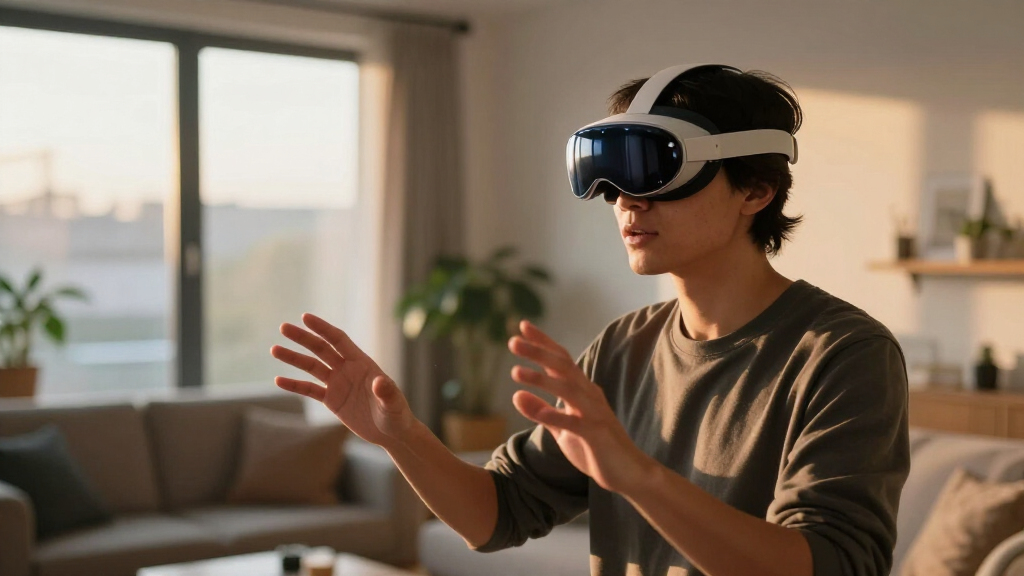
Apple’s senior vice president of hardware engineering, John Ternus, has publicly emphasized that the Vision Pro is designed as a platform for developers and users, rather than merely a standalone product. This marks a strategic shift in how Apple approaches mixed reality, focusing on building an ecosystem of applications and experiences rather than relying solely on hardware innovation.
During a recent industry conference, John Ternus articulated that Apple’s vision for the Vision Pro extends beyond the device itself. Instead, it aims to serve as a comprehensive platform that supports a wide range of applications, services, and developer tools. Ternus stressed that this approach aligns with Apple’s broader strategy of integrating hardware, software, and services into a cohesive ecosystem.
While Apple has not yet released detailed specifications or a full developer ecosystem for the Vision Pro, Ternus indicated that the company is actively engaging with developers to create a diverse array of applications. He emphasized that the device’s success will depend significantly on the software ecosystem that surrounds it, rather than the hardware alone.
Industry analysts note that this perspective is a shift from traditional product launches, where hardware often takes center stage. Apple’s move to position the Vision Pro as a platform suggests a long-term plan to expand its capabilities through software updates, developer support, and third-party applications, similar to the company’s approach with the iPhone and App Store.
Vision Pro is being defended as a platform, not a single product.
John Ternus’ message reframes Apple’s mixed-reality effort around an expanding ecosystem: hardware establishes the foundation, but applications, developer tools, services, and long-term integration are expected to create lasting value.
From premium headset to expandable environment
The argument is not that hardware matters less. It is that hardware alone cannot sustain the ambition. Apple’s familiar playbook connects a controlled device, an evolving operating layer, and outside creators who continually add new reasons to participate.
A doorway into spatial computing
The headset supplies the sensors, displays, processing, and interaction model. It establishes the technical baseline, but does not define the full ceiling of value.
Capabilities can compound over time
Operating-system updates, services, and new interaction patterns can expand what the platform does without requiring every improvement to arrive through a new device.
Third parties widen the opportunity
Independent applications can move Vision Pro into work, communication, entertainment, education, design, and use cases Apple may not build itself.
How a platform becomes more useful
A successful ecosystem creates a reinforcing loop: stronger tools attract creators, creators produce useful experiences, and those experiences make the hardware more compelling to users.
Platform foundation
Apple defines the device, operating environment, and interaction rules.
Developer tools
SDKs, documentation, support, and incentives reduce the cost of building.
New experiences
Developers translate technical capability into practical applications.
User adoption
More compelling use cases increase relevance for professionals and consumers.
Ecosystem momentum
A larger audience gives developers more reason to invest and iterate.
The strategic objective is compounding utility. A standalone product is judged mainly by what it can do at launch; a platform is judged by how much more valuable it can become.
Two very different measures of success
Platform thinking extends the evaluation window. Initial specifications and sales still matter, but application quality, ecosystem participation, and long-term retention become equally important signals.
| Dimension | Single-product lens | Platform lens |
|---|---|---|
| Primary value | ~ Device features available now | ✓ Expanding network of experiences |
| Growth engine | ✗ Hardware refresh cycles | ✓ Software, services, and third parties |
| Key participant | ~ Hardware buyer | ✓ Users, developers, and businesses |
| Competitive defense | ✗ Specifications and industrial design | ✓ Integration, content, and ecosystem depth |
| Revenue horizon | ~ Concentrated around device sales | ✓ Hardware plus recurring software and services |
Execution will determine whether the defense holds.
The platform thesis becomes persuasive only when tools, applications, and user demand reinforce one another. The next meaningful signals will come from ecosystem activity rather than rhetoric alone.
Implications of a Platform-Centric Vision Pro Strategy
This emphasis on the Vision Pro as a platform indicates that Apple aims to foster a robust ecosystem of applications and experiences, which could be crucial for its adoption and success in the mixed reality space. By prioritizing developer engagement and software development, Apple may be seeking to differentiate the Vision Pro from competitors that focus primarily on hardware features. This approach could lead to a broader range of use cases and a more sustainable revenue model based on software and services rather than hardware sales alone.
For consumers, this means that the value of the Vision Pro will increasingly depend on the quality and diversity of applications available, rather than just the device’s specifications. For developers, the message is clear: Apple is positioning the Vision Pro as a new platform with significant opportunities for innovation and integration into existing Apple ecosystems.
As an affiliate, we earn on qualifying purchases.
Background on Apple’s Mixed Reality Ambitions
Apple has been rumored to be developing a mixed reality headset for several years, with expectations that it would mark a major entry into the spatial computing market. The company officially announced the Vision Pro in early 2024, positioning it as a high-end device aimed at professionals and early adopters.
Historically, Apple has succeeded by creating platforms—such as the iPhone, iPad, and Mac—that rely heavily on third-party developers to expand their capabilities. The company’s strategy with the Vision Pro appears to follow this pattern, emphasizing an ecosystem approach rather than a single hardware feature.
Prior to the official announcement, industry insiders speculated that Apple would focus on hardware innovation. Instead, Ternus’s comments suggest that the company views the Vision Pro as a foundational platform that will evolve through software and developer support over time.
As an affiliate, we earn on qualifying purchases.
Unclear Details on Ecosystem Development and Launch Timeline
While Ternus confirmed that Apple is working with developers to build out the Vision Pro ecosystem, specific details about the timeline, the number of applications, or features are still undisclosed. It remains uncertain how quickly the ecosystem will mature and what the initial software offerings will include. Additionally, it is not yet clear how Apple will support third-party developers or what incentives will be provided to foster a vibrant app marketplace.
mixed reality application development
As an affiliate, we earn on qualifying purchases.
As an affiliate, we earn on qualifying purchases.
Next Steps for Ecosystem Expansion and Developer Engagement
Apple is expected to release developer kits and SDKs in the coming months, encouraging third-party developers to create applications tailored for the Vision Pro. The company may also host developer conferences or events to showcase new capabilities and attract more creators. The success of this platform strategy will largely depend on the pace and quality of software development, which will become clearer as these tools are rolled out and early applications are demonstrated.
As an affiliate, we earn on qualifying purchases.
Key Questions
What makes the Vision Pro different from other mixed reality headsets?
The Vision Pro is positioned as a platform supporting a broad ecosystem of applications, rather than just a hardware device. Its success will depend on software support and developer engagement, unlike other headsets that focus primarily on hardware features.
When will developers be able to access SDKs for the Vision Pro?
Apple is expected to release developer kits and SDKs in the coming months, though an exact date has not been officially announced.
Will the Vision Pro be available to general consumers soon?
While the device has been announced, Apple has not yet specified a release date for the consumer market. The focus appears to be on building the ecosystem first.
How does this platform approach impact the potential success of the Vision Pro?
By emphasizing a platform and ecosystem, Apple aims to create a sustainable, versatile environment that can evolve over time, potentially leading to broader adoption and more innovative applications.
What challenges might Apple face in building this ecosystem?
Challenges include attracting enough developers, creating compelling software, and ensuring seamless integration within the existing Apple ecosystem to drive user adoption.
Source: rss
Fall Picks
fall essentials
As an affiliate, we earn on qualifying purchases.