
TL;DR

Get the latest gadgets delivered free — and shop member deals
- Fast, free delivery on millions of items
- Access to Prime Big Deal Days deals on October 6–7
- Prime Video, Amazon Music and more included
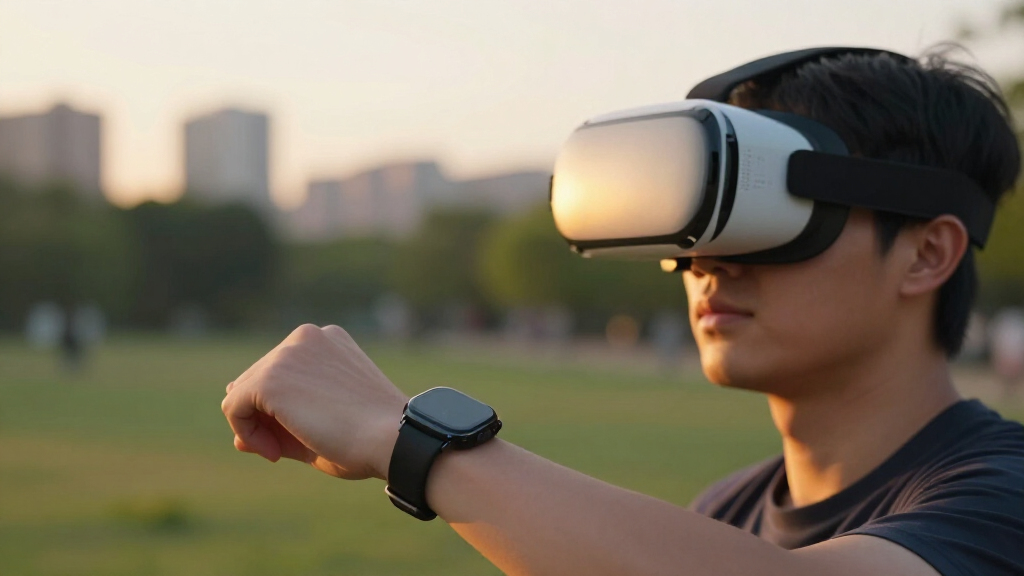
A Christchurch-based startup, Explo, is developing technology that integrates smart watches with virtual reality therapy to potentially speed up treatment for mental health issues. While promising, the approach is still in early testing stages.
Christchurch startup Explo is developing a new approach that integrates smart watches with virtual reality therapy in an effort to speed up mental health treatments. The company claims this technology could lead to faster recovery times for conditions such as anxiety and PTSD, though the approach is still in early testing phases.
Explo, based in Christchurch, is working on a system that uses data collected from smart watches to enhance virtual reality (VR) therapy sessions. The company asserts that real-time biometric data—such as heart rate, activity levels, and stress indicators—can be used to tailor VR treatments more precisely and quickly. According to Explo, this integration could reduce the duration of therapy, potentially benefiting patients and healthcare providers by increasing efficiency.
While the company has not yet released detailed clinical trial results, early prototypes have shown promising signs of improved engagement and personalized treatment adjustments. Explo emphasizes that the technology aims to provide continuous monitoring outside therapy sessions, allowing for more dynamic treatment plans. The startup is currently in the pilot testing phase, with plans to expand trials in the coming months.
Health experts acknowledge that combining wearable biometric data with VR therapy is a novel approach, but caution that rigorous scientific validation is needed before it can be widely adopted. The company states it is working closely with local healthcare providers to validate its methods.
Can Smart Watches Accelerate Virtual Reality Therapy?
Christchurch startup Explo is integrating smart watch biometric data into VR therapy sessions — aiming to shorten treatment for anxiety, PTSD, and other stress-related conditions. The approach is promising, but still in early pilot testing.
How the System Works
A closed loop between wearable sensors and VR treatment, adapting therapy in real time.
Smart Watch Data
Heart rate, activity levels, and stress indicators captured continuously.
Biometric Signals
Real-time data processed to detect stress and engagement states.
VR Adjustment
Therapy scenarios tailored precisely to the patient’s responses.
Continuous Tracking
Wearables keep monitoring outside sessions for dynamic treatment plans.
Clinical Trials
Expanded pilots aim to confirm faster recovery times and safety.
Potential Impact on Mental Health Care
Why wearables plus VR could reshape treatment — and where uncertainty remains.
Shorter Therapy Duration
Personalized, data-driven sessions could reduce overall treatment time, easing pressure on mental health services amid rising demand.
Data-Driven Precision
Real-time biometrics allow VR exposure scenarios to adapt moment-to-moment, aligning with broader trends in personalized healthcare.
Validation Needed
Experts note the approach is novel, but rigorous scientific validation is required before widespread clinical adoption.
Where the Technology Stands
Explo’s own development milestones vs. remaining hurdles (indicative status).
Wearables in Mental Health: Landscape Check
How Explo’s integrated approach compares to existing applications.
| Approach | Real-Time Biometrics | VR Integration | Clinically Validated | Maturity |
|---|---|---|---|---|
| Mood tracking apps | ✗ Manual logging | ✗ | ~ Partial | Mature |
| Stress wearables | ✓ Continuous | ✗ | ~ Partial | Growing |
| Standalone VR therapy | ✗ | ✓ Exposure therapy | ✓ Emerging evidence | Early adoption |
| Explo: Watch + VR | ✓ Real-time loop | ✓ Adaptive sessions | ✗ Trials pending | Pilot phase |
Key Questions
What patients, clinicians, and observers are asking.
How does smart watch data improve VR therapy?
Real-time biometric information — heart rate and stress levels — is used to personalize and adapt VR sessions for more effective treatment.
Is this technology available for widespread use?
No. It remains in early testing stages and has not been approved for widespread clinical use; pilot trials are ongoing.
Which conditions could benefit?
Potentially anxiety disorders, PTSD, and other stress-related mental health issues could benefit from faster, personalized VR therapy.
Are there risks?
Data privacy concerns and the need for thorough validation of safety and efficacy — both currently under investigation.
Bottom line: If clinical trials succeed, regulatory approval and commercial deployment could still take several years. Explo plans to expand pilot studies and publish results in collaboration with local healthcare providers.
Potential Impact on Mental Health Treatment Speed
If successful, Explo’s approach could significantly reduce therapy times and improve outcomes for patients with mental health conditions. Faster, more personalized treatments could ease the burden on mental health services, especially amid rising demand. However, the effectiveness of integrating smart watch data into VR therapy remains to be thoroughly validated through clinical research.
smart watch biometric health monitor
As an affiliate, we earn on qualifying purchases.
As an affiliate, we earn on qualifying purchases.
Emerging Use of Wearables in Mental Health Care
The use of wearable devices in mental health treatment has been growing, with applications ranging from mood tracking to stress management. Virtual reality therapy is also gaining traction as a method for exposure therapy and anxiety reduction. Combining these technologies represents a new frontier, with startups and researchers exploring how real-time biometric data can enhance therapeutic outcomes.
Explo is among several companies experimenting with wearable tech, but its focus on accelerating therapy duration through integrated VR and smartwatch data is relatively novel. The concept aligns with broader trends toward personalized, data-driven healthcare, though scientific validation is still underway.
As an affiliate, we earn on qualifying purchases.
Validation and Clinical Trial Status
It is not yet clear whether Explo’s approach will demonstrate statistically significant improvements in treatment speed or outcomes. The company is in early pilot phases, and comprehensive clinical trial data are not yet available. The effectiveness and safety of this integrated method remain to be validated through rigorous scientific testing.
As an affiliate, we earn on qualifying purchases.
Upcoming Trials and Validation Steps
Explo plans to expand its pilot studies in collaboration with local healthcare providers over the next several months. The company aims to collect more data to validate whether smart watch integration can reliably accelerate VR therapy outcomes. Future milestones include publishing clinical trial results and seeking regulatory approval for broader adoption.
As an affiliate, we earn on qualifying purchases.
Key Questions
How does smart watch data improve VR therapy?
Smart watch data provides real-time biometric information, such as heart rate and stress levels, which can be used to personalize and adapt VR therapy sessions for more effective treatment.
Is this technology currently available for widespread use?
No, Explo’s system is still in early testing stages and has not yet been approved for widespread clinical use. It is undergoing pilot trials to validate its effectiveness.
What conditions could benefit from this technology?
Potentially, conditions such as anxiety disorders, PTSD, and other stress-related mental health issues could benefit from faster, personalized VR therapy enhanced by biometric data.
Are there any risks associated with this approach?
As with any emerging medical technology, risks include data privacy concerns and the need for thorough validation to ensure safety and efficacy. These aspects are currently under investigation.
When might this technology become widely available?
If clinical trials are successful, it could take several years for regulatory approval and commercial deployment. The timeline depends on trial outcomes and regulatory processes.
Source: rss
Fall Picks
fall essentials
As an affiliate, we earn on qualifying purchases.