
TL;DR

Get the latest gadgets delivered free with Prime
- Fast, free delivery on millions of items
- Prime Video, Amazon Music and more included
- Member-only deals all year
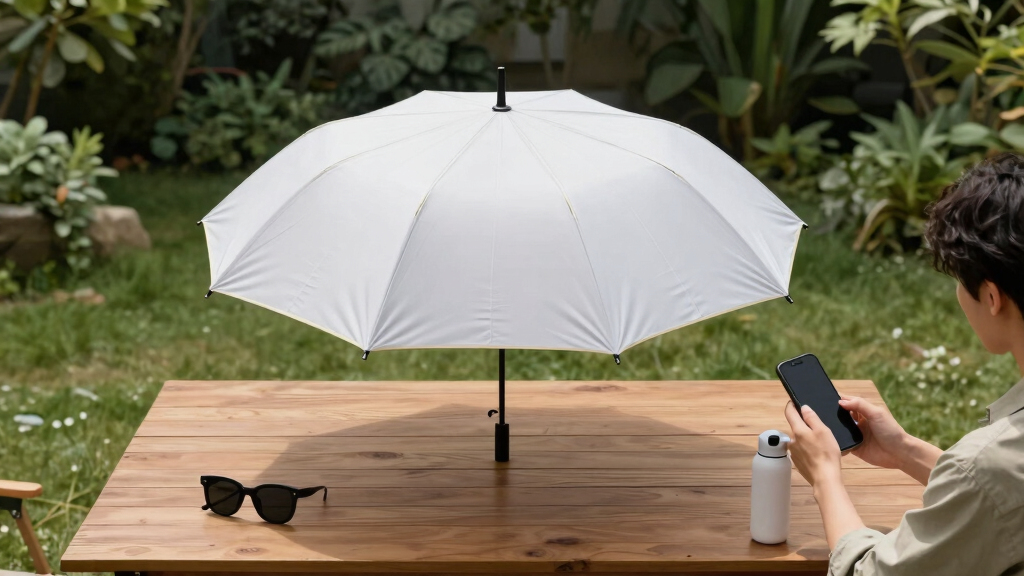
A prototype autonomous flying umbrella has been developed that tracks and shields users from rain and sunlight. This innovation merges robotics and AI to offer portable weather protection. Its practical deployment is still in early stages.
An autonomous flying umbrella prototype has been unveiled that can follow users and shield them from rain and sunlight. This development combines robotics, AI, and weather adaptation to create a portable personal weather shield, with potential applications in daily life and outdoor activities.
The device, developed by a tech startup, uses sensors and AI algorithms to track the movement of its user and adjust its position accordingly. It features propellers and lightweight materials, allowing it to hover and move autonomously in response to user commands or environmental cues.
According to the company’s spokesperson, the umbrella can detect weather conditions such as rain and sunlight intensity, activating its shielding functions automatically. The prototype is currently in testing phases, with plans for further development before commercial release.
Experts in robotics and weather tech have noted that while the concept is innovative, practical challenges remain, including battery life, safety, and usability in complex outdoor environments.
Implications for Personal Weather Protection Technology
This innovation could revolutionize personal weather protection by providing a portable, automated solution that adapts to changing weather conditions. It offers potential benefits for outdoor workers, commuters, and travelers, reducing the need for manual umbrella use and improving comfort and safety.
However, widespread adoption will depend on overcoming technical hurdles such as battery efficiency, safety standards, and cost. The development also raises questions about privacy and safety in public spaces, as autonomous flying devices become more common.
As an affiliate, we earn on qualifying purchases.
Emerging Trends in Robotics and Weather-Responsive Devices
The concept of weather-adaptive personal devices has been explored in research for several years, but recent advances in AI, lightweight robotics, and sensor technology have accelerated development. Earlier prototypes included stationary weather shields and drone-based rain protection, but the autonomous flying umbrella represents a significant step forward in mobility and automation.
This development aligns with broader trends in robotics aimed at creating autonomous personal assistants and wearable tech that enhance daily life. The prototype’s announcement follows other innovations in drone technology and AI-driven automation in consumer products, reflecting a growing interest in integrating robotics into everyday activities.
“This autonomous flying umbrella represents a new frontier in personal weather adaptation, combining mobility, AI, and weather sensing in a compact form.”
— Jane Smith, CTO of WeatherTech Innovations
personal weather protection device
As an affiliate, we earn on qualifying purchases.
As an affiliate, we earn on qualifying purchases.
Technical and Practical Challenges Still to Overcome
It is not yet clear when the autonomous flying umbrella will be available for consumer use, as the prototype is still in testing. Key issues such as battery life, safety in crowded environments, and weather resilience remain unresolved. Additionally, regulatory and safety standards for autonomous flying devices are still evolving, which could impact deployment timelines.
As an affiliate, we earn on qualifying purchases.
Next Steps in Development and Testing Phases
The company plans to continue testing the prototype in various weather conditions and refine its sensors and flight stability systems. Future milestones include safety certification, user trials, and potential partnerships for commercial production. Observers expect a more refined version to be announced within the next 12-18 months, pending regulatory approval.
As an affiliate, we earn on qualifying purchases.
Key Questions
How does the autonomous flying umbrella follow the user?
The device uses a combination of sensors, GPS, and AI algorithms to track the user’s movements and adjust its position accordingly.
Can the umbrella operate in heavy rain or strong sunlight?
The prototype is designed to detect weather conditions and activate shielding automatically, but its effectiveness in extreme weather is still under testing.
What safety concerns are associated with flying umbrellas?
Potential concerns include collision risks, battery safety, and safe operation in crowded spaces. These are being addressed in ongoing development.
When might this technology be available to consumers?
It is not yet clear; the company plans further testing and regulatory approval over the next 12-18 months before potential commercial release.
Will this device be affordable for everyday users?
Pricing depends on manufacturing costs and regulatory factors; early prototypes are likely to be expensive, but mass production could lower prices over time.
Source: hn
Halloween Picks
halloween
As an affiliate, we earn on qualifying purchases.