TL;DR

Get the latest gadgets delivered free with Prime
- Fast, free delivery on millions of items
- Prime Video, Amazon Music and more included
- Member-only deals all year
Older computers that rely on a discrete TPM may expose BitLocker decryption keys over an unencrypted communication bus, according to the source report. The attack requires physical access; a pre-boot PIN can prevent the TPM from releasing the key automatically. The scope of affected systems and available manufacturer patches are not established in the source material.
A report published Oct. 17, 2026, warns that some older PCs using a discrete Trusted Platform Module (TPM) can expose BitLocker decryption keys to an attacker with physical access, because key traffic between the TPM and processor may travel over an unencrypted bus. The issue is not a remote internet attack, and a pre-boot PIN can stop the drive key from being released automatically.
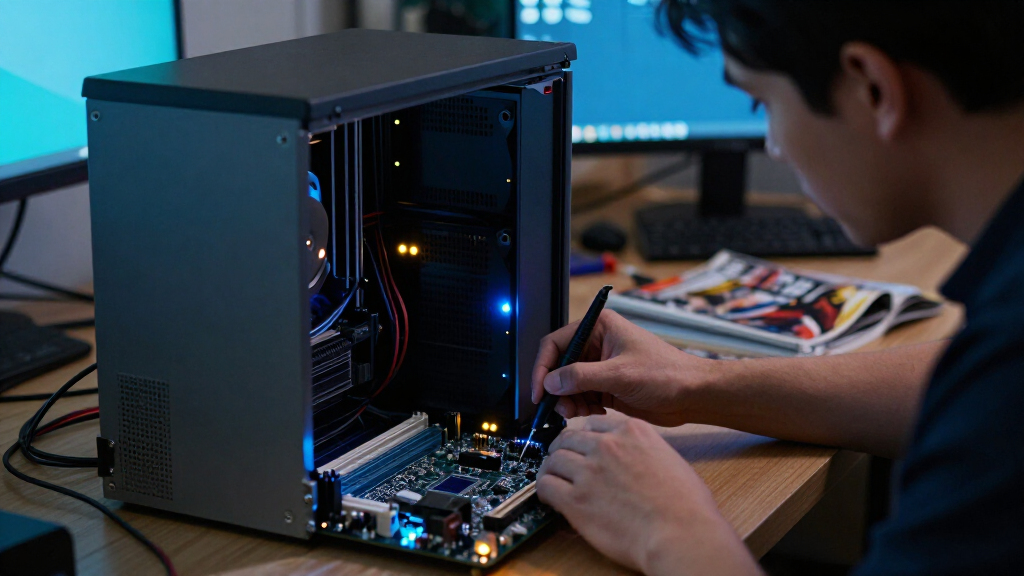
The security concern applies to systems where a separate TPM chip is installed on the motherboard, rather than a firmware TPM integrated into the processor. The report says the discrete chip may communicate with the CPU through buses such as LPC or SPI, and that traffic can be intercepted if an attacker can reach the hardware. A motherboard debug header may offer a convenient connection point, but the report says an attacker could also probe the TPM itself; the header is not required.
In a typical TPM-only BitLocker setup, the TPM checks boot measurements and releases the key if the system appears unchanged. According to the report, an attacker who captures the unencrypted exchange can use the key to decrypt the drive on another system. This bypasses the protection users may expect from drive encryption when a device is stolen or left unattended, but it requires physical access and suitable equipment.
The report cites a 2019 demonstration by Pulse Security, which used a $40 FPGA board to capture key material. It also says attacks have been shown on laptops from Dell, Lenovo and Microsoft, though it does not provide model numbers, affected firmware versions or a complete list of vulnerable devices. The suggested mitigation for systems without firmware TPM support is to configure BitLocker to require a startup PIN before the TPM releases the key.
Hardware security • Field guide
Motherboard Debug Headers: A Lingering, Unpatched Security Risk
Some older PCs with a discrete TPM may expose BitLocker key traffic over an unencrypted bus. The described attack requires hands-on access to the hardware; a pre-boot PIN can stop automatic key release.
Probe the TPM bus or chip to capture key material during boot authorization.
Add authentication before the TPM releases the BitLocker key.
2026
Pulse Security demonstration
FPGA board used in the cited demo
No complete model or patch list
01 / The exposure
A key exchange at the hardware layer
The concern is limited to a described pathway involving a separate TPM chip and unencrypted communication with the processor.
A separate motherboard chip
A dTPM is installed on the board. The report describes communication with the CPU over buses such as LPC or SPI.
Normal boot authorization
The TPM checks boot measurements and may release the key when firmware and bootloader state appear unchanged.
Probe the bus or chip
A debug header can be a convenient connection point, but the report says it is not required. Physical access and suitable equipment are.
02 / Attack sequence
From unattended device to exposed drive
Gain physical access
Reach the computer and its motherboard hardware.
Inspect the TPM path
Connect to the discrete TPM bus or probe the chip.
Capture boot traffic
Observe the exchange as the TPM authorizes startup.
Use the key material
Decrypt the drive on another system, according to the report.
03 / TPM comparison
Discrete chip vs. firmware TPM
The report focuses on one exposed bus pathway. A firmware TPM avoids that same discrete-chip connection, but is not a guarantee against every kind of attack.
| Feature | Discrete TPM (dTPM) | Firmware TPM (fTPM) |
|---|---|---|
| Where it runs | Separate motherboard chip | Platform firmware on supported processors |
| Path described in report | Potentially exposed unencrypted bus traffic | Avoids this same discrete-chip bus pathway |
| Generational guidance | May appear on older systems | Intel 8th-generation and AMD Ryzen 2000-series and newer broadly support TPM 2.0 in firmware |
| Compatibility certainty | Confirm by device | Generational guidance is not a definitive compatibility list |
04 / Risk boundaries
What the report establishes—and leaves open
Demonstrations show a possible technique; the available source does not determine exposure for a specific computer.
Demonstrated on some laptops
The report cites Pulse Security’s 2019 demonstration and says attacks have been shown on laptops from Dell, Lenovo, and Microsoft.
No model-level inventory
No model numbers, motherboard revisions, TPM firmware versions, complete vulnerable-device list, or manufacturer patch status are provided.
05 / Owner checklist
Reduce this specific exposure
Identify the TPM
Open tpm.msc, review manufacturer details, and confirm the result against device documentation.
Require a pre-boot PIN
If using a discrete TPM with TPM-only BitLocker protection, add a startup PIN before key release.
Secure recovery access
Confirm recovery keys are available before changing BitLocker startup settings. A USB startup key is another option, with added boot steps.
06 / Quick answers
Key questions
Does it work remotely?
No. The report describes physical access and hardware probing, not an internet-based attack.
Is every BitLocker PC vulnerable?
The source does not support that conclusion. It describes some discrete-TPM systems with exposed, unencrypted key traffic.
Has a vendor patch been identified?
No patch or coordinated fix is identified in the source. Model-specific guidance and updated testing are still needed.
How a Stolen Laptop Could Be Exposed
The issue matters most when an older encrypted computer leaves its owner’s control. BitLocker encryption can protect data if a drive is removed, but the described attack targets the key exchange while the TPM is authorizing a normal boot. A stolen laptop may give an attacker the physical access needed to inspect its motherboard, turning an unattended device into a more practical target than a remotely reachable computer.
That risk should not be overstated: the source describes a hands-on attack, not a way to break BitLocker over a network. Still, many users rely on the default configuration, where the TPM releases the key without asking for a separate startup credential. Requiring a PIN adds a factor the attacker cannot obtain merely by monitoring the bus. The trade-off is added friction: the owner must enter the PIN during startup.
The report also cautions that firmware TPM is not invulnerable to every hardware or software attack. Its stated comparison is narrower: a processor-based firmware TPM avoids the same exposed, unencrypted discrete-chip bus pathway. Users should treat the mitigation as reducing this particular risk, not as a guarantee against all attacks.
Motherboard debug header connector
As an affiliate, we earn on qualifying purchases.
As an affiliate, we earn on qualifying purchases.
Discrete and Firmware TPM Differences
A TPM helps protect encryption keys by checking whether key parts of the boot process, including firmware and bootloader measurements, match expected values. If they do, it can release a key used by software such as BitLocker. The distinction in this report is where the TPM runs: a discrete TPM (dTPM) is a separate motherboard chip, while a firmware TPM (fTPM) runs through platform firmware on supported processors.
The source says Intel 8th-generation and AMD Ryzen 2000-series processors and newer broadly support TPM 2.0 through firmware, while older systems may depend on a separate chip. Those are broad generational guidelines, not a definitive compatibility list for every PC. The report suggests checking TPM details through Windows’ tpm.msc utility: Intel, AMD or Microsoft may indicate firmware TPM, while names such as Infineon, Nuvoton or STMicroelectronics may indicate a discrete device. The result should be checked against the computer’s documentation where possible.
The concern is not newly discovered in the report. It points to Pulse Security’s 2019 demonstration and frames the exposure as a continuing risk for older hardware that remains in use. The material does not identify a new patch release or a recent incident prompting the warning.
“A pre-boot PIN prevents the TPM from releasing the master key without that additional authentication.”
— The XDA Developers report
As an affiliate, we earn on qualifying purchases.
Which Computers Remain at Risk
The source does not provide a complete list of affected models, motherboard revisions or TPM firmware versions, nor does it say whether particular manufacturers issued patches. It names Dell, Lenovo and Microsoft laptops as examples of systems on which researchers have demonstrated the attack, but offers no model-level detail or current test results. It is therefore not possible from the source alone to determine whether a specific computer is exposed.
The precise scope also depends on configuration and hardware access. The report describes unencrypted key traffic in discrete-TPM systems and says the attacker needs physical access, but does not establish how quickly every device can be opened or attacked. It does not report a confirmed campaign or estimate how often the technique has been used. Whether a device uses a discrete TPM should be verified using its system information and manufacturer documentation.
As an affiliate, we earn on qualifying purchases.
Check TPM Settings and Startup Protection
Owners of older PCs can first check the TPM manufacturer details in Windows using tpm.msc, then confirm the result with their device documentation. If the machine uses a discrete TPM and BitLocker is set to TPM-only protection, the report recommends configuring a pre-boot PIN. Some configurations can also require a startup key stored on a USB drive, though that adds another step to each boot.
Users should confirm that recovery keys are available before changing BitLocker settings, since startup configuration changes can affect access to an encrypted drive. The source does not identify a vendor patch or announce a coordinated fix. Further clarity would require model-specific guidance from PC makers and TPM suppliers, along with updated testing of affected systems.
As an affiliate, we earn on qualifying purchases.
Key Questions
Does this attack work remotely?
No. The report describes a physical-access attack involving hardware probes attached to a computer’s TPM bus or chip. It does not describe an internet-based method.
Are all computers with BitLocker vulnerable?
No such conclusion is supported by the source. The described risk concerns some systems using a discrete TPM with exposed, unencrypted key traffic. The report does not provide a complete list of affected devices.
How can I check whether my PC uses a discrete TPM?
The report recommends opening Windows’ tpm.msc utility and checking the manufacturer field. It says names including Infineon, Nuvoton or STMicroelectronics may indicate a discrete TPM, while Intel, AMD or Microsoft may indicate firmware TPM. Check your computer maker’s documentation to confirm.
What is the recommended mitigation?
For a system without firmware TPM support, the report recommends requiring a BitLocker startup PIN so the TPM does not release the key automatically. A startup key on a USB drive may add another requirement, but also adds inconvenience.
Has a new patch been released?
The source does not identify a new patch or say that manufacturers have issued model-specific fixes. It describes the risk as lingering and points to a demonstration from 2019.
Source: XDA Developers
Halloween Picks
halloween
As an affiliate, we earn on qualifying purchases.