

Set up your wireless noise-canceling headphones by charging them, pairing them with a phone or computer, and checking audio, fit, and noise-control settings. This guide is for first-time users and anyone reconnecting a headset after a reset. Allow about 15-25 minutes; you will need basic Bluetooth settings skills.

Get the latest gadgets delivered free with Prime
- Fast, free delivery on millions of items
- Prime Video, Amazon Music and more included
- Member-only deals all year

Sony WH-CH720N Wireless Noise Cancelling Over-Ear Headphones, Black
- ✔ Design: Over-ear wireless headphones
- ✔ Weight: 192 g stated
- ✔ Noise control: Dual Noise Sensor technology; adjustable Ambient Sound mode; Adaptive Sound Control
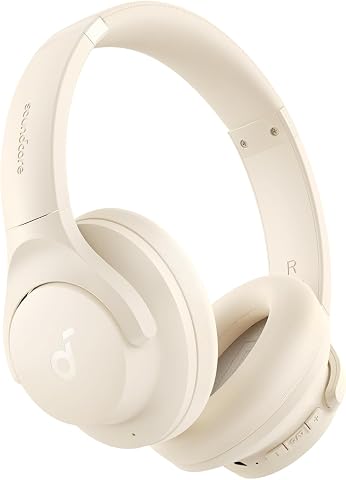
Soundcore by Anker Q20i Hybrid Active Noise Cancelling Headphones, White
- ✔ Design: Over-ear hybrid ANC headphones
- ✔ Weight: 8.64 ounces stated
- ✔ Noise control: Hybrid ANC; Normal and Transparency modes

Hybrid Active Noise Cancelling Bluetooth Headphones Wireless Headphones
- ✔ Design: Over-ear wireless headphones
- ✔ Noise control: Hybrid active noise cancellation with dual microphones
- ✔ Noise reduction claim: Up to 95%; test method not specified
Difficulty: Beginner | Time: 15-25 minutes
What You’ll Need
Tools & Materials:
- Wireless noise-canceling headphones
- Phone, tablet, or computer with Bluetooth
- Charging cable or charged battery
- Headphone companion app, if the manufacturer offers one
Knowledge:
- How to open Bluetooth settings on your device
- How to adjust a headband and ear cups for a comfortable fit
Keep the headphones and device nearby. Check the headphone label or manual for the power button, pairing control, indicator lights, and any manufacturer-specific reset steps. Use the supplied cable or a compatible charger. Do not force a connector that does not fit.
Sony WH-CH720N Wireless Noise Cancelling Over-Ear Headphones, Black
The WH-CH720N earns our top spot by balancing comfort, noise control, and useful everyday features. At a stated 192 g, it is the lightest option described here, a meaningful advantage for long listening sessions or travel when heavier ear cups can become tiring. Sony also lists Dual Noise Sensor technology, adjustable ambient sound, and Adaptive Sound Control, giving listeners more ways to manage the move between music and surroundings than the simpler feature descriptions for the 120-hour model.Compared with the Soundcore Q20i, Sony offers a lighter stated weight and a more explicitly adaptive listening feature set; Soundcore counters with app EQ, white noise, and more detail about switching among ANC, normal, and transparency modes. Sony’s 35-hour battery claim is shorter than Soundcore’s stated 40 hours with ANC enabled and far below the other model’s standard-mode claim. Its strength is the overall package, not maximum runtime. Multipoint connection and beamforming microphones make it a sensible fit for alternating between calls and media, though the supplied details do not establish call performance in noisy conditions.We would choose Sony when a comfortable, flexible daily headset matters more than headline battery duration. Buyers who want detailed EQ controls or the longest time between charges should look first at Soundcore or the third model, respectively. And while Sony describes its noise sensors and processor, the listing does not quantify cancellation, so we cannot rank it by a measured reduction figure.
Pros:
- Stated weight of just 192 g supports a lighter fit for long sessions.
- Adaptive Sound Control and adjustable Ambient Sound mode help manage changing surroundings.
- Multipoint connection supports switching between two devices.
- Up to 35 hours of listed battery life with quick charging.
Cons:
- Battery claim trails Soundcore’s ANC-on figure and the third model’s standard-mode claim.
- The provided details do not specify a noise-reduction percentage or a shared comparison test.
- App EQ and sound-customization options are less clearly described than Soundcore’s.
Best for: Listeners who wear headphones for extended stretches and want lightweight comfort, adaptive ambient controls, and multipoint device switching.
Not ideal for: Buyers prioritizing the longest stated battery life or extensive app-based EQ and sound customization.
Bottom line: For the broadest balance of light comfort, ambient control, and device switching, we recommend Sony—unless extended battery life or hands-on EQ control matters more.
“For the broadest balance of light comfort, ambient control, and device switching, we recommend Sony—unless extended battery life or hands-on EQ control matters more.”
Soundcore by Anker Q20i Hybrid Active Noise Cancelling Headphones, White
The Soundcore Q20i is the most configurable pick in this lineup. Its app offers EQ presets and custom adjustments, plus ANC, Normal, and Transparency modes; built-in white noise adds another option for winding down. That range can make a bigger day-to-day difference than a headline spec: you can tune the sound to your preference and choose whether to quiet or admit some surroundings. The four-microphone ANC system is described for busy offices and commutes, but its listing does not give a directly comparable reduction figure.For hybrid work, two-device connection is the standout. The headphones can connect to a phone and laptop at once and switch audio as needed, similar in purpose to Sony’s multipoint feature. Soundcore goes further in detailing app control, while Sony’s lower stated weight may suit listeners who are especially sensitive to headset heft. Battery life is listed at up to 40 hours with ANC on, ahead of Sony’s 35-hour figure under its stated conditions. The third model advertises 120 hours in standard mode, but that is a different listening condition and comes with less detail about customization.Soundcore also includes an AUX cable, and its listing says wired listening unlocks Hi-Res certified audio; ANC is unavailable in AUX-in mode. The 8.64-ounce weight is more than Sony’s stated 192 g, which could matter over a full day. It is also listed as not water resistant, so this is best treated as a commute, home, or office headset rather than one for sweaty outdoor use. Choose it for controls and flexibility; skip it if low weight is your leading concern.
Pros:
- App includes EQ presets, custom EQ, and ANC, Normal, and Transparency modes.
- Connects to two devices and can switch audio between them.
- Up to 40 hours of battery life with ANC enabled is claimed.
- Includes an AUX cable; listing says wired mode supports Hi-Res certified audio.
Cons:
- Stated weight is 8.64 ounces, heavier than Sony’s listed 192 g.
- ANC is unavailable in AUX-in mode.
- Listed as not water resistant.
Best for: Commuters and remote workers who want app-based EQ and listening modes alongside a phone-and-laptop connection.
Not ideal for: Listeners who prioritize the lightest possible headset, water resistance, or ANC while using a wired AUX connection.
Bottom line: Soundcore is our strongest choice for app controls and workday device switching, provided its extra weight and wired-mode ANC limitation suit your routine.
“Soundcore is our strongest choice for app controls and workday device switching, provided its extra weight and wired-mode ANC limitation suit your routine.”
Hybrid Active Noise Cancelling Bluetooth Headphones Wireless Headphones
This over-ear model makes its case with a striking up to 120 hours of playtime in standard mode and a five-minute charge claimed to add four hours. For frequent travelers or anyone who dislikes managing charging, that headline is the longest in this roundup. The condition matters, though: the listing specifies standard mode, while Soundcore explicitly states its 40-hour figure with ANC on and Sony lists up to 35 hours. We should not treat those numbers as an apples-to-apples battery contest.Its other main draw is hybrid ANC with dual microphones, alongside a claim to eliminate up to 95% of ambient noise. The description does not identify a test method, so that percentage cannot establish superiority over Sony or Soundcore. The listing also mentions memory foam ear cups, an adjustable headband, Bluetooth 6.0, and bass-focused tuning. These details suggest a comfort-and-runtime-oriented option, but there is less information here about ambient modes, EQ adjustment, or switching between devices than Soundcore provides. Sony, by contrast, specifically describes adaptive sound and ambient controls.We would shortlist this model when charging frequency is the deciding concern and the available controls match your needs. We would be more cautious if you need detailed microphone or call specifications, a 3.5 mm wired option, or a clearly described app. The listing says it has no headphone jack and provides no stated weight, making it harder to judge both wired fallback and comfort against Sony’s unusually light design.
Pros:
- Advertises up to 120 hours of playtime in standard mode.
- Five-minute charge is claimed to provide four hours of listening.
- Hybrid ANC and dual microphones are described.
- Memory foam ear cups and an adjustable headband are listed.
Cons:
- The 120-hour claim is for standard mode, so it cannot be directly compared with ANC-on figures.
- The 95% noise-reduction claim has no test method in the supplied description.
- No headphone jack or stated product weight; app and call controls are not detailed.
Best for: Travelers and home or office listeners who place a high priority on the advertised standard-mode runtime and quick top-ups.
Not ideal for: Buyers who need a wired headphone jack, detailed app controls, a stated weight, or clearly documented call features.
Bottom line: Consider this model for its advertised standard-mode runtime, but choose Sony or Soundcore if clearly described controls and everyday feature flexibility matter more.
“Consider this model for its advertised standard-mode runtime, but choose Sony or Soundcore if clearly described controls and everyday feature flexibility matter more.”
As an Amazon Associate we earn from qualifying purchases.
Before You Start
Charge the headphones before setup if the battery is low. Many models can pair with a small charge, but low power can interrupt pairing or setup. Turn off Bluetooth on nearby devices that have previously used the headphones if they keep connecting to the wrong one. Pairing names may include the brand or model; do not select an unfamiliar device.
Noise cancellation reduces some surrounding sounds, especially steady low-frequency noise, but it does not block every sound. Keep a way to hear important announcements or traffic when needed, and pause audio before adjusting the headphones near hazards.
Step-by-Step Instructions
Step 1: Charge the headphones
Connect the charging cable to the headphone charging port and a suitable power source. Check the manual or indicator light for the charging signal. Leave the headset connected until it has enough charge for setup; a full charge is useful if you plan to use it for several hours.
Tip: If the headphones do not show a charging light, reseat both ends of the cable and try a known working power source.
Check: The indicator shows charging or the battery status appears in the companion app or device, if supported.
Step 2: Turn on pairing mode
Disconnect the charging cable if your model requires it, then power on the headphones. Hold the Bluetooth or pairing button for the duration specified in the manual. Watch for a flashing light or listen for a pairing prompt. Some headphones enter pairing mode automatically the first time they are powered on.
Tip: A brief press may only power the headphones on. If they announce a connected device instead of pairing, use the manual’s instructions to start pairing mode.
Check: The headphone light flashes in the pairing pattern or an audio prompt says they are ready to pair.
Step 3: Pair with your phone, tablet, or computer
Open Bluetooth settings on the device and turn Bluetooth on. Choose the option to add or pair a device, then select the entry matching the headphone brand or model. Accept a pairing request if one appears. Wait for the device to show that the headphones are connected.
Tip: Keep the headphones close to the device while pairing. If two similar names appear, check the label or manual before selecting one.
Check: The headphones appear as connected in Bluetooth settings, and the headset confirms the connection if it provides a voice prompt.
Step 4: Install the companion app and check for updates
If the manufacturer provides an official companion app, download it from your device’s app store and open it. Follow its prompts to add your headphones. Review the battery level and any available firmware update instructions. Keep the headphones charged and close to the device while an update runs; do not turn them off until the app reports completion.
Tip: An app is optional on many models. Use the manufacturer’s official app rather than an app with a similar name from an unknown publisher.
Check: The app recognizes the headphone model and displays its settings or battery status, or you have confirmed that no app is needed.
Step 5: Fit the headphones and choose a listening mode
Place the ear cups over your ears and adjust the headband so the cups sit evenly, forming a comfortable seal without pinching. Find the controls for noise cancellation, transparency or ambient sound, and off mode. Select noise cancellation for reducing surrounding noise, or transparency when you need to hear nearby speech and sounds.
Tip: Hair, glasses, earrings, or an uneven ear-cup position can weaken the seal and change the noise-canceling effect. Readjust the cups before changing other settings.
Check: The headset feels secure and comfortable, and its indicator, voice prompt, or app confirms the selected mode.
Step 6: Play audio and adjust sound
Start a familiar song, video, or spoken recording at a low volume. Confirm that sound comes through both ear cups, then raise the volume gradually to a comfortable level. Use the device’s audio output menu if sound continues to play through its speakers. Adjust equalizer or sound settings only after the basic connection works.
Tip: Begin at low volume, especially if the device remembers a high setting from another headset.
Check: Audio plays clearly through both sides, controls respond, and the volume is comfortable.
Step 7: Test the controls and connection
Use the headphone controls to pause or resume audio and switch noise modes. Walk a short distance from the device while listening, staying within the range described by the manufacturer. Return near the device if audio cuts out, and note whether other wireless devices or walls are between you and it.
Tip: Bluetooth range varies by model and surroundings. Treat the manufacturer’s stated range as an estimate, not a guarantee through walls.
Check: Playback and mode controls respond, and audio remains stable at your usual listening distance.
Common Mistakes to Avoid
- Selecting a similarly named Bluetooth device. — Match the listed name to the headset label or manual, and remove old duplicate entries only after identifying which one is in use.
- Assuming noise cancellation is active as soon as the headphones connect. — Select the noise-canceling mode using the headset controls or companion app and check for its confirmation.
- Wearing the ear cups loosely or unevenly. — Center each cup over the ear and adjust the headband; check the seal again if noise reduction seems weak.
- Turning the volume up before confirming the output. — Start playback at a low level and confirm the headphones, rather than the device speakers, are selected.
Troubleshooting
Problem: The headphones do not appear in Bluetooth settings.
Solution: Confirm they are powered on and in pairing mode, then refresh the device list. Move them close to the device and temporarily disable Bluetooth on devices that may have connected to them already. If they still do not appear, follow the manual’s pairing reset instructions.
Problem: The device says connected, but audio comes from its speakers.
Solution: Open the device’s audio output selector and choose the headphones. Check the volume on both the device and headset, and confirm that media audio is enabled for the Bluetooth connection when that setting is available.
Problem: Noise cancellation seems weak or uneven.
Solution: Reposition the ear cups to make an even seal, clear anything caught between the cushions and your ears, and check that the active mode is noise cancellation rather than transparency or off. If the issue remains, consult the manual for fit or ear-cup inspection guidance.
Problem: Audio stutters or disconnects.
Solution: Move closer to the connected device and remove obstacles where practical. Pause audio on other devices connected to the headphones, then reconnect Bluetooth. Charge the headset if its battery is low and check the manufacturer’s app for connection or firmware guidance.
What Success Looks Like
The headphones are charged, listed as connected to your intended device, and play audio through both ear cups at a comfortable level. You can pause or resume playback, switch noise-control modes, and wear the headset with a stable, comfortable seal. Noise cancellation should reduce some steady background sounds; compare it with the mode off in the same location to check for a clear difference.
Next Steps
Store the headphones in their case or a clean, dry place, and charge them before the next long listening session. Use transparency mode or remove the headphones when you need to hear your surroundings. If you pair with another device, follow the model’s instructions for multipoint connections or switch the active Bluetooth connection in settings. Clean the ear cushions according to the manual, since unsuitable cleaners can damage them.
Frequently Asked Questions
Can I use noise cancellation without playing music?
Many models allow noise cancellation with no audio playing. Turn on the headphones and select the noise-canceling mode. The available modes vary by model, so check the manual if the mode turns off automatically.
Why do the headphones reconnect to another device?
They may automatically connect to a previously paired phone, tablet, or computer. Turn off Bluetooth on that device, disconnect the headset there, or choose the intended device using the headphone’s multipoint controls if supported.
Do wireless noise-canceling headphones block every sound?
No. Active noise cancellation often reduces steady low-frequency sounds more than sudden noises, speech, or high-pitched sounds. Use them where appropriate, but do not rely on them to hear warnings or replace hearing protection rated for hazardous noise.
Can I connect the headphones to more than one device?
Some models support multipoint connections, while others connect to one device at a time. Check the manual or companion app for the supported number of devices and instructions for switching between them.