
TL;DR

Get the latest gadgets delivered free with Prime
- Fast, free delivery on millions of items
- Prime Video, Amazon Music and more included
- Member-only deals all year
An innovative VR application immerses students in the world of ancient Egyptian pyramid construction, providing an interactive way to explore historical mysteries. The project aims to enhance understanding of ancient engineering and cultural practices.
A new virtual reality (VR) application has been developed to simulate the construction of ancient Egyptian pyramids, offering an immersive educational tool. The experience aims to help students and the public understand the complex engineering and cultural practices of the pyramid builders. This development is confirmed by the creators and is currently being tested in select educational institutions, marking a significant step in using VR for historical education.
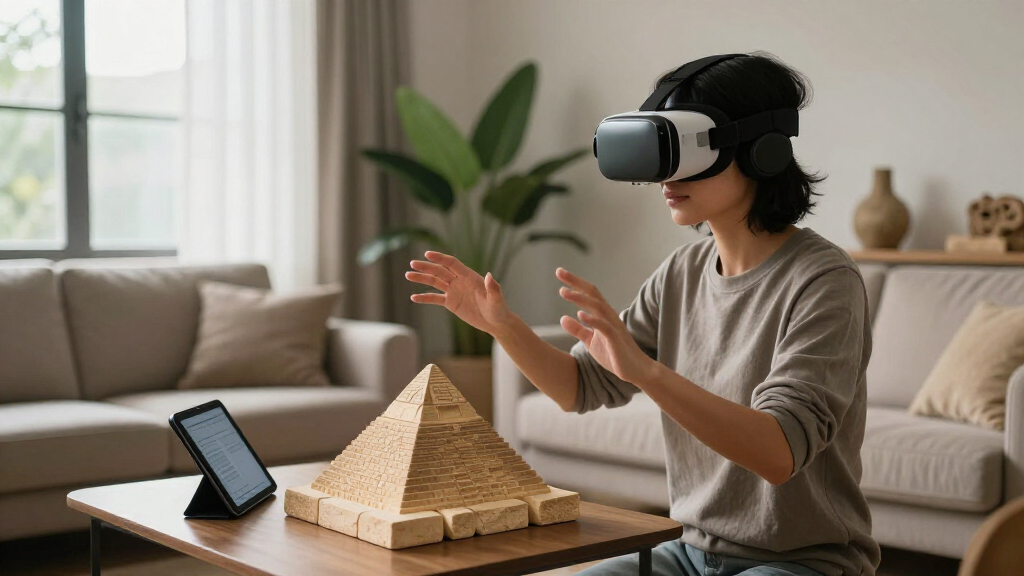
The VR experience, titled Secret of the Pyramid Builders, allows users to explore a detailed reconstruction of pyramid construction sites, including the tools, techniques, and labor involved. According to the developers, it provides interactive simulations of quarrying, block transportation, and monument assembly, giving insight into the scale and sophistication of ancient Egyptian engineering. The project was created through collaboration between archaeologists, educators, and VR developers, with the goal of making ancient history accessible and engaging.
While the VR tool is still in pilot testing, initial feedback indicates it effectively enhances understanding of the construction process and cultural context. The developers emphasize that the experience is based on current archaeological theories and research, though some specific construction methods remain subject to ongoing scholarly debate. The VR application is designed to be accessible on multiple platforms, including Oculus Quest and PC-based VR headsets, aiming for broad educational adoption.
How VR Brings the Mysteries of Pyramid Construction to Life
A new virtual reality experience — Secret of the Pyramid Builders — immerses students in detailed reconstructions of ancient Egyptian construction sites, revealing the tools, techniques, and labor behind humanity’s most iconic monuments.
Built through collaboration between archaeologists, educators, and VR developers, the pilot is now being tested in select schools and museums.
SOURCE: UPLOADVR · STATUS: PILOT TESTINGInside Secret of the Pyramid Builders
Users explore a detailed reconstruction of pyramid construction sites, gaining interactive insight into the scale and sophistication of ancient engineering — something static images and simplified models simply cannot convey.
Interactive Quarrying
Experience how massive stone blocks were extracted from the earth using ancient tools and techniques grounded in archaeological evidence.
Block Transportation
Explore the logistics of moving tons of limestone and granite across the desert — from sledges and ramps to labor organization.
Monument Assembly
Watch and participate in the step-by-step raising of a monument, understanding the engineering precision behind every course of stone.
The Construction Journey, Rebuilt in VR
The experience traces the full building process as understood by current scholarship, letting learners step into each phase of the ancient workflow.
⛏ Quarry the Stone
Extract blocks with period-accurate tools and techniques.
🛷 Transport Blocks
Move massive stones across the construction site.
🧱 Assemble the Monument
Raise courses of stone with engineering precision.
🏛 Understand the Culture
Context on the society and practices of the builders.
VR vs. Traditional History Teaching
The project underscores the growing role of VR in academic and cultural preservation — making ancient sites accessible to a global audience without physical travel.
| Capability | Textbooks & Lectures | Video / Virtual Tours | VR Experience |
|---|---|---|---|
| Immersive first-person perspective | ✗ | ~ Passive viewing | ✓ Fully immersive |
| Interactive construction simulation | ✗ | ✗ | ✓ Quarrying, transport & assembly |
| Sense of scale and engineering | ~ Simplified models | ~ Two-dimensional | ✓ True-to-life proportions |
| Cultural & historical context | ✓ Rich detail | ✓ Included | ✓ Integrated interactively |
| Engagement for digital-native learners | ✗ Limited | ~ Moderate | ✓ Especially effective |
Development & Confidence Levels
The experience is grounded in current archaeological consensus — though some specifics remain subject to ongoing scholarly debate.
“Some specific construction methods — such as precise quarrying techniques and the logistics of labor organization — are still debated among scholars. Further research may lead to updates or revisions of the virtual environment.”
— Remaining Questions on Construction TechniquesWhat Educators & Curious Minds Are Asking
How accurate is the reconstruction?
Based on current research and scholarly consensus — but some methods remain speculative, and the simulation will be updated as findings emerge.
Can it be used outside pilot testing?
Yes. Wider availability with supplementary educational resources is planned once pilot feedback has been incorporated.
Which platforms are supported?
Oculus Quest and PC-based VR headsets — with possible additional platforms — to maximize accessibility for institutions.
Does it include cultural context?
Yes. Cultural elements and historical background are integrated to give a full picture of the pyramid builders’ society and practices.
Innovative Use of VR in Historical Education
This development represents a meaningful advancement in how history and archaeology can be taught through technology. By providing an immersive, interactive experience, the VR tool has the potential to improve engagement and comprehension, especially among younger audiences who are accustomed to digital learning environments. It also offers a new way for educators to demonstrate complex engineering concepts and cultural practices that are difficult to convey through traditional textbooks or lectures.
Furthermore, the project underscores the growing role of VR in academic and cultural preservation efforts, making ancient sites and practices accessible to a global audience without physical travel. If successful, this approach could be expanded to other historical periods and structures, transforming educational methodologies across disciplines.
As an affiliate, we earn on qualifying purchases.
Background on Pyramid Construction and Educational VR
Ancient Egyptian pyramids, particularly the Great Pyramid of Giza, have long fascinated scholars and the public alike. Despite extensive research, many details about their construction—such as precise labor methods and engineering techniques—remain partially speculative. Traditional educational methods often rely on static images or simplified models, which can limit understanding.
In recent years, VR has emerged as a powerful educational tool, capable of creating immersive environments that bring historical sites and processes to life. Prior projects have used VR for virtual tours of archaeological sites or reconstructions of ancient cities, but applications specifically focused on construction techniques are still relatively rare. The new VR experience aims to fill this gap by simulating the actual building process, based on archaeological evidence and scholarly research.
ancient Egypt pyramid VR experience
As an affiliate, we earn on qualifying purchases.
As an affiliate, we earn on qualifying purchases.
Remaining Questions About Construction Techniques
While the VR experience is based on current archaeological theories, some specific construction methods—such as precise quarrying techniques and the logistics of labor organization—are still debated among scholars. It is not yet clear how accurately the VR simulation reflects all aspects of ancient pyramid construction, and further research may lead to updates or revisions of the virtual environment.
VR headset for educational purposes
As an affiliate, we earn on qualifying purchases.
As an affiliate, we earn on qualifying purchases.
Next Steps for Educational Deployment and Research
The developers plan to expand pilot testing to more schools and museums to gather broader feedback and assess educational impact. They also aim to incorporate new archaeological findings as they emerge, refining the simulation. Additionally, efforts are underway to develop supplementary materials, such as lesson plans and interactive quizzes, to enhance classroom integration. Future updates may include more detailed reconstructions of specific construction phases or regional differences in pyramid building techniques.
As an affiliate, we earn on qualifying purchases.
Key Questions
How accurate is the VR reconstruction of pyramid construction?
The VR experience is based on current archaeological research and scholarly consensus, but some methods remain speculative. Developers aim to update the simulation as new findings emerge.
Can this VR tool be used in classrooms outside of pilot testing?
Yes, the developers plan to make the experience more widely available, with additional educational resources, once pilot testing is complete and feedback is incorporated.
What platforms will support the VR experience?
The application is designed for Oculus Quest, PC-based VR headsets, and possibly other platforms, to maximize accessibility for educational institutions.
Does the VR experience include cultural and historical context?
Yes, it integrates cultural elements and historical background to provide a comprehensive understanding of the pyramid builders’ society and practices.
Are there plans to expand the VR experience to other ancient structures?
While currently focused on Egyptian pyramids, the development team is exploring options to adapt similar immersive experiences for other historical sites and monuments.
Source: UploadVR
Fall Picks
fall essentials
As an affiliate, we earn on qualifying purchases.