📊 Full opportunity report: A Men's Skincare App Brings Routine Tracking To Grooming on IdeaNavigator AI — validation score, market gap, and execution plan.

Get the latest gadgets delivered free with Prime
- Fast, free delivery on millions of items
- Prime Video, Amazon Music and more included
- Member-only deals all year
TL;DR
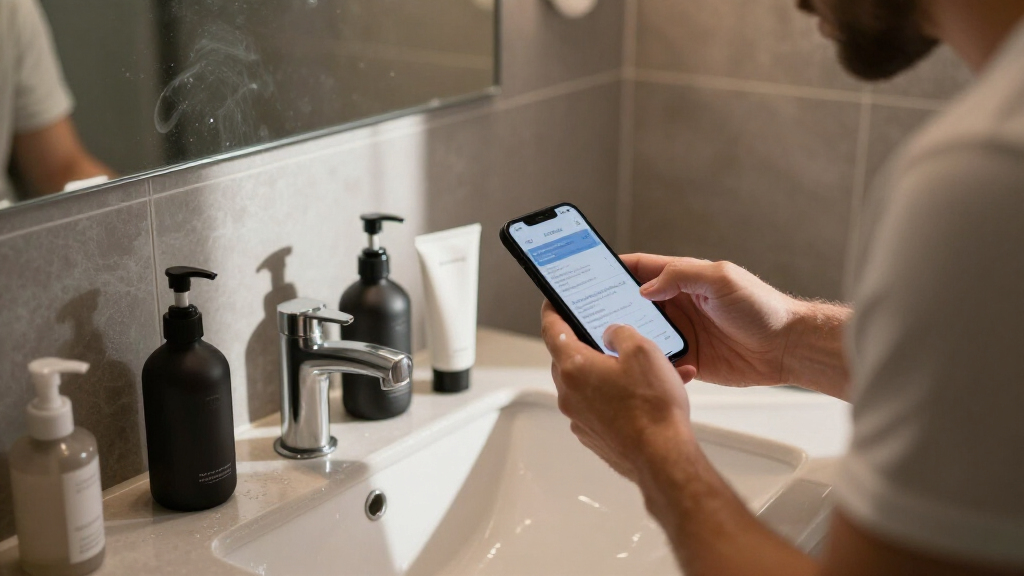
IdeaNavigator AI has outlined a proposed men’s skincare app built around weekly guided selfies, routine logging and progress tracking. The concept is framed as an early product idea; no app launch, user testing results, or evidence for its market claims is provided.
IdeaNavigator AI has proposed a men’s skincare app that would pair weekly guided selfies with routine logs and progress cards, giving users a way to track their skincare habits and perceived changes over time. The concept is aimed at men newly investing in skincare, but there is no announcement of a launched product or reported user-testing results.
The proposed minimum viable product would prompt users to take selfies on a weekly schedule and assess skin clarity, texture and dark circles. It would also record skincare routines, use streaks to encourage consistent check-ins, and present progress in cards described as training metrics rather than beauty scores. These are features in a product proposal, not confirmed capabilities of an available app.
The business model under consideration combines a subscription with affiliate recommendations for products linked to measured skin concerns. IdeaNavigator AI does not provide prices, a product catalogue, the method that would generate the assessments, or details about how recommendations would be selected. It also does not report a development team, release date or funding.
The proposal recommends testing how the app is positioned: the same selfie-capture technology could be presented with men’s-training branding or neutral branding, then compared for conversion and retention across user segments. No results from that test are included, so the preferred branding and the likely response from potential users remain open questions.
Testing a More Practical Skincare Pitch
The concept addresses a specific point of friction: men who are starting a skincare routine may want a visible way to judge whether it is working, while beauty-oriented apps or messaging may not appeal to them. A tracking tool that emphasizes habit and progress could offer a different entry point. Whether that framing attracts and retains users, however, is a hypothesis the proposed test is meant to examine.
If developed, the app would also sit at the intersection of personal care tracking and product recommendations. That combination could make it easier for users to record routines, but it could also connect assessments to purchases through affiliate links. The proposal does not explain how it would distinguish useful recommendations from commercial ones, or how users would be told about those financial relationships.
For readers, the distinction between an idea and a functioning product matters. The proposal describes a possible workflow and revenue model, not evidence that automated skin scoring is accurate, that users want this approach, or that it improves skincare outcomes. Its immediate news value is the product direction and proposed validation plan, rather than a market launch.
men's skincare routine tracker app
As an affiliate, we earn on qualifying purchases.
As an affiliate, we earn on qualifying purchases.
A Concept Built Around Measurable Habits
IdeaNavigator AI describes the intended customer as a man newly invested in skincare who wants proof of progress. It argues that existing beauty apps can feel poorly suited to this audience in their design, tone or marketing. The proposal does not identify particular apps or provide customer research documenting that problem.
It also presents men’s skincare as a growing grooming opportunity and points to looksmaxxing culture as a reason the audience may be receptive to metrics and gamification. Those are market assertions in the concept; no growth figures, time period, comparison baseline or independent research are supplied. The article therefore cannot establish the size or pace of demand from the information provided.
The proposed test follows from that uncertainty: keep the capture technology the same, change the branding, and compare conversion and retention by segment. That design could help determine whether men respond differently to training-oriented language, though the proposal does not specify sample size, test duration, success thresholds or how retention would be measured.
As an affiliate, we earn on qualifying purchases.
Product, Scoring and Demand Remain Untested
No evidence is provided that an app has been built, that the concept has been tested with users, or that a company plans to release it. The proposed selfie assessments also lack technical detail: it is unclear how skin clarity, texture or dark circles would be scored, how lighting and camera differences would be handled, or whether scores would be reviewed by qualified professionals.
The concept does not describe privacy protections for face images and routine data, including storage, retention, deletion or whether images would be used to develop assessment systems. It also does not establish whether any scoring would be reliable enough to show meaningful change rather than differences caused by capture conditions.
Demand and commercial viability are likewise unconfirmed. The proposal offers no user numbers, conversion data, subscription pricing, affiliate terms or measured retention. Its statements about market growth and interest in gamified tracking should be treated as rationale for testing, not as established findings.
As an affiliate, we earn on qualifying purchases.
Branding Tests Would Be the Next Step
The next step outlined in the concept is a positioning test comparing men’s-training branding with neutral branding while holding the capture technology constant. The proposed measures are conversion and retention by segment. No test schedule, recruitment plan or results have been announced.
Before the idea could be assessed as a consumer product, further details would be needed on how the scoring works, how face data is handled, what subscriptions and affiliate recommendations would involve, and whether users find the assessments useful. For now, the proposal remains an early product hypothesis rather than a confirmed app launch.
Source: IdeaNavigator AI
As an affiliate, we earn on qualifying purchases.
Key Questions
Is the men’s skincare tracking app available now?
No launch is reported. The app is presented as a product concept, with no release date or availability details.
What features does the proposal describe?
It proposes weekly guided selfies, tracking for skin clarity, texture and dark circles, routine logging, streaks and progress cards. These features have not been confirmed as part of a working product.
How would the app make money?
The suggested model is a subscription combined with affiliate product recommendations linked to measured concerns. Pricing and affiliate arrangements are not provided.
Has the idea been tested with users?
No user-test results are reported. The proposal recommends comparing men’s-training branding with neutral branding and measuring conversion and retention.
Source: IdeaNavigator AI
Halloween Picks
halloween
As an affiliate, we earn on qualifying purchases.