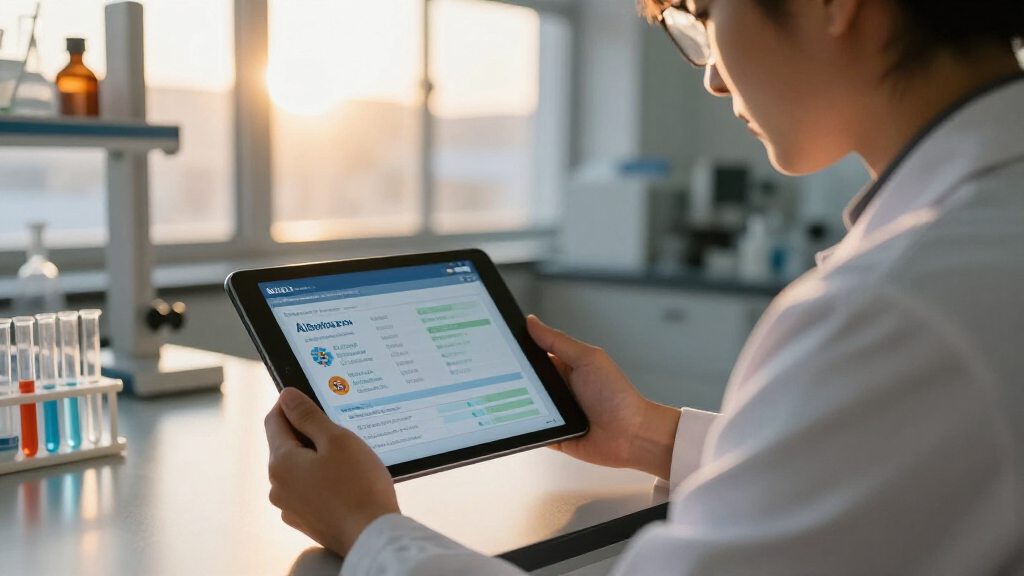

🔍 Read the full analysis: Innovative Antimicrobial Search Methods With Codex And ChatGPT AI Tools on ThorstenMeyerAI.com
Prime for Young Adults — start your free trial
Fast free delivery, streaming and member deals for eligible 18–24 year olds.
Try it freeAs an affiliate, we earn on qualifying purchases.
TL;DR
Researchers at the University of Pennsylvania are employing AI tools like Codex and ChatGPT alongside custom deep-learning models to dramatically speed up the initial search for antimicrobial molecules in genomes. This approach reduces the early discovery phase from years to hours, though validation and clinical testing remain lengthy processes. The development signals a potential shift in how antibiotics are discovered amid rising resistance.
Researchers at the University of Pennsylvania’s bioengineering lab, led by César de la Fuente, have demonstrated that integrating AI tools such as Codex, ChatGPT, and custom deep-learning models can significantly accelerate the initial search for antimicrobial molecules within genomic datasets. This approach is detailed in the original analysis. This development could reduce the early-stage candidate identification process from years to hours, marking a potential breakthrough in drug discovery efforts against rising antimicrobial resistance.
The lab’s approach treats biological information as a form of data that can be analyzed computationally, similar to methods discussed in recent AI research on drug discovery. By training deep-learning models to recognize patterns in DNA and protein sequences, the team can scan vast genomic databases—including genomes of extinct organisms—for peptides with potential antimicrobial activity, exemplifying how AI accelerates scientific discovery. ChatGPT and Codex support the process by assisting with hypothesis generation, coding, data processing, and interdisciplinary communication, making the workflow more efficient and accessible across disciplines.
According to the lab, this AI-enhanced pipeline has compressed the initial candidate search phase, traditionally taking years, into a matter of hours. This speed-up aims to enable researchers to focus laboratory efforts on the most promising molecules, thereby accelerating the overall timeline for new antibiotic development. However, the report emphasizes that this is only the first step; candidates still require extensive validation, including lab testing, toxicity assessments, and clinical trials, before any new drug reaches patients.
Potential Impact on Antibiotic Development Speed
This advancement addresses a critical bottleneck in antibiotic discovery—initial candidate identification—by leveraging AI to rapidly analyze complex genomic data. Given the global threat of antimicrobial resistance, faster discovery pipelines could help replenish the dwindling pipeline of new antibiotics. Additionally, the integration of AI tools like ChatGPT and Codex exemplifies a broader shift toward cross-disciplinary collaboration, lowering barriers for biologists, chemists, and computer scientists to work together effectively. Nevertheless, the true impact depends on subsequent validation and regulatory approval, which remain lengthy and uncertain processes.
As an affiliate, we earn on qualifying purchases.
Evolution of Antimicrobial Discovery Methods
Traditional antimicrobial discovery involved laborious, manual screening of natural sources such as soil microbes, plants, and marine organisms—an iterative process often spanning several years. The advent of digital genome databases shifted the focus toward in silico screening, allowing researchers to search through millions of genetic sequences for potential antimicrobial peptides. Despite this progress, the bottleneck persisted in identifying functional candidates worth laboratory validation. Recent developments, including the use of AI for pattern recognition and hypothesis generation, aim to further streamline this process. The University of Pennsylvania’s work builds on prior research that used AI to discover antimicrobial peptides but claims a substantial reduction in initial search time through integrated tools like ChatGPT and Codex.
“Antimicrobial resistance is one of the greatest existential threats to humanity, and yet we haven’t had a new class of antibiotics in 50 years.”
— César de la Fuente
As an affiliate, we earn on qualifying purchases.
Limitations of the AI-Enhanced Discovery Approach
While the report claims that the initial candidate search has been compressed from years to hours, it remains unclear how many of these candidates have progressed to laboratory validation or clinical trials. The report does not specify the number of molecules that have demonstrated antimicrobial activity in vitro or in vivo, nor does it provide data on their safety or resistance potential. Additionally, the reliance on AI predictions introduces uncertainties related to false positives, toxicity risks, and unforeseen resistance mechanisms that only thorough laboratory and clinical testing can reveal. The use of OpenAI’s tools in this context also raises questions about the reproducibility and peer review of these results.
molecular modeling software for drug discovery
As an affiliate, we earn on qualifying purchases.
As an affiliate, we earn on qualifying purchases.
Next Steps Toward Clinical Application
The immediate next phase involves laboratory validation of the AI-identified candidates to confirm antimicrobial activity and assess safety profiles. Researchers will need to optimize promising molecules through chemical modifications and conduct resistance studies. Simultaneously, efforts will focus on scaling up synthesis and navigating regulatory pathways. The lab emphasizes that AI-driven discovery must be integrated with traditional experimental validation to ensure safety and efficacy. Further research will also explore expanding the approach to other types of pathogens and resistance mechanisms, with the goal of developing a pipeline capable of rapid response to emerging threats.
laboratory automation tools for microbiology
As an affiliate, we earn on qualifying purchases.
As an affiliate, we earn on qualifying purchases.
Key Questions
Does this AI approach guarantee the discovery of new antibiotics?
No, it accelerates the initial search for candidate molecules, but all candidates still require extensive laboratory testing, safety assessments, and clinical trials before becoming approved drugs.
Are the AI tools used in this research publicly available?
ChatGPT and Codex are commercial products from OpenAI, and their use in research is subject to licensing. The custom deep-learning models are developed by the university team and are not publicly disclosed.
How reliable are AI predictions in drug discovery?
AI predictions are valuable for narrowing down candidates but are not infallible. False positives, toxicity, and resistance risks require laboratory validation to confirm efficacy and safety.
Will this method replace traditional discovery approaches?
It is unlikely to replace traditional methods entirely but aims to complement and accelerate them, especially in the early screening and hypothesis generation stages.
What is the timeline for bringing AI-discovered antibiotics to market?
Even with accelerated initial discovery, the full process—including validation, clinical trials, and regulatory approval—typically takes several years, often a decade or more.
Primary source: OpenAI · via ThorstenMeyerAI.com
Fall Picks
fall essentials
As an affiliate, we earn on qualifying purchases.