
TL;DR

Get the latest gadgets delivered free with Prime
- Fast, free delivery on millions of items
- Prime Video, Amazon Music and more included
- Member-only deals all year
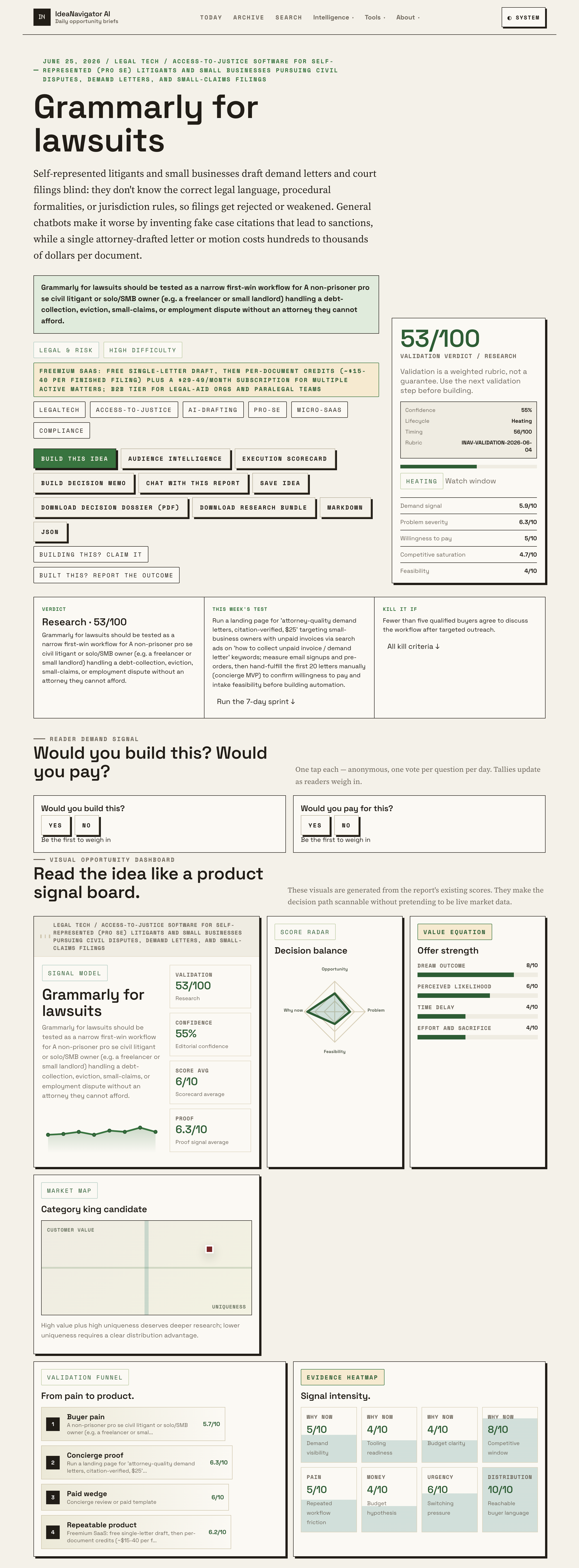
An AI-based tool called ‘Grammarly for Lawsuits’ is in development to help non-lawyers draft accurate, court-formatted legal documents. It verifies citations and ensures procedural compliance, addressing a major gap for self-represented litigants and small businesses.
A new AI tool, dubbed ‘Grammarly for Lawsuits,’ is being developed to assist non-lawyer users in drafting court-ready legal documents, including demand letters and small-claims filings. It aims to address the widespread challenge faced by self-represented litigants and small business owners, who often lack legal expertise and struggle with procedural formalities and citation accuracy. The tool’s development reflects an urgent need to improve the quality and correctness of filings in civil courts, where many cases are initiated without legal counsel.
The project involves creating a web application that guides users through structured intake questions—covering parties, amounts, contract details, and jurisdiction—to generate properly formatted legal documents. The core feature is a ‘lawsuit Grammarly’ pass, which flags weak or missing elements and verifies every legal citation against a verified database, aiming to eliminate hallucinated or incorrect references. This verification process is critical, as generic language models have been shown to produce false citations, which can lead to sanctions or case dismissals.
The initiative is targeted at small-business owners, landlords, and individuals handling debt collection, eviction notices, or employment disputes without legal representation. The developers plan to offer a freemium SaaS model, starting with free single-document drafts and charging per-document fees ($15-40) or monthly subscriptions ($29-49). The service also includes a B2B tier for legal aid organizations and paralegals, aiming to expand access to affordable, high-quality legal document preparation.
Early validation efforts include launching a landing page aimed at small-business owners seeking unpaid invoice collection letters, with search ads targeting relevant keywords. The initial phase involves manually fulfilling the first 20 documents to gauge willingness to pay and assess user experience, before automating the process further.
Potential Impact on Self-Represented Civil Litigation
This development could significantly improve the quality of legal filings submitted by self-represented litigants and small businesses, reducing errors, sanctions, and case dismissals caused by citation mistakes and procedural missteps. By verifying citations and ensuring proper formatting, the tool addresses a critical gap in access to justice, potentially lowering legal costs and increasing case success rates for non-lawyers. It also responds to the rising trend of pro se litigation, which now accounts for roughly 60% of civil cases in the U.S., and the proliferation of AI-generated citations that can flood courts with inaccuracies.
Ultimately, if successful, this tool could serve as a model for AI-driven legal assistance, encouraging courts and legal providers to adopt similar verification-based drafting aids, and helping democratize access to justice for those unable to afford traditional legal services.
As an affiliate, we earn on qualifying purchases.
Rise of Pro Se Litigation and Citation Errors
Over the past decade, the number of self-represented litigants in U.S. civil courts has increased markedly, with about 60% of civil cases now involving a pro se party. This surge is driven by factors such as rising legal costs and limited access to affordable legal counsel. However, self-represented litigants often lack familiarity with legal language, procedural rules, and jurisdictional requirements, leading to rejected or weakened filings.
Meanwhile, the widespread use of large language models (LLMs) for legal document drafting has introduced new risks. Reports indicate that generic AI chatbots frequently hallucinate citations—fictitious case laws or statutes—contributing to errors that can result in sanctions or case dismissals. Data logs from late 2025 reveal hundreds of incidents of citation hallucinations, with pro se litigants accounting for approximately 39% more such errors than attorneys, highlighting an urgent need for verification-focused AI tools in legal drafting.
This context underscores the importance of developing specialized AI solutions that prioritize citation accuracy and procedural compliance, rather than raw language generation, to support self-represented parties effectively.
“The proliferation of hallucinated citations in AI-generated legal documents poses a serious risk to self-represented litigants, who often lack the expertise to identify errors.”
— an anonymous researcher
court-ready legal document templates
As an affiliate, we earn on qualifying purchases.
As an affiliate, we earn on qualifying purchases.
Unclear Scope and Adoption of the AI Tool
It is not yet clear how widely the ‘Grammarly for Lawsuits’ tool will be adopted, or how effective it will be in reducing citation errors in real-world court filings. The project is still in early testing phases, and user feedback, legal compliance, and integration with court systems remain to be evaluated. Additionally, questions remain about the extent to which courts will accept filings generated or verified by AI, and how regulatory or ethical considerations might influence deployment.
citation verification tool for legal documents
As an affiliate, we earn on qualifying purchases.
As an affiliate, we earn on qualifying purchases.
Next Steps for Validation and Deployment
The developers plan to launch initial pilot testing by manually fulfilling the first batch of demand letters and small-claims filings, gathering user feedback on usability, accuracy, and cost-effectiveness. Success in these early phases will determine whether further automation and scaling are feasible. Future milestones include integrating comprehensive legal databases, expanding the range of document types supported, and establishing partnerships with legal aid organizations to broaden access. Monitoring court acceptance and regulatory responses will also be key to wider adoption.
AI legal assistance for small businesses
As an affiliate, we earn on qualifying purchases.
As an affiliate, we earn on qualifying purchases.
Key Questions
How will the AI verify legal citations?
The AI will compare each citation against a verified legal database, flagging any discrepancies or hallucinations to ensure accuracy and compliance with court standards.
Can this tool replace a lawyer?
No, it is designed to assist self-represented litigants and small businesses by improving document quality, not to replace professional legal advice or representation.
Will courts accept documents generated by this AI?
This remains uncertain; acceptance will depend on court policies and the legal community’s trust in AI-verified filings, which is still being evaluated.
What types of documents will the tool support?
Initially, it will focus on demand letters, small-claims statements, and basic pleadings related to debt collection, eviction, and employment disputes.
How much will the service cost?
The initial pricing model includes a free draft option, with per-document fees ranging from $15 to $40, and subscription plans from $29 to $49 per month for multiple matters.
Source: IdeaNavigator AI
Evergreen bestsellers Picks
bestsellers
As an affiliate, we earn on qualifying purchases.