
TL;DR

Get the latest gadgets delivered free with Prime
- Fast, free delivery on millions of items
- Prime Video, Amazon Music and more included
- Member-only deals all year
SenseTime has released its SenseNova-Vision model as open source, making it accessible to developers worldwide. This move signals a strategic shift towards ecosystem growth and aligns with China’s broader open-source AI initiatives. Key technical details and independent evaluations are still awaited.
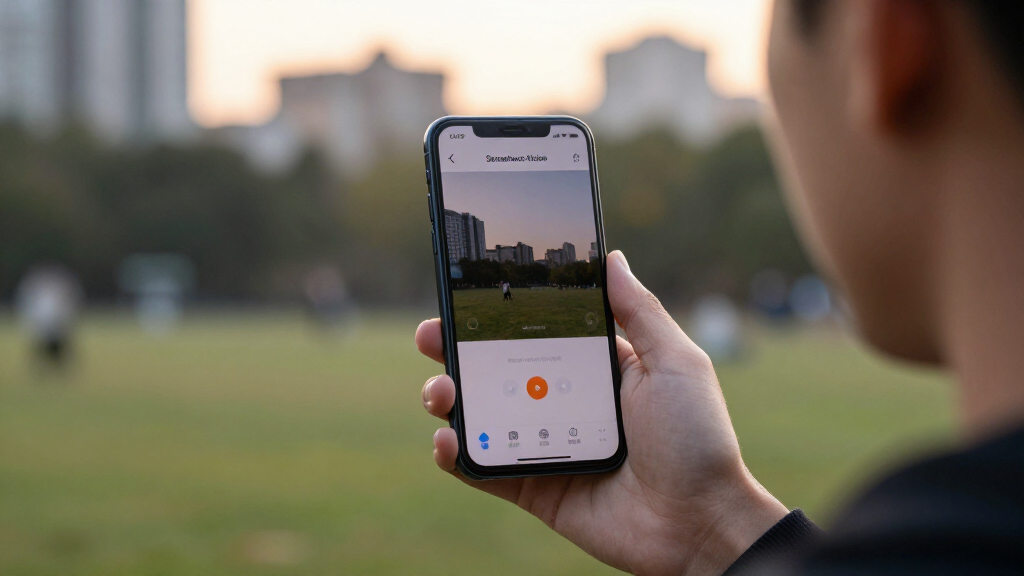
Chinese AI company SenseTime has open-sourced its SenseNova-Vision model, a unified vision system designed to handle multiple visual tasks within a single architecture. The release aims to expand developer access and foster innovation in vision-based AI applications, marking a strategic shift for the company from proprietary software to open collaboration. This move is part of China’s broader push to make influential AI models openly accessible, competing with US-based closed models.
SenseTime’s SenseNova-Vision is part of its larger SenseNova foundation model family, which underpins its commercial AI products. For more details, see the original analysis. The company confirmed the open-source release through its official channels and TechNode reporting, but specifics such as parameter count, benchmark scores, and licensing terms have not yet been disclosed.
The model is described as a unified vision system, capable of performing various visual tasks within a single architecture, though details on whether it includes image generation or solely understanding tasks are still unclear. The move aligns with China’s broader push to make influential AI models openly accessible, competing with US-based closed models. For more context, see the detailed coverage in the original analysis.
Developers will be able to download, deploy, and modify the model, but the licensing terms—which determine commercial use—remain unspecified. No independent testing or benchmarking has been published so far, so claims about its performance are solely from SenseTime at this stage.
Implications of Open-Sourcing a Flagship Vision Model
This release signifies a strategic shift for SenseTime, which historically focused on proprietary computer-vision solutions for enterprise and government clients. By open-sourcing SenseNova-Vision, the company appears to prioritize ecosystem development and developer engagement over direct licensing revenue. This move also strengthens China’s position in the global AI landscape by providing low-cost, open alternatives to US models, potentially accelerating innovation in areas like image analysis, multimodal AI, and document understanding.
However, the actual impact depends on the model’s real-world performance and how broadly it is adopted, which remains uncertain until independent evaluations are available. The release could influence the competitive dynamics between Chinese and Western AI firms, especially in the open-source domain.
Products Worth Considering

Amazon Kindle Paperwhite Signature Edition (12th Generation, 2024), 32 GB, Metallic Black

DJI Osmo Mobile 8 Standard Combo Phone Gimbal Stabilizer

DJI Osmo Mobile 8 Phone Gimbal with Mic Mini Transmitter, Infinity Black
As an affiliate, we earn on qualifying purchases.
Background on SenseTime’s AI Strategy and Open-Source Push
Founded in 2014, SenseTime built its early reputation on facial recognition and computer vision for surveillance, becoming one of China’s most valuable AI startups. US sanctions and limited commercial returns prompted the company to pivot towards generative AI and large models in recent years.
In 2023, SenseTime introduced the SenseNova model family, positioning it as the core of its cloud and enterprise offerings. The open-source release of SenseNova-Vision extends this strategy into the public domain, aligning with efforts by other Chinese firms like Alibaba and DeepSeek to foster international developer communities and challenge US dominance in AI.
This move reflects a broader trend among Chinese AI companies to leverage open-source models for ecosystem expansion and global influence.
“SenseNova-Vision is a unified vision model.”
— SenseTime
Technical Details and Performance Benchmarks Still Unclear
Critical specifics such as model size, training data, benchmark results, and licensing conditions have not been publicly shared. It remains unknown whether the model includes capabilities like image generation or solely visual understanding. Additionally, independent evaluations of its performance are yet to be published, so claims about its capabilities are unverified at this stage.
Upcoming Technical Documentation and Developer Testing
Developers are expected to test the model soon, which will provide initial benchmark comparisons against other open vision models. SenseTime plans to release detailed technical documentation and licensing terms in the coming weeks, which will clarify the model’s commercial viability and scope. Further open-source releases from the SenseNova family are also anticipated as part of SenseTime’s broader ecosystem strategy.
Key Questions
What is SenseNova-Vision?
SenseNova-Vision is a vision AI model released by SenseTime, described as a unified system capable of handling multiple visual tasks within a single architecture. It is part of the company’s SenseNova family of foundation models.
Is SenseNova-Vision free to use?
The model has been open-sourced, allowing developers to download and modify it. However, the licensing terms—which determine if it can be used commercially—have not yet been disclosed.
What does ‘unified vision model’ mean?
It refers to a single architecture capable of performing multiple visual tasks rather than relying on separate specialized models. It is unclear whether this includes image generation or just understanding tasks.
How does this compare with other open AI models?
This release joins a growing list of Chinese open-source models like Alibaba’s Qwen and DeepSeek’s language models, contributing to a diverse ecosystem that challenges US dominance in AI.
Source: ThorstenMeyerAI.com