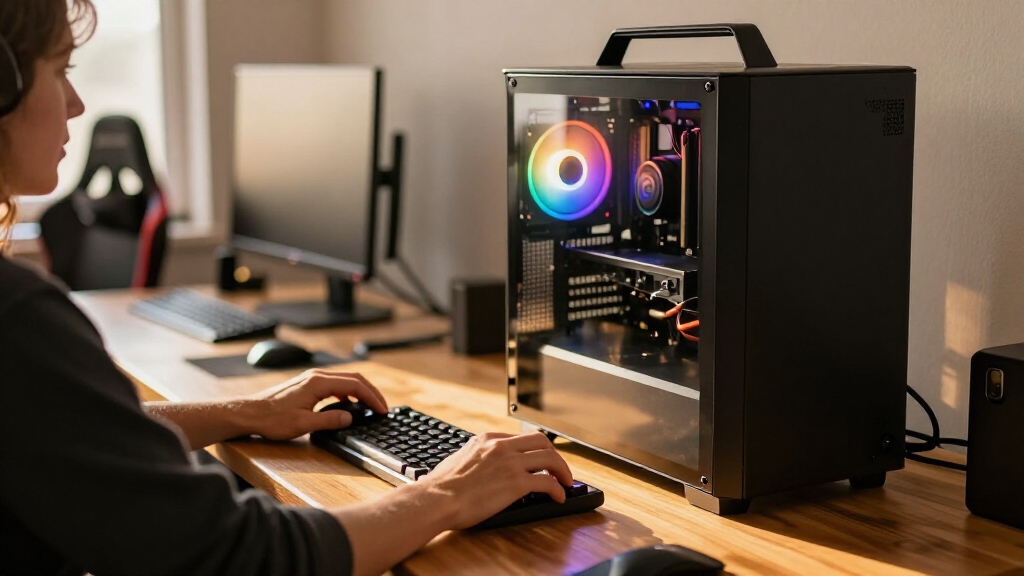

The best gaming PCs in 2027 balance graphics performance, processor speed, memory, and room to grow. My best overall pick is the MSI Codex Z2, whose RTX 5070, 32GB of DDR5 memory, and 2TB SSD make it a well-rounded choice for demanding games. For higher-end play, the STORMCRAFT Phantom pairs an RTX 5080 with a Ryzen 7 9800X3D, while the CyberPowerPC Gamer Master offers a more modest RTX 5060 Ti setup. The main tradeoffs are how much graphics power you need, whether a system has enough memory and storage out of the box, and how much upgrade flexibility matters to you. Keep reading for my full breakdown of all 15 options and guidance on choosing the right PC for your setup.

Get the latest gadgets delivered free with Prime
- Fast, free delivery on millions of items
- Prime Video, Amazon Music and more included
- Member-only deals all year
Complete the kit



Key Takeaways
- The MSI Codex Z2 is my best overall pick because its RTX 5070 configuration is paired with 32GB of DDR5 and a 2TB SSD, avoiding the tight memory and storage starting points found in several midrange options.
- The RTX 5080 systems sit at the performance end of this lineup. The STORMCRAFT Phantom and Skytech King 95 are aimed at buyers who prioritize graphics headroom, while their stronger components may be more than a casual or entry-level player needs.
- Processor and graphics balance matters more than a long spec list. A Ryzen 9 or Core i9 does not automatically make a PC a better gaming fit than an RTX 5070 or RTX 5080 system with a more gaming-focused processor.
- Several PCs share nearly the same starting point. The CyberPowerPC Gamer Master and KOTIN RTX 5060 Ti models both list 16GB of DDR5 and a 1TB SSD, so buyers should compare their full configurations and upgrade paths rather than choosing by processor name alone.
- Storage and memory vary widely even among similarly positioned PCs. The Horizon Autherium Dragon lists 64GB of RAM and 5TB of storage, while some other systems start at 16GB and 1TB; the larger capacities suit heavy multitasking and large game libraries, but do not replace checking graphics performance.
| YAWYORE Gaming Desktop PC with AMD Ryzen 7 5700X and GeForce RTX 5060 |  | Best for 1080p Gaming | Processor: AMD Ryzen 7 5700X, 8 cores and 16 threads, up to 4.6GHz | Graphics: GeForce RTX 5060, 8GB GDDR7 | Memory: 32GB DDR4 3200MHz (2 x 16GB) | VIEW LATEST PRICE | See Our Full Breakdown |
| MSI Codex Z2 Gaming Desktop, Ryzen 7 8700F, GeForce RTX 5070, 32GB DDR5, 2TB SSD |  | Best Overall | Processor: AMD Ryzen 7 8700F, 8 cores and 16 threads, up to 5.0GHz | Graphics: NVIDIA GeForce RTX 5070 | Memory: 32GB DDR5, 6000MHz | VIEW LATEST PRICE | See Our Full Breakdown |
| CyberPowerPC Gamer Master Gaming Desktop, Ryzen 7 8700F, GeForce RTX 5060 Ti 8GB, 16GB DDR5, 1TB SSD |  | Best Starter Gaming PC | Processor: AMD Ryzen 7 8700F, 8 cores, 4.1GHz | Chipset: AMD B850 | Graphics: NVIDIA GeForce RTX 5060 Ti, 8GB | VIEW LATEST PRICE | See Our Full Breakdown |
| KOTIN Gaming Desktop PC with Ryzen 7 9700X and Radeon RX 9070 XT |  | Best for AMD Graphics and Cooling | Processor: AMD Ryzen 7 9700X, 3.8GHz base speed, up to 5.5GHz | Graphics: AMD Radeon RX 9070 XT, 16GB GDDR6 | Memory: 32GB DDR5 | VIEW LATEST PRICE | See Our Full Breakdown |
| CyberPowerPC Gaming PC, AMD Ryzen 9 9900X, GeForce RTX 5070 12GB |  | Best for Gaming and Multitasking | Processor: AMD Ryzen 9 9900X, 12 cores, 4.4GHz | Chipset: AMD B850 | Graphics: NVIDIA GeForce RTX 5070, 12GB | VIEW LATEST PRICE | See Our Full Breakdown |
| Skytech Crystal Gaming Desktop PC with Ryzen 7 5700, RTX 5060, 32GB RAM, and 1TB SSD |  | Best for 1080p Gaming | Processor: AMD Ryzen 7 5700, 3.7GHz base, up to 4.6GHz | Graphics: NVIDIA GeForce RTX 5060, 8GB GDDR7; brand may vary | Memory: 32GB DDR4 3200MHz | VIEW LATEST PRICE | See Our Full Breakdown |
| Skytech King 95 Gaming Desktop with Ryzen 7 9800X3D and RTX 5070 Ti |  | Best for High-End Gaming | Processor: AMD Ryzen 7 9800X3D, 4.7GHz base, up to 5.2GHz | Graphics: NVIDIA GeForce RTX 5070 Ti, 16GB GDDR7; brand may vary | Memory: 32GB DDR5 6000 RGB | VIEW LATEST PRICE | See Our Full Breakdown |
| Horizon Autherium Dragon Gaming Desktop, Intel Core i9, RTX 5070 OC, 64GB RAM, 5TB Storage |  | Best for Multitasking and Large Libraries | Processor: Unlocked Intel Core i9, up to 5.4GHz | Graphics: NVIDIA GeForce RTX 5070 OC, 12GB GDDR7 | Memory: 64GB RAM | VIEW LATEST PRICE | See Our Full Breakdown |
| Skytech Azure Gaming Desktop with Ryzen 7 9850X3D and Radeon RX 9070 XT |  | Best for Radeon-Based Gaming | Processor: AMD Ryzen 7 9850X3D, 4.7GHz, up to 5.6GHz | Graphics: AMD Radeon RX 9070 XT, 16GB GDDR6; brand may vary | Memory: 32GB DDR5 5600 | VIEW LATEST PRICE | See Our Full Breakdown |
| KOTIN Gaming Desktop with RTX 5070 and Ryzen 7 9700X |  | Best Compact Gaming PC | Processor: AMD Ryzen 7 9700X, 8-core | Graphics: NVIDIA GeForce RTX 5070, 12GB GDDR7 | Memory: 32GB DDR5 6000MHz | VIEW LATEST PRICE | See Our Full Breakdown |
| iBUYPOWER Element Gaming Desktop with AMD Ryzen 9 7900X and NVIDIA GeForce RTX 5070 |  | Best for Gaming and Content Creation | Processor: AMD Ryzen 9 7900X, 4.7 GHz base, up to 5.6 GHz | Graphics: NVIDIA GeForce RTX 5070, 12GB | Memory: 32GB DDR5 RGB, 4800 MHz | VIEW LATEST PRICE | See Our Full Breakdown |
| Alienware Aurora Gaming Desktop with RTX 5070 and Intel Core Ultra 7 265F |  | Best for Connectivity and Support | Processor: Intel Core Ultra 7 265F | Graphics: NVIDIA GeForce RTX 5070, 12GB GDDR7 | Memory: 32GB DDR5 | VIEW LATEST PRICE | See Our Full Breakdown |
| KOTIN Gaming Desktop PC, Ryzen 7 8700F, GeForce RTX 5060 Ti 8GB, 16GB DDR5, 1TB SSD |  | Best Upgradeable Starter PC | Processor: AMD Ryzen 7 8700F, 4.1 GHz base, up to 5 GHz | Graphics: GeForce RTX 5060 Ti, 8GB GDDR7 | Memory: 16GB DDR5 | VIEW LATEST PRICE | See Our Full Breakdown |
| STORMCRAFT Phantom Gaming PC with RTX 5080 and Ryzen 7 9800X3D |  | Best for High-End Gaming and Support | Processor: AMD Ryzen 7 9800X3D, 8 cores, 16 threads, up to 5.2 GHz | Graphics: NVIDIA RTX 5080, 16GB GDDR7, 256-bit | Memory: 32GB DDR5-6000 RGB | VIEW LATEST PRICE | See Our Full Breakdown |
| Skytech King 95 Gaming Desktop with Ryzen 7 9850X3D and GeForce RTX 5080 |  | Best Premium Gaming Performance | Processor: AMD Ryzen 7 9850X3D, 4.7 GHz base, up to 5.6 GHz | Graphics: NVIDIA GeForce RTX 5080, 16GB GDDR7; brand may vary | Memory: 32GB DDR5-6000 RGB | VIEW LATEST PRICE | See Our Full Breakdown |
| gaming PC | Processor | Graphics | Memory | Storage |
|---|---|---|---|---|
| YAWYORE Gaming Desktop PC with | AMD Ryzen 7 5700X, 8 cores and 16 threads, up to 4.6GHz | GeForce RTX 5060, 8GB GDDR7 | 32GB DDR4 3200MHz (2 x 16GB) | 1TB M.2 NVMe PCIe SSD |
| MSI Codex Z2 Gaming Desktop | AMD Ryzen 7 8700F, 8 cores and 16 threads, up to 5.0GHz | NVIDIA GeForce RTX 5070 | 32GB DDR5, 6000MHz | 2TB M.2 NVMe SSD |
| CyberPowerPC Gamer Master Gami | AMD Ryzen 7 8700F, 8 cores, 4.1GHz | NVIDIA GeForce RTX 5060 Ti, 8GB | 16GB DDR5, 4800MHz | 1TB PCIe 4.0 NVMe SSD |
| KOTIN Gaming Desktop PC with R | AMD Ryzen 7 9700X, 3.8GHz base speed, up to 5.5GHz | AMD Radeon RX 9070 XT, 16GB GDDR6 | 32GB DDR5 | 1TB PCIe 4.0 NVMe SSD |
| CyberPowerPC Gaming PC | AMD Ryzen 9 9900X, 12 cores, 4.4GHz | NVIDIA GeForce RTX 5070, 12GB | 32GB DDR5, 4800MT/s | 1TB PCIe 4.0 NVMe SSD |
| Skytech Crystal Gaming Desktop | AMD Ryzen 7 5700, 3.7GHz base, up to 4.6GHz | NVIDIA GeForce RTX 5060, 8GB GDDR7; brand may vary | 32GB DDR4 3200MHz | 1TB NVMe M.2 SSD |
| Skytech King 95 Gaming Desktop | AMD Ryzen 7 9800X3D, 4.7GHz base, up to 5.2GHz | NVIDIA GeForce RTX 5070 Ti, 16GB GDDR7; brand may vary | 32GB DDR5 6000 RGB | 2TB Gen4 NVMe M.2 SSD |
| Horizon Autherium Dragon Gamin | Unlocked Intel Core i9, up to 5.4GHz | NVIDIA GeForce RTX 5070 OC, 12GB GDDR7 | 64GB RAM | 1TB M.2 NVMe SSD plus 4TB 7200RPM HDD |
| Skytech Azure Gaming Desktop w | AMD Ryzen 7 9850X3D, 4.7GHz, up to 5.6GHz | AMD Radeon RX 9070 XT, 16GB GDDR6; brand may vary | 32GB DDR5 5600 | 2TB Gen4 NVMe M.2 SSD |
| KOTIN Gaming Desktop with RTX | AMD Ryzen 7 9700X, 8-core | NVIDIA GeForce RTX 5070, 12GB GDDR7 | 32GB DDR5 6000MHz | 1TB PCIe 4.0 NVMe SSD |
| iBUYPOWER Element Gaming Deskt | AMD Ryzen 9 7900X, 4.7 GHz base, up to 5.6 GHz | NVIDIA GeForce RTX 5070, 12GB | 32GB DDR5 RGB, 4800 MHz | 1TB NVMe SSD |
| Alienware Aurora Gaming Deskto | Intel Core Ultra 7 265F | NVIDIA GeForce RTX 5070, 12GB GDDR7 | 32GB DDR5 | 1TB SSD |
| KOTIN Gaming Desktop PC | AMD Ryzen 7 8700F, 4.1 GHz base, up to 5 GHz | GeForce RTX 5060 Ti, 8GB GDDR7 | 16GB DDR5 | 1TB PCIe Gen4 NVMe SSD |
| STORMCRAFT Phantom Gaming PC w | AMD Ryzen 7 9800X3D, 8 cores, 16 threads, up to 5.2 GHz | NVIDIA RTX 5080, 16GB GDDR7, 256-bit | 32GB DDR5-6000 RGB | 2TB NVMe Gen4 SSD |
| Skytech King 95 Gaming Desktop | AMD Ryzen 7 9850X3D, 4.7 GHz base, up to 5.6 GHz | NVIDIA GeForce RTX 5080, 16GB GDDR7; brand may vary | 32GB DDR5-6000 RGB | 2TB NVMe M.2 SSD |
More Details on Our Top Picks
YAWYORE Gaming Desktop PC with AMD Ryzen 7 5700X and GeForce RTX 5060
The YAWYORE is the straightforward pick for players targeting 1080p gaming without giving up memory or storage. Its RTX 5060 supports ray tracing and DLSS 4, while 32GB of RAM and a 1TB NVMe SSD leave room for multitasking and a game library. Compared with the CyberPowerPC Gamer Master, it arrives with twice the listed system memory, though that model pairs a newer Ryzen 7 8700F with an RTX 5060 Ti. The YAWYORE’s Ryzen 7 5700X remains an 8-core processor, but its older DDR4 platform is less modern than the DDR5 systems in this lineup. The listed maximum resolution is 1920 x 1080, which makes the intended display target clear and limits its appeal to buyers seeking higher-resolution gaming.
Pros:- RTX 5060 supports ray tracing and DLSS 4
- 32GB of memory suits gaming alongside everyday multitasking
- 1TB NVMe SSD provides fast storage for games and applications
- Includes Wi-Fi, Bluetooth, and remote-controlled ARGB fans
Cons:- Listed maximum resolution of 1920 x 1080 limits its stated display target
- DDR4 platform is older than the DDR5 systems in this lineup
- Graphics card brand may vary
Best for: Players building a 1080p setup who want 32GB of RAM, wireless connectivity, and a ready-to-use Windows desktop.
Not ideal for: Buyers targeting 1440p or higher resolution, or those who want a newer DDR5 platform and clearly specified graphics-card branding.
- Processor:AMD Ryzen 7 5700X, 8 cores and 16 threads, up to 4.6GHz
- Graphics:GeForce RTX 5060, 8GB GDDR7
- Memory:32GB DDR4 3200MHz (2 x 16GB)
- Storage:1TB M.2 NVMe PCIe SSD
- Motherboard:MSI B550M-A PRO
- Operating system:Windows 11
- Power supply:650W, 80 Plus Bronze
- Connectivity:Wi-Fi and Bluetooth
- Maximum resolution:1920 x 1080
Our verdict“Choose the YAWYORE for a 1080p-focused build with generous memory, but skip it if higher-resolution gaming or a newer platform matters more.”
MSI Codex Z2 Gaming Desktop, Ryzen 7 8700F, GeForce RTX 5070, 32GB DDR5, 2TB SSD
The MSI Codex Z2 is the most balanced choice here for buyers who want a strong gaming foundation without leaning into a specialist build. Its RTX 5070, Ryzen 7 8700F, and 32GB of DDR5 combine with a 2TB NVMe SSD, giving it a more capable graphics card and twice the listed storage of the YAWYORE. Compared with the CyberPowerPC Gamer Master, the MSI also starts with 32GB rather than 16GB of memory, so it needs less immediate attention for demanding games and multitasking. Four case fans and Wi-Fi 6 round out a practical setup. The main compromise is air cooling, which may be less suited to sustained heavy workloads than the liquid-cooled KOTIN or CyberPowerPC Ryzen 9 system. Windows 11 Home may also be limiting for business-focused users.
Pros:- RTX 5070 offers a stronger graphics tier than the RTX 5060 and 5060 Ti options here
- 32GB DDR5 memory supports gaming and multitasking
- 2TB NVMe SSD provides more room than the 1TB drives in several alternatives
- Wi-Fi 6, Bluetooth, USB-C, and four system fans are included
Cons:- Air cooling may be less effective than liquid cooling under sustained heavy loads
- Windows 11 Home may not suit business users who require advanced management features
Best for: PC gamers who want an RTX 5070, 32GB DDR5, and 2TB of storage in a ready-to-play desktop.
Not ideal for: Users who need Windows Pro or plan long, sustained workloads where liquid cooling is a priority.
- Processor:AMD Ryzen 7 8700F, 8 cores and 16 threads, up to 5.0GHz
- Graphics:NVIDIA GeForce RTX 5070
- Memory:32GB DDR5, 6000MHz
- Maximum memory:96GB
- Storage:2TB M.2 NVMe SSD
- Operating system:Windows 11 Home
- Cooling:Air cooling with four system fans
- Connectivity:Wi-Fi 6, Bluetooth, Ethernet, HDMI, DisplayPort, and USB Type-C
- Dimensions:16 x 8.38 x 19 inches
Our verdict“The Codex Z2 is the most balanced fit for gamers who want an RTX 5070, ample memory, and a larger SSD without moving to a more specialized high-end build.”
CyberPowerPC Gamer Master Gaming Desktop, Ryzen 7 8700F, GeForce RTX 5060 Ti 8GB, 16GB DDR5, 1TB SSD
The Gamer Master is a sensible entry point for someone who wants a current-generation Ryzen 7 platform and dedicated graphics without needing to assemble a setup from separate parts. Its Ryzen 7 8700F and RTX 5060 Ti are a step up from the YAWYORE’s older Ryzen 7 5700X platform, and the CyberPowerPC includes a keyboard and mouse to get started. Wi-Fi 6, Bluetooth 5.3, and a PCIe 4.0 SSD add useful everyday convenience. The compromise is the 16GB of DDR5: the MSI Codex Z2 and YAWYORE both provide 32GB, so buyers running memory-heavy games or several apps at once may want to plan for an upgrade. Its graphics card has 8GB of video memory, which may also constrain some demanding settings.
Pros:- Ryzen 7 8700F and RTX 5060 Ti provide a modern gaming-focused foundation
- PCIe 4.0 NVMe SSD offers fast storage
- Wi-Fi 6 and Bluetooth 5.3 are built in
- Keyboard and mouse are included
Cons:- 16GB RAM is less than the 32GB supplied with the MSI Codex Z2 and YAWYORE
- Graphics card has 8GB of video memory
- 1TB storage is smaller than the MSI Codex Z2’s 2TB drive
Best for: First-time PC gamers who want a modern DDR5 desktop with keyboard and mouse included and are comfortable upgrading memory later.
Not ideal for: Players who want 32GB of RAM out of the box or need more than 8GB of graphics memory for demanding workloads.
- Processor:AMD Ryzen 7 8700F, 8 cores, 4.1GHz
- Chipset:AMD B850
- Graphics:NVIDIA GeForce RTX 5060 Ti, 8GB
- Memory:16GB DDR5, 4800MHz
- Maximum memory:192GB
- Storage:1TB PCIe 4.0 NVMe SSD
- Connectivity:Wi-Fi 6, Bluetooth 5.3, and Ethernet
- Ports:2 USB-C 3.2, 4 USB-A 3.2, 2 USB-A 2.0, 1 HDMI, and 2 DisplayPort
- Included accessories:Keyboard and mouse
Our verdict“Pick the Gamer Master as a ready-to-start gaming PC if you value its included peripherals and accept that a memory upgrade may be useful.”
KOTIN Gaming Desktop PC with Ryzen 7 9700X and Radeon RX 9070 XT
The KOTIN is the AMD-focused performance pick, pairing a Ryzen 7 9700X with a Radeon RX 9070 XT that has 16GB of graphics memory. That larger VRAM capacity sets it apart from the 8GB RTX 5060 Ti in the CyberPowerPC Gamer Master, while 32GB DDR5 makes this a stronger out-of-box fit for gaming and creative work. A 360mm liquid cooler and 850W Gold-certified power supply give the system a more substantial cooling and power setup than the air-cooled MSI Codex Z2. It also adds Wi-Fi 7 and an unusual built-in 11.3-inch system display. Those extras make the case more elaborate, but the included 1TB SSD is modest alongside the MSI’s 2TB drive. Buyers must connect their monitor to the graphics card, not the motherboard.
Pros:- Radeon RX 9070 XT includes 16GB of GDDR6 graphics memory
- Ryzen 7 9700X and 32GB DDR5 suit gaming and content creation
- 360mm ARGB liquid cooler and 850W 80 PLUS Gold power supply
- Built-in 11.3-inch system display and Wi-Fi 7
Cons:- 1TB SSD is smaller than the MSI Codex Z2’s 2TB drive
- VGA and DVI monitors require an HDMI or DisplayPort adapter
- Monitor must connect to the graphics card ports for video output
Best for: AMD-leaning gamers and creators who want 16GB of graphics memory, liquid cooling, and a built-in system-monitoring display.
Not ideal for: Buyers who prefer an understated tower, need more than 1TB of included storage, or connect an older VGA or DVI monitor without an adapter.
- Processor:AMD Ryzen 7 9700X, 3.8GHz base speed, up to 5.5GHz
- Graphics:AMD Radeon RX 9070 XT, 16GB GDDR6
- Memory:32GB DDR5
- Storage:1TB PCIe 4.0 NVMe SSD
- Cooling:360mm ARGB liquid CPU cooler
- Display:Built-in 11.3-inch system display
- Connectivity:Wi-Fi 7, Bluetooth, and Ethernet
- Power supply:850W, 80 PLUS Gold certified
- Dimensions:16.81 x 8.66 x 14.29 inches
Our verdict“Choose the KOTIN for an AMD graphics build with generous VRAM and liquid cooling, provided its display and case extras appeal to you.”
CyberPowerPC Gaming PC, AMD Ryzen 9 9900X, GeForce RTX 5070 12GB
This CyberPowerPC stands out for buyers who split time between games and heavily threaded work. Its 12-core Ryzen 9 9900X gives it more listed cores than the Ryzen 7 processors in the MSI Codex Z2 and KOTIN, while the RTX 5070 with 12GB provides a capable dedicated graphics option. The 32GB of DDR5, liquid CPU cooling, and included keyboard and mouse make it a well-equipped tower for a combined gaming and productivity setup. Compared with the MSI, however, it has only 1TB of storage rather than 2TB, and its DDR5 runs at 4800MT/s rather than the MSI’s listed 6000MHz. The product listing also gives conflicting cache information, so I leave that out of the specs; its confirmed strengths are the processor, graphics, memory, and cooling.
Pros:- 12-core Ryzen 9 9900X offers more listed cores than the Ryzen 7 systems here
- RTX 5070 has 12GB of graphics memory
- 32GB DDR5 and liquid CPU cooling support a gaming-and-work setup
- Keyboard, mouse, Wi-Fi 6, and Bluetooth 5.3 are included
Cons:- 1TB SSD provides less capacity than the MSI Codex Z2’s 2TB drive
- Listed DDR5 speed is 4800MT/s, below the MSI Codex Z2’s 6000MHz
- Product information contains conflicting cache details
Best for: Gamers who also edit, stream, or run other CPU-heavy applications and want a 12-core processor with liquid cooling.
Not ideal for: Players who mainly want extra game storage or faster listed memory, and buyers who need a clearly documented cache specification.
- Processor:AMD Ryzen 9 9900X, 12 cores, 4.4GHz
- Chipset:AMD B850
- Graphics:NVIDIA GeForce RTX 5070, 12GB
- Memory:32GB DDR5, 4800MT/s
- Maximum memory:192GB
- Storage:1TB PCIe 4.0 NVMe SSD
- Cooling:Liquid-cooled CPU
- Connectivity:Wi-Fi 6, Bluetooth 5.3, and LAN
- Ports:2 USB-C 3.2, 4 USB-A 3.2, 2 USB-A 2.0, 1 HDMI, and 3 DisplayPort
Our verdict“Choose this CyberPowerPC if your gaming desktop also needs to handle CPU-heavy work; favor the MSI Codex Z2 if you want more included storage.”
Skytech Crystal Gaming Desktop PC with Ryzen 7 5700, RTX 5060, 32GB RAM, and 1TB SSD
I’d choose the Skytech Crystal for a straightforward 1080p gaming setup with a useful memory and storage baseline. Its RTX 5060 and 32GB of RAM make it a more ready-to-play configuration than the CyberPowerPC Gamer Master, which lists 16GB, while the 1TB NVMe SSD leaves room for a starter game library. The Ryzen 7 5700 is a sensible match for this graphics tier, but it doesn’t make this the pick for buyers chasing the highest frame rates or demanding workloads. Compared with the more powerful Skytech King 95, this system is aimed at less demanding gaming rather than premium performance. The graphics card brand and some components may vary, and the listing leaves the power supply and motherboard unspecified. I also like that it includes a keyboard and mouse, though its 802.11ac wireless is older than Wi-Fi 7 options.
Pros:- RTX 5060 graphics paired with a Ryzen 7 5700 for a focused 1080p configuration
- 32GB RAM provides more headroom than many entry-level prebuilts
- 1TB NVMe SSD offers quick loading and useful game-library space
- Keyboard, mouse, technical support, and a one-year parts-and-labor warranty are included
Cons:- Graphics card brand and some component models may vary
- Power supply and motherboard are not specified
- 802.11ac wireless is less current than the Wi-Fi 7 offered by the KOTIN Ryzen 7 9700X system
Best for: Players building a 1080p setup who want 32GB of RAM, a 1TB SSD, and included basic peripherals.
Not ideal for: High-refresh-rate or demanding 1440p gamers who want stronger graphics, or buyers who require clearly specified motherboard and power-supply models.
- Processor:AMD Ryzen 7 5700, 3.7GHz base, up to 4.6GHz
- Graphics:NVIDIA GeForce RTX 5060, 8GB GDDR7; brand may vary
- Memory:32GB DDR4 3200MHz
- Storage:1TB NVMe M.2 SSD
- Operating system:Windows 11 Home 64-bit
- Wireless:802.11ac
- Cooling and case:High-performance air cooler, ARGB fans, black tempered-glass case
- Included accessories:Gaming keyboard and mouse
- Warranty:One year parts and labor
Our verdict“Choose the Skytech Crystal for a ready-to-use 1080p PC with generous memory, but skip it if you want a higher performance ceiling or detailed component disclosure.”
Skytech King 95 Gaming Desktop with Ryzen 7 9800X3D and RTX 5070 Ti
The Skytech King 95 is the strongest fit here for players prioritizing demanding games and a high-end graphics card. Its RTX 5070 Ti with 16GB of GDDR7 gives it a more substantial graphics setup than the RTX 5070 systems in this roundup, while the Ryzen 7 9800X3D, 32GB of DDR5, and 2TB SSD make the rest of the configuration feel appropriately capable. Compared with the Horizon Autherium Dragon, it has less memory and total storage, but its storage is all fast NVMe rather than split between an SSD and a slower hard drive. A 360mm liquid cooler is included, though it adds complexity compared with the Crystal’s air cooling. Graphics card branding may vary, and the listed video outputs are limited to one HDMI and one DisplayPort, with additional ports subject to variation.
Pros:- RTX 5070 Ti with 16GB GDDR7 is the roundup’s most substantial listed graphics configuration among these five PCs
- Ryzen 7 9800X3D is a strong gaming-focused processor
- 32GB DDR5 memory and a 2TB Gen4 NVMe SSD provide a well-balanced core setup
- 360mm liquid cooler, keyboard, mouse, and one-year parts-and-labor warranty are included
Cons:- Graphics card brand may vary
- Listed video outputs include only one HDMI and one DisplayPort, with other ports subject to variation
- Has less total storage and RAM than the Horizon Autherium Dragon
Best for: PC gamers seeking a powerful graphics card, a fast gaming-focused processor, and a 2TB NVMe library drive in one prebuilt system.
Not ideal for: Buyers who prioritize abundant mass storage, clearly fixed component brands, or a simpler air-cooled system.
- Processor:AMD Ryzen 7 9800X3D, 4.7GHz base, up to 5.2GHz
- Graphics:NVIDIA GeForce RTX 5070 Ti, 16GB GDDR7; brand may vary
- Memory:32GB DDR5 6000 RGB
- Storage:2TB Gen4 NVMe M.2 SSD
- CPU cooler:360mm AIO liquid cooler with ARGB fans
- Operating system:Windows 11 Home 64-bit
- Wireless:802.11ac
- Video outputs:1 HDMI and 1 DisplayPort; additional ports may vary
- Warranty:One year parts and labor, with technical support
Our verdict“Pick the King 95 if gaming performance and a 16GB RTX 5070 Ti matter more than maximum storage capacity or a simpler cooling setup.”
Horizon Autherium Dragon Gaming Desktop, Intel Core i9, RTX 5070 OC, 64GB RAM, 5TB Storage
I’d put the Horizon Autherium Dragon on the shortlist for buyers who game while running demanding creative or multitasking workloads. Its 64GB of RAM and 5TB of combined storage far exceed the Skytech King 95’s 32GB and 2TB, making it easier to keep a large collection of files and games on the system. The tradeoff is that 4TB sits on a 7200RPM hard drive, which is slower for game loading than the King 95’s all-NVMe storage; the 1TB NVMe drive is the better home for frequently played titles. The RTX 5070 OC and unlocked Core i9 offer a capable foundation, but this is not the most graphics-forward option among the five. Windows 11 Pro, an 850W Gold power supply, and extended warranty coverage add appeal, while the 35-pound case needs room.
Pros:- 64GB RAM supports heavier multitasking and demanding creative applications
- 5TB total storage combines a 1TB NVMe SSD with a 4TB hard drive
- RTX 5070 OC, 360mm liquid cooling, and an 850W 80+ Gold power supply
- Windows 11 Pro and extended parts and labor warranty coverage
Cons:- The 4TB HDD is slower for game loading than an SSD
- The listed 24-inch display size does not establish that a monitor is included
- At 35 pounds and 17 x 18 x 18 inches, it needs more space than the compact KOTIN system
Best for: Gamers who also handle memory-heavy creative work and want substantial local storage for games, media, and project files.
Not ideal for: Players who want all games on fast solid-state storage, a compact PC, or the strongest listed graphics card in this group.
- Processor:Unlocked Intel Core i9, up to 5.4GHz
- Graphics:NVIDIA GeForce RTX 5070 OC, 12GB GDDR7
- Memory:64GB RAM
- Storage:1TB M.2 NVMe SSD plus 4TB 7200RPM HDD
- Operating system:Windows 11 Pro
- Cooling:360mm liquid cooling and 11 total fans
- Power supply:850W 80+ Gold
- Connectivity:Wi-Fi, Bluetooth, Ethernet, USB-C, USB 3, HDMI, and DisplayPort
- Dimensions and weight:17 x 18 x 18 inches; 35 pounds
Our verdict“Choose the Horizon Dragon for its memory and storage capacity if you’ll use the hard drive for bulk files and keep frequently played games on the SSD.”
Skytech Azure Gaming Desktop with Ryzen 7 9850X3D and Radeon RX 9070 XT
The Skytech Azure is the Radeon-focused alternative for gamers who want a high-end graphics card with 16GB of memory and a fast gaming-oriented processor. Its RX 9070 XT sets it apart from the RTX 5070 and RTX 5070 Ti choices in the KOTIN and King 95 systems, so I’d compare the graphics ecosystems and game requirements rather than treating the names as directly interchangeable. The Ryzen 7 9850X3D, 32GB of DDR5, and 2TB Gen4 SSD make a strong core configuration, while its 360mm AIO cooling matches the premium feel of the King 95. Unlike the Horizon Dragon, it has no listed hard drive or oversized RAM capacity, but its storage is all NVMe. The GPU brand and I/O ports may vary, which makes exact component matching less certain.
Pros:- Radeon RX 9070 XT has 16GB GDDR6 graphics memory
- Ryzen 7 9850X3D and 32GB DDR5 form a capable gaming-focused core
- 2TB Gen4 NVMe SSD provides fast storage without relying on a hard drive
- 360mm AIO cooler, ARGB fans, and one-year parts-and-labor warranty with technical support
Cons:- Graphics card brand may vary
- Component models and I/O ports may differ from product images
- Offers less memory and total storage than the Horizon Autherium Dragon
Best for: Gamers who prefer an AMD Radeon graphics card and want 16GB of VRAM, a gaming-focused Ryzen processor, and fast 2TB storage.
Not ideal for: Buyers who need a specified GPU brand and fixed port layout, or who want the 64GB RAM and extra hard-drive capacity of the Horizon Dragon.
- Processor:AMD Ryzen 7 9850X3D, 4.7GHz, up to 5.6GHz
- Graphics:AMD Radeon RX 9070 XT, 16GB GDDR6; brand may vary
- Memory:32GB DDR5 5600
- Storage:2TB Gen4 NVMe M.2 SSD
- Operating system:Windows 11 Home 64-bit
- Cooling:360mm AIO liquid CPU cooler with ARGB fans
- Wireless:802.11ac
- Dimensions:17.2 x 9.1 x 17.8 inches
- Warranty:One year parts and labor, with free technical support
Our verdict“Choose the Azure if you specifically want a Radeon-based gaming PC with 16GB of graphics memory and fast 2TB storage.”
KOTIN Gaming Desktop with RTX 5070 and Ryzen 7 9700X
The KOTIN Ryzen 7 9700X stands out for combining a compact listed footprint with strong supporting hardware. At 16.81 x 8.66 x 14.25 inches, it takes up less space than the Skytech King 95 or the 35-pound Horizon Dragon, while still pairing an RTX 5070 with 32GB of DDR5-6000 memory. Its 360mm liquid cooler and 850W Gold power supply are useful additions, and Wi-Fi 7 is newer than the 802.11ac wireless listed for the Skytech systems here. The 11.3-inch secondary screen is a distinctive extra for system information, not a substitute for a gaming monitor. Its main compromise is the 1TB SSD, which offers less room than the King 95’s 2TB drive; buyers with a growing game library may need more storage later.
Pros:- Compact listed dimensions compared with the larger King 95 and Horizon Dragon towers
- RTX 5070 and Ryzen 7 9700X paired with 32GB DDR5-6000 memory
- Wi-Fi 7, Bluetooth, and an 850W 80 Plus Gold power supply
- 11.3-inch secondary display and 360mm AIO cooler
Cons:- 1TB SSD provides less capacity than the 2TB drives in the King 95 and Azure
- No integrated speakers
- VGA or DVI monitors require an HDMI or DisplayPort adapter
Best for: Gamers with limited desk or floor space who want an RTX 5070, current wireless connectivity, and a built-in secondary system display.
Not ideal for: Players with a large installed game library who want more than 1TB of SSD storage, or anyone expecting built-in speakers or a primary monitor.
- Processor:AMD Ryzen 7 9700X, 8-core
- Graphics:NVIDIA GeForce RTX 5070, 12GB GDDR7
- Memory:32GB DDR5 6000MHz
- Storage:1TB PCIe 4.0 NVMe SSD
- Operating system:Windows 11 Home
- Secondary display:11.3-inch LED screen
- Cooling:360mm AIO liquid cooler
- Power supply:850W, 80 Plus Gold certified
- Wireless and dimensions:Wi-Fi 7 and Bluetooth; 16.81 x 8.66 x 14.25 inches
Our verdict“Pick the KOTIN if space, Wi-Fi 7, and its secondary display matter more than having a larger SSD or integrated speakers.”
iBUYPOWER Element Gaming Desktop with AMD Ryzen 9 7900X and NVIDIA GeForce RTX 5070
The iBUYPOWER Element pairs an RTX 5070 with a Ryzen 9 7900X, making it a flexible pick for demanding games alongside video editing, streaming, or other CPU-heavy work. Its 32GB of DDR5 memory gives multitasking more room than the 16GB KOTIN Gaming Desktop with RTX 5060 Ti, while the 1TB SSD offers a solid starting point for a game library. A 240mm liquid cooler and included keyboard and mouse add convenience, though the listed memory speed is 4800 MHz and the accessories may not suit every player. Compared with the RTX 5080 systems in this roundup, it gives up graphics headroom; its stronger emphasis is on pairing capable gaming performance with a high-core-count processor. At 36 pounds, it is also a substantial tower to move.
Pros:- Ryzen 9 7900X and RTX 5070 support gaming alongside CPU-heavy creative workloads.
- 32GB of DDR5 memory is better suited to multitasking than 16GB configurations.
- 240mm liquid CPU cooling is included.
- Gaming keyboard and RGB mouse are included.
Cons:- The listed DDR5 memory speed is 4800 MHz.
- The 36-pound tower is cumbersome to move.
- Its RTX 5070 has less graphics headroom than the RTX 5080 options in this roundup.
Best for: Players who also edit video, stream, or run other CPU-heavy applications and want a ready-to-use desktop with 32GB of memory.
Not ideal for: Buyers prioritizing the strongest graphics performance in this group, or anyone seeking a lightweight tower or faster-listed DDR5 memory.
- Processor:AMD Ryzen 9 7900X, 4.7 GHz base, up to 5.6 GHz
- Graphics:NVIDIA GeForce RTX 5070, 12GB
- Memory:32GB DDR5 RGB, 4800 MHz
- Storage:1TB NVMe SSD
- Cooling:240mm liquid CPU cooling
- Operating system:Windows 11 Home
- Wireless:Wi-Fi and Bluetooth
- Dimensions and weight:20 × 9.1 × 17.4 inches; 36 pounds
Our verdict“Choose this iBUYPOWER if you want a capable gaming PC that also gives demanding creative and multitasking work a strong CPU and 32GB of memory.”
Alienware Aurora Gaming Desktop with RTX 5070 and Intel Core Ultra 7 265F
The Alienware Aurora is a good fit for players who value a polished brand-specific setup and flexible networking alongside an RTX 5070. Its Wi-Fi 7 and Killer 2.5 Gb Ethernet give it a connectivity advantage over the Wi-Fi 5 Skytech King 95 with RTX 5080, especially for buyers with a compatible wireless network or wired home setup. The Core Ultra 7 265F and 32GB of DDR5 memory suit gaming, streaming, and general creative work, while customizable AlienFX lighting adds a distinct look. The tradeoff is air cooling rather than the liquid cooling in the iBUYPOWER Element and both Skytech RTX 5080 systems. Its 1TB SSD is also half the capacity of those Skytech options, and no display is included. The one-year onsite service is a useful support feature, but the tower remains sizable.
Pros:- RTX 5070 graphics with 12GB GDDR7 memory.
- Wi-Fi 7 and Killer 2.5 Gb Ethernet offer current wireless and wired connectivity.
- 32GB DDR5 supports gaming and multitasking.
- Includes one-year onsite service and customizable AlienFX lighting.
Cons:- Air cooling instead of the liquid CPU cooling offered by several alternatives.
- The 1TB SSD provides less capacity than the 2TB Skytech RTX 5080 systems.
- No display is included, and the tower takes up substantial space.
Best for: Players who want an RTX 5070 desktop with Wi-Fi 7, fast wired networking, customizable lighting, and onsite service.
Not ideal for: Buyers seeking an included monitor, liquid CPU cooling, or the extra graphics and storage capacity of an RTX 5080 desktop.
- Processor:Intel Core Ultra 7 265F
- Graphics:NVIDIA GeForce RTX 5070, 12GB GDDR7
- Memory:32GB DDR5
- Storage:1TB SSD
- Cooling:Air cooled
- Wireless and wired networking:Wi-Fi 7, Bluetooth, Killer 2.5 Gb Ethernet
- Operating system:Windows 11 Home
- Warranty:1-year onsite service
Our verdict“Pick the Aurora if strong networking, AlienFX customization, and onsite service matter more to you than liquid cooling or an RTX 5080.”
KOTIN Gaming Desktop PC, Ryzen 7 8700F, GeForce RTX 5060 Ti 8GB, 16GB DDR5, 1TB SSD
The KOTIN is the most approachable route in this group for a buyer who wants a current-generation gaming desktop and a clear path to upgrades. Its Ryzen 7 8700F and RTX 5060 Ti make it a more modest graphics choice than the RTX 5070 desktops, including the Alienware Aurora, but the dedicated GPU supports ray tracing and DLSS 4. The main compromise is 16GB of DDR5 memory: it can serve as a starting configuration, yet demanding games alongside streaming or creative apps may prompt an early upgrade. Four memory slots and three M.2 slots offer room to expand, while Wi-Fi 7 is a newer wireless feature than the Wi-Fi 5 on the Skytech King 95 RTX 5080. A 650W Gold power supply and five fans round out the build, though older VGA or DVI monitors need an adapter.
Pros:- RTX 5060 Ti supports ray tracing and DLSS 4.
- Four DDR5 DIMM slots and three M.2 slots leave room for memory and storage upgrades.
- Wi-Fi 7 and Bluetooth are included.
- 650W 80 PLUS Gold power supply and five 120mm ARGB fans.
Cons:- 16GB of DDR5 may constrain demanding multitasking.
- RTX 5060 Ti is a lower graphics tier than the RTX 5070 and RTX 5080 options here.
- VGA and DVI displays require an HDMI or DisplayPort adapter.
Best for: First-time PC buyers who want a Windows 11 gaming desktop with modern wireless connectivity and room to add memory or storage later.
Not ideal for: Players who want 32GB of memory out of the box, greater graphics headroom than an RTX 5060 Ti, or legacy-monitor connections without an adapter.
- Processor:AMD Ryzen 7 8700F, 4.1 GHz base, up to 5 GHz
- Graphics:GeForce RTX 5060 Ti, 8GB GDDR7
- Memory:16GB DDR5
- Storage:1TB PCIe Gen4 NVMe SSD
- Wireless:Wi-Fi 7 and Bluetooth
- Power supply:650W, 80 PLUS Gold
- Expansion:Four DDR5 DIMM slots and three M.2 SSD slots
- Warranty:1-year limited warranty
Our verdict“Choose the KOTIN if you want a capable entry configuration with upgrade slots and are comfortable adding memory as your games and workloads demand more.”
STORMCRAFT Phantom Gaming PC with RTX 5080 and Ryzen 7 9800X3D
The STORMCRAFT Phantom combines an RTX 5080 with 16GB of GDDR7 and a Ryzen 7 9800X3D, making it a clear step up in graphics hardware from the RTX 5070 iBUYPOWER Element and Alienware Aurora. Its 32GB of DDR5-6000 memory and 2TB NVMe SSD also provide more room for large games and multitasking than those 1TB systems. A 360mm liquid cooler, seven ARGB fans, and an 850W Gold power supply are matched to the high-end components, while lifetime technical support and listed parts-and-labor coverage add service reassurance. Compared with the Skytech King 95 RTX 5080, the STORMCRAFT stands out for its specified support terms; the Skytech includes a keyboard and mouse and has a newer listed CPU model. This is a large, cooling-heavy desktop, not a compact or minimal setup.
Pros:- RTX 5080 with 16GB GDDR7 and Ryzen 7 9800X3D target high-end gaming.
- 32GB DDR5-6000 and a 2TB NVMe Gen4 SSD provide generous memory and storage.
- 360mm liquid cooler, seven ARGB fans, and an 850W Gold power supply.
- Lifetime technical support and specified parts-and-labor coverage.
Cons:- Its 17 × 9.25 × 17-inch case and extensive cooling are a substantial setup.
- No keyboard or mouse is listed among the included accessories.
- Compared with the Skytech King 95 RTX 5080, the listed CPU is an older model.
Best for: Enthusiast gamers who want RTX 5080 graphics, 2TB of storage, substantial cooling, and ongoing technical support.
Not ideal for: Buyers who need a compact or quiet-focused build, want bundled keyboard and mouse accessories, or prefer the Skytech King 95’s newer listed processor.
- Processor:AMD Ryzen 7 9800X3D, 8 cores, 16 threads, up to 5.2 GHz
- Graphics:NVIDIA RTX 5080, 16GB GDDR7, 256-bit
- Memory:32GB DDR5-6000 RGB
- Storage:2TB NVMe Gen4 SSD
- Cooling:360mm AIO liquid cooler and seven ARGB fans
- Power supply:850W Gold certified
- Operating system:Windows 11 Home
- Support and coverage:Lifetime technical support; 2 years parts, 3 years labor, and 1 year shipping
Our verdict“Choose the STORMCRAFT if you want RTX 5080 gaming, 2TB storage, extensive cooling, and lifetime technical support in one desktop.”
Skytech King 95 Gaming Desktop with Ryzen 7 9850X3D and GeForce RTX 5080
The Skytech King 95 is the most performance-focused pick in this batch, pairing a Ryzen 7 9850X3D with an RTX 5080 and 16GB of GDDR7. That gives it a higher graphics tier than the iBUYPOWER Element and Alienware Aurora, while its 32GB of DDR5-6000 and 2TB SSD match the roomy configuration of the STORMCRAFT Phantom. The 360mm liquid cooler is suited to a powerful gaming system, and the included keyboard and mouse make the setup easier to complete. Its standout compromise is component variability: the graphics card brand may vary, and exact ports and parts may change. Wi-Fi 5 also trails the Wi-Fi 7 in the KOTIN RTX 5060 Ti desktop. This is a premium-performance choice, but buyers who want predictable component branding or newer wireless should compare carefully.
Pros:- Ryzen 7 9850X3D and RTX 5080 provide high-end gaming hardware.
- 32GB DDR5-6000 RGB and a 2TB NVMe SSD.
- 360mm AIO liquid CPU cooler with ARGB fans.
- Gaming keyboard and mouse are included.
Cons:- Graphics card brand may vary.
- Exact ports and other components may vary.
- Wi-Fi 5 is older than Wi-Fi 7 offered by the KOTIN RTX 5060 Ti desktop.
Best for: Enthusiast gamers who want an RTX 5080, a high-end X3D processor, 2TB of storage, and included keyboard and mouse accessories.
Not ideal for: Buyers who require a specific graphics-card brand, fixed port details, or Wi-Fi 7 rather than Wi-Fi 5.
- Processor:AMD Ryzen 7 9850X3D, 4.7 GHz base, up to 5.6 GHz
- Graphics:NVIDIA GeForce RTX 5080, 16GB GDDR7; brand may vary
- Memory:32GB DDR5-6000 RGB
- Storage:2TB NVMe M.2 SSD
- Cooling:360mm AIO liquid CPU cooler with ARGB fans
- Wireless:Wi-Fi 5 (802.11ac)
- Operating system:Windows 11 Home 64-bit
- Warranty:1 year parts and labor
Our verdict“Pick the Skytech King 95 if high-end gaming performance and included peripherals matter more than fixed component branding or Wi-Fi 7.”
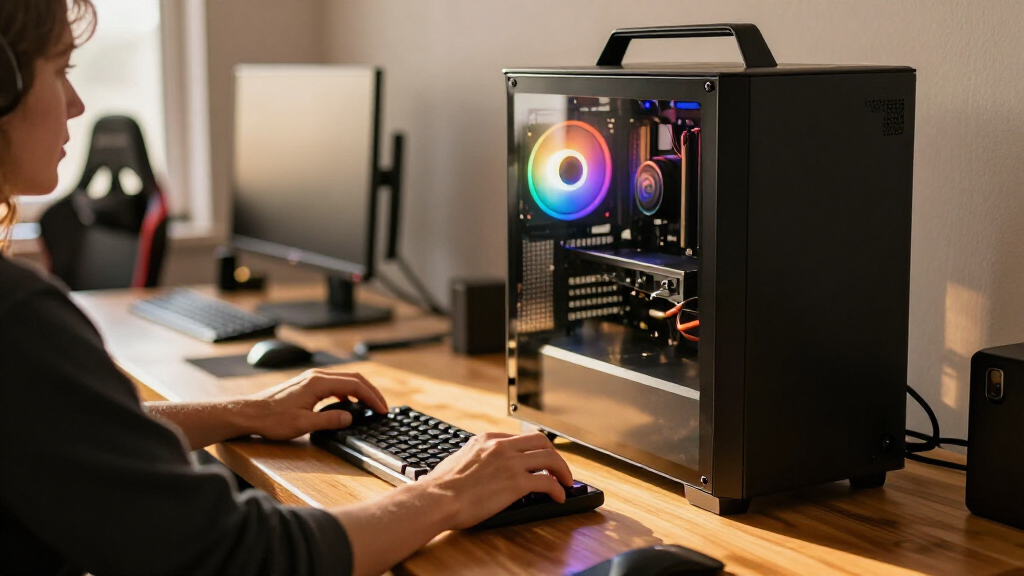
How We Picked
I ranked these PCs by how well their listed components fit real gaming needs, giving the most weight to graphics hardware and the balance between GPU and CPU. I also compared memory and storage, since limited capacity can mean earlier upgrades or less room for a large game library. Options with stronger graphics and a well-rounded supporting configuration rank ahead of systems that lean on a high-end processor or large capacity figures without the same gaming focus.
I also considered who each configuration serves: a first gaming desktop has different priorities from a 4K-focused system or a PC built for multitasking. Distinctive configurations, such as the RTX 5080 models, X3D processors, or the Horizon’s listed 64GB of RAM and 5TB of storage, earned attention where they serve a clear buyer need. Because the supplied specifications do not establish details such as cooling performance, noise, component brands, or upgrade access, I avoid treating those as proven advantages and recommend checking the exact configuration before purchase.
| gaming PC | Operating system |
|---|---|
| YAWYORE Gaming Desktop PC with | Windows 11 |
| MSI Codex Z2 Gaming Desktop | Windows 11 Home |
| CyberPowerPC Gamer Master Gami | — |
| KOTIN Gaming Desktop PC with R | — |
| CyberPowerPC Gaming PC | — |
| Skytech Crystal Gaming Desktop | Windows 11 Home 64-bit |
| Skytech King 95 Gaming Desktop | Windows 11 Home 64-bit |
| Horizon Autherium Dragon Gamin | Windows 11 Pro |
| Skytech Azure Gaming Desktop w | Windows 11 Home 64-bit |
| KOTIN Gaming Desktop with RTX | Windows 11 Home |
| iBUYPOWER Element Gaming Deskt | Windows 11 Home |
| Alienware Aurora Gaming Deskto | Windows 11 Home |
| KOTIN Gaming Desktop PC | — |
| STORMCRAFT Phantom Gaming PC w | Windows 11 Home |
| Skytech King 95 Gaming Desktop | Windows 11 Home 64-bit |
Factors to Consider When Choosing Best Gaming PCs
A gaming PC is a bundle of tradeoffs, not a single graphics-card decision. I’d start with the games and display you already own, then check whether the rest of the system supports that plan without forcing immediate upgrades.
Match Graphics Power to Your Display
Start with your monitor’s resolution and refresh rate, since those shape how much graphics performance you can use. A more powerful GPU can help with higher resolutions and demanding visual settings, but it may bring little benefit if your display cannot show the extra detail or frames. Avoid choosing by GPU name alone: different games place different demands on graphics hardware, and ray tracing or high-resolution textures can change the load. If you already own a monitor, use its capabilities as your starting point; if not, decide on the display before buying the PC. That keeps you from paying for graphics headroom you cannot see or buying a system that struggles to meet your screen’s demands.
Look at the Full Gaming Configuration
A fast graphics card needs a processor that can keep up, particularly in games that rely heavily on CPU performance or target high frame rates. A higher-tier processor can also help with streaming and other background tasks, but it does not compensate for a graphics card that falls short of your gaming goals. Compare the GPU and CPU together, then ask whether the configuration fits your main use rather than assuming that a Ryzen 9 or Core i9 is automatically the better choice. Gaming-focused processors such as the X3D models in this roundup may appeal to players who prioritize game performance, while a broader workload may favor a different balance. Check the exact model names and full component list, because product families can include materially different configurations.
Treat Memory and Storage as Different Decisions
Memory helps the PC run games and background applications, while storage determines how many games and files can stay installed. A system with 16GB of RAM and a 1TB SSD may be a workable starting point, but it leaves less room for multitasking and a growing game library than a configuration with more capacity. Large storage claims deserve a closer look: confirm whether the total includes multiple drives and whether there are open slots for future expansion. More RAM or storage does not make up for a weaker GPU, so treat capacity as a convenience and workload factor rather than a shortcut to better game performance. If you plan to keep many large games installed, prioritize storage capacity or a clearly described upgrade path.
Check the Upgrade Path Before You Commit
Prebuilt gaming PCs can differ in how easily you can replace or add components, even when their headline specifications look similar. Before choosing, check the case dimensions, motherboard details, power supply capacity, cooling layout, and available drive or memory slots. These details affect whether a future graphics-card upgrade is practical and whether you can add storage without removing an existing drive. A compact or proprietary design may simplify the initial setup but restrict later changes; a more standard layout can offer greater flexibility, though that should be verified for the exact model. Do not assume that a desktop is automatically easy to upgrade just because it uses familiar processor or graphics branding.
Choose for Your Actual Workload
If you mainly play games, put graphics performance and a balanced configuration ahead of excess memory or storage. If you stream, edit video, or keep many demanding applications open, extra processor capacity and RAM may have a practical role beyond gaming. Large-capacity configurations can save time for people with broad workloads, but buyers should confirm that those resources match their regular use. A PC designed around high-end gaming components may be a better fit for demanding visuals than a system whose headline appeal is extensive storage. Write down your two or three main tasks before comparing models; that makes it easier to spot specifications that solve a real problem and ignore ones that only make the listing look more impressive.
Verify the Exact Model and Included Support
Prebuilt product names can cover multiple versions, so check that the listing’s processor, GPU, memory, and storage match the configuration you intend to buy. Also check what the warranty covers, how support is handled, and whether the system arrives ready to use or requires setup. Review the connection options against your peripherals, including monitor outputs, wired networking, and the ports needed for controllers or external drives. These details rarely outrank the GPU for game performance, but they can affect daily usability and the cost of completing your setup. A little verification can prevent confusion between similarly named models or missing features that matter to your desk.
Frequently Asked Questions
Is an RTX 5070 PC enough for demanding games?
An RTX 5070 system can suit demanding gaming, but the right fit depends on your display resolution, target frame rate, and preferred graphics settings. The MSI Codex Z2 is a particularly balanced example in this lineup because its listed 32GB of DDR5 and 2TB SSD support the GPU with room for games and multitasking. If you want more graphics headroom, the RTX 5080 options are the step-up choices here. A more powerful GPU is not automatically worthwhile if your monitor and games do not make use of it. Compare the full configuration against your actual setup rather than choosing by GPU tier alone.
Should I choose an RTX 5080 PC or an RTX 5070 PC?
Choose based on the visual workload you plan to run, not on the assumption that the highest graphics tier is always the best buy. The RTX 5080 systems in this roundup are aimed at players seeking more graphics headroom, while an RTX 5070 PC can be a more balanced fit for a wide range of gaming setups. Check your monitor resolution and the games you play most often before deciding whether the step up will make a visible difference. Also compare the rest of each PC, including memory, storage, processor, cooling information, and power supply details. If those supporting parts are unclear, ask for the exact configuration before committing.
Is 16GB of RAM enough in a prebuilt gaming PC?
Sixteen gigabytes can serve as a starting point for gaming, but it leaves less room for demanding games, browser tabs, voice chat, and streaming software to run together. Several PCs here list 16GB, including the CyberPowerPC Gamer Master and the KOTIN RTX 5060 Ti configuration, while the MSI Codex Z2 lists 32GB. If you multitask often, the larger capacity may reduce the need for an early memory upgrade. Before buying a 16GB system, check whether the memory is arranged in a way that leaves room to add more and whether the manufacturer documents compatible upgrades. Do not assume an upgrade is simple without checking the specific motherboard and case.
Does a gaming PC with more storage perform better in games?
More storage mainly gives you room for games and files; it does not by itself raise frame rates. The Horizon Autherium Dragon’s listed 5TB is useful for a large library or storage-heavy work, but graphics hardware remains the more direct influence on game visuals and performance. A smaller SSD can still work well if you uninstall games you no longer play or add another drive later. Check whether listed capacity comes from one drive or multiple drives, and whether there are open slots for expansion. Also verify the drive type and configuration, since a capacity figure alone does not tell the whole story.
What should I verify before buying a prebuilt gaming PC?
Confirm the exact processor, graphics card, memory, and storage in the version you plan to order, since similar model names can refer to different configurations. Check the power supply, cooling, case space, and motherboard details if you may upgrade the GPU or add drives later. Make sure the video outputs and other ports work with your monitor and accessories. Read the warranty and support terms so you know who handles problems and what coverage applies. These checks are especially useful when a listing emphasizes headline components but leaves supporting parts or upgrade access unclear.
Conclusion
For a balanced system that is ready for demanding gaming without an immediate memory or storage shortfall, I recommend the MSI Codex Z2 as best overall. The CyberPowerPC Gamer Master is my best value-style starting point among the listed configurations for buyers who want an RTX 5060 Ti and can work with 16GB of RAM and a 1TB SSD. New PC owners should favor the option whose exact configuration and support terms are clearest, rather than paying for capacity they may not use. For a best premium direction, look at the STORMCRAFT Phantom or the RTX 5080 Skytech King 95; for a large-storage and multitasking focus, the Horizon Autherium Dragon stands apart with its listed 64GB of RAM and 5TB of storage. My final pick depends on your display, workload, and upgrade plans: match those first, then choose the strongest balanced configuration that fits them.
Halloween Picks
halloween
As an affiliate, we earn on qualifying purchases.