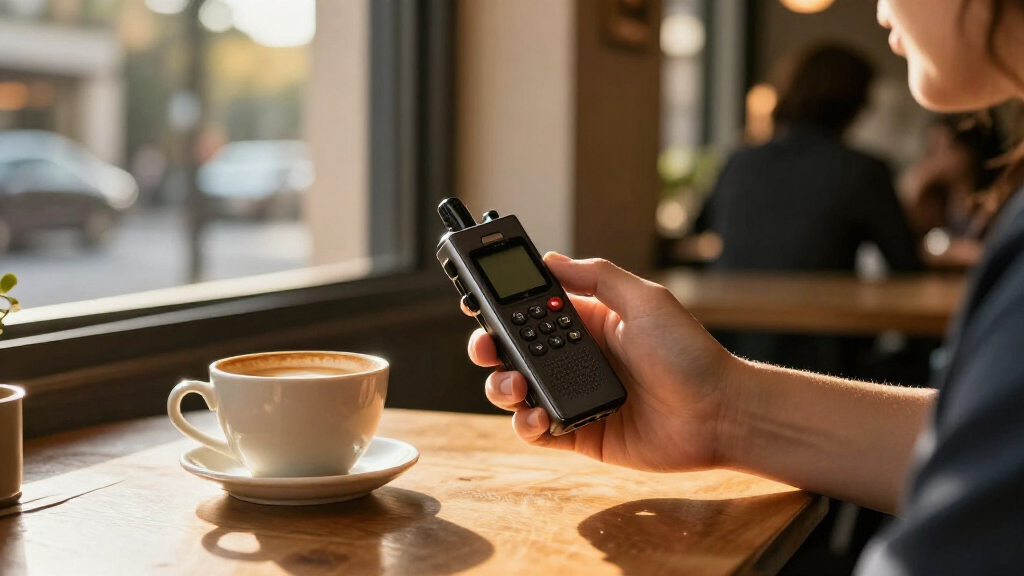

The best digital voice recorders balance dependable recording controls with the storage, battery life, and playback features you actually need. I rank the Elasound Voice-Activated Recorder as the best overall for its 128GB storage, long stated battery life, and noise-reduction features; the Plaud Note Pro stands out for AI transcription, while the EVISTR L357 offers a simpler playback-focused alternative. The main tradeoff is between straightforward local recording and AI-assisted transcription, which can add workflow convenience but may involve extra setup or service limits. Storage capacity and voice activation also matter, but neither can compensate for poor microphone placement or unclear audio. Continue reading for the full comparison and guidance on choosing a recorder that suits your routine.

Get the latest gadgets delivered free with Prime
- Fast, free delivery on millions of items
- Prime Video, Amazon Music and more included
- Member-only deals all year
Complete the kit


Key Takeaways
- The lineup splits into two clear camps: traditional recorders emphasize controls, playback, and local storage, while Plaud and select EVISTR models add transcription and summaries.
- Elasound leads on paper for all-day recording needs with 128GB storage, voice activation, noise reduction, and a stated 100-hour battery life; buyers should still check how battery claims were measured.
- Plaud Note Pro is the premium workflow pick, not the simplest recorder. Its AI transcription and summaries suit people who need searchable notes, while a basic recorder is less dependent on software.
- More storage does not automatically mean better recordings. Models such as the ESCYTEGR advertise large capacity, but microphone performance, file formats, and transfer options matter just as much.
- Beginner-friendly choices favor uncomplicated playback and controls. The EVISTR L357, Cappsu, and Sunlan focus more directly on recording and listening back than on AI-driven workflows.
| QNGEE F5 64GB Digital Voice Recorder with Playback and Voice Activation |  | Best for High-Resolution Recording on a Simple Recorder | Storage: 64GB TF card | Recording quality: Up to 1536 kbps PCM | Battery capacity: 260 mAh | VIEW LATEST PRICE | See Our Full Breakdown |
| Elasound Voice-Activated Recorder with AI Noise Reduction, 128GB Storage and 100-Hour Battery |  | Best for Long Recording Sessions | Storage: 128GB TF card; product information also lists 136GB | Maximum recording time: Up to 9,800 hours at 32 kbps | Continuous recording: Up to 100 hours | VIEW LATEST PRICE | See Our Full Breakdown |
| Plaud NotePin S Wearable AI Voice Recorder with Transcription and Summaries, Black |  | Best Wearable Recorder for Transcription | Storage: 64GB | Continuous recording: Up to 20 hours | Standby time: Up to 40 days | VIEW LATEST PRICE | See Our Full Breakdown |
| EVISTR L357 64GB Digital Voice Recorder with Playback |  | Best for Adjustable Recording Controls | Storage: 64GB | Recording quality: Up to 1536 kbps | Microphone: Built-in stereo | VIEW LATEST PRICE | See Our Full Breakdown |
| 16GB Digital Voice Recorder with Voice Activation and MP3/WAV Playback |  | Best Compact Budget-Style Pick for Everyday Notes | Storage: 16GB | Microphone: Built-in stereo | Recording formats: MP3, WAV | VIEW LATEST PRICE | See Our Full Breakdown |
| Pocket AI Voice Recorder with Auto Transcription, Sierra Blue |  | Best for Searchable Meeting Notes | Storage: 64 GB | Microphone: Built-in | Connectivity: Bluetooth | VIEW LATEST PRICE | See Our Full Breakdown |
| Plaud Note Pro AI Voice Recorder with Transcription and Summaries |  | Best for Phone Calls and Meetings | Microphones: 4 MEMS + 1 VPU | Recording modes: Phone calls and in-person | Transcription languages: 112 | VIEW LATEST PRICE | See Our Full Breakdown |
| Pocket AI Voice Recorder with Auto Transcription, 64 GB, Space Grey |  | Best for Long Gaps Between Charges | Storage: 64 GB | Audio format: RealAudio | Microphone: Built-in | VIEW LATEST PRICE | See Our Full Breakdown |
| EVIDA 128GB Digital Voice Recorder with Voice Activation, Playback, and Password Protection |  | Best for High-Capacity Offline Recording | Storage: 128 GB | Recording formats: WAV, MP3 | Maximum recording bitrate: 1536 Kbps | VIEW LATEST PRICE | See Our Full Breakdown |
| Cappsu Digital Voice Recorder with Playback, 32GB Built-in Memory |  | Best for Simple Everyday Recording | Storage: 32 GB built-in | Maximum recording bitrate: 1536 Kbps | Recording modes: Continuous and voice-activated | VIEW LATEST PRICE | See Our Full Breakdown |
| EVISTR L359 128GB Digital Voice Recorder with AI Transcription and Summaries |  | Best for High-Capacity AI Workflows | Storage: 128 GB | Maximum recording time: Up to 33 hours | Maximum recording bitrate: 3072 Kbps | VIEW LATEST PRICE | See Our Full Breakdown |
| Xelarvex 72GB Digital Voice Recorder with Voice Activation and AI Noise Reduction |  | Best Lightweight Long-Session Recorder | Storage capacity: 72 GB | Continuous recording time: Up to 48 hours | Voice activation: Yes | VIEW LATEST PRICE | See Our Full Breakdown |
| ESCYTEGR 144GB Digital Voice Recorder with Playback and MP3 Player |  | Best for Local Storage and Playback | Storage: 144GB total: 16GB onboard and preinstalled 128GB microSD card | Recording formats: MP3, WAV | Maximum PCM bitrate: 1536Kbps | VIEW LATEST PRICE | See Our Full Breakdown |
| Sunlan 16GB Digital Voice Recorder with Playback |  | Best for Simple One-Button Recording | Storage capacity: 16 GB | Recording format: WAV | Recording bitrate: 1536 kbps | VIEW LATEST PRICE | See Our Full Breakdown |
| Plaud Note Pro AI Voice Recorder with Transcription and Summaries |  | Best for AI Meeting Notes and Phone Calls | Microphones: 4 MEMS microphones and 1 VPU microphone | Storage capacity: 64 GB | Recording format: WAV | VIEW LATEST PRICE | See Our Full Breakdown |
| digital voice recorder | Storage | Microphone | Weight |
|---|---|---|---|
| QNGEE F5 64GB Digital Voice Re | 64GB TF card | — | — |
| Elasound Voice-Activated Recor | 128GB TF card; product information also lists 136GB | Built-in; clip-on microphone included | — |
| Plaud NotePin S Wearable AI Vo | 64GB | — | 17.28 g (0.61 oz) |
| EVISTR L357 64GB Digital Voice | 64GB | Built-in stereo | — |
| 16GB Digital Voice Recorder wi | 16GB | Built-in stereo | 1.6 ounces |
| Pocket AI Voice Recorder with | 64 GB | Built-in | — |
| Plaud Note Pro AI Voice Record | 64 GB | — | — |
| Pocket AI Voice Recorder with | 64 GB | Built-in | — |
| EVIDA 128GB Digital Voice Reco | 128 GB | Built-in, mono, noise cancellation | — |
| Cappsu Digital Voice Recorder | 32 GB built-in | — | 1.6 ounces |
| EVISTR L359 128GB Digital Voic | 128 GB | Built-in mono | 2.24 ounces |
| Xelarvex 72GB Digital Voice Re | — | — | 1 ounce |
| ESCYTEGR 144GB Digital Voice R | 144GB total: 16GB onboard and preinstalled 128GB microSD card | — | 3.67 ounces |
| Sunlan 16GB Digital Voice Reco | — | Built-in mono with noise cancellation | 35 g |
| Plaud Note Pro AI Voice Record | — | — | 30 g |
More Details on Our Top Picks
QNGEE F5 64GB Digital Voice Recorder with Playback and Voice Activation
The QNGEE F5 pairs one-touch recording with voice activation, so it suits buyers who want a straightforward handheld recorder without giving up higher-bitrate WAV capture. Its stated maximum of 1536 kbps PCM and included 64GB card give it an advantage over the 16GB recorder in this lineup when keeping larger, detailed files matters. Automatic noise reduction and A-B repeat add useful control for review, while USB-C handles file transfer. The tradeoff is that the product information offers no independent detail about audio quality, so the bitrate alone cannot tell buyers how clean recordings will sound. Its 260 mAh battery is also smaller on paper than the EVISTR L357’s 500 mAh, even though QNGEE claims up to 30 hours of use. I’d choose it for its feature mix, not as a proven audio-quality leader.
Pros:- Includes a 64GB TF card for storing longer sessions
- Offers one-touch recording and voice activation
- Records in MP3 and WAV, with PCM rates up to 1536 kbps
- USB-C transfer, playback controls, and A-B repeat support file review
Cons:- The 260 mAh battery is smaller than the EVISTR L357’s stated 500 mAh battery
- No brand-independent audio-quality information is provided
- The claimed 30-hour use figure does not specify recording conditions
Best for: Students and interviewers who want a physical recorder with included 64GB storage, voice activation, and WAV recording.
Not ideal for: Buyers prioritizing a larger stated battery or independently documented recording performance; the EVISTR L357 lists a 500 mAh battery, while QNGEE provides no independent audio-quality information.
- Storage:64GB TF card
- Recording quality:Up to 1536 kbps PCM
- Battery capacity:260 mAh
- Continuous use:Up to 30 hours
- Connection:USB Type-C
- Audio formats:MP3, WAV
- Microphones:Dual microphones
- Playback features:A-B repeat, single-track loop
Our verdict“Choose the QNGEE F5 if you want an easy-to-start recorder with included storage and high-bitrate WAV capture, but not if battery specifications are your main priority.”
Elasound Voice-Activated Recorder with AI Noise Reduction, 128GB Storage and 100-Hour Battery
The Elasound NZ007 is the endurance pick here: its stated up to 100 hours of continuous recording makes it better suited to long events or repeated sessions than the QNGEE F5’s stated 30 hours. Voice activation and AI-assisted triple noise reduction aim to limit unwanted sound and empty stretches, and the included clip-on microphone gives users another placement option beyond the built-in mic. It also arrives with headphones and OTG adapters, a broader accessory bundle than the EVISTR L357 provides. There are tradeoffs: the listed capacity conflicts between 128GB and 136GB, and the headline storage figure of 9,800 hours assumes a very low 32 kbps bitrate. MP3 is the listed format, so buyers seeking WAV capture should favor the QNGEE or EVISTR instead.
Pros:- Claims up to 100 hours of continuous recording
- Voice activation can start capture when sound is detected
- Includes a clip-on microphone, headphones, and OTG adapters
- USB-C supports file transfer to compatible devices
Cons:- Storage is listed inconsistently as 128GB and 136GB
- The 9,800-hour recording claim depends on a low 32 kbps bitrate
- MP3 is the only listed audio format, unlike the WAV-capable QNGEE F5 and EVISTR L357
Best for: People recording long lectures, conferences, or work shifts who value extended battery life and want a clip-on mic and transfer accessories included.
Not ideal for: Buyers who need WAV recording, a clearly stated storage capacity, or a high-bitrate recording specification; this model lists MP3 and gives inconsistent capacity information.
- Storage:128GB TF card; product information also lists 136GB
- Maximum recording time:Up to 9,800 hours at 32 kbps
- Continuous recording:Up to 100 hours
- Audio format:MP3
- Connection:USB Type-C
- Microphone:Built-in; clip-on microphone included
- Noise reduction:AI-assisted triple noise reduction
- Dimensions:4.5 × 4 × 1.1 inches
Our verdict“Pick the Elasound NZ007 for extended recording and a useful accessory bundle, provided MP3-only recording and its inconsistent storage listing fit your needs.”
Plaud NotePin S Wearable AI Voice Recorder with Transcription and Summaries, Black
The Plaud NotePin S is the most distinct option in this group: rather than centering on handheld controls and direct file playback, it pairs a wearable recorder with an app and web platform for transcripts, summaries, and structured insights. Its four wearing options and dedicated record button make it easier to capture conversations while moving between meetings than a conventional device such as the EVISTR L357. Local 64GB storage supports offline capture, while transcription covers 112 languages. That workflow comes with limits: using transcripts and summaries requires Plaud’s app or web platform, and the included Starter Plan provides 300 transcription minutes per month. At 20 hours of continuous recording, it also has less stated endurance than the Elasound NZ007. I’d choose it when turning speech into organized notes matters more than standalone recorder simplicity.
Pros:- Transcription supports 112 languages and can produce summaries and structured insights
- Four wearing options and a physical record button support discreet, accessible capture
- 64GB of local storage allows recording without an internet connection
- Compact 17.28 g design is easier to wear than the handheld EVISTR L357
Cons:- The free Starter Plan is limited to 300 transcription minutes per month
- Transcription and summaries require the Plaud app or web platform
- Its 20-hour continuous recording claim is shorter than the Elasound NZ007’s stated 100 hours
Best for: Mobile professionals and multilingual users who want a wearable device that can turn recorded conversations into searchable transcripts and summaries.
Not ideal for: People who want a conventional recorder with direct, device-only playback or extensive transcription without a monthly allowance; Plaud’s transcription features depend on its app or web platform.
- Storage:64GB
- Continuous recording:Up to 20 hours
- Standby time:Up to 40 days
- Transcription languages:112
- Starter Plan:300 transcription minutes per month
- Weight:17.28 g (0.61 oz)
- Dimensions:0.83 × 2.01 × 0.43 inches
- Connection:Bluetooth 5
Our verdict“Choose the NotePin S if wearable capture and AI-assisted notes matter more than unrestricted transcription or traditional standalone playback.”
EVISTR L357 64GB Digital Voice Recorder with Playback
The EVISTR L357 earns its place through control rather than a transcription service or an unusually long battery claim. Its seven recording-gain levels and seven voice-activation sensitivity levels let users adjust capture behavior for different rooms, which is more hands-on than the simpler feature set on the QNGEE F5. It also combines a stereo microphone, noise reduction, MP3/WAV support, and USB-C file transfer in a compact handheld body. For reviewing recordings, A-B repeat and variable-speed playback are practical tools. The main caveat is conflicting time information: the specs state 32 hours of continuous recording, while product information also lists 107 hours of digital recording time, without making the conditions clear. Its 1-inch screen is small, too, so this is a better fit for control-oriented users than anyone who wants a roomy interface.
Pros:- Seven gain and seven voice-activation sensitivity levels offer useful control
- Built-in stereo microphone and noise reduction support general-purpose recording
- MP3/WAV playback with A-B repeat and variable speed aids review
- USB-C transfer and Windows/Mac compatibility simplify file handling
Cons:- Recording time is listed as 32 hours continuous and also 107 hours digital, with conditions unclear
- The 1-inch screen leaves limited space for navigation
- It lacks the Plaud NotePin S’s transcription and summary workflow
Best for: Students, reporters, and meeting attendees who want to adjust recording gain and voice-activation sensitivity for changing environments.
Not ideal for: Buyers who need an easy-to-read screen or a single, clearly explained recording-endurance figure; the display is 1 inch and the stated time claims conflict.
- Storage:64GB
- Recording quality:Up to 1536 kbps
- Microphone:Built-in stereo
- Recording gain:7 levels
- Voice activation sensitivity:7 levels
- Battery capacity:500 mAh
- Continuous recording time:32 hours
- Screen:1 inch
- Connection and formats:USB Type-C; MP3, WAV
Our verdict“Choose the EVISTR L357 if adjustable capture settings and local playback matter more than a larger screen or automatic transcription.”
16GB Digital Voice Recorder with Voice Activation and MP3/WAV Playback
This 16GB recorder keeps the basics in a small, lightweight format: stereo recording, voice activation, MP3/WAV files, and playback tools including A-B repeat and variable speed. At 1.6 ounces, it is lighter than the 2.24-ounce EVISTR L357, making it a sensible choice for carrying to classes or routine meetings. Its 16GB capacity is the clear limit beside the QNGEE F5 and EVISTR L357, which each list 64GB; buyers who keep many long sessions should look to those models instead. The stated maximum of 1,120 hours also depends on recording at 32 kbps, so it should not be read as a high-quality recording estimate. Micro USB is an older transfer connection than the USB-C ports on both 64GB alternatives, and playback is listed at up to eight hours with earphones.
Pros:- Lightweight 1.6-ounce body is easy to carry
- Built-in stereo microphone supports MP3 and WAV recording
- Voice activation and noise reduction provide practical capture options
- A-B repeat and variable-speed playback help with reviewing speech
Cons:- 16GB storage is substantially less than the 64GB QNGEE F5 and EVISTR L357
- The 1,120-hour maximum recording claim depends on a low 32 kbps bitrate
- Micro USB is less current than the USB-C connection on the EVISTR L357
Best for: Students and occasional note-takers who want a light handheld recorder with playback controls and do not need large local storage.
Not ideal for: Frequent interviewers or people archiving many long sessions; its 16GB capacity is below the 64GB QNGEE F5 and EVISTR L357, and file transfer uses Micro USB.
- Storage:16GB
- Microphone:Built-in stereo
- Recording formats:MP3, WAV
- Continuous recording time:Up to 20 hours
- Maximum recording time:Up to 1,120 hours at 32 kbps
- Playback time:Up to 8 hours with earphones
- Battery:Rechargeable 3.6V 300mAh lithium-ion
- File transfer:Micro USB
- Weight:1.6 ounces
Our verdict“Choose this compact 16GB recorder for occasional classes and meetings, but move to a 64GB model if you record often or keep sessions for long periods.”
Pocket AI Voice Recorder with Auto Transcription, Sierra Blue
Conversation follow-up is the main reason I’d choose this Pocket recorder: it turns captured speech into transcripts, summaries, action items, and conversation maps, then lets you ask questions about a recording. That goes further than the EVIDA VR01, which focuses on storing and playing back audio rather than organizing it with AI. MagSafe attachment and compatibility with iOS and Android phones suit people who want a recorder that stays close to their mobile workflow, while the stated battery life of up to four days can reduce charging interruptions. The tradeoff is dependence on connected software for the AI benefits, with some advanced tools requiring a subscription. Also, the listed dimensions seem at odds with the pocket-sized pitch, so I wouldn’t pick it solely for minimal bulk.
Pros:- Creates transcripts, summaries, action items, and conversation maps
- Can answer questions about recorded conversations
- Attaches to MagSafe-compatible devices and supports iOS and Android
- Lists up to four days of battery life
Cons:- Some advanced features require an optional subscription
- Listed dimensions appear bulky for a device marketed as pocket-sized
- AI tools make it less suitable for buyers seeking a simple standalone recorder
Best for: Mobile professionals who want searchable conversation notes, action items, and follow-up answers from recorded meetings
Not ideal for: Buyers who want a standalone recorder with no subscription-dependent tools, or a reliably tiny device based on clearly compact dimensions
- Storage:64 GB
- Microphone:Built-in
- Connectivity:Bluetooth
- Compatible devices:Smartphones; iOS and Android
- MagSafe compatible:Yes
- Battery life:Up to 4 days
- Color:Sierra Blue
- Dimensions:1.77 × 3.2 × 7.4 in (D × W × H)
Our verdict“Choose this Pocket model if AI-generated meeting follow-up matters more than a conventional standalone recording workflow.”
Plaud Note Pro AI Voice Recorder with Transcription and Summaries
Call and in-person recording in one slim device gives the Plaud Note Pro a broader role than the Cappsu V02, which is built around straightforward local recording and playback. Plaud automatically switches recording modes and pairs a four-MEMS-plus-VPU microphone array with transcription in 112 languages, speaker labels, and structured summaries. Its credit-card-sized profile, magnetic accessories, and 0.95-inch AMOLED display make it easier to carry and check than a larger basic recorder. The included free plan provides 300 transcription minutes per month, but that cap matters for frequent interviewers or people recording long workdays. Core workflows also depend on the Plaud app and connected workspace, so this is a poor match for buyers who want recordings managed entirely on the device.
Pros:- Automatically switches between phone-call and in-person recording
- Transcribes in 112 languages and labels speakers
- Slim 30 g design includes a 0.95-inch AMOLED display
- Includes magnetic accessories and 300 monthly transcription minutes on the free plan
Cons:- Free transcription plan is limited to 300 minutes per month
- Some features depend on the Plaud app and connected workspace
- AI transcription and summaries make it less suited to buyers seeking a simple recorder
Best for: Consultants, journalists, and multilingual professionals who regularly record both phone calls and in-person conversations
Not ideal for: People who need extensive transcription every month without a usage limit, or who prefer an offline, app-independent recorder
- Microphones:4 MEMS + 1 VPU
- Recording modes:Phone calls and in-person
- Transcription languages:112
- Storage:64 GB
- Display:0.95-inch AMOLED
- Battery life / recording time:30 hours
- Dimensions and weight:2.13 × 3.37 × 0.12 in; 30 g (1.06 oz)
- Wireless interface:Bluetooth 5
- Audio format:WAV
Our verdict“Pick the Plaud Note Pro if you need a compact recorder for both calls and meetings and can work within its app-based transcription plan.”
Pocket AI Voice Recorder with Auto Transcription, 64 GB, Space Grey
Long stated battery life and AI conversation tools make this Space Grey Pocket model a fit for people who want recordings turned into useful notes without daily charging. It can produce transcripts, summaries, action items, and conversation maps, and it supports questions about recorded conversations—a more analysis-focused approach than the EVIDA VR01’s playback, bookmarks, and file-storage features. MagSafe compatibility also gives phone-centered users a convenient way to attach the recorder. The main compromise is similar to other AI-first devices: advanced tools may require a subscription, and the key benefits are tied to a smartphone workflow. Its listed dimensions are unusually large for a compact recorder, so the Cappsu V02 may be a safer choice for buyers who want a clearly specified lightweight handheld device.
Pros:- Generates transcripts, summaries, action items, and conversation maps
- Supports questions about recorded conversations
- Lists up to four days of battery life
- MagSafe compatible and works with iOS and Android smartphones
Cons:- Some advanced tools require an optional subscription
- Listed dimensions seem large for a compact recorder
- Bluetooth and AI-focused features make it less suited to users seeking a basic standalone device
Best for: Smartphone users who want AI-generated notes and long stated battery life for recurring conversations
Not ideal for: Buyers who prioritize a clearly pocketable physical recorder, or who want all advanced features without a subscription
- Storage:64 GB
- Audio format:RealAudio
- Microphone:Built-in
- Connectivity:Bluetooth
- Compatible devices:Smartphones; iOS and Android
- MagSafe compatible:Yes
- Battery life:Up to 4 days
- Dimensions:1.77 × 3.2 × 7.4 in (D × W × H)
- Color:Space Grey
Our verdict“Choose the Space Grey Pocket if AI conversation tools and fewer charging interruptions matter more than a conventional recorder’s simplicity.”
EVIDA 128GB Digital Voice Recorder with Voice Activation, Playback, and Password Protection
128 GB of storage gives the EVIDA VR01 a practical advantage for lectures, interviews, and archives that don’t need cloud transcription. Its WAV and MP3 recording options, adjustable six-level voice activation, bookmarks, and A-B repeat support a more traditional record-and-review routine than either Pocket AI model. It also doubles as an MP3 player and USB flash drive, adding utility for people who move files between devices. Compared with the Cappsu V02, EVIDA offers four times the listed storage, though Cappsu includes an external microphone and USB-C connection. The EVIDA’s specified 54-hour continuous recording time is substantial, but its listed C battery requirement is unusual, and there’s no headphone jack for direct monitoring or private playback.
Pros:- 128 GB of storage for long-running local audio collections
- Records in WAV or MP3 with a maximum listed bitrate of 1536 Kbps
- Six voice-activation sensitivity levels and noise-canceling mono microphone
- Includes password protection, bookmarks, A-B repeat, and USB flash drive functionality
Cons:- Specifications call for a C battery rather than describing a rechargeable battery
- No headphone jack for direct headphone playback
- Does not offer the AI transcription and conversation summaries found on the Pocket models
Best for: Students, interviewers, and archivists who need substantial local storage, voice activation, and password-protected recordings
Not ideal for: Buyers who need a rechargeable battery, a headphone jack, or automatic transcription and summaries
- Storage:128 GB
- Recording formats:WAV, MP3
- Maximum recording bitrate:1536 Kbps
- Microphone:Built-in, mono, noise cancellation
- Voice activation:6 sensitivity levels
- Maximum continuous recording time:54 hours
- Battery:1 C battery required
- Screen:1.5 inches
- Interface:USB 2.0
Our verdict“Choose the EVIDA VR01 for feature-rich local recording and high storage capacity, but skip it if you need rechargeable power or built-in transcription.”
Cappsu Digital Voice Recorder with Playback, 32GB Built-in Memory
One-click operation makes the Cappsu V02 the straightforward pick in this group: it records continuously or uses voice activation to reduce idle recording, without asking buyers to manage an AI app or subscription. Its 32 GB of built-in storage is less than the EVIDA VR01’s 128 GB, but may suit routine classes, interviews, and personal notes; the included external microphone and 3.5 mm earphones add flexibility straight out of the box. The USB-C connection is also a practical advantage over the EVIDA’s listed USB 2.0 interface. The tradeoff is endurance: continuous recording is listed at up to 20 hours, well below EVIDA’s 54 hours. For clearer capture, the source also advises keeping it close to the sound, so it’s not the best choice for distant speakers.
Pros:- One-click recording is simple to operate
- Voice activation can conserve battery life and storage
- Includes 32 GB built-in memory with no memory card needed
- Comes with USB-C cable, 3.5 mm earphones, and an external microphone
Cons:- Continuous recording is listed at up to 20 hours
- Best results may require placing the recorder close to the sound source
- Has less storage than the 128 GB EVIDA VR01
Best for: Students and note-takers who want easy one-click recording, voice activation, and included listening and microphone accessories
Not ideal for: People recording long events without access to charging, or those who need to capture speakers from across a large room
- Storage:32 GB built-in
- Maximum recording bitrate:1536 Kbps
- Recording modes:Continuous and voice-activated
- Battery life:Up to 20 hours continuous; up to 50 hours voice-activated
- Weight:1.6 ounces
- Dimensions:4.16 × 1.46 × 0.47 inches
- Headphone jack:3.5 mm
- Hardware interface:USB Type-C
- Included accessories:USB-C cable, 3.5 mm earphones, external microphone, user manual
Our verdict“Pick the Cappsu V02 for uncomplicated everyday recording and useful accessories, not for long unattended sessions or distant audio.”
EVISTR L359 128GB Digital Voice Recorder with AI Transcription and Summaries
The EVISTR L359 suits buyers who want a conventional handheld recorder with a route from audio capture to AI-generated notes. Its 128GB storage, voice activation, and up to 33 hours of continuous recording make it better suited to frequent or lengthy sessions than the smaller-capacity Sunlan 16GB recorder. A maximum 3072 Kbps bitrate gives users a high-quality recording option, while the app adds transcription, summaries, mind maps, and speaker identification across 113 languages. The tradeoff is that those AI tools depend on the AI DVR Link app, and moving files requires a wired OTG connection rather than Bluetooth. I’d choose it for flexible recording and large-file capacity, but not for someone who wants a mostly hands-off, wireless transcription workflow like the Plaud Note Pro.
Pros:- 128GB storage accommodates a large archive of recordings.
- AI app features include transcription, summaries, mind maps, and speaker identification.
- Voice activation can reduce silent gaps in recordings.
- Up to 33 hours of continuous recording supports extended sessions.
Cons:- AI functions require the AI DVR Link app.
- File transfer uses wired OTG rather than Bluetooth.
- Built-in mono microphone offers less stereo capture flexibility than the ESCYTEGR 144GB recorder.
Best for: Students, interviewers, and researchers who record long sessions and want ample local storage plus optional app-based transcription.
Not ideal for: Buyers who want wireless file transfers or AI transcription without relying on a companion app.
- Storage:128 GB
- Maximum recording time:Up to 33 hours
- Maximum recording bitrate:3072 Kbps
- Audio formats:MP3, WAV
- Microphone:Built-in mono
- Connectivity:USB Type-C; wired OTG
- Transcription languages:113
- Weight:2.24 ounces
Our verdict“Choose the L359 if you want a high-capacity handheld recorder with app-based AI tools and can accept wired transfers.”
Xelarvex 72GB Digital Voice Recorder with Voice Activation and AI Noise Reduction
At one ounce, the Xelarvex is the lightest-feeling choice in this group based on its listed weight, and its up to 48 hours of continuous recording gives it a clear endurance advantage over the EVISTR L359’s stated 33 hours. Voice activation can save space by avoiding long stretches of silence, while USB-C and a 3.5 mm headphone jack keep the basic recording setup familiar. Its 72GB capacity is generous, though below the L359’s 128GB and the ESCYTEGR’s 144GB. I’d treat the claimed 97% ambient-noise reduction as a manufacturer claim rather than a guaranteed result. The product information also gives conflicting storage-time figures, and its battery is described as nonstandard. That uncertainty makes it less reassuring for buyers who need predictable archiving or easy battery replacement.
Pros:- Very light at a listed one ounce.
- Up to 48 hours of continuous recording is the longest stated runtime among these five products.
- 72GB storage provides room for many recordings.
- Voice activation can limit silent sections and conserve storage.
Cons:- Product details conflict on total recording hours, making capacity claims hard to interpret.
- Battery is listed as nonstandard, which may complicate replacement.
- The 97% noise-reduction figure is a manufacturer claim, not a guaranteed recording outcome.
Best for: People who carry a recorder daily and prioritize low weight, long stated recording life, and voice-activated capture.
Not ideal for: Buyers who need clearly documented recording capacity, a standard battery, or a well-specified AI transcription workflow.
- Storage capacity:72 GB
- Continuous recording time:Up to 48 hours
- Voice activation:Yes
- Noise reduction:AI noise reduction; manufacturer claims 97% ambient-noise reduction
- Connectivity:USB Type-C
- Headphone jack:3.5 mm
- Weight:1 ounce
- Warranty:1 year
Our verdict“Pick the Xelarvex for a lightweight recorder with long stated runtime, but skip it if you need dependable capacity details or standard battery service.”
ESCYTEGR 144GB Digital Voice Recorder with Playback and MP3 Player
The ESCYTEGR takes a more self-contained approach than the EVISTR L359: its 144GB of included storage is made up of onboard memory and a preinstalled memory card, and its color display, built-in speaker, and playback tools help manage files directly on the recorder. Dual microphones with stereo operation give it a capture advantage over mono options such as the Sunlan, while USB-C and password protection add practical file-management features. The tradeoff is that the headline up to 100 hours of recording applies at MP3 32kbps, a low bitrate that prioritizes duration over detail. Its maximum PCM rate is 1536Kbps, and the product details do not specify an external microphone. I’d favor it over the AI-focused Plaud Note Pro when local playback and storage matter more than transcription services.
Pros:- 144GB total storage includes onboard memory and a preinstalled 128GB card.
- Dual microphones support stereo recording.
- Color display and built-in speaker help with direct playback and file management.
- USB-C transfer, voice activation, and password protection add useful controls.
Cons:- The 100-hour recording figure applies at MP3 32kbps, not the highest-quality setting.
- No external microphone is listed in the product details.
- At 3.67 ounces, it is heavier than the one-ounce Xelarvex.
Best for: Students and field note-takers who want substantial local storage, stereo recording, and onboard playback without depending on an AI app.
Not ideal for: Buyers who need automatic transcription, phone-call recording, or the smallest and lightest recorder.
- Storage:144GB total: 16GB onboard and preinstalled 128GB microSD card
- Recording formats:MP3, WAV
- Maximum PCM bitrate:1536Kbps
- Microphones:Built-in dual microphones; stereo operation
- Display:1.44-inch color display
- Recording time:Up to 100 hours at MP3 32kbps
- Connectivity:USB Type-C; 3.5 mm headphone jack
- Weight:3.67 ounces
Our verdict“Choose the ESCYTEGR if you want extensive local storage and onboard playback, not AI-driven transcription or a lightweight design.”
Sunlan 16GB Digital Voice Recorder with Playback
The Sunlan is the straightforward pick for buyers who want to press record, capture a note, and move on. Its one-button controls, voice activation, and built-in noise-reduction microphone keep the basic task simpler than the app-linked EVISTR L359 or the transcription-centered Plaud Note Pro. WAV recording at a listed 1536 kbps gives it a defined format and bitrate, but its 16GB storage is modest beside the ESCYTEGR’s 144GB or the Xelarvex’s 72GB. The stated 30 hours refers to recording time; playback is listed at up to seven hours, so it is not the strongest choice for reviewing audio away from a charger. A one-inch screen also limits how much file information is visible. I’d choose it for uncomplicated notes, not an expansive recording archive.
Pros:- One-button controls keep recording simple.
- Voice activation can reduce long silent sections.
- WAV recording is listed at 1536 kbps.
- Compact 35 g body also supports music playback and file storage.
Cons:- 16GB storage is limited compared with the ESCYTEGR and EVISTR models.
- Playback lasts up to seven hours, much less than the stated recording time.
- The one-inch screen offers limited space for reviewing files.
Best for: People who need a compact, simple recorder for lectures, reminders, or occasional interviews and value direct controls over AI features.
Not ideal for: Frequent recorders who need large storage, extended playback, detailed on-device file navigation, or transcription tools.
- Storage capacity:16 GB
- Recording format:WAV
- Recording bitrate:1536 kbps
- Recording time:Up to 30 hours
- Playback time:Up to 7 hours
- Microphone:Built-in mono with noise cancellation
- Connectivity:USB; 3.5 mm headphone jack
- Weight:35 g
Our verdict“Pick the Sunlan for simple, occasional recordings with direct controls, but choose a higher-capacity model for frequent or long-term use.”
Plaud Note Pro AI Voice Recorder with Transcription and Summaries
The Plaud Note Pro is the most workflow-focused option here: it records in-person conversations and phone calls, then uses its app ecosystem to produce transcripts, speaker labels, summaries, action items, and follow-ups. Automatic dual-mode recording and four MEMS microphones plus a VPU microphone make it a better fit for mixed meeting and call capture than the conventional handheld EVISTR L359. It also syncs across mobile, web, and desktop, while the slim 30 g body and 0.95-inch AMOLED display keep it more like a dedicated companion device than a basic recorder. The compromise is ongoing service dependence: the free transcription allowance is 300 minutes per month, with Pro or unlimited access requiring an upgrade. It also lacks a headphone jack, unlike the Sunlan and ESCYTEGR.
Pros:- Captures in-person conversations and phone calls with automatic mode switching.
- AI can transcribe in 112 languages and generate summaries, action items, and follow-ups.
- Syncs recordings across the Plaud app, web, and desktop.
- Slim 30 g design includes a 0.95-inch AMOLED display.
Cons:- Pro or unlimited transcription access requires an upgrade beyond the 300-minute monthly free plan.
- No headphone jack for direct wired listening.
- 64GB storage is lower than the ESCYTEGR’s 144GB and EVISTR L359’s 128GB.
Best for: Professionals who record both meetings and phone calls and want transcripts, speaker labels, and structured follow-up notes across devices.
Not ideal for: Buyers who want a standalone recorder with no service-plan limits, headphone playback, or extensive hands-on file controls.
- Microphones:4 MEMS microphones and 1 VPU microphone
- Storage capacity:64 GB
- Recording format:WAV
- Battery life:Up to 30 hours
- AI transcription languages:112
- Display:0.95-inch AMOLED
- Connectivity:Bluetooth 5
- Weight:30 g
- Free transcription plan:300 minutes per month
Our verdict“Choose the Plaud Note Pro if AI meeting notes and phone-call capture matter more than subscription-free use or maximum local storage.”
How We Picked
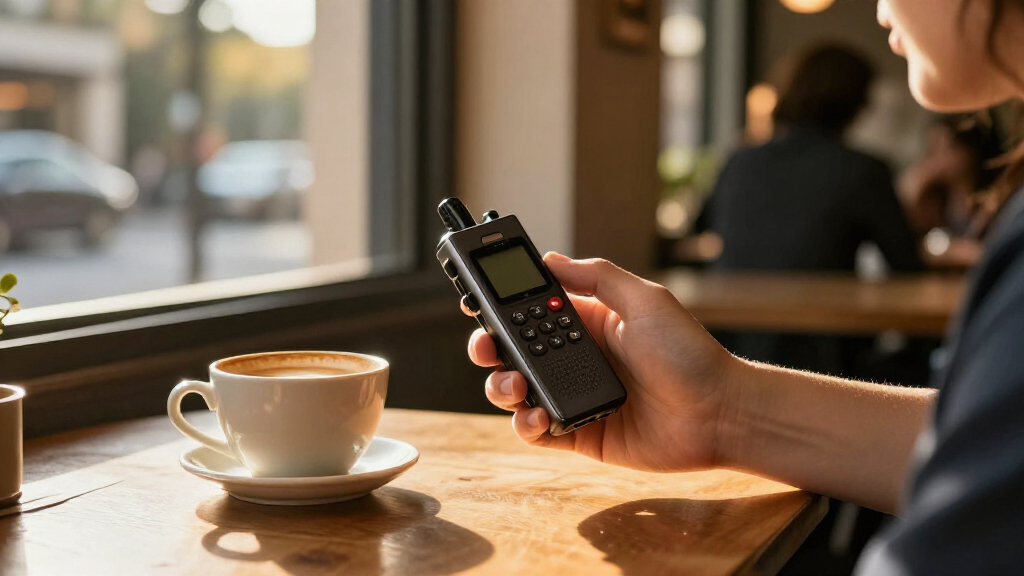
I compared these 15 digital voice recorders by the jobs buyers commonly need them to do: capture lectures or meetings, record notes on the move, store long sessions, and retrieve useful information afterward. I looked at stated storage, recording and playback controls, voice activation, battery claims, noise-reduction features, and whether transcription or summaries are part of the workflow. I also weighed the practical difference between a dedicated recorder and a device whose main advantage depends on companion software or AI services.
The ranking favors products with a clear use case and a useful balance of recording features, ease of use, and workflow flexibility. The Elasound ranks first for its broad feature set and stated endurance, while the Plaud Note Pro is a stronger fit for buyers who prioritize AI-assisted notes over traditional simplicity. Straightforward playback models rank well for accessible, local recording, but less highly when they offer fewer workflow tools. Capacity claims alone do not determine placement, and duplicate Plaud Note Pro listings do not represent distinct product choices.
| digital voice recorder | Microphone |
|---|---|
| QNGEE F5 64GB Digital Voice Re | — |
| Elasound Voice-Activated Recor | Built-in; clip-on microphone included |
| Plaud NotePin S Wearable AI Vo | — |
| EVISTR L357 64GB Digital Voice | Built-in stereo |
| 16GB Digital Voice Recorder wi | Built-in stereo |
| Pocket AI Voice Recorder with | Built-in |
| Plaud Note Pro AI Voice Record | — |
| Pocket AI Voice Recorder with | Built-in |
| EVIDA 128GB Digital Voice Reco | Built-in, mono, noise cancellation |
| Cappsu Digital Voice Recorder | — |
| EVISTR L359 128GB Digital Voic | Built-in mono |
| Xelarvex 72GB Digital Voice Re | — |
| ESCYTEGR 144GB Digital Voice R | — |
| Sunlan 16GB Digital Voice Reco | Built-in mono with noise cancellation |
| Plaud Note Pro AI Voice Record | — |
Factors to Consider When Choosing Digital Voice Recorders
Before choosing a recorder, I would start with how the audio will be used after the session. The right device for keeping a personal voice memo may be a poor fit for searchable meeting notes or long lectures. These broader tradeoffs can help narrow the field beyond headline storage figures.
Choose a recording workflow before comparing features
Decide whether you mainly need an audio file or written notes you can search and share. A conventional recorder can keep the process direct: capture audio, play it back, and transfer the file when needed. AI transcription models may reduce note-taking work, but they introduce another step and can depend on an app, account, supported languages, or service terms. Check what is processed on the device and what must be sent to an online service before recording sensitive conversations. If you rarely need transcripts, paying attention to controls and reliable file access may serve you better than choosing AI features you seldom use.
Match storage to recording length and file quality
Storage needs depend on recording duration, audio format, and how often you move files off the device. Higher-capacity models can be useful for long sessions or infrequent transfers, but capacity alone does not tell you how many hours will fit. WAV files usually take more space than compressed formats, so check which formats the recorder supports and whether you can choose between them. A common mistake is buying the largest advertised capacity without checking if recordings are easy to organize and retrieve. For regular use, a simple transfer routine may matter more than an extra block of memory.
Treat battery claims as a use-case estimate
Published battery life is a comparison point, not a guarantee for every recording session. Continuous recording, playback, screen use, and wireless or AI features can change how long a device lasts between charges. Voice activation may reduce idle recording time, but it can also miss quiet speech or the beginning of a sentence if its sensitivity is poorly matched to the room. If you record full-day classes or interviews, check charging options and whether the recorder can operate while connected to power. For occasional short memos, compactness and easy charging may matter more than the longest stated runtime.
Prioritize microphone placement and room conditions
A recorder with noise reduction cannot make every distant speaker clear, especially in a reverberant room or among overlapping voices. Placement often has more influence on intelligibility than storage capacity or a long feature list. Before buying for group meetings, check whether the device is meant to sit on a table, clip to clothing, or be worn discreetly, and whether its microphone design suits that position. Voice activation can help avoid silent stretches, but it is not a substitute for checking that quiet speakers are captured. For important recordings, plan a short test in the room and listen back before relying on the device for a full session.
Check playback, file transfer, and privacy needs
Recording is only half the job; you also need a practical way to review and store the result. Look for controls that make it easy to pause, find a file, and replay a section without navigating a complicated menu. Confirm how recordings transfer to a computer or phone, what file formats are created, and whether password protection applies to the files or only device access. If recordings contain work, class, or personal information, consider where backups are stored and whether any transcription service retains uploaded audio. A simple local workflow can be a better fit than a feature-rich system when privacy and dependable access are your main priorities.
Frequently Asked Questions
Should I choose an AI recorder or a traditional digital voice recorder?
Choose an AI recorder if searchable transcripts and summaries are a regular part of your work, not just an occasional convenience. A traditional recorder is often simpler when you mainly need a reliable audio file and straightforward playback. AI features may require an app, account, internet access, or a separate service plan, so check those details before buying. Also consider whether recordings can be exported in a format you can keep and use elsewhere. If you are unsure, prioritize file access and recording controls over automation.
Is 128GB enough for lectures and meetings?
For many users, 128GB provides room for a substantial archive, but the actual recording time depends on format and audio quality settings. Uncompressed files use more space than compressed files, and long lectures can accumulate quickly when you keep every session. Check whether the recorder shows remaining capacity and how easily files can be transferred or deleted. Regularly moving recordings to a secure backup can make a smaller capacity practical. Do not treat a large capacity number as proof of better microphone quality or easier file management.
Can voice activation reliably record a full conversation?
Voice activation can reduce empty audio, but it may not capture every word in quiet speech, distant conversation, or a room with sudden background noise. Sensitivity settings and microphone distance affect how it behaves. For interviews or important meetings, a continuous recording is safer when you can manage the file size and battery use. If you use activation, test it with the quietest speaker and typical room conditions before relying on it. Review the opening and pauses in a sample recording to check for clipped words.
What should I check before using a recorder for confidential meetings?
Find out whether recordings stay on the device or are uploaded to an app or transcription service. Review password protection, transfer methods, account security, and any available settings for data retention. A password feature can limit casual access, but it does not automatically protect every copy made on a phone or computer. Follow workplace or meeting consent rules before recording, especially when other people are present. If confidentiality is the priority, a local recording workflow may be easier to manage than a cloud-dependent AI process.
Is the Plaud Note Pro worth choosing over a basic recorder?
The Plaud Note Pro makes more sense when transcription and summaries save enough time to justify using an AI-centered workflow. If you only need to record and replay audio, a simpler model such as the EVISTR L357 may be easier to operate and maintain. Check which AI functions are included, whether they require an account or ongoing service, and how transcripts can be exported. Audio clarity still depends on recording conditions, so AI should not be treated as a fix for distant or muffled sound. Choose based on how often you will use the written output, not the presence of AI alone.
Conclusion
For the broadest feature mix, I recommend the Elasound Voice-Activated Recorder as best overall, especially for buyers who value high stated capacity and long claimed runtime. For a premium note-taking workflow, choose the Plaud Note Pro if transcription and summaries are central to your routine; skip it if you only need local audio playback. The EVISTR L357 is my best value-style pick for straightforward recording and playback, while the Sunlan 16GB is a sensible beginner choice for simpler needs. For buyers who want large advertised storage and playback features, the ESCYTEGR 144GB is a specific-capacity option, though I would compare its transfer and recording details before making capacity the deciding factor. Match the recorder to the work you do after pressing record, and the choice becomes much clearer.