
When searching for the best bike computers, the options can be overwhelming, with models that excel in navigation, training features, or battery life. The Garmin Edge 1050 Premium stands out as the overall top choice thanks to its comprehensive features and durability. For those prioritizing long battery life, the Bryton Rider S810 offers extended use with offline maps, while the Garmin Edge 850 GPS is ideal for advanced training and navigation. However, choosing the right bike computer involves balancing features, usability, and budget. Keep reading to see how these models compare and find the best fit for your riding needs.

Get the latest gadgets delivered free with Prime
- Fast, free delivery on millions of items
- Prime Video, Amazon Music and more included
- Member-only deals all year
Complete the kit



Key Takeaways
- Top models like the Garmin Edge 1050 and Garmin Edge 850 dominate due to their advanced navigation and training features.
- Battery life varies significantly, with some devices like Bryton Rider S810 offering extended use for long rides.
- Size and form factor matter—compact options are better suited for discreet setups, while larger screens enhance visibility.
- Pricing spans from budget-friendly to premium, so consider what features are worth the investment for your riding style.
- Additional features like safety tools, eBike compatibility, and offline maps can be deciding factors for specific riders.
| Garmin Edge 1050 Premium Cycling Computer |  | Best Overall | Battery Life: Up to 20 hours (demanding use), up to 60 hours (battery saver mode) | Display: Vivid color touchscreen | Connectivity: Smartphone, Garmin Connect app | VIEW LATEST PRICE | See Our Full Breakdown |
| Bryton Rider S810 3.5 Inch Color Touchscreen GPS Bike Computer with Long Battery Life and Offline Maps |  | Best for Long-Distance & Remote Rides | Screen Size: 3.5 inches | Battery Life: 50 hours | Navigation: Offline maps with turn-by-turn guidance | VIEW LATEST PRICE | See Our Full Breakdown |
| Garmin Edge 850 GPS Cycling Computer, 2.7″ Touchscreen, Advanced Training & Navigation |  | Best for Advanced Training & Versatile Navigation | Display: 2.7-inch color touchscreen | Battery Life: Up to 12 hours (36 hours in battery saver mode) | Mapping: Bike-specific maps, Trailforks MTB trails | VIEW LATEST PRICE | See Our Full Breakdown |
| Garmin Edge 550 Compact GPS Cycling Computer |  | Best Compact GPS for Safety & Basic Navigation | Display: Vivid color display | Battery Life: Up to 12 hours (standard), up to 36 hours (battery saver mode) | Maps: Preloaded road, gravel, and trail maps | VIEW LATEST PRICE | See Our Full Breakdown |
| iGPSPORT BiNavi Air Bike Computer, 3.0” Touchscreen, GPS Navigation, Voice Reroute, Climb Data, Wireless |  | Best Lightweight & Versatile | Display Size: 3 inches | Display Color: Color display | Battery Life: 30 hours | VIEW LATEST PRICE | See Our Full Breakdown |
| Hammerhead Karoo Bike Computer Wireless GPS ANT+/BLE/GPS/GNSS |  | Best for Advanced Navigation in Challenging Environments | Display Size: 3.2 inches | Display: LCD | Battery Life: 15 hours | VIEW LATEST PRICE | See Our Full Breakdown |
| Wahoo ELEMNT Bolt V3 GPS Cycling/Bike Computer, Black |  | Best for Seamless App Integration and Smart Connectivity | Navigation: Turn-by-turn prompts with LEDs and audible cues | Route Import: GPX, TCX, Strava, Ride With GPS, Komoot | Wireless Sync: Automatic route downloads and workout uploads | VIEW LATEST PRICE | See Our Full Breakdown |
| Garmin Edge 540 Compact GPS Cycling Computer | 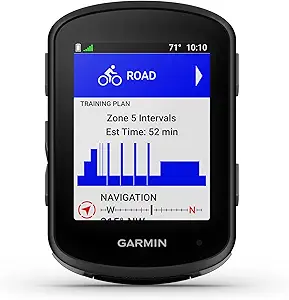 | Best for Advanced Navigation and Performance Metrics | Battery Life: up to 26 hours | Navigation: Multi-band GNSS | Display: Button controls, compact size | VIEW LATEST PRICE | See Our Full Breakdown |
| Garmin Edge 850 Cycling Computer |  | Best for Versatile Navigation and Long Battery Life | Display: Vivid color touchscreen | Battery Life: up to 36 hours | Maps: Preloaded road, gravel, trail, Trailforks | VIEW LATEST PRICE | See Our Full Breakdown |
| Garmin Edge Explore 2 GPS Cycling Computer |  | Best for Easy Navigation and Beginner-Friendly Features | Display: 3-inch high-resolution touchscreen | Navigation: Preloaded maps, turn-by-turn | Connectivity: Smartphone pairing, LiveTrack | VIEW LATEST PRICE | See Our Full Breakdown |
| Garmin Edge 1040 Solar GPS Bike Computer with Solar Charging |  | Best Overall for Advanced Cycling Enthusiasts | Control Method: Application | Special Features: Bluetooth, Solar Charging | Battery Life: Up to 100 hours in battery saver mode, 45 hours in demanding use | VIEW LATEST PRICE | See Our Full Breakdown |
| Garmin Edge 840, Compact GPS Cycling Computer |  | Best for Performance-Oriented Cyclists with Limited Space | Battery Life: Up to 26 hours in demanding use, 32 hours in battery saver | Display: Touchscreen and button control | Navigation: Multi-band GNSS technology | VIEW LATEST PRICE | See Our Full Breakdown |
| iGPSPORT BSC500 GPS Bike Computer with 3.3” Touchscreen, Voice Navigation, and Climb Training |  | Best for Route Planning and Voice-Guided Navigation | Screen Size: 3.3 inches | Navigation: GPS, Beidou, GLONASS, GALILEO, QZSS | Connectivity: iGPSPORT APP, third-party apps | VIEW LATEST PRICE | See Our Full Breakdown |
| Garmin Edge Explore 2 GPS Cycling Computer, eBike Compatible, Maps & Navigation, Safety Features (Renewed) |  | Best for Ease of Use and Versatility for All Riders | Compatible Vehicle Type: Bicycle, eBike | Screen Size: 3 inches | Additional Features: Bluetooth, Wi-Fi | VIEW LATEST PRICE | See Our Full Breakdown |
| bike computer | Battery Life | Display |
|---|---|---|
| Garmin Edge 1050 Premium Cycli | Up to 20 hours (demanding use), up to 60 hours (battery saver mode) | Vivid color touchscreen |
| Bryton Rider S810 3.5 Inch Col | 50 hours | — |
| Garmin Edge 850 GPS Cycling Co | Up to 12 hours (36 hours in battery saver mode) | 2.7-inch color touchscreen |
| Garmin Edge 550 Compact GPS Cy | Up to 12 hours (standard), up to 36 hours (battery saver mode) | Vivid color display |
| iGPSPORT BiNavi Air Bike Compu | 30 hours | — |
| Hammerhead Karoo Bike Computer | 15 hours | LCD |
| Wahoo ELEMNT Bolt V3 GPS Cycli | — | — |
| Garmin Edge 540 Compact GPS Cy | up to 26 hours | Button controls, compact size |
| Garmin Edge 850 Cycling Comput | up to 36 hours | Vivid color touchscreen |
| Garmin Edge Explore 2 GPS Cycl | — | 3-inch high-resolution touchscreen |
| Garmin Edge 1040 Solar GPS Bik | Up to 100 hours in battery saver mode, 45 hours in demanding use | — |
| Garmin Edge 840 | Up to 26 hours in demanding use, 32 hours in battery saver | Touchscreen and button control |
| iGPSPORT BSC500 GPS Bike Compu | — | — |
| Garmin Edge Explore 2 GPS Cycl | Up to 16 hours | — |
More Details on Our Top Picks
Garmin Edge 1050 Premium Cycling Computer
The Garmin Edge 1050 stands out for its comprehensive feature set tailored to serious cyclists who value detailed navigation and performance metrics. Its vivid color touchscreen makes route planning and tracking intuitive, surpassing the simplicity of the Edge 850’s smaller display. With up to 20 hours of battery life, it supports long-distance rides better than the Edge 550, which offers only 12 hours. The inclusion of smart notifications, hazard alerts, and Garmin Pay makes it a versatile companion, though the extensive options can feel overwhelming for casual riders. The premium price reflects its advanced capabilities, which are best leveraged with compatible sensors and a smartphone. While the feature-rich interface may intimidate beginners, this device excels for those seeking a fully connected, long-range cycling computer.
Pros:- High-resolution color touchscreen for clear maps and stats
- Long battery life supporting extended rides
- Advanced navigation, hazard alerts, and smart connectivity
- Supports multiple sensors including power meters and heart rate monitors
Cons:- Complex feature set may be overwhelming for new users
- Premium price point may be too high for casual cyclists
Best for: Dedicated cyclists who want a full-featured, navigation-focused device for long rides and training.
Not ideal for: Casual riders or beginners who prefer a simple, straightforward computer without a steep learning curve.
- Battery Life:Up to 20 hours (demanding use), up to 60 hours (battery saver mode)
- Display:Vivid color touchscreen
- Connectivity:Smartphone, Garmin Connect app
- Features:Navigation, hazard alerts, in-ride messaging, leaderboards, incident detection, Garmin Pay, personalized coaching
- Compatibility:Power meter, heart rate monitor
Our verdict“This device is ideal for experienced cyclists seeking a premium, fully connected navigation and performance tool.”
Bryton Rider S810 3.5 Inch Color Touchscreen GPS Bike Computer with Long Battery Life and Offline Maps
The Bryton Rider S810 excels for riders who need a rugged, long-lasting GPS computer with offline mapping capabilities. Its large 3.5-inch touchscreen remains visible even in bright sunlight, outperforming smaller screens like the Garmin Edge 850 in outdoor readability. The impressive 50-hour battery life makes it ideal for multi-day adventures, unlike the Garmin Edge 550, which offers up to 12 hours. Its offline maps with turn-by-turn guidance and support for multiple sensors, including smart trainers, position it as a versatile choice for remote exploration. However, the device’s size could be cumbersome for some riders, and its feature set may intimidate beginners unfamiliar with advanced navigation tools. It’s a solid pick for those prioritizing endurance and durability over ultra-compact design.
Pros:- 50-hour battery life supports multi-day rides
- Vibrant touchscreen with physical buttons for outdoor use
- Offline maps with real-time rerouting
- Supports multiple sensors and smart trainer integration
Cons:- Large size may reduce portability
- Advanced features entail a learning curve for beginners
Best for: Long-distance cyclists and adventure riders seeking durability and extensive navigation features.
Not ideal for: Urban commuters or casual riders who prefer compact, simple devices with minimal setup.
- Screen Size:3.5 inches
- Battery Life:50 hours
- Navigation:Offline maps with turn-by-turn guidance
- Sensor Support:ANT+ sensors including HR, speed, cadence, power
- Connectivity:Bluetooth for data sync
Our verdict“This pick is perfect for endurance riders who need a durable, high-capacity GPS with offline navigation.”
Garmin Edge 850 GPS Cycling Computer, 2.7″ Touchscreen, Advanced Training & Navigation
The Garmin Edge 850 offers a compact yet powerful option for cyclists who want detailed training metrics combined with reliable navigation. Its 2.7-inch high-resolution touchscreen delivers clear maps and stats, surpassing the smaller Edge 550 in visual clarity. Designed with advanced training insights, including performance metrics and preloaded trail maps, it caters well to road, gravel, and mountain bikers. Compared to the Edge 1050, it offers fewer battery hours—up to 12 hours—making it less suitable for ultra-long rides but more manageable for daily use. Its smart features, like notifications and Garmin Pay, add convenience, but the interface can be complex for beginners. This device balances performance and size, ideal for riders focused on training and trail exploration without the bulk of larger models.
Pros:- Vivid high-resolution display for clear maps and stats
- Advanced training insights and performance metrics
- Preloaded trail maps and turn-by-turn navigation
- Smart notifications and Garmin Pay support
Cons:- Relatively high price for its size and features
- Limited battery life for very long rides
Best for: Intermediate to advanced cyclists seeking detailed performance data and navigation in a compact form.
Not ideal for: Casual riders or those needing ultra-long ride support, due to limited battery life.
- Display:2.7-inch color touchscreen
- Battery Life:Up to 12 hours (36 hours in battery saver mode)
- Mapping:Bike-specific maps, Trailforks MTB trails
- Connectivity:Smartphone notifications, Garmin Pay
- GPS:Multi-band, 5 Hz recording
Our verdict“This device is well-suited for riders who prioritize detailed training data in a compact, easy-to-carry format.”
Garmin Edge 550 Compact GPS Cycling Computer
The Garmin Edge 550 offers a compact, reliable GPS option with essential navigation and safety features for everyday cyclists. Its vivid color display provides quick access to route info, though it isn’t as large or detailed as the Edge 1050 or Bryton Rider S810. With up to 12 hours of battery life, it comfortably supports typical day rides, while its multi-band GPS ensures precise location tracking. Safety features like incident detection and live tracking add peace of mind, but its feature set might feel limited compared to high-end models, especially for those wanting offline maps or extensive training metrics. The need for a compatible smartphone for full functionality could be a drawback for minimalist riders. This model balances size, safety, and core navigation for the budget-conscious or casual cyclist.
Pros:- High-accuracy multi-band GPS with detailed maps
- Long battery life suitable for daily rides
- Safety features like incident detection and live tracking
- Compact size easily fits on any bike
Cons:- Limited advanced training metrics
- Requires smartphone for full features
- Higher price compared to other compact options
Best for: Urban cyclists and commuters who want reliable navigation with safety features in a small package.
Not ideal for: Long-distance or mountain bikers needing extensive mapping and battery capacity.
- Display:Vivid color display
- Battery Life:Up to 12 hours (standard), up to 36 hours (battery saver mode)
- Maps:Preloaded road, gravel, and trail maps
- GPS:Multi-band with 5 Hz recording
- Safety Features:Incident detection, LiveTrack
Our verdict“This device suits urban cyclists and commuters seeking safety and reliable navigation in a compact form.”
iGPSPORT BiNavi Air Bike Computer, 3.0” Touchscreen, GPS Navigation, Voice Reroute, Climb Data, Wireless
The iGPSPORT BiNavi Air offers a lightweight, waterproof design with outdoor visibility, making it a versatile choice for riders who value portability. Its 3.0-inch touchscreen is bright enough for outdoor conditions, outperforming smaller screens like the Garmin Edge 550 in visibility. The GPS navigation with voice rerouting and climb data adds practical features for both indoor and outdoor training, similar to the Bryton Rider S810 but with a focus on simplicity and ease of use. Its 30-hour battery life rivals the Bryton, supporting multi-hour rides, but its mapping capabilities are more basic, lacking the detailed offline maps of higher-end models. This device is ideal for riders who want a straightforward, lightweight computer that handles navigation well without extra bulk.
Pros:- Bright 3.0-inch touchscreen with outdoor visibility
- GPS navigation with voice rerouting
- Supports indoor training and multiple sensors
- Lightweight and waterproof for all-weather use
Cons:- Limited detailed mapping compared to high-end GPS devices
- Battery life may vary with usage intensity
- Requires smartphone app for route planning
Best for: Casual and intermediate riders who want a lightweight, waterproof device with decent navigation and climb data.
Not ideal for: Advanced trail or mountain bikers needing detailed offline maps and extensive training metrics.
- Display Size:3 inches
- Display Color:Color display
- Battery Life:30 hours
- Sensor Support:ANT, Bluetooth, USB
- Protection Rating:IPX7
Our verdict“This pick is suited for riders who prioritize portability, waterproofing, and basic navigation without the bulk of advanced features.”
Hammerhead Karoo Bike Computer Wireless GPS ANT+/BLE/GPS/GNSS
The Hammerhead Karoo stands out for its multi-band GNSS technology, delivering highly accurate navigation even in dense urban areas or remote trails—something that sets it apart from the Garmin Edge 540, which relies on multi-band GNSS but offers fewer advanced mapping features. Its 15-hour battery life supports long-distance rides without concern, yet its relatively large size could be a drawback for riders with smaller handlebar setups. The touchscreen combined with physical buttons makes operation intuitive, but the lack of detailed display specs leaves questions about screen durability and resolution. Connectivity options like ANT+ and BLE allow extensive device pairing, ideal for cyclists wanting a customizable experience. However, its price and availability are less transparent, which might deter casual users.
Pros:- High-precision multi-band GNSS for reliable navigation in tough environments
- Long battery life of up to 15 hours supports extended rides
- Seamless ANT+ and BLE connectivity for extensive device pairing
- Intuitive touchscreen interface for easy operation
Cons:- Relatively large size may not fit all handlebar setups comfortably
- Limited info on display resolution and durability
Best for: Cyclists needing precise navigation in difficult environments, such as mountain bikers or long-distance riders.
Not ideal for: Casual riders or commuters who prefer a compact device or shorter battery life, since its size and extended battery are better suited for serious adventures.
- Display Size:3.2 inches
- Display:LCD
- Battery Life:15 hours
- Sensor Type:GPS
- Connectivity Technology:USB
- Mounting Type:Handlebar Mount
- Input:Buttons, Touchscreen
- Item Dimensions:8″L x 5″W x 3″H
- Item Weight:0.41 kg
Our verdict“This device is best suited for experienced cyclists who prioritize accurate navigation and long battery life over compactness.”
Wahoo ELEMNT Bolt V3 GPS Cycling/Bike Computer, Black
The Wahoo ELEMNT Bolt V3 excels in integrating with cycling apps like Strava and Komoot, making route planning and download effortless—comparable to the Garmin Edge 850’s ability to sync with various platforms, but with less emphasis on advanced onboard mapping. Its turn-by-turn navigation with visual and audible cues enhances safety and confidence on unfamiliar routes, though it relies on a smartphone connection for some features, which could be a limitation for those seeking standalone operation. The ability to share live ride data and receive real-time notifications adds a layer of safety and connectivity that many casual riders will appreciate. However, the precise battery life isn’t specified, which may concern long-distance riders expecting extended use without frequent charging.
Pros:- Advanced turn-by-turn navigation with visual and audible cues
- Seamless integration with popular cycling apps for route management
- Real-time notifications and live tracking for safety
- Compatibility with ANT+ radar for proximity alerts
Cons:- Requires smartphone connection for full feature set
- Setup process may be challenging for beginners
Best for: Cyclists who prioritize app integration, live ride sharing, and smart notifications for a connected riding experience.
Not ideal for: Those who prefer a fully standalone device or are new to cycling computers, as setup can be complex and some features depend on a smartphone connection.
- Navigation:Turn-by-turn prompts with LEDs and audible cues
- Route Import:GPX, TCX, Strava, Ride With GPS, Komoot
- Wireless Sync:Automatic route downloads and workout uploads
- Route Generation:On-demand route creation via app
- Notifications:Smart alerts for calls, texts, messages
- Live Tracking:Share ride location via app
- Radar Compatibility:ANT+ rearview radar
Our verdict“This pick is ideal for tech-savvy cyclists who want smart app features and ride safety enhancements without extensive onboard mapping.”
Garmin Edge 540 Compact GPS Cycling Computer
The Garmin Edge 540 is designed for serious cyclists who want a compact yet feature-rich device. Its multi-band GNSS technology ensures precise positioning even in challenging environments, outperforming simpler models like the Edge Explore 2, which has less advanced navigation features. The device offers personalized coaching, stamina insights, and ride-specific maps—making it suitable for competitive riders or those training intensely. Its longer battery life of up to 26 hours supports extended sessions, but the device’s complex array of features can overwhelm beginners, and its price may be prohibitive for casual users. The compact size helps with handling but might limit screen readability for some.
Pros:- Accurate multi-band GNSS for reliable positioning
- Personalized coaching and stamina insights for training
- Ride-specific maps for various terrains
- Long battery life of up to 26 hours
Cons:- Steep learning curve due to extensive features
- High price point may deter casual users
Best for: Competitive cyclists or serious enthusiasts who need detailed performance metrics and advanced navigation tools.
Not ideal for: Casual riders or beginners seeking a simple, budget-friendly device, as the learning curve and cost are high.
- Battery Life:up to 26 hours
- Navigation:Multi-band GNSS
- Display:Button controls, compact size
- Features:Personalized coaching, ClimbPro, ride maps, stamina insights
- Price:Premium
- Item Dimensions:Not specified
Our verdict“Best suited for experienced cyclists focused on detailed metrics and advanced navigation, rather than casual riding or beginners.”
Garmin Edge 850 Cycling Computer
The Garmin Edge 850 combines a vivid color touchscreen with robust navigation features, making it a versatile choice for dedicated cyclists. Its up to 36 hours of battery life in power saver mode beats many competitors like the Edge 540 for extended adventures. The device’s preloaded maps include trails and roads along with Trailforks, appealing to off-road riders and gravel cyclists. Its smart features—notifications, Garmin Pay, incident detection—add safety and convenience, yet the interface can be overwhelming for new users, and its high price makes it less attractive for casual riders. The touchscreen and button controls offer flexibility, but the reliance on smartphone pairing for some functionalities can be a hassle.
Pros:- Vivid color touchscreen with easy controls
- Preloaded maps for various terrains, including off-road
- Battery life up to 36 hours in power saver mode
- Smart connectivity features like notifications and Garmin Pay
Cons:- Complex interface may challenge new users
- Premium price could be a barrier for casual riders
Best for: Cyclists who need detailed mapping, versatile navigation, and long-lasting battery life for diverse terrain riding.
Not ideal for: Beginners or casual riders who prefer straightforward devices without complex features or high costs.
- Display:Vivid color touchscreen
- Battery Life:up to 36 hours
- Maps:Preloaded road, gravel, trail, Trailforks
- Connectivity:Smart notifications, Garmin Pay
- Additional Features:Weather overlays, hazard alerts
- Item Dimensions:Not specified
Our verdict“Ideal for experienced riders seeking a feature-packed device with long endurance and versatile navigation capabilities.”
Garmin Edge Explore 2 GPS Cycling Computer
The Garmin Edge Explore 2 shines for its simple, user-friendly interface and reliable navigation, making it a top choice for newcomers or casual riders. Its bright 3-inch touchscreen displays preloaded maps with turn-by-turn directions and highlights of popular routes, similar to the Edge 850 but with fewer advanced features, simplifying the learning curve. Safety features like incident detection and live tracking add peace of mind, yet some functions depend on smartphone pairing or additional sensors, which may limit standalone usability. Its focus on ease of use makes it accessible, but less suitable for riders wanting highly detailed performance analytics or off-road maps.
Pros:- User-friendly 3-inch high-resolution touchscreen
- Preloaded maps with turn-by-turn navigation
- Safety features like incident detection and live tracking
- Compatible with various sensors and accessories
Cons:- Dependent on smartphone connection for some features
- Limited indoor ride functionalities
Best for: Beginner cyclists or those seeking straightforward navigation without fuss or complexity.
Not ideal for: Advanced riders or mountain bikers who need detailed maps, performance metrics, or off-road features not fully supported by this device.
- Display:3-inch high-resolution touchscreen
- Navigation:Preloaded maps, turn-by-turn
- Connectivity:Smartphone pairing, LiveTrack
- Safety:Incident detection
- Compatibility:Sensors, Varia devices
- Indoor Use:Music control via smartphone
Our verdict“This device is perfect for riders new to GPS cycling computers who want simple, reliable navigation and safety features.”
Garmin Edge 1040 Solar GPS Bike Computer with Solar Charging
The Garmin Edge 1040 Solar stands out for its impressive extended battery life, thanks to solar charging, making it ideal for long-distance riders. Its multi-band GNSS technology ensures high-precision positioning even in challenging environments, surpassing the accuracy of the Garmin Edge 850. While its robust features like customizable maps and smart connectivity are appealing, they come with a learning curve and a higher price tag. This device is best suited for cyclists who prioritize endurance and detailed navigation over simplicity, but those new to bike computers might find its complexity overwhelming.
Pros:- Extended battery life up to 100 hours with solar power
- Multi-band GNSS offers superior accuracy in difficult environments
- Customizable maps and points of interest enhance navigation
- Smart connectivity with sensors and apps
Cons:- Complex features may require time to master
- Higher price point may be prohibitive for casual users
- Dependence on compatible sensors for some insights
Best for: Dedicated long-distance cyclists and adventure riders who need reliable, all-day navigation and performance tracking
Not ideal for: Casual riders or beginners who prefer straightforward devices without advanced features and a steep learning curve
- Control Method:Application
- Special Features:Bluetooth, Solar Charging
- Battery Life:Up to 100 hours in battery saver mode, 45 hours in demanding use
- Charging:Solar Power with Power Glass lens
- Navigation Technology:Multi-band GNSS
- Compatibility:Pair with sensors and smart devices (Strava, Komoot, TrainingPeaks)
Our verdict“This pick is best for experienced cyclists seeking maximum endurance and detailed navigation capabilities.”
Garmin Edge 840, Compact GPS Cycling Computer
The Garmin Edge 840 offers a compact yet powerful GPS solution, featuring a bright touchscreen and button controls. Its multi-band GNSS technology ensures precise positioning, even on challenging routes, making it stand out against larger models like the Edge 1040. With personalized coaching and detailed ride maps, it caters well to serious cyclists focused on improving performance. However, its advanced features and premium price might deter casual riders or those new to cycling tech. Its 26-hour battery life is impressive for long rides, but the device’s learning curve could be steep for less tech-savvy users.
Pros:- Accurate navigation with multi-band GNSS
- Long battery life suitable for multi-hour rides
- Personalized coaching and ride analysis
- Compact size fits easily on any bike
Cons:- Complex features may require a learning curve
- Premium price might be high for casual users
- Requires familiarity with Garmin ecosystem for full benefit
Best for: Performance-focused cyclists who want detailed insights in a space-saving device
Not ideal for: Casual riders or beginners who do not need advanced training features or are sensitive to higher costs
- Battery Life:Up to 26 hours in demanding use, 32 hours in battery saver
- Display:Touchscreen and button control
- Navigation:Multi-band GNSS technology
- Features:Personalized coaching, ClimbPro, ride maps, stamina insights
Our verdict“Ideal for serious cyclists seeking a compact, feature-rich device with precise navigation.”
iGPSPORT BSC500 GPS Bike Computer with 3.3” Touchscreen, Voice Navigation, and Climb Training
The iGPSPORT BSC500 shines for its large 3.3-inch touchscreen paired with voice navigation, making it highly accessible for riders who need clear, real-time route guidance. Its support for multiple satellite systems ensures reliable positioning, rivaling Garmin’s accuracy but at a potentially more affordable price point. The inclusion of climb training and route import features makes it well-rounded for those who prefer comprehensive navigation and training tools. Yet, its lack of explicit weather resistance details and unclear waterproofing could be a concern for riders in variable conditions. This device balances ease of use with advanced features, ideal for tech-savvy cyclists focused on route versatility.
Pros:- Large, easy-to-operate touchscreen
- Supports multiple satellite systems for precise navigation
- Voice alerts for safer riding
- Route import from popular apps like Strava and Komoot
Cons:- No clear weather resistance info
- Complex features may require some learning
- Price not specified, which might influence decision-making
Best for: Cyclists who prioritize route import, voice alerts, and detailed climb training in a large touchscreen format
Not ideal for: Riders needing weatherproofing or waterproof features, or those with a tight budget without detailed specs
- Screen Size:3.3 inches
- Navigation:GPS, Beidou, GLONASS, GALILEO, QZSS
- Connectivity:iGPSPORT APP, third-party apps
- Features:Voice navigation, route import, climb training
Our verdict“Best suited for tech-savvy cyclists who want reliable, feature-rich route guidance and climb data.”
Garmin Edge Explore 2 GPS Cycling Computer, eBike Compatible, Maps & Navigation, Safety Features (Renewed)
The Garmin Edge Explore 2 offers a user-friendly experience with preloaded maps and straightforward navigation, making it ideal for casual riders and those new to bike computers. Its compatibility with eBikes and sensors adds versatility, especially with ride-specific features like safety alerts and ride tracking. While the 16-hour battery life is decent for typical day rides, it falls short for longer adventures compared to the Edge 1040 or 840, and its limited North America mapping might restrict international use. This device is perfect for riders seeking simplicity without sacrificing essential navigation and connectivity features, but it may not meet the needs of more advanced or international cyclists.
Pros:- Easy-to-use touchscreen interface
- Preloaded maps with ride-specific features
- Longer battery life for a day’s ride
- Compatibility with eBikes and sensors
Cons:- Limited to North America maps
- Requires separate sensors for heart rate or cadence
- Battery life may be insufficient for ultra-long rides
Best for: Casual cyclists and eBike riders looking for an intuitive, reliable navigation device
Not ideal for: Performance riders or those needing extensive mapping outside North America or longer battery life
- Compatible Vehicle Type:Bicycle, eBike
- Screen Size:3 inches
- Additional Features:Bluetooth, Wi-Fi
- Map Types:North America
- Battery Life:Up to 16 hours
- Mounting Type:Dashboard, windshield
Our verdict“Ideal for casual cyclists and eBike users who want simple, reliable navigation with minimal setup.”
How We Picked
In evaluating these bike computers, I focused on a combination of performance, ease of use, build quality, and feature set. Devices were rated based on GPS accuracy, navigation capabilities, display quality, battery life, and overall user interface. Value for money was also crucial—models offering essential features at a reasonable price ranked higher. We prioritized products with reliable connectivity options like ANT+ and BLE, as well as those with useful extras like safety alerts or offline maps. This ranking aims to highlight options suitable for a range of riders, from beginners to seasoned cyclists, based on how well they balance features and usability.Factors to Consider When Choosing Best Bike Computers
Choosing the best bike computer involves considering several key factors that impact your riding experience. Beyond just features, how a device integrates into your cycling routine and its durability under different conditions are equally important. This guide explores the main considerations to help you avoid common pitfalls and make an informed purchase that truly enhances your rides.Display Size and Visibility
The size and clarity of the display significantly affect how easily you can view data on the go. Larger screens are more visible and better for navigation, but they may add weight or bulk to your setup. Conversely, compact screens are less obtrusive but might require more focus to read during rides. Consider your typical riding conditions—bright sunlight or night riding—and choose a display that offers good contrast and readability in those environments.
Navigation and Mapping Features
For riders who explore new routes or rely heavily on turn-by-turn directions, navigation features are essential. Some models come with preloaded maps and offline capabilities, reducing dependence on your phone. It’s worth noting that more advanced mapping can increase the device’s price and complexity. If navigation isn’t a priority, a simpler model with basic GPS might save you money and simplify your setup.
Battery Life
Battery performance varies widely, from a few hours to several days of use. Long-distance riders should prioritize models with extended battery life, especially those with power-saving modes. Keep in mind that features like GPS and color displays consume more power, so balancing your needs for advanced features against battery longevity is key. Also, consider whether the device supports charging on the go, such as solar options or fast charging.
Connectivity and Compatibility
Most bike computers now support ANT+ and Bluetooth, allowing seamless connection with heart rate monitors, power meters, and cadence sensors. Compatibility with your existing gear is vital to maximize functionality. Additionally, some devices can connect to smartphones for notifications or live tracking, which adds convenience but may drain your battery faster. Ensure the device’s connectivity options match your accessories and riding habits.
Price and Value
Prices range from budget models to high-end units with all the bells and whistles. It’s tempting to go for the most feature-rich device, but that isn’t always necessary. Identify which features are essential for your riding style and budget accordingly. Sometimes, paying more for durability, better screen quality, or advanced navigation can result in better long-term value. Conversely, if you only need basic tracking, a simpler, less expensive model can suffice.
Additional Features and Safety
Features like incident detection, rider alerts, eBike-specific functions, and compatibility with training apps can enhance safety and training. These extras are beneficial but often come at a higher cost. Consider whether these features match your riding environment—urban commuting, mountain biking, or long-distance touring—and what adds real value for you personally.
Frequently Asked Questions
Do I need a bike computer with offline maps?
If you frequently ride in unfamiliar areas or off-grid, a bike computer with offline maps ensures you can navigate without relying on your phone’s data connection. It provides peace of mind and quick route rerouting when needed. However, these models tend to be more expensive and might require more setup time. For casual or routine rides, a device without offline maps could be sufficient, saving you money and complexity.
How important is battery life for a bike computer?
Battery life is a critical factor if you go on long rides or multi-day trips. A device with limited battery capacity may require frequent charging, which can be inconvenient mid-ride. Longer battery life reduces the need to worry about power during extended outings and often correlates with better power efficiency overall. For daily training or short rides, shorter battery life may be acceptable, but for serious touring, it’s worth investing in longer-lasting models.
Should I prioritize a color display or a simple monochrome screen?
Color displays improve readability and allow for richer data visualization, especially on larger screens, making navigation and metrics easier to interpret at a glance. However, they tend to consume more power and can be more fragile in rough conditions. Monochrome screens are often more durable and have longer battery life, making them suitable for rugged environments. Your choice depends on your riding conditions and preference for visibility versus battery longevity.
Can I use a bike computer with my eBike?
Many modern bike computers are compatible with eBikes, especially those supporting ANT+ or Bluetooth connectivity. They can display eBike-specific data like battery status and assist levels, enhancing your riding experience. However, not all models support eBike features, so check the compatibility before purchasing. For eBike riders, selecting a device with dedicated eBike integration can provide more detailed and useful information.
Is it worth paying extra for advanced navigation features?
If you often ride in new areas or on long-distance routes, investing in advanced navigation features can significantly improve your experience by providing reliable turn-by-turn directions and offline maps. For casual riders or those who stick to familiar routes, basic GPS functions are usually enough and can save money. Consider how much you value navigation assistance versus other features like training metrics or safety alerts when making your choice.
Conclusion
For most riders seeking a reliable all-rounder, the Garmin Edge 1050 Premium offers the best combination of features, durability, and usability, making it the top overall pick. Budget-conscious cyclists or those new to GPS cycling devices will find the Garmin Edge 550 or iGPSPORT BiNavi Air to be excellent value options. If you want a device with extended battery life and offline maps, the Bryton Rider S810 is worth considering. Serious training enthusiasts and tech-savvy riders should look at premium models like the Garmin Edge 1040 Solar for the latest features and longer-lasting performance. Ultimately, your choice depends on your riding style, feature needs, and budget.
Fall Picks
fall essentials
As an affiliate, we earn on qualifying purchases.