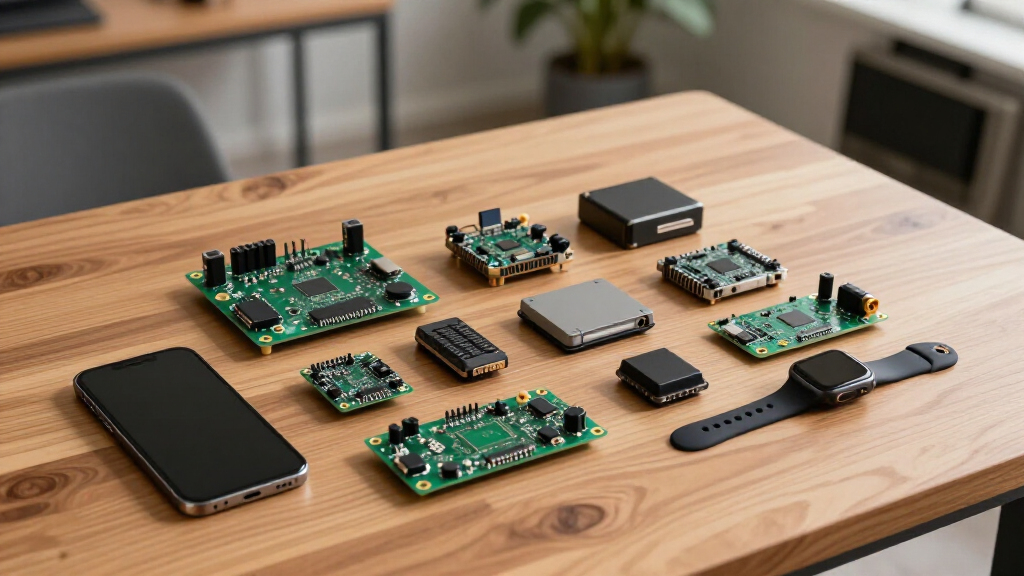
Finding the best AI development kits in 2026 means balancing power, ease of use, and versatility. The NVIDIA Jetson Orin Nano stands out for its impressive processing capabilities, ideal for advanced projects. For those seeking affordability without sacrificing functionality, the UNIHIKER K10 Starter Kit offers a great entry point. Meanwhile, the Vilros Raspberry Pi 5 AI Kit combines strong hardware with a user-friendly setup, making it a versatile option. The main challenge in this category is choosing between raw performance and ease of use, as many kits require different levels of technical skill. Continue reading for a detailed breakdown of each option and which one fits your needs best.
Open a free Amazon Business account
Business pricing, bulk buying and tax-exempt orders.
Create a free accountAs an affiliate, we earn on qualifying purchases.
Complete the kit


Key Takeaways
- High-performance kits like NVIDIA Jetson Orin Nano are best for intensive AI tasks but come with a higher price and steeper learning curve.
- Starter kits such as UNIHIKER K10 provide a balance of usability and capability, making them ideal for beginners or educational purposes.
- Integration with popular platforms like Raspberry Pi remains a key factor, offering flexibility and community support.
- Cost varies significantly; premium kits deliver more power but may be overkill for simple projects, while budget options are more accessible but limited in scope.
- Sensor and accessory compatibility is often overlooked but essential for expanding project capabilities and achieving specific AI goals.
| T5AI-Board Voice AI Development Kit with WiFi, BLE, 3.5″ TFT Display & DVP Camera |  | Best for Human–Machine Interaction Projects | Display: 3.5″ TFT | Camera Interface: DVP | Microphones: 2 MIC | VIEW LATEST PRICE | See Our Full Breakdown |
| LAFVIN AI Chatbot Kit for ESP32-S3 with Preloaded Voice Assistant Projects |  | Best for Rapid AI Voice Project Deployment | Processor: Xtensa 32-bit LX7 dual-core | SRAM: 512KB | PSRAM: 8MB | VIEW LATEST PRICE | See Our Full Breakdown |
| UNIHIKER K10 Starter Kit – AI Coding Board with Protective Case & Sensor Cables |  | Best for STEM Beginners and Classroom Use | Board: UNIHIKER K10 AI Board | Processor: ESP32-S3 | Display: 2.8-inch color screen | VIEW LATEST PRICE | See Our Full Breakdown |
| ESP32 Basic Starter AI Chatbot Kit Development Board with USB-C Dual Core Microcontroller |  | Best for Versatile IoT and AI Prototyping | Processor: Dual-core ESP32 | Memory RAM: 520 KB | Memory Storage: 448 KB | VIEW LATEST PRICE | See Our Full Breakdown |
| HIWONDER ROS2 Robot with OpenClaw and 3D Vision Navigation Kit |  | Best for Advanced Robotics and AI Research | Supported Boards: Jetson Nano, Jetson Orin Nano Super, Jetson Orin NX Super, Raspberry Pi 5 | AI Models: Gemini, ChatGPT, Grok, Llama, Deepseek | SLAM & Navigation: LiDAR, 3D depth camera, real-time obstacle avoidance | VIEW LATEST PRICE | See Our Full Breakdown |
| CanMV K230 AI Development Board with 3.5″ Touch Screen and Deep Learning Kit |  | Best for AI Vision and Interactive Projects | Processor: 1.6GHz RISC-V dual-core | Display: 3.5-inch touch screen | Camera: 2MP HD (1080P) | VIEW LATEST PRICE | See Our Full Breakdown |
| SunFounder PiCrawler AI Robot Kit for Raspberry Pi 5/4/3B+/Zero 2W | 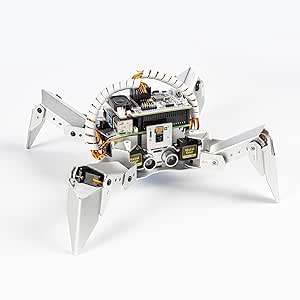 | Best for Versatile Robotics with AI Support | Compatibility: Raspberry Pi 5/4/3B+/Zero 2W | AI Capabilities: ChatGPT, Gemini, Grok, Doubao, Ollama, Qwen, DeepSeek | Motion: 12 high-torque metal gear servos | VIEW LATEST PRICE | See Our Full Breakdown |
| SunFounder AI Robot Kit with Raspberry Pi Zero 2 W+32G TF Card, ChatGPT-4o Enabled with Voice Command & Video Recognition, App Control, FPV, 12 Servos, Gyroscope, Camera, Mic |  | Best for Interactive and Conversational Robotics | Processor: Raspberry Pi Zero 2 W+ | Storage: 32G TF Card | Servos: 12 | VIEW LATEST PRICE | See Our Full Breakdown |
| CrowPi 3 for Raspberry Pi 5 All-in-One AI Learning and Development Station |  | Best for Comprehensive AI and STEM Education | Display: 4.3-inch capacitive touchscreen | Camera: 2MP | Microphone: High-sensitivity | VIEW LATEST PRICE | See Our Full Breakdown |
| NVIDIA Jetson Orin Nano Developer Kit | 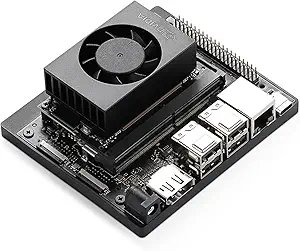 | Best for High-Performance Edge AI Development | Processor: Jetson Orin Nano 8GB with Ampere GPU | Performance: Up to 40 TOPS | Memory: 8GB | VIEW LATEST PRICE | See Our Full Breakdown |
| Vilros Raspberry Pi 5 AI Kit (8GB RAM, 26 TOPS) |  | Best Overall for Versatile AI Projects with Complete Hardware | RAM: 8GB | Processor: Quad-core Cortex-A76 2.4GHz | TOPS Capacity: 26 TOPS | VIEW LATEST PRICE | See Our Full Breakdown |
| ELECROW AI Starter Kit for Jetson Orin Nano with 11.6″ Screen and 30 Sensors |  | Best for Edge AI and Visual Recognition with Rich Expansion | Sensor Board: 30 sensors including temperature, humidity, ultrasonic, gas, motion | Camera: 8MP IMX219 gimbal | Display: 11.6-inch IPS HD (1366×768) | VIEW LATEST PRICE | See Our Full Breakdown |
| SunFounder AI Fusion Lab Kit for Raspberry Pi 5/4/3B+/Zero 2W |  | Best for Multi-Modal AI Learning and Hands-On Projects | Supported Raspberry Pi Models: Pi 5, 4B, 3B+, 3B, Zero 2W | Includes: Pan-Tilt HAT, 10-axis 10DOF, camera, high-quality components | Features: Multi-LLMs, vision tracking, voice AI, hardware control | VIEW LATEST PRICE | See Our Full Breakdown |
| ELECROW CrowPi 3 AI Learning & Development Station with Raspberry Pi 5 16GB, 4.3″ Touch Screen, Programming and Sensor Kit for AI & IoT Learning |  | Best for Educators and Creators with All-in-One AI & IoT Platform | Processor: Raspberry Pi 5 16GB | Display: 4.3-inch capacitive touch | Camera: 2-megapixel | VIEW LATEST PRICE | See Our Full Breakdown |
| AI development kit | Processor | Display |
|---|---|---|
| T5AI-Board Voice AI Developmen | — | 3.5" TFT |
| LAFVIN AI Chatbot Kit for ESP3 | Xtensa 32-bit LX7 dual-core | 2-inch TFT‑SPI |
| UNIHIKER K10 Starter Kit | ESP32-S3 | 2.8-inch color screen |
| ESP32 Basic Starter AI Chatbot | Dual-core ESP32 | — |
| HIWONDER ROS2 Robot with OpenC | — | — |
| CanMV K230 AI Development Boar | 1.6GHz RISC-V dual-core | 3.5-inch touch screen |
| SunFounder PiCrawler AI Robot | — | — |
| SunFounder AI Robot Kit with R | Raspberry Pi Zero 2 W+ | — |
| CrowPi 3 for Raspberry Pi 5 Al | — | 4.3-inch capacitive touchscreen |
| NVIDIA Jetson Orin Nano Develo | Jetson Orin Nano 8GB with Ampere GPU | — |
| Vilros Raspberry Pi 5 AI Kit | Quad-core Cortex-A76 2.4GHz | — |
| ELECROW AI Starter Kit for Jet | — | 11.6-inch IPS HD (1366×768) |
| SunFounder AI Fusion Lab Kit f | — | — |
| ELECROW CrowPi 3 AI Learning & | Raspberry Pi 5 16GB | 4.3-inch capacitive touch |
More Details on Our Top Picks
T5AI-Board Voice AI Development Kit with WiFi, BLE, 3.5″ TFT Display & DVP Camera
This kit stands out for its comprehensive hardware support, including dual microphones, a speaker, and a DVP camera interface, making it ideal for voice-driven AI projects. Compared with the UNIHIKER K10, it offers more connectivity options and hardware expansion potential, but it is less beginner-friendly and more suited for prototyping rather than finished products. Its ARMv8-M MCU and multiple interfaces enable flexible development, especially for IoT applications. This kit excels at voice interaction, but requires technical skill to set up and lacks long-term software support details.
Pros:- Supports voice interaction with integrated microphones and speaker
- Rich interfaces and expansion options for versatile projects
- Compatible with TuyaOS for easier software development
Cons:- Designed primarily for development, not end-user products
- Requires technical expertise for setup and deployment
- Limited information on ongoing software updates
Best for: Engineers and hobbyists focused on voice-enabled human–machine interfaces and IoT prototypes.
Not ideal for: Complete beginners seeking plug-and-play AI kits, as it demands advanced setup skills.
- Display:3.5″ TFT
- Camera Interface:DVP
- Microphones:2 MIC
- Speaker:1
- MCU:ARMv8-M (M33)
- WiFi:2.4GHz
- Bluetooth:LE 5.4
- GPIOs:56
- Interfaces:SPI, I2C, UART, I2S, USB, TF card, camera
Our verdict“This kit is best suited for experienced developers building voice-interaction prototypes or IoT devices.”
LAFVIN AI Chatbot Kit for ESP32-S3 with Preloaded Voice Assistant Projects
This kit simplifies AI voice project setup with preloaded Deepseek and OpenAI voice dialogue models, making it ideal for learners and rapid prototyping. Unlike the UNIHIKER K10, which supports offline AI and graphical programming, this kit emphasizes quick access to AI voice features via the ESP32-S3 processor. The 2-inch TFT display enhances user interaction, while its extensive GPIO options allow customization. However, using OpenAI features requires your own API key, and the instructions may be less detailed for newcomers. This kit is perfect for those wanting quick AI voice project results but less suitable if you need comprehensive offline capabilities or detailed tutorials.
Pros:- Preloaded with popular AI voice projects for fast start
- Supports extensive GPIO and customization options
- Includes a color display for real-time visualization
Cons:- Requires your own OpenAI API key for full functionality
- Limited detailed instructions for beginners
- OpenAI features depend on external API stability
Best for: Hobbyists and students aiming to quickly build AI voice assistants with minimal setup.
Not ideal for: Absolute beginners without familiarity with APIs or microcontroller programming, due to limited guidance.
- Processor:Xtensa 32-bit LX7 dual-core
- SRAM:512KB
- PSRAM:8MB
- Flash:16MB
- Display:2-inch TFT‑SPI
- Wi-Fi:2.4GHz
- Bluetooth:5 (LE)
- GPIOs:45 programmable
Our verdict“This kit is ideal for learners seeking quick AI voice project deployment with minimal coding fuss.”
UNIHIKER K10 Starter Kit – AI Coding Board with Protective Case & Sensor Cables
The UNIHIKER K10 offers a user-friendly entry point into AI development, with a durable design, a 2.8-inch color display, and support for graphical and MicroPython programming. Compared to the ESP32-based kits, it emphasizes offline AI features like visual recognition and voice control, making it suitable for educational settings. Its comprehensive starter kit includes cables and a protective case, but some users may find the need for prior coding knowledge to fully leverage its AI capabilities. Its durability and support for multiple programming styles make it a strong choice for younger learners or classroom environments. However, it may be too complex for absolute beginners without some guidance.
Pros:- Complete starter kit with protective case and cables
- Supports graphical and MicroPython programming
- Built-in AI features like visual recognition and offline voice control
Cons:- Requires some prior coding knowledge for full use
- Limited details on power and battery options
- May be complex for absolute beginners without guidance
Best for: STEM educators and beginners interested in hands-on AI projects with offline capabilities.
Not ideal for: Advanced users seeking flexible hardware expansion or extensive online AI integration, as it focuses on offline features.
- Board:UNIHIKER K10 AI Board
- Processor:ESP32-S3
- Display:2.8-inch color screen
- Included Cables:2x 3-Pin, 1x 4-Pin
- Protection:Plastic protective case
- Programming Support:Mind+ (Graphical), MicroPython
Our verdict“This kit is best suited for educators and beginners eager to explore offline AI features in a structured environment.”
ESP32 Basic Starter AI Chatbot Kit Development Board with USB-C Dual Core Microcontroller
This development board offers a balanced mix of connectivity and peripherals, supporting Wi-Fi, Bluetooth 5.0, and multiple interfaces like LCD and camera. Compared with the LAFVIN kit, it provides more onboard connectivity options, making it suitable for complex IoT projects. Its compatibility with Arduino IDE simplifies coding, though the setup can be challenging for absolute beginners. The limited onboard storage means larger projects require additional components, but overall, it provides a flexible platform for both hobbyists and engineers. Its compact size also makes it suitable for embedded applications where space is limited. Ideal for versatile prototyping, yet may demand more initial setup effort than plug-and-play kits.
Pros:- Supports multiple peripherals and interfaces
- Wireless connectivity with Wi-Fi and Bluetooth 5.0
- Compatible with Arduino IDE for easy programming
Cons:- Setup can be complex for absolute beginners
- Limited onboard storage for large projects
- Requires additional components for some applications
Best for: Developers and students seeking a flexible, multi-peripheral AI/IoT platform with Arduino compatibility.
Not ideal for: Complete beginners with no prior microcontroller experience, due to complex initial setup and limited onboard storage.
- Processor:Dual-core ESP32
- Memory RAM:520 KB
- Memory Storage:448 KB
- Connectivity:Wi-Fi 2.4 GHz, Bluetooth 5.0
- USB Ports:1
- Operating Voltage:3.0 ~ 3.6 V
- Dimensions:2.2″L x 1.1″W x 0.5″H
Our verdict“This kit fits well with intermediate users wanting a flexible, multi-peripheral AI development platform.”
HIWONDER ROS2 Robot with OpenClaw and 3D Vision Navigation Kit
This robotics kit pushes into the high-end with its support for multiple processing boards like Jetson Nano and Raspberry Pi, offering extensive AI and navigation capabilities. It surpasses simpler kits like the UNIHIKER K10 in complexity, featuring 3D vision, SLAM mapping, and a robotic arm with inverse kinematics. Designed for research and educational purposes, it provides comprehensive resources, including source codes and tutorials. However, the setup process is intricate and suitable only for those with advanced robotics knowledge. Its ability to support multiple hardware options makes it adaptable but also adds to the cost and complexity. This is best for serious robotics enthusiasts or researchers who need cutting-edge AI and navigation features.
Pros:- Supports multiple high-performance processing boards
- Equipped with advanced 3D vision and SLAM navigation
- Includes extensive development resources and tutorials
Cons:- Setup is complex and time-consuming
- High cost may be prohibitive for hobbyists
- Requires prior robotics knowledge for effective use
Best for: Research labs, advanced students, and robotics professionals seeking a fully featured AI robot platform.
Not ideal for: Beginners or hobbyists without prior robotics experience, due to its complexity and costs.
- Supported Boards:Jetson Nano, Jetson Orin Nano Super, Jetson Orin NX Super, Raspberry Pi 5
- AI Models:Gemini, ChatGPT, Grok, Llama, Deepseek
- SLAM & Navigation:LiDAR, 3D depth camera, real-time obstacle avoidance
- Robotic Arm:6DOF, inverse kinematics
- Vision Algorithms:YOLO26, MediaPipe
- Development Resources:Source codes, tutorials, OpenCV, Gmapping
Our verdict“This kit is best for advanced users aiming to develop state-of-the-art AI robotics and navigation systems.”
CanMV K230 AI Development Board with 3.5″ Touch Screen and Deep Learning Kit
The CanMV K230 stands out for its robust AI processing power of 6 TOPS, making it suitable for real-time vision applications like face detection and object recognition. Its 3.5-inch touch screen adds an interactive element that’s ideal for STEM education and DIY robotics, yet it demands familiarity with MicroPython, which can be a hurdle for beginners. Compared to the NVIDIA Jetson Orin Nano, this board offers a more accessible entry point for projects focused on AI vision rather than high-end edge AI. Its limited onboard storage means you’ll likely need to expand via TF cards, adding some setup complexity.
bestFor: Educators and hobbyists seeking a portable, interactive AI platform for vision projects.
notIdealFor: Users looking for plug-and-play solutions or those unfamiliar with MicroPython programming.
- High AI performance with 6 TOPS
- Large HD touch screen for easy interaction
- Supports over 30 AI vision functions
- Includes tutorials and extensive resources
- Requires familiarity with MicroPython and AI development
- Limited onboard storage (32GB) may need expansion
This board is perfect for those focused on visual AI projects who don’t mind a steeper learning curve.
- Processor:1.6GHz RISC-V dual-core
- Display:3.5-inch touch screen
- Camera:2MP HD (1080P)
- RAM:2GB
- Storage:32GB TF Card
- Connectivity:UART, I2C
- AI Performance:6 TOPS
Our verdict“Best for AI Vision and Interactive Projects — a strong pick in this lineup.”
SunFounder PiCrawler AI Robot Kit for Raspberry Pi 5/4/3B+/Zero 2W
The PiCrawler offers a compelling platform for robotics enthusiasts, supporting multiple Raspberry Pi models and AI frameworks like ChatGPT and DeepSeek. Its 12-servo spider-like movement provides a realistic motion system, making it ideal for projects combining AI, vision, and motion control. Unlike the SunFounder CrowPi 3, which leans toward educational experimentation, PiCrawler is more suited for those wanting to develop versatile, mobile robots with advanced AI capabilities. The need to purchase a Raspberry Pi separately adds to the initial setup effort, and its complexity might challenge absolute beginners.
bestFor: Robotics hobbyists and developers wanting to combine AI with mobile, spider-like movement.
notIdealFor: Complete newcomers to robotics who prefer all-in-one kits with integrated hardware.
- Supports multiple advanced AI models
- Realistic spider motion with 12 servos
- Sensors for face detection, obstacle avoidance
- Compatible with various Raspberry Pi models
- Raspberry Pi must be purchased separately
- Setup can be complex for beginners
This kit is best for those eager to build agile, AI-powered robots with versatile software support.
- Compatibility:Raspberry Pi 5/4/3B+/Zero 2W
- AI Capabilities:ChatGPT, Gemini, Grok, Doubao, Ollama, Qwen, DeepSeek
- Motion:12 high-torque metal gear servos
- Sensors:Camera, ultrasonic sensor
- Programming Support:Python, Scratch
- Includes:Mic, camera, speaker, microphone
Our verdict“Best for Versatile Robotics with AI Support — a strong pick in this lineup.”
SunFounder AI Robot Kit with Raspberry Pi Zero 2 W+32G TF Card, ChatGPT-4o Enabled with Voice Command & Video Recognition, App Control, FPV, 12 Servos, Gyroscope, Camera, Mic
The SunFounder AI Robot Kit combines a Raspberry Pi Zero 2 W+ with extensive sensors and 12 servos, enabling lifelike interactions and movement. Its support for ChatGPT-4o allows natural conversations, voice commands, and gesture recognition, making it suitable for interactive projects. Compared with the CanMV K230, which excels in AI vision, this kit emphasizes conversational AI and mobility, though its setup is more complex and may challenge beginners less familiar with robotics programming. Power and battery life details are limited, which could impact longer deployments.
bestFor: Developers seeking a robot with advanced voice and visual AI for interactive experiences.
notIdealFor: Complete beginners or those needing a straightforward, all-in-one robot platform.
- Realistic movement with 12 servos
- Supports ChatGPT-4o for natural interactions
- Multiple sensors for obstacle detection and gestures
- Includes comprehensive tutorials
- Complex setup for newcomers
- Power and battery details are limited
This robot kit suits those aiming for conversational, interactive AI robots capable of mobility and environmental awareness.
- Processor:Raspberry Pi Zero 2 W+
- Storage:32G TF Card
- Servos:12
- Sensors:Ultrasonic, touch, gyroscope, sound, camera, microphone
- Features:ChatGPT-4o integration, app control, FPV
- Includes:Assembly resources
Our verdict“Best for Interactive and Conversational Robotics — a strong pick in this lineup.”
CrowPi 3 for Raspberry Pi 5 All-in-One AI Learning and Development Station
The CrowPi 3 transforms the learning experience with its all-in-one design, featuring a 4.3-inch touchscreen, camera, microphone, and 41 sensors for hands-on AI and IoT experiments. Its extensive guided lessons make it a strong choice for beginners eager to explore face recognition, object detection, and large language models, especially since it supports multiple hardware options like Arduino and micro:bit. However, the need to purchase a Raspberry Pi 5 separately adds to the initial cost, and its complexity may overwhelm complete novices who lack prior experience with hardware assembly. Compared to the CanMV K230, it’s less focused on real-time vision but more on broad AI and STEM education.
bestFor: Students and educators seeking a versatile, all-in-one platform for AI and IoT projects.
notIdealFor: Users wanting a ready-to-run system without additional hardware investments.
- Includes extensive guided courses
- Supports multiple hardware platforms
- Rich sensor and module array for experiments
- Designed for hands-on learning
- Requires separate Raspberry Pi 5 purchase
- May be overwhelming for absolute beginners
This platform is ideal for learners who want a broad, in-depth introduction to AI and IoT development.
- Display:4.3-inch capacitive touchscreen
- Camera:2MP
- Microphone:High-sensitivity
- Sensors & Modules:41 onboard sensors
- Compatibility:Raspberry Pi 5, Arduino Nano, micro:bit, Raspberry Pi Pico
- Included:Basic kit (Pi not included)
- Guided Courses:200+ lessons
Our verdict“Best for Comprehensive AI and STEM Education — a strong pick in this lineup.”
NVIDIA Jetson Orin Nano Developer Kit
The NVIDIA Jetson Orin Nano Developer Kit is tailored for advanced AI projects at the edge, offering up to 40 TOPS of processing power with the Ampere GPU and 8GB RAM. Its compact size belies its capabilities, making it suitable for deploying AI in robotics, drones, and cameras that need high-performance processing. Compared to the CanMV K230, which targets smaller-scale vision tasks, the Jetson Orin Nano provides a broader scope of high-end AI applications, though its setup requires a solid technical background. Its premium price reflects its performance, but the lack of detailed compatibility options could restrict some users.
bestFor: Developers working on high-end robotics or vision systems requiring top-tier AI performance.
notIdealFor: Beginners or hobbyists seeking a budget-friendly, simple AI development kit.
- Up to 40 TOPS AI processing
- Compact form factor with extensive connectivity
- Supports multiple AI frameworks and software tools
- Setup complexity may deter beginners
- High price point for entry-level users
This kit is best suited for professionals and advanced developers aiming to prototype sophisticated edge AI solutions.
- Processor:Jetson Orin Nano 8GB with Ampere GPU
- Performance:Up to 40 TOPS
- Memory:8GB
- Connectivity:Multiple connectors including MIPI CSI
- Included:Jetson Orin Nano 8GB module and carrier board
- Size:Compact design
Our verdict“Best for High-Performance Edge AI Development — a strong pick in this lineup.”
Vilros Raspberry Pi 5 AI Kit (8GB RAM, 26 TOPS)
This kit stands out as a comprehensive solution for those comfortable with Raspberry Pi hardware, offering a well-rounded bundle that includes a powerful Raspberry Pi 5, cooling, storage, and an AI HAT capable of 26 TOPS. Compared with the SunFounder AI Fusion Lab Kit, which emphasizes multi-modal learning and large language models, the Vilros kit provides a more straightforward entry point into AI development with strong performance and a complete set of accessories. The main tradeoff is that it demands some assembly and technical familiarity, which could be a hurdle for absolute beginners. Its performance depends heavily on the chosen TOPS variant and user setup, making it ideal for hobbyists and advanced students ready to customize their projects.
Pros:- Complete hardware package with cooling, storage, and accessories
- Powerful quad-core processor with significant AI performance
- Supports up to 26 TOPS, suitable for demanding AI workloads
- Flexible for custom projects and expansions
Cons:- Requires assembly and technical setup, not ideal for beginners
- Performance varies depending on the selected TOPS configuration
- Limited software out-of-the-box, needing user customization
Best for: Hobbyists and intermediate developers seeking a complete Raspberry Pi-based AI development environment.
Not ideal for: Absolute beginners or those preferring a fully plug-and-play, software-focused AI experience without hardware assembly.
- RAM:8GB
- Processor:Quad-core Cortex-A76 2.4GHz
- TOPS Capacity:26 TOPS
- Storage:128GB Micro SD Card
- Power Supply:Vilros 27W 5V/5A USB-C
- Included Accessories:HDMI cable, case, cooler, microSD to USB adapter
Our verdict“This kit is best for users comfortable with Raspberry Pi hardware who want a versatile, high-performance AI development platform.”
ELECROW AI Starter Kit for Jetson Orin Nano with 11.6″ Screen and 30 Sensors
This all-in-one kit excels at providing a portable, beginner-friendly platform for edge AI projects, especially for those interested in robot navigation and visual recognition. Unlike the SunFounder AI Fusion Lab Kit, which emphasizes multi-modal learning with Raspberry Pi, the ELECROW kit leverages the Jetson Orin Nano’s power, making it more suitable for real-time, resource-intensive AI tasks. Its inclusion of 30 sensors, a high-quality camera, and a built-in display creates an immersive experience. However, it requires users to have or acquire the Jetson Orin Nano board separately, and its setup can be complex for users new to embedded systems. It’s an ideal choice for developers wanting a portable, sensor-rich AI toolkit for edge applications.
Pros:- Includes extensive sensor and camera array for multi-modal AI projects
- Portable design with integrated display and sensors
- High-quality 8MP gimbal camera for visual tasks
- Rich expansion options for versatile experimentation
Cons:- Requires separate Jetson Orin Nano board, adding cost and complexity
- Setup may be challenging for users unfamiliar with embedded systems
- Limited to 11.6-inch display, not suitable for larger projects
Best for: Intermediate to advanced developers focusing on edge AI, robotics, and visual recognition projects.
Not ideal for: Complete beginners without experience in Jetson modules or those seeking a simple, all-in-one plug-and-play solution.
- Sensor Board:30 sensors including temperature, humidity, ultrasonic, gas, motion
- Camera:8MP IMX219 gimbal
- Display:11.6-inch IPS HD (1366×768)
- Expansion Interfaces:2x I2C, 1x UART, 2x IO
- Included Accessories:128G SD card, adapter, mounting plates, case
- Dimensions:11.81×7.87×3.94 inches
Our verdict“This kit is best for those seeking a portable, sensor-rich edge AI platform with advanced visual and robotic capabilities.”
SunFounder AI Fusion Lab Kit for Raspberry Pi 5/4/3B+/Zero 2W
This kit transforms multiple Raspberry Pi models into a comprehensive AI learning platform, focusing on voice, vision, and sensor integration. Compared with the ELECROW CrowPi 3, which emphasizes a ready-to-use all-in-one device, the SunFounder kit offers a flexible, modular approach for learners to build and experiment with various AI applications. Its support for large language models and multi-modal AI makes it suitable for those interested in cutting-edge AI concepts. The main challenge is that Raspberry Pi boards are not included, requiring a separate purchase, and some users may find the setup complex if unfamiliar with Pi hardware and software. It’s an excellent choice for learners eager to explore multi-modal AI with a solid hardware foundation.
Pros:- Supports multiple Raspberry Pi models and large language models
- Includes extensive sensors, camera, and hardware for diverse AI projects
- Structured tutorial resources and active community support
- Flexible for building multi-modal AI applications
Cons:- Requires separate Raspberry Pi purchase, increasing total cost
- Setup and configuration can be complex for newcomers
- Advanced projects may be difficult for complete beginners
Best for: Students and educators looking to learn multi-modal AI concepts with flexible hardware components.
Not ideal for: Beginners seeking a fully integrated, plug-and-play device without assembling or configuring multiple hardware parts.
- Supported Raspberry Pi Models:Pi 5, 4B, 3B+, 3B, Zero 2W
- Includes:Pan-Tilt HAT, 10-axis 10DOF, camera, high-quality components
- Features:Multi-LLMs, vision tracking, voice AI, hardware control
- Learning Resources:Video lessons, sample code, support
Our verdict“This kit is ideal for learners and educators seeking a flexible, multi-modal AI platform with extensive hardware support.”
ELECROW CrowPi 3 AI Learning & Development Station with Raspberry Pi 5 16GB, 4.3″ Touch Screen, Programming and Sensor Kit for AI & IoT Learning
This all-in-one kit combines a Raspberry Pi 5 with a touch screen, sensors, and a wide array of accessories, making it well-suited for educational environments and hands-on creators. Unlike the other kits, such as the SunFounder or ELECROW’s previous offerings, the CrowPi 3 emphasizes an integrated experience with ready-to-use resources, dual system options, and extensive sensors for AI, IoT, and gaming projects. Its complex setup may be intimidating for complete beginners, and the price could be a barrier for some users. Still, it serves as a formidable platform for teaching and exploring a broad range of AI and IoT applications with minimal additional hardware required.
Pros:- Comprehensive platform with sensors, accessories, and dual-system support
- Includes a high-capacity Raspberry Pi 5 16GB for robust performance
- Supports AI, IoT, and gaming projects with extensive resources
- Includes educational resources and accessories for varied projects
Cons:- Setup may be complex for complete beginners
- Price and size could be prohibitive for some users
- Software and hardware compatibility details are limited
Best for: Educators, students, and creators seeking a versatile, all-in-one AI and IoT development station with extensive accessories.
Not ideal for: Users seeking a lightweight, simple starter kit or those on a tight budget due to potential cost and setup complexity.
- Processor:Raspberry Pi 5 16GB
- Display:4.3-inch capacitive touch
- Camera:2-megapixel
- Sensors:41 built-in sensors and modules
- Supported Boards:Raspberry Pi 5, Arduino Nano, micro:bit, Pico
- Included Accessories:Wireless keyboard, mouse, game controllers, NFC cards, Minecraft cube, dual system cards
Our verdict“This kit is best for educators and creators wanting a feature-rich, all-in-one AI and IoT platform for advanced projects and teaching.”
How We Picked
I evaluated these AI development kits based on their processing power, ease of setup, build quality, and expandability. Performance metrics such as CPU, GPU, and AI acceleration features were prioritized to ensure the kits could handle complex AI workloads. Usability factors, including documentation, community support, and included accessories, played a central role in the ranking. Additionally, I looked at value for money by comparing prices to features, aiming to highlight options suitable for different budgets and skill levels. The final list balances high-end performance with beginner-friendly options, ensuring a broad spectrum of users can find a suitable kit.Factors to Consider When Choosing Best AI Development Kits
Choosing the right AI development kit depends on several key factors beyond raw specs. Understanding your project’s scope, your technical skill level, and future expansion plans can help narrow your options. Carefully evaluating these aspects prevents costly mistakes like opting for overpowered kits for simple tasks or underpowered options for demanding projects. The following sections outline the most important considerations to keep in mind when selecting an AI development kit.Performance and Processing Power
The core of any AI development kit is its processing capability. Higher-end kits like the NVIDIA Jetson Orin Nano feature advanced GPUs and dedicated AI accelerators, enabling complex models and faster inference times. However, for many hobbyist or educational projects, less powerful options like Raspberry Pi-based kits are sufficient and more budget-friendly. Matching the kit’s performance to your project needs is critical to avoid overpaying or facing bottlenecks during development.
Ease of Use and Documentation
An AI kit’s usability often determines your overall project success, especially if you’re new to AI development. Kits with comprehensive documentation, tutorials, and active community forums shorten the learning curve significantly. While high-performance options may require advanced setup and programming skills, beginner-friendly kits typically include visual programming interfaces or simplified SDKs. Consider your experience level and choose accordingly to prevent frustration.
Expandability and Compatibility
Future-proofing your investment means selecting kits that support additional sensors, cameras, and peripherals. Compatibility with common platforms like Raspberry Pi or NVIDIA’s ecosystem can make it easier to upgrade and expand your project. Check if the kit offers GPIO pins, USB ports, or dedicated slots for modules. Overlooking this can limit your project’s growth and force costly replacements later.
Price and Value
Cost varies widely across AI development kits, with high-end models costing several hundred dollars and entry-level options under a hundred. It’s important to weigh the features against your budget, but also consider long-term value. Cheaper kits might lack necessary processing power, leading to frustration and wasted time, while premium options deliver capabilities that could justify their cost if your project demands it. Balance your needs with what you’re willing to invest.
Sensor and Accessory Support
Many AI projects rely on additional sensors, cameras, or actuators. Ensuring your chosen kit supports these peripherals is essential. Some kits include a variety of sensors and expansion ports, facilitating rapid prototyping, while others require additional modules or shields. Compatibility and ease of integration directly impact your project’s development speed and complexity.
Frequently Asked Questions
Can I use a Raspberry Pi for advanced AI projects?
Yes, Raspberry Pi models like the Pi 4 or Pi 5 can handle many AI tasks, especially when paired with accelerators like the Google Coral USB Edge TPU. While they may not match the raw power of dedicated AI development kits like NVIDIA Jetson, they are excellent for learning, prototyping, and lightweight applications. Their extensive community support and affordable price point make them a popular choice for beginners and hobbyists.
What should I consider when choosing between a high-end and a budget AI kit?
Deciding between high-end and budget kits depends on your project scope and future plans. High-end kits provide faster processing, better GPU performance, and more expandability, suitable for complex models and real-time applications. Budget options are more accessible for learning and small-scale projects but may lack the power needed for intensive tasks. Analyzing your immediate needs versus potential growth helps prevent overspending or under-equipping your setup.
Are preloaded AI models necessary in an AI development kit?
Preloaded AI models can significantly reduce setup time and allow you to start experimenting immediately. They are especially useful for beginners or educational kits. However, for advanced projects, customizing or training your own models is often necessary, so relying solely on preloaded models might limit flexibility. Consider your experience level and project requirements when evaluating whether preloaded options are a priority.
How important is community support when choosing an AI development kit?
Community support can be a decisive factor, especially for troubleshooting, tutorials, and shared project ideas. Kits with active user forums, detailed documentation, and a vibrant developer ecosystem help you resolve issues faster and learn more effectively. For beginners, this support can be the difference between frustration and progress, while experienced developers benefit from shared resources and collaboration opportunities.
Is it better to buy a ready-to-use kit or assemble one myself?
Preassembled kits save time and reduce setup complexity, making them ideal for those eager to start working on AI projects immediately. Building your own setup can be rewarding and allows for tailored configurations, but it requires more technical knowledge and effort. For most users, especially newcomers, a ready-to-use kit offers a smoother entry into AI development without compromising too much on flexibility.
Conclusion
For those seeking the best overall performance and future-proofing, the NVIDIA Jetson Orin Nano makes an excellent choice, especially for advanced developers. Beginners or educators should consider the UNIHIKER K10 Starter Kit for its simplicity and solid capabilities. If budget is a primary concern, the Vilros Raspberry Pi 5 AI Kit provides a good balance of power and affordability. For developers focused on expanding projects, kits with extensive sensor support like the ELECROW CrowPi 3 are worth considering. Ultimately, your choice should align with your project complexity, experience level, and budget constraints.
Flea & tick season Picks
flea and tick prevention
As an affiliate, we earn on qualifying purchases.