
📊 Full opportunity report: Vocal-strain load tracking for working singers on IdeaNavigator AI — validation score, market gap, and execution plan.

Get the latest gadgets delivered free with Prime
- Fast, free delivery on millions of items
- Prime Video, Amazon Music and more included
- Member-only deals all year
TL;DR
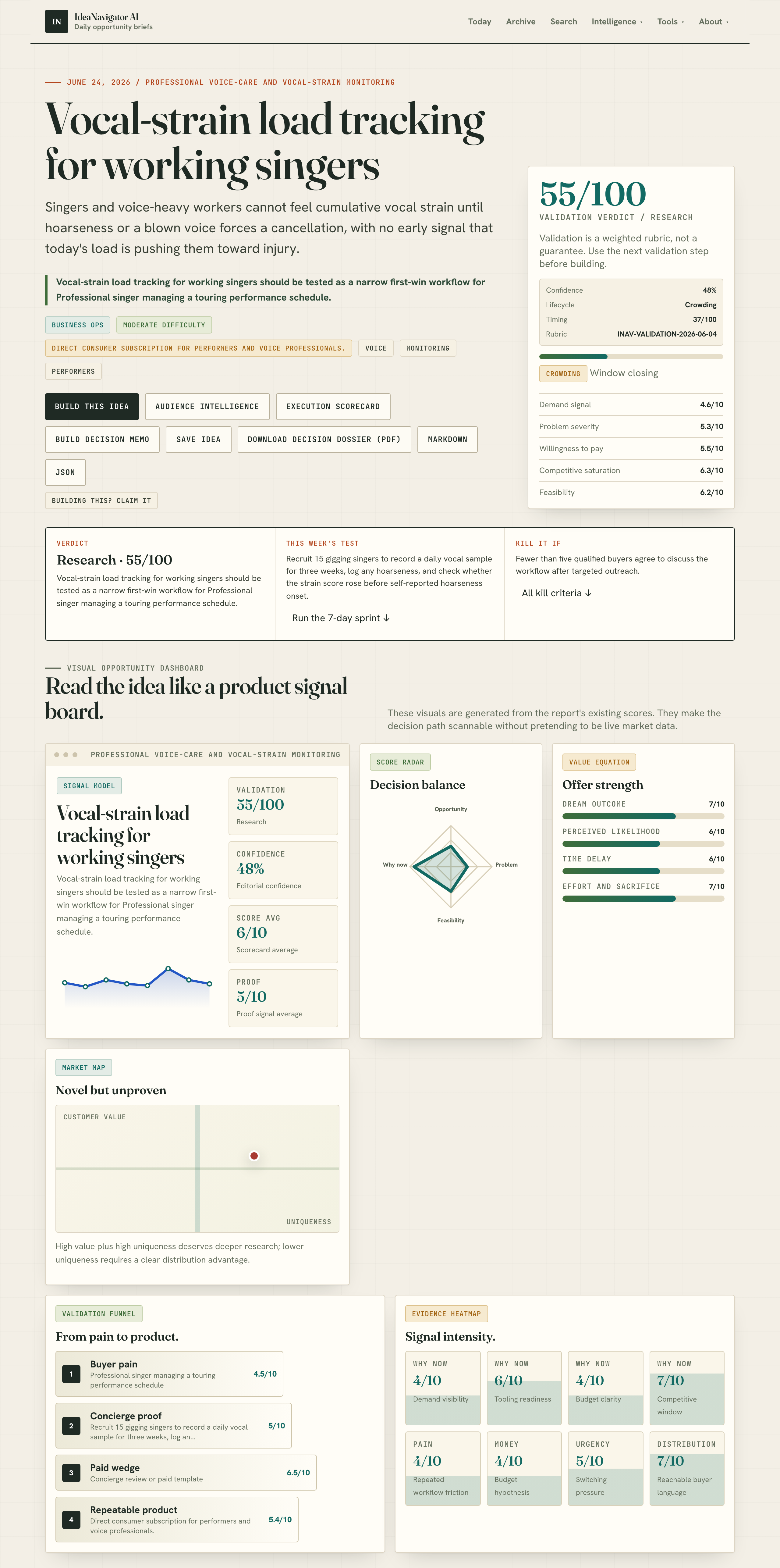
Researchers are developing an app that records short vocal samples after performances to track cumulative vocal strain. The goal is to alert singers before hoarseness or injury occurs, improving vocal health management.
A new vocal strain tracking app prototype is being tested with professional singers to monitor cumulative vocal load and prevent injury during touring schedules. This development offers a potential tool for voice professionals to manage their vocal health proactively, addressing a longstanding challenge in the industry.
The proposed system involves singers recording a short vocal sample after each performance, which the app then analyzes to assess vocal strain. The analysis compares current vocal characteristics to the singer’s personal baseline, identifying tone shifts that have historically preceded hoarseness or injury. The app would then flag increased strain levels and suggest warm-up routines or rest periods.
This approach leverages recent advances in on-device audio analysis technology, making it feasible to implement in a portable, user-friendly format. The initiative is currently in the validation phase, with plans to recruit 15 gigging singers to test whether the app’s strain scores rise before self-reported hoarseness onset over a three-week period.
Potential Impact on Vocal Health Management
If successful, this technology could significantly reduce voice injuries among touring singers by providing early warning signals, allowing for timely intervention. It also addresses the gap in current vocal health management, which largely relies on subjective feedback and delayed symptoms like hoarseness. The app’s ability to quantify vocal load could empower performers to self-manage their schedules more effectively, potentially extending their careers and reducing vocal fatigue.
Products Worth Considering

LG UltraGear 27-inch QHD OLED Gaming Monitor, 240Hz, 0.03ms, G-SYNC Compatible, FreeSync Premium Pro, HDR True Black 400

Samsung 27-Inch Odyssey OLED G5 QHD Gaming Monitor (G50SF)

LG 27GR83Q-B 27-inch Ultragear QHD IPS Gaming Monitor
As an affiliate, we earn on qualifying purchases.
Advances in Audio Analysis Enable New Monitoring Tools
Recent developments in portable audio analysis have made it possible to evaluate vocal characteristics in real time. Traditionally, vocal health management depended on subjective feedback or periodic check-ups with voice specialists. The increasing gig economy and self-managed touring schedules have created a demand for accessible, on-demand tools that can provide immediate feedback on vocal strain. This project builds on these technological trends, aiming to create a practical solution for professional singers.
“The ability to analyze vocal characteristics on a smartphone opens new possibilities for real-time health monitoring in voice professionals.”
— an anonymous researcher
Uncertainties Around Effectiveness and Adoption
It is not yet confirmed whether the app’s strain scores will reliably predict hoarseness or injury across diverse voices and performance conditions. The validation study is ongoing, and results are still pending. Additionally, user acceptance and consistent usage in real-world touring scenarios remain untested at this stage.
Next Steps in Validation and Development
The next step involves recruiting the 15 singers for the validation study, with data collection expected over three weeks. If the results show a clear correlation between early strain signals and subsequent hoarseness, developers plan to refine the algorithm and prepare for wider testing. Further, they aim to explore commercial deployment through subscription-based models targeted at voice professionals.
Key Questions
How does the app analyze vocal strain?
The app records a short vocal sample after each performance and uses audio analysis algorithms to compare vocal characteristics against the singer’s baseline, identifying tone shifts associated with strain.
Can the app prevent vocal injuries?
While it cannot prevent injuries directly, the app aims to provide early warnings of increased vocal load, allowing singers to adjust their schedules and avoid overuse.
Is this technology suitable for all singers?
The initial development targets professional and gigging singers, but its effectiveness across different voice types and skill levels will depend on validation results.
When will the app be available for wider use?
Wider availability depends on the success of ongoing validation studies; if positive, commercial versions could be launched within the next year.
How much will the subscription cost?
Pricing details are not yet finalized, but the model is expected to be a monthly subscription aimed at voice professionals and serious amateurs.
Source: IdeaNavigator AI