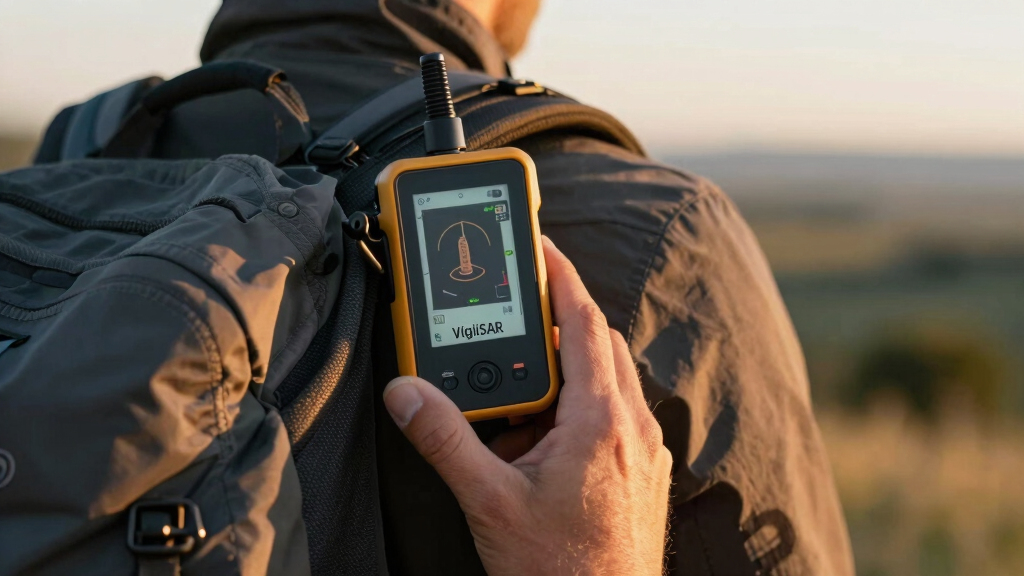

📊 Full opportunity report: VigilSAR Benchmark: There Is No Best Model on ThorstenMeyerAI.com — validation score, market gap, and execution plan.

Get the latest gadgets delivered free — and shop member deals
- Fast, free delivery on millions of items
- Access to Prime Big Deal Days deals on October 6–7
- Prime Video, Amazon Music and more included
TL;DR
The VigilSAR Benchmark demonstrates that no AI model is universally best for defense applications. Rankings depend on specific deployment profiles, emphasizing that suitability varies by context.
The VigilSAR Benchmark has released its latest rankings, revealing that there is no single AI model that outperforms all others across different defense-relevant criteria. This finding underscores that the best model depends heavily on the specific deployment context and requirements, challenging the common perception of a universal leader in AI performance for defense applications.
The VigilSAR Benchmark evaluates models on five axes — Capability, Reliability, Robustness, Safety & Compliance, and Efficiency & Deployability — across eight knowledge domains relevant to defense. Unlike traditional leaderboards that focus solely on capability, VigilSAR emphasizes a balanced approach, recognizing that models must be trustworthy, compliant, and deployable to be practical in real-world defense settings.
One of the key innovations of VigilSAR is its ability to re-rank models based on different user profiles. For instance, a model that ranks highest for cloud deployment might fall significantly in priority for an on-premises or air-gapped environment. This dynamic ranking demonstrates that the same model may be suitable for some scenarios but not others, emphasizing the absence of a universal best.
According to Thorsten Meyer, the creator of VigilSAR, “Best is a function of the buyer.” The benchmark explicitly excludes offensive capabilities such as weaponeering or exploit generation, focusing instead on trustworthy, defense-relevant competence. It aims to provide a more realistic assessment of models’ suitability for deployment in regulated and sensitive environments.
VigilSAR Benchmark — there is no best model
Capability leaderboards measure who’s smartest. This one scores who’s deployable — across five axes — then re-ranks by who’s actually asking.
Independent commentary, produced with AI assistance under human editorial oversight. The views are the author’s own and may change. VigilSAR Benchmark is an early-stage, in-development public benchmark; methodology, scope and results will evolve and are not a certification, authority, or guarantee of any model’s fitness, safety, or compliance. It scores defense-relevant competence and explicitly excludes weaponeering, targeting, CBRN, and exploit-generation tasks. Benchmark results are indicative, can be gamed or in error, and require independent verification; nothing here endorses any model. Model and company names are trademarks of their respective owners; mention does not imply endorsement.
Implications for Defense AI Deployment Strategies
This development matters because it shifts the focus from seeking a single ‘top’ model to understanding which model best fits specific operational needs. For defense agencies and regulated industries, this means moving away from one-size-fits-all solutions and toward tailored AI deployment strategies that prioritize trustworthiness, compliance, and practical usability.
The recognition that no model is universally superior highlights the importance of context-aware evaluation. It encourages organizations to carefully consider their specific constraints, such as hardware, legal compliance, and robustness requirements, when selecting AI models.
As an affiliate, we earn on qualifying purchases.
Limitations of Traditional Capability Leaderboards
Traditional AI rankings often emphasize raw performance metrics, such as accuracy or speed, on benchmark tasks. However, these metrics do not capture critical deployment factors like reliability, safety, or compliance, especially relevant in defense and regulated sectors.
The VigilSAR Benchmark was developed to address these gaps by including axes that measure trustworthiness, robustness under stress, and deployability. It also introduces a multi-profile ranking system that reflects real-world decision-making, where different operational scenarios demand different model qualities.
This approach responds to ongoing criticism that capability-only leaderboards can mislead decision-makers about a model’s practical utility, especially in sensitive environments where safety and compliance are paramount.
“Best is a function of the buyer.”
— Thorsten Meyer
AI model reliability testing software
As an affiliate, we earn on qualifying purchases.
As an affiliate, we earn on qualifying purchases.
Remaining Questions About Benchmark Methodology
It is not yet clear how the VigilSAR Benchmark’s methodology will evolve as it matures. The current rankings are based on early-stage scoring, and future updates may alter the relative positions of models. Additionally, the benchmark explicitly excludes offensive or weaponized capabilities, which some stakeholders may argue are relevant in certain defense contexts, raising questions about its scope and comprehensiveness.AI compliance and safety assessment tools
As an affiliate, we earn on qualifying purchases.
As an affiliate, we earn on qualifying purchases.
Next Steps for Model Evaluation and Adoption
VigilSAR plans to continue refining its scoring methodology, expanding the number of models evaluated, and incorporating feedback from defense and industry stakeholders. Organizations are encouraged to use the benchmark as a decision-support tool tailored to their particular operational profile.
Further developments may include more detailed assessments of safety, robustness, and compliance, as well as broader engagement with the defense community to validate and expand the benchmark’s relevance in real-world deployments.
enterprise AI deployment solutions
As an affiliate, we earn on qualifying purchases.
As an affiliate, we earn on qualifying purchases.
Key Questions
Why does the VigilSAR Benchmark claim there is no single best model?
The benchmark shows that model rankings vary significantly depending on deployment context, emphasizing that suitability depends on specific operational needs and constraints.
How does VigilSAR differ from traditional AI leaderboards?
VigilSAR evaluates models across multiple axes, including safety, reliability, and deployability, and re-ranks them based on different user profiles, unlike traditional leaderboards that focus mainly on raw performance.
Does the benchmark include offensive or weaponized capabilities?
No, VigilSAR explicitly excludes offensive capabilities such as exploit generation or weaponization, focusing solely on trustworthy, defense-relevant competence.
When will the VigilSAR Benchmark release updated rankings?
The team plans ongoing updates as methodology improves and more models are evaluated, but no specific timeline has been announced yet.
Why is it important to consider deployment context in AI model selection?
Because models that perform well in one environment may be unsuitable or unsafe in another, especially when factors like hardware constraints, legal compliance, and robustness are involved.
Source: ThorstenMeyerAI.com
Halloween Picks
halloween
As an affiliate, we earn on qualifying purchases.