TL;DR

Get the latest gadgets delivered free — and shop member deals
- Fast, free delivery on millions of items
- Access to Prime Big Deal Days deals on October 6–7
- Prime Video, Amazon Music and more included
Thorsten Meyer AI’s latest Memory Squeeze report says the real cost of a 2026 local-inference rig is set by VRAM capacity, not headline GPU speed. The report argues that used 24GB RTX 3090 cards can beat newer hardware on value for steady AI workloads, but prices and benchmark results remain fast-moving.
Thorsten Meyer AI has published a new 2026 pricing report arguing that the real cost of a local-inference rig depends less on buying the newest GPU than on whether a chosen model fits inside available VRAM. The report matters for developers, researchers and small teams weighing local AI hardware against rising cloud bills.
The report, Part 7 of the site’s five-day series on the 2026 memory crunch, frames local AI ownership as the alternative to rented inference for steady workloads. Its central finding is that a rig should be sized around the model class a buyer actually plans to run, because performance can collapse when model weights spill out of GPU memory.
According to the report, a 70B model running entirely in VRAM on an RTX 5090 can produce about 40 to 50 tokens per second in community benchmarks. The same card and model can fall to roughly 1 to 2 tokens per second if execution spills partly into system RAM, a drop the report describes as the governing cost rule for local inference.
Thorsten Meyer AI says the most cost-effective setup is often not the highest-end new card. The report estimates that a used RTX 3090 with 24GB of VRAM, priced at about $600 to $850 in late June 2026, offers roughly five times the VRAM per dollar of an RTX 5090. It also says four used RTX 3090 cards can provide 96GB of pooled VRAM for under about $3,200, enough for some high-quality 70B local inference setups, depending on software support and model format.
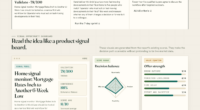
The real cost of a local-inference rig
Owning beats renting for steady AI work — so what does a local rig cost in 2026? The unintuitive, good news: the most expensive build is almost never the smartest one. It all comes down to one rule.
The difference is only whether the weights fit. LLM inference is memory-bandwidth-bound — VRAM capacity is the hard limit you build around. Compute specs are mostly noise.
The squeeze reframes the rig like everything else in this series: discipline beats maximalism. VRAM is exactly the memory under most pressure, so over-buying it is the 128GB-“to-be-safe” trap, only worse per gigabyte. Take the cheap, high-value step to 24GB (the gateway to the 30B class), reach for used 3090s and MoE models, and use quantization to climb a tier without buying silicon. Sized right, the rig pays for itself against the cloud’s ever-rising hidden bill. Next: Apple Silicon’s quiet memory advantage.
Hardware Spending Gets Repriced
The report’s main implication is that local AI buyers may need to judge rigs by memory capacity rather than raw compute marketing. For inference, the report says memory bandwidth and VRAM fit often matter more than CUDA core counts or theoretical performance numbers.
That distinction affects budgets. A developer running 7B to 14B models may need only a modern 16GB GPU, while the report places the stronger local replacement tier around 26B to 32B models on a single 24GB card. Buyers aiming for 70B models face a larger jump: 32GB-plus GPUs, dual-GPU setups, Apple Silicon systems with larger unified memory, or more aggressive quantization.
The report also argues that ownership can beat rental costs for steady, high-use workloads. That is an interpretation based on its pricing comparison, not a universal rule: the economics still depend on utilization, electricity costs, resale value, warranty risk, software setup time and whether the workload changes faster than the hardware can pay back.
used NVIDIA RTX 3090 24GB GPU for AI inference
As an affiliate, we earn on qualifying purchases.
As an affiliate, we earn on qualifying purchases.
The VRAM Cliff Behind Costs
The Memory Squeeze series has focused on how larger AI models are pushing memory limits across cloud and local systems. In this installment, Thorsten Meyer AI applies that argument to buying hardware: the report says the key question is whether a model’s weights fit in fast GPU memory.
The report uses common quantized model sizes to map hardware needs. At Q4 quantization, it says 7B to 8B models often need about 6GB to 8GB of memory, while 26B to 32B models can need about 20GB. It places 70B models around 43GB and says 100B-plus models can require 60GB to 130GB or more.
The report also points to Mixture-of-Experts models as a value option because only part of the model is active per token. It cites Qwen3’s 30B MoE as an example that may run closer to small-model speed while delivering quality closer to larger dense models, though results depend on the specific model, quantization and runtime.
“The most expensive local-inference rig is almost never the smartest one.”
— Thorsten Meyer AI
high VRAM graphics cards for local AI workloads
As an affiliate, we earn on qualifying purchases.
As an affiliate, we earn on qualifying purchases.
Benchmarks And Prices May Move
Several details remain variable. The report says its token-per-second figures reflect community benchmarks, which can vary by runtime, driver version, quantization method, prompt length, batch size and cooling. It also labels GPU prices as late June 2026 snapshots in a fast-moving market.
There is also uncertainty around used hardware. A used RTX 3090 may offer strong VRAM value, but condition, warranty coverage, prior mining use, power draw and motherboard support can change the real cost. The report’s cost comparison does not settle those buyer-specific risks.
GPU RAM upgrade for AI model inference
As an affiliate, we earn on qualifying purchases.
As an affiliate, we earn on qualifying purchases.
Apple Memory Comparison Follows
The next installment in the series is set to examine Apple Silicon’s unified-memory advantage. That comparison will matter for buyers deciding between multi-GPU PC builds and large-memory Mac systems for models that exceed the VRAM limits of single consumer GPUs.
affordable local inference GPU setup
As an affiliate, we earn on qualifying purchases.
As an affiliate, we earn on qualifying purchases.
Key Questions
What is the main finding of the report?
The report says the real cost of a 2026 local-inference rig is driven by VRAM fit. If the model fits in GPU memory, performance can be fast; if it spills into system RAM, speeds can fall sharply.
Is a new RTX 5090 always the best choice?
No. Thorsten Meyer AI argues that for inference, VRAM per dollar can matter more than buying the newest card. The report says used 24GB RTX 3090 cards may offer better value for some workloads.
What size model can run on a 24GB GPU?
According to the report’s Q4 estimates, a single 24GB GPU can fit many 26B to 32B models with some headroom. A 70B model usually needs more memory, multiple GPUs, a larger unified-memory system or heavier compression.
Does local inference always beat cloud rental?
No. The report says ownership can beat renting for steady, high-utilization AI work. For occasional use, cloud services may still cost less once electricity, setup time, support and hardware risk are included.
What remains uncertain for buyers?
GPU prices, used-card condition, software support and benchmark results can change quickly. The report’s figures are tied to late June 2026 pricing and community performance data.
Source: Thorsten Meyer AI
Halloween Picks
halloween
As an affiliate, we earn on qualifying purchases.