
TL;DR

Get the latest gadgets delivered free — and shop member deals
- Fast, free delivery on millions of items
- Access to Prime Big Deal Days deals on October 6–7
- Prime Video, Amazon Music and more included
Stenvrik, a closed-beta news product from Thorsten Meyer AI, organizes about 1,700 live stories across 49 city hubs on a rotating 3D globe. The project claims to use an autonomous trend engine to cluster and place stories by city while feeding trend signals into a wider publishing network.
Thorsten Meyer AI has presented Stenvrik, a closed-beta news product that places about 1,700 live stories across 49 city hubs on a rotating 3D globe, a model the operator says is meant to make news easier to read by location rather than by recency alone.
The product, described in a Built in Public Day 3/19 post, organizes stories around city hubs including Tokyo, Berlin, New York and Singapore. The source material says users can spin the globe to see where stories are breaking, where clusters are forming and which regions are active.
According to Thorsten Meyer AI, Stenvrik is powered by an autonomous trend engine that surfaces stories, groups them into topics and pins those clusters to cities. The same signal is said to feed a wider operator network, making the product both a consumer-facing news interface and a trend-detection layer for other publishing tools.
The operator says the project began as a Claude Design “News Globe Demo” and was later rebuilt for production. The source says the system runs at roughly €0 per month, with the globe rendering client-side and the engine running on owned compute. Stenvrik remains in closed beta, and the operator says features, availability and behavior may change.
Geography Becomes The Filter
Stenvrik’s main claim is that location can provide structure that a standard headline feed loses. Instead of ranking stories only by time or popularity, the interface groups them by place, allowing readers to scan for city-level and regional activity.
That matters because many news events are tied to geography before they become global stories. A market shock, transport disruption, policy move or security incident may start in one city and affect readers elsewhere. Stenvrik’s format is built around that chain: where a story is happening, where related stories cluster and where attention may be moving next.
The business case also depends on whether a low-cost, automated system can create a useful news product without newsroom-scale staffing. Thorsten Meyer AI frames the project as part of a local-first, provider-agnostic portfolio, meaning its clustering and ranking are not described as tied to a single model provider.
As an affiliate, we earn on qualifying purchases.
From Demo To Closed Beta
Stenvrik is part of Thorsten Meyer AI’s Built in Public series, where the operator is documenting a portfolio of products connected by shared infrastructure. The source material lists Stenvrik alongside other tools in what it calls an “operator constellation,” with Stenvrik’s trend engine feeding the broader network.
The product’s origin is central to the announcement. The operator says Stenvrik started as a throwaway Claude Design news globe prototype before being rebuilt as a production system. That framing supports the broader thesis in the source material: small AI-assisted prototypes can become reusable systems when they are rebuilt around owned infrastructure and limited operating costs.
“Not what is the news — where is it happening.”
— Thorsten Meyer AI
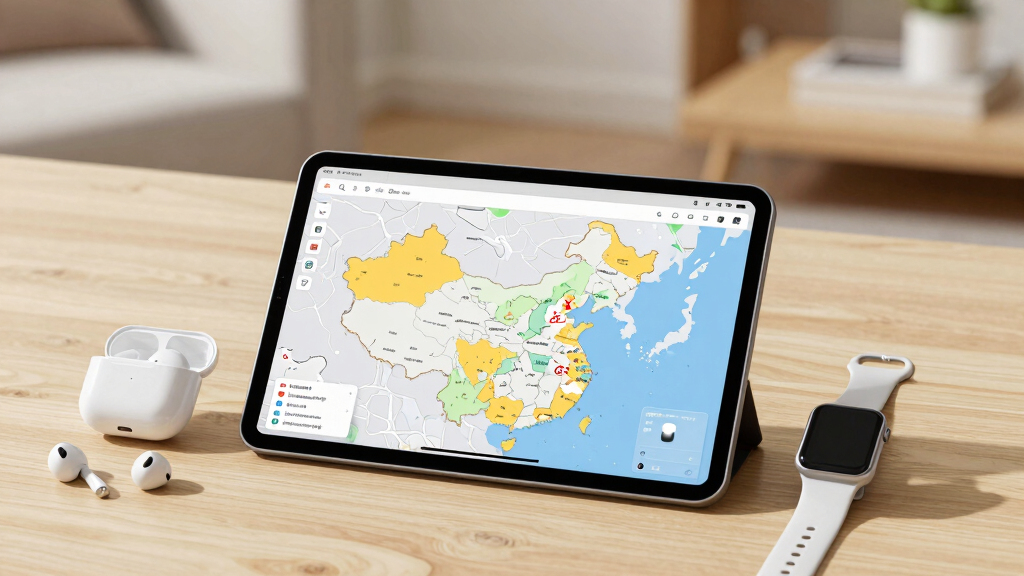
interactive globe with news stories
As an affiliate, we earn on qualifying purchases.
As an affiliate, we earn on qualifying purchases.
Beta Claims Need Proof
Several parts of Stenvrik remain unverified from the provided source material. The exact public release date, beta access process, data sources, refresh rate and moderation process are not stated. It is also not clear how the system handles stories that belong to multiple cities or where location cannot be reliably inferred.
The operator says the trend engine may contain errors, misplaced stories or omissions. Because the product is automated, readers should treat its clustering and city pins as a discovery layer rather than a confirmed account of events.
digital globe for news visualization
As an affiliate, we earn on qualifying purchases.
As an affiliate, we earn on qualifying purchases.
Closed Beta Sets The Test
The next milestone is whether Stenvrik’s closed beta shows that readers find geographic organization more useful than a standard news feed. The product’s value will depend on accuracy, speed, source quality and whether the city hubs make complex news patterns easier to understand.
Thorsten Meyer AI has not stated when Stenvrik will become widely available. Until then, the project remains a limited-access test of whether “news as geography” can work as both a reader product and an input for a wider publishing network.
As an affiliate, we earn on qualifying purchases.
Key Questions
What is Stenvrik?
Stenvrik is a closed-beta news product from Thorsten Meyer AI that displays live stories on a rotating 3D globe, grouped around 49 city hubs.
How many stories does Stenvrik track?
The source material says Stenvrik has about 1,700 live stories pinned and clustered by an autonomous trend engine.
Is Stenvrik publicly available?
No public access details are provided. The source states that Stenvrik is in closed beta, with limited availability.
What remains unconfirmed?
The source does not state the exact launch date, data sources, public release plan or accuracy record for its automated city placement and clustering.
Source: Thorsten Meyer AI
Fall Picks
fall essentials
As an affiliate, we earn on qualifying purchases.