
TL;DR

Get the latest gadgets delivered free with Prime
- Fast, free delivery on millions of items
- Prime Video, Amazon Music and more included
- Member-only deals all year
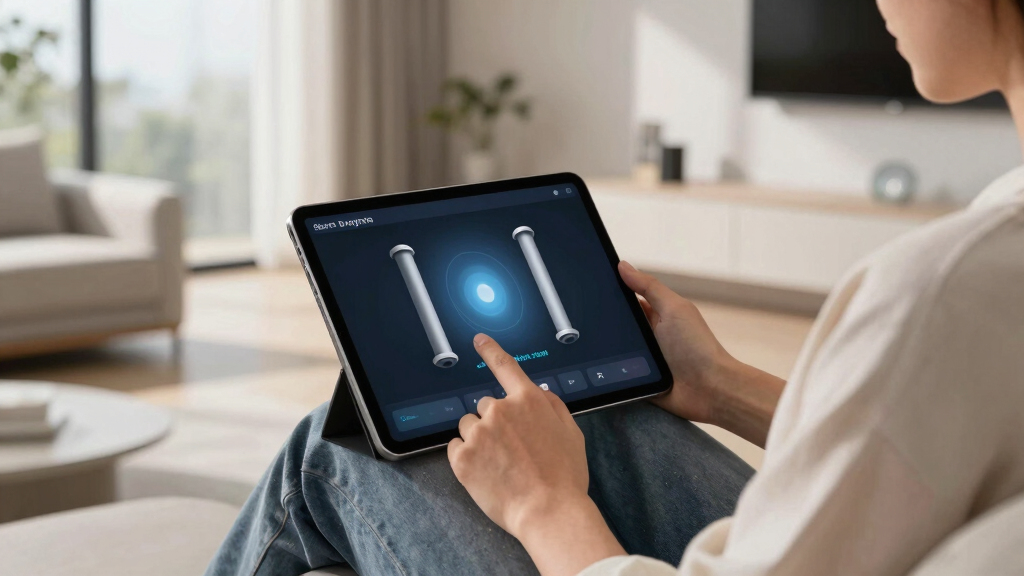
Abyssal Station introduces a pioneering scroll-driven depth engine that simulates a descent into the ocean’s depths. This immersive web experience uses CSS and JavaScript to create a realistic sinking sensation, with visual and interactive elements responding to scroll position.
Abyssal Station, a web-based immersive experience, has implemented a novel scroll-driven depth engine that simulates a descent to 3,800 meters below the ocean surface. This technical innovation creates a convincing sinking sensation by dynamically adjusting visuals, lighting, and interactive elements based on scroll position, offering users a realistic underwater journey. For a detailed analysis, see the original analysis. The experience is designed to be accessible, visually cohesive, and emotionally engaging, marking a significant advance in web-based immersive design.
The depth engine in Abyssal Station is built with CSS variables and JavaScript interpolation, synchronized through a master scroll anchor that measures the user’s scroll position. As users scroll, background colors, lighting effects, particle movements, and creature animations respond in real-time, simulating the layers of the ocean, from surface teal to hadal black. The experience features stylized aquatic entities, such as bioluminescent jellyfish and anglerfish, which react to depth cues, enhancing immersion. Learn more about how AI shapes the depth engine of Abyssal Station.
The development process involved three phases: initial build translating the concept into code, critique and refinement focusing on fluidity and accessibility, and final validation by an art director to ensure emotional resonance. The entire experience is self-hosted, with no external assets, and designed to run flawlessly across multiple screen sizes, maintaining high performance and accessibility standards.
Innovative Web Technique Sets New Standard for Immersive Experiences
This development demonstrates how advanced CSS and JavaScript can be harnessed to create highly immersive, scroll-responsive web experiences that simulate physical phenomena like sinking into the ocean. It expands the possibilities for digital storytelling, education, and artistic expression, offering a new way to engage users through interactive depth simulation. Such techniques could influence future web design, especially in fields requiring realistic environmental simulations or emotionally resonant narratives.
immersive virtual reality headsets
As an affiliate, we earn on qualifying purchases.
As an affiliate, we earn on qualifying purchases.
Background on Abyssal Station and Web-Based Immersive Design
Abyssal Station is part of a larger project featuring 175 AI-built websites, each exploring different artistic and technical concepts. The station’s design builds on recent advances in web animation, CSS, and JavaScript, emphasizing seamless integration of visual and interactive elements to evoke physical sensations. This particular experience follows a trend toward more realistic, immersive web environments, inspired by virtual reality and interactive art, but implemented purely through code.
The concept of simulating physical phenomena via scroll-driven interfaces has been explored before, but Abyssal Station’s depth engine stands out for its precision, visual harmony, and accessibility focus. Its development reflects an ongoing effort to push the boundaries of what web experiences can achieve without external assets or frameworks.
“The scroll-driven depth engine in Abyssal Station exemplifies how CSS and JavaScript can work together to produce a convincing sense of sinking into the ocean, blending technical mastery with artistic storytelling.”
— Thorsten Meyer
interactive underwater exploration toys
As an affiliate, we earn on qualifying purchases.
As an affiliate, we earn on qualifying purchases.
Unresolved Questions About the Depth Engine’s Capabilities
It is not yet clear how scalable or adaptable this scroll-driven depth engine is for other types of content or environments. While technically impressive, questions remain about its performance on lower-end devices, long-term accessibility, and how it might integrate with more complex interactive systems. Additionally, the extent to which this technique can be extended beyond artistic projects into commercial or educational applications is still under consideration.
bioluminescent LED aquarium lights
As an affiliate, we earn on qualifying purchases.
As an affiliate, we earn on qualifying purchases.
Future Developments and Potential Applications of the Technique
Developers and designers may explore adapting the scroll-driven depth engine for educational tools, virtual tours, or interactive storytelling. Further refinement could improve performance on a broader range of devices and enhance accessibility features. The creators of Abyssal Station plan to document their process and potentially open-source parts of the engine, encouraging wider experimentation and innovation in immersive web design.
scroll responsive web design tools
As an affiliate, we earn on qualifying purchases.
As an affiliate, we earn on qualifying purchases.
Key Questions
How does the scroll-driven depth engine work?
The engine uses CSS variables and JavaScript to interpolate visual and interactive elements based on the user’s scroll position, simulating a sinking motion through ocean layers.
Can this technique be used for other types of immersive experiences?
Yes, the underlying principles can be adapted for various environments, including virtual tours, educational simulations, or artistic installations, though performance and accessibility should be considered.
Is the Abyssal Station experience accessible to all users?
The experience is designed with accessibility in mind, including reduced-motion options and keyboard navigation, but performance may vary on lower-end devices.
Will the scroll engine be open-source or available for public use?
The creators plan to document their development process and may release parts of the engine to encourage wider experimentation in web immersive design.
What are the limitations of this scroll-driven technique?
Potential limitations include performance issues on older devices, challenges in integrating with complex systems, and ensuring accessibility for all users.
Source: ThorstenMeyerAI.com
Fall Picks
fall essentials
As an affiliate, we earn on qualifying purchases.