📊 Full opportunity report: Particle Geometry Mapping: A Look Inside “SINGULARITY” (FABLE/175) on ThorstenMeyerAI.com — validation score, market gap, and execution plan.
TL;DR
‘SINGULARITY’ (FABLE/175) showcases advanced Particle Geometry Mapping techniques that create immersive AI environments. This development highlights innovative design merging art and technology, with ongoing technical and conceptual exploration.
Particle Geometry Mapping Inside “SINGULARITY”
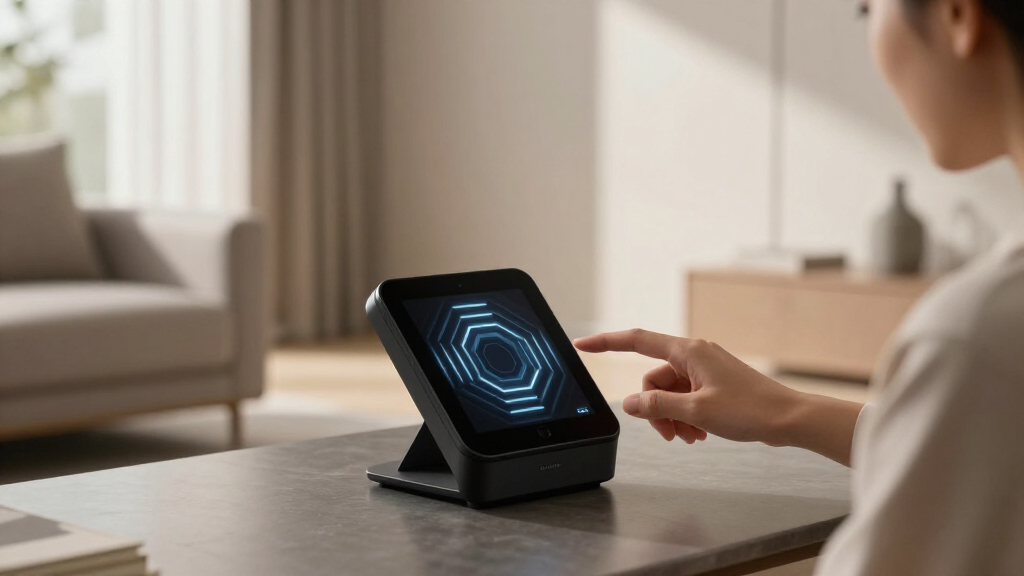
Advanced particle systems turn abstract data into an immersive architecture of light, motion and geometry—transforming a stark black room into a spatial AI experience.
From invisible data to tangible environment
“SINGULARITY” combines advanced algorithms with creative direction to produce a data-rich environment that remains visually coherent, expressive and experiential.
Abstract information
Data sources supply the underlying values that determine particle placement, density, behaviour and visual relationships.
Geometric translation
Algorithms translate those values into spatial coordinates, creating complex structures that can be read as form, rhythm and motion.
Immersive architecture
The mapped particle field transforms a minimal black room into a dynamic visual environment for AI interfaces and artistic expression.

Interactive GPU-based Visualization of Large Dynamic Particle Data (Synthesis Lectures on Visualization)
As an affiliate, we earn on qualifying purchases.
As an affiliate, we earn on qualifying purchases.
How the visual symphony takes shape
The project’s conceptual pipeline connects data interpretation, algorithmic structure, real-time rendering and human perception.
Data signal
Abstract values establish the raw material.
Particle logic
Rules assign position, density and behaviour.
Geometry map
Relationships become spatial structures.
Live render
Complex forms resolve into responsive visuals.
Experience
Viewers encounter data as an environment.

3D Data Science with Python: Building Accurate Digital Environments with 3D Point Cloud Workflows
As an affiliate, we earn on qualifying purchases.
As an affiliate, we earn on qualifying purchases.
A different model for digital space
| Design dimension | Conventional interface | “SINGULARITY” approach | Current certainty |
|---|---|---|---|
| Data representation | Charts, panels and fixed objects | Particles mapped into spatial geometry | ✓ Demonstrated |
| Environmental depth | Mostly screen-bound and planar | Immersive, volumetric and experiential | ✓ Demonstrated |
| Visual behaviour | Predetermined interface states | Algorithmic motion and data response | ~ Developing |
| Commercial scalability | Established deployment patterns | Requirements remain undisclosed | ✗ Unverified |
| Human interaction | Clicks, taps and menus | Potentially spatial and embodied | ~ Under review |
immersive AI environment creation kit
As an affiliate, we earn on qualifying purchases.
As an affiliate, we earn on qualifying purchases.
Where the method could matter next
Application potential
Editorial assessment based on the project’s stated direction—not measured adoption forecasts.
Still under review
The artistic direction is visible; several implementation details remain open.
advanced particle mapping hardware
As an affiliate, we earn on qualifying purchases.
As an affiliate, we earn on qualifying purchases.
Traceability: concept to consequence
Each stage converts an abstract input into a progressively more human, spatial and experiential output.
What the project tells us—and what comes next
What is Particle Geometry Mapping?
A technique that uses particle systems to translate abstract data into complex, spatial visual forms.
How does “SINGULARITY” use AI in design?
It applies advanced algorithms and AI-supported tools to shape a data-driven environment where art and technology operate as one system.
Can the approach move beyond art?
Potential applications include virtual reality, AI interfaces and interactive environments, although broader scalability has not yet been established.
What are the main technical challenges?
Real-time particle rendering, spatial coherence, seamless tool integration and preservation of aesthetic integrity.
Why is the project significant for future AI environments?
It offers a blueprint for interfaces that are not merely functional screens, but immersive, data-rich spaces capable of expanding human-computer interaction.
Space becomes an interface.
“SINGULARITY” suggests a future in which data is no longer confined to charts or panels. It becomes the material of the environment itself—structured by algorithms, shaped by design and understood through experience.
Implications of Particle Geometry Mapping for AI Environments
This development underscores a significant step forward in how AI-driven environments can be designed and experienced. The use of Particle Geometry Mapping offers new possibilities for creating immersive spaces that blend data, art, and technology. It highlights a future where digital environments are not just functional but also deeply engaging and visually complex, influencing fields from virtual reality to AI interface design. For designers, developers, and AI researchers, ‘SINGULARITY’ exemplifies a blueprint for integrating advanced algorithms into tangible creative outputs, potentially shaping next-generation digital spaces and human-computer interactions.The Evolution of Data-Driven Space Design
‘SINGULARITY’ builds on recent advances in AI and data visualization, where techniques like Particle Geometry Mapping have emerged as powerful tools for spatial rendering. This project is part of a broader movement toward immersive, AI-enabled environments that challenge traditional design boundaries. Thorsten Meyer’s earlier work has explored the intersection of art and AI, but ‘SINGULARITY’ marks a notable leap in applying these methods to real-world, experiential spaces. The project’s focus on transforming a minimalistic black room into a dynamic visual environment reflects ongoing efforts to harness complex algorithms for aesthetic and functional purposes, pushing the limits of what digital environments can achieve.“Particle Geometry Mapping breathes new life into abstract data, turning it into immersive visual experiences that challenge our understanding of space and form.”
— Thorsten Meyer
Technical and Conceptual Challenges Still Under Review
It is not yet clear how scalable or adaptable the Particle Geometry Mapping techniques used in ‘SINGULARITY’ will be for broader applications. Details about the specific algorithms, data sources, and computational requirements remain undisclosed, and the long-term impact on user interaction and interface design is still under development.Future Developments and Broader Applications of ‘SINGULARITY’
Further technical demonstrations and detailed case studies are expected to explore the scalability of Particle Geometry Mapping. Researchers and designers will likely investigate how these methods can be integrated into commercial or public AI environments, potentially influencing virtual reality, digital art, and interactive spaces. Additional insights into the underlying algorithms and their customization for different contexts are anticipated to emerge in upcoming presentations or publications.Key Questions
What is Particle Geometry Mapping?
Particle Geometry Mapping is an advanced technique that uses particles to generate complex, data-driven visual environments, transforming abstract data into immersive spatial forms.
How does ‘SINGULARITY’ demonstrate the potential of AI in design?
‘SINGULARITY’ showcases how AI algorithms can be used to craft immersive environments that blend data, art, and technology, challenging traditional design boundaries and opening new possibilities for digital spaces.
Can this technology be applied outside artistic environments?
While currently demonstrated as an artistic and experimental project, the underlying techniques have potential applications in virtual reality, AI interfaces, and interactive environments across various industries.
What are the main technical challenges faced in this project?
Key challenges include rendering complex particle systems in real-time, maintaining spatial coherence, and integrating AI tools seamlessly into the creative process.
What is the significance of ‘SINGULARITY’ for future AI environments?
It presents a blueprint for designing immersive, data-rich environments that could influence future AI interfaces, virtual spaces, and digital art forms, expanding the scope of human-computer interaction.
Source: ThorstenMeyerAI.com