
TL;DR

Get the latest gadgets delivered free with Prime
- Fast, free delivery on millions of items
- Prime Video, Amazon Music and more included
- Member-only deals all year
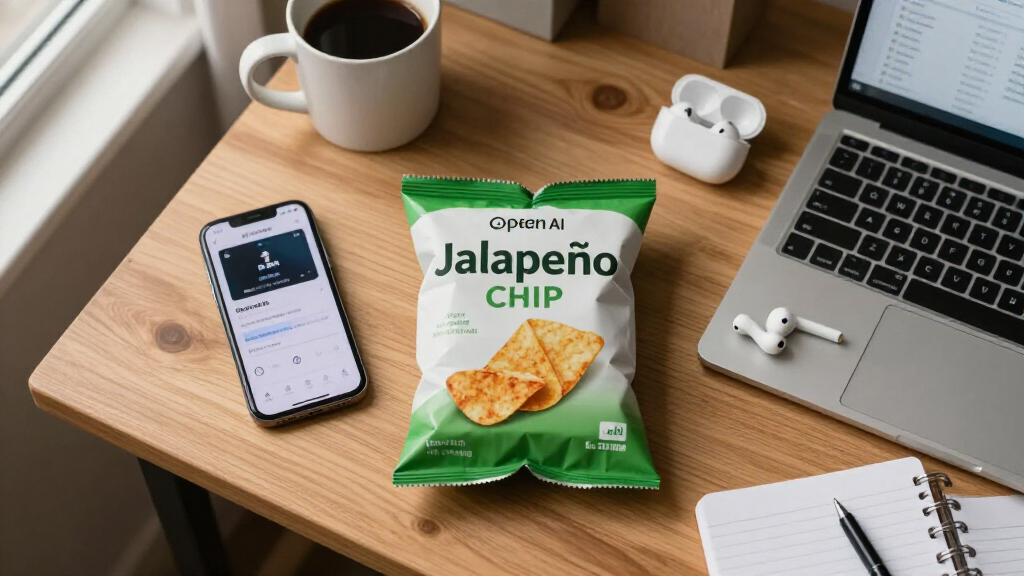
OpenAI has published early performance metrics for its Jalapeño inference chip, claiming notable efficiency and latency improvements over NVIDIA’s hardware. However, these results are vendor-reported, untested outside OpenAI’s environment, and focus solely on comparisons with NVIDIA. The development signals OpenAI’s move toward custom hardware optimized for AI inference, with implications for AI infrastructure costs and performance.
OpenAI has publicly released initial performance data for its Jalapeño inference chip, claiming significant efficiency and latency improvements over NVIDIA’s current generation of AI hardware. The results, based on internal measurements and benchmarks, highlight the company’s efforts to develop custom silicon tailored specifically for AI inference workloads. While the data suggests promising advancements, it remains vendor-reported and unverified by independent testing, raising questions about how these results will hold up in broader deployment.
OpenAI’s Jalapeño chip was tested against NVIDIA’s Blackwell systems using the InferenceX benchmark, which measures the full process of serving AI requests across multiple models. The results show that Jalapeño achieves between 1.5 to 1.9 times higher performance per watt, with latency reductions of 1.7 to 3.6 times across different models. These metrics are based on OpenAI’s own measurements, with the chip operating below 550W during testing, normalized against higher power ratings for comparison.
It’s important to note that the comparison is limited to NVIDIA’s hardware, specifically the Blackwell generation, and does not include other vendors like AMD or Google. Additionally, the results are vendor-reported, not independently verified, and the Jalapeño chip has not yet been deployed in production. OpenAI emphasizes that these measurements are preliminary and subject to further validation before any large-scale deployment.
Implications of OpenAI’s Custom Inference Hardware
The reported performance gains indicate that specialized inference chips like Jalapeño could significantly reduce operational costs for large-scale AI deployment by improving efficiency and reducing latency. For OpenAI, this development could lead to more cost-effective and scalable AI services, especially as demand for real-time, interactive AI applications grows. However, since the results are unverified outside OpenAI, the broader industry must await independent benchmarks to confirm these claims, making the impact on competitors and the market still uncertain.
As an affiliate, we earn on qualifying purchases.
Background on AI Hardware Development and OpenAI’s Strategy
OpenAI has historically relied on general-purpose GPUs from NVIDIA for training and inference, but the increasing scale of models and demand for efficiency have driven the company to develop custom silicon. The Jalapeño chip represents a strategic shift toward hardware specifically optimized for inference workloads, which dominate operational costs in large AI deployments. Prior to this, other industry players like Google and Microsoft have also invested in custom AI accelerators, but OpenAI’s recent disclosure marks one of the first instances of publicly sharing detailed performance metrics for its own hardware.
The company’s focus on inference efficiency aligns with broader industry trends to reduce power consumption and latency, crucial for deploying AI services at scale. The Jalapeño chip is designed to handle the varied phases of language model inference, from prompt prefill to token generation, with a focus on minimizing data movement and optimizing for different workload phases.
As an affiliate, we earn on qualifying purchases.
Limits of Current Performance Data and Verification Status
Since the Jalapeño performance metrics are vendor-reported and based on internal testing, it remains unclear how these results will translate into real-world deployment. Independent benchmarking is not yet available, and the chip has not been deployed at scale. Additionally, the comparison is limited to NVIDIA hardware, leaving questions about how Jalapeño stacks up against other vendors’ solutions. The actual operational benefits and potential integration challenges are still unknown.
As an affiliate, we earn on qualifying purchases.
Next Steps for OpenAI’s Hardware and Industry Impact
OpenAI plans to complete production qualification of Jalapeño and begin deployment within its infrastructure by the end of 2024. Independent benchmarks and third-party testing are expected to follow, which will either confirm or challenge the initial claims. The broader industry will watch for how these custom chips perform at scale and whether other companies accelerate their own hardware development efforts. The ongoing evolution of inference hardware will influence operational costs, model deployment strategies, and AI service architecture in the coming years.
As an affiliate, we earn on qualifying purchases.
Key Questions
What are the main claimed advantages of OpenAI’s Jalapeño chip?
The chip reportedly offers 1.5 to 1.9 times higher performance per watt, with 1.7 to 3.6 times lower latency across tested models, compared to NVIDIA’s Blackwell systems, based on internal measurements.
Are these performance results independently verified?
No, the results are vendor-reported and have not yet been independently verified outside OpenAI’s testing environment.
When will Jalapeño be deployed in OpenAI’s infrastructure?
OpenAI expects to begin deploying Jalapeño chips in production by the end of 2024, after completing qualification testing.
How does Jalapeño compare to other AI hardware vendors?
The current comparison is limited to NVIDIA’s Blackwell hardware; performance against AMD, Google, or other vendors remains untested and unknown.
What does this mean for the AI industry?
If verified, Jalapeño’s efficiency gains could reduce operational costs significantly, influencing how large-scale AI services are built and operated in the future.
Source: ThorstenMeyerAI.com
Halloween Picks
halloween
As an affiliate, we earn on qualifying purchases.

![SenseTime’s AI Strategy: Dominating AI As Frontier AI Lab [In-Depth Analysis, 2026] – Klover.ai](https://techwreckreport.com/wp-content/uploads/2026/09/sensetime-s-ai-strategy-dominating-ai-as-frontier-ai-lab-in-depth-analysis-2026-featured-560x300.jpg)