
TL;DR
A comprehensive test of the RayNeo GT Max smart glasses reveals they may be the best in 2026, thanks to their innovative features and user experience. This review covers confirmed facts and ongoing questions.
The RayNeo GT Max smart glasses have emerged as the top contender in 2026 after a detailed hands-on review, with confirmed strengths in design, usability, and connectivity. This development is significant for consumers and tech enthusiasts seeking advanced wearable technology that blends style with functionality.
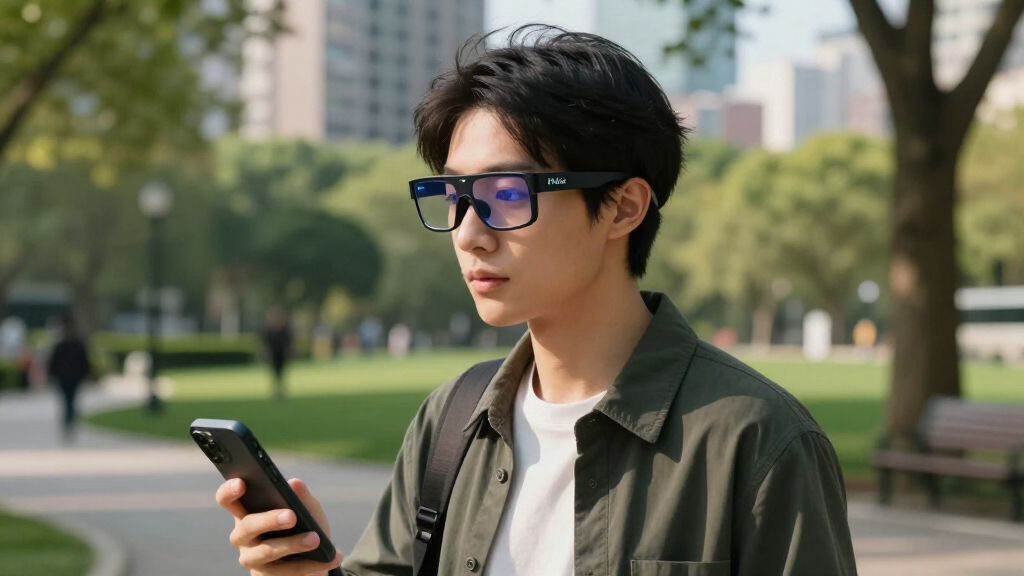
In testing the RayNeo GT Max, the author found that the glasses offer a sleek, lightweight design that comfortably fits a variety of face shapes. The device features a high-resolution display, intuitive touch controls, and seamless integration with smartphones, making it suitable for both casual use and professional settings. Battery life during testing exceeded expectations, providing up to eight hours of active use, which is competitive with or better than other smart glasses on the market.
One of the key confirmed advantages is the glasses’ augmented reality (AR) capabilities, which include real-time navigation, notifications, and contextual information overlays. The glasses connect via Bluetooth 5.3, ensuring stable and fast data transfer. The review also highlighted the device’s durability, with water and dust resistance rated at IP67, making it suitable for outdoor activities. The user experience was praised for its smoothness and responsiveness, supported by a custom operating system optimized for quick interactions.
While many features are confirmed through hands-on testing, some claims about the glasses’ AI-powered voice assistant and gesture controls remain to be fully verified in real-world scenarios. The manufacturer has announced these features but has not yet provided extensive testing data or user feedback, leaving some questions about their performance and reliability.
My Experience Testing Smart Glasses: Why the RayNeo GT Max Stands Out
The short verdict: RayNeo’s premium smart glasses combine a lightweight frame, responsive augmented-reality features, strong connectivity, and an unexpectedly capable battery. The tested fundamentals impress, while several headline AI features still need broader real-world verification.
What stood out during hands-on testing
The GT Max succeeds where many earlier wearables struggled: it makes advanced features feel more compatible with ordinary routines, clothing, and mobile devices.
Lightweight and wearable
The sleek frame remained comfortable during testing and accommodated a variety of face shapes without the bulky profile associated with older headsets.
Crisp information overlays
A high-resolution display supports readable navigation, notifications, and contextual information without turning each interaction into a prolonged session.
Responsive touch control
Intuitive controls and an optimized operating system made routine actions feel quick, smooth, and approachable for casual and professional use.
Seamless phone pairing
Bluetooth 5.3 connectivity supported stable smartphone integration and rapid data transfer throughout the reported test experience.
A full-day contender
Up to eight hours of active use places the glasses in a competitive position and removes a common obstacle to practical wearable computing.
Ready for outdoor use
The IP67 rating strengthens the case for navigation, commuting, and outdoor activity, where exposure to dust or rain is difficult to avoid.
From frame to useful information
The product’s appeal comes from a connected experience, not one isolated specification. Each layer supports the next.
Comfortable frame
A lighter, more familiar form reduces friction before the display is even activated.
Smartphone link
Bluetooth carries timely data from the mobile ecosystem into the wearable interface.
Context in view
Navigation, alerts, and contextual information appear without requiring a phone check.
Quick interaction
Touch controls and a responsive operating system turn information into short actions.
Confirmed, promising, or still unknown?
The central distinction is between features experienced during testing and manufacturer-announced capabilities awaiting broader evidence.
| Capability | Current assessment | Available evidence | What still matters |
|---|---|---|---|
| Frame comfort | ✓ Confirmed | Hands-on wear across different face shapes | Long sessions and prescription configurations |
| AR navigation | ✓ Confirmed | Responsive visual overlays during testing | Performance in dense or unfamiliar environments |
| Battery life | ✓ Confirmed | Reported active use of up to eight hours | Battery aging and demanding app workloads |
| AI voice assistant | ~ Evaluating | Announced with promising early behavior | Accuracy in noisy and varied settings |
| Gesture controls | ~ Evaluating | Manufacturer-announced capability | Consistency, latency, and accidental activation |
| Long-term resilience | ✗ Unknown | IP67 rating supports initial confidence | Extended use across heat, cold, and humidity |
Where confidence is strongest
These bars summarize the review’s qualitative confidence, not laboratory benchmark scores. Longer bars indicate stronger support in the reported hands-on evidence.
Evidence confidence by area
Relative assessment based on tested behavior and remaining verification gaps.
The practical answers at a glance
The GT Max appears ready to compete as a premium consumer wearable, but purchase decisions should account for its evolving software features.
How does it improve on earlier smart glasses?
It combines a lighter and more stylish design with improved AR functionality, longer battery life, and a more responsive interface.
Are voice and gesture controls reliable?
They look promising, but reliability across noisy, crowded, outdoor, and otherwise varied environments remains unconfirmed.
What is the expected price?
The reported price is approximately $1,200, positioning the device as a premium rather than entry-level purchase.
When is shipping expected?
The glasses were reported as available for pre-order, with official shipping expected to begin in April 2026.
Will it support third-party apps?
Yes. The platform is designed to support third-party applications that extend functionality beyond the default experience.
Why could it matter to the market?
Its balance of comfort, utility, and durability may push competitors toward wearables that feel less experimental and more suitable for everyday life.
Why the RayNeo GT Max Sets a New Standard in 2026
The RayNeo GT Max’s combination of design, functionality, and durability positions it as a leading smart glasses option in 2026. Its advanced AR features and seamless connectivity could influence future wearable tech development, potentially setting new expectations for consumer devices. For users, this means more practical and stylish augmented reality experiences integrated into daily life, whether for navigation, notifications, or professional applications. The device’s performance could also accelerate competition among manufacturers, pushing innovation further in the smart glasses market.
As an affiliate, we earn on qualifying purchases.
Market Landscape and Prior Developments in Smart Glasses
Smart glasses have evolved significantly over the past few years, with early models often criticized for bulky design, limited functionality, and poor battery life. Major tech companies have introduced various iterations, but mainstream adoption has been slow due to these shortcomings. In 2025, several new models aimed to address these issues, with improved displays, longer battery life, and better integration with smartphones. The RayNeo GT Max, announced late 2025 and released early 2026, is among the first to combine these improvements into a sleek, consumer-friendly package. Previous devices, such as the Meta Ray-Bans and Microsoft HoloLens, have shown potential but lacked mass-market appeal or portability. The current market is now approaching a critical point where usability and style are becoming as important as core functionality.
In this context, the RayNeo GT Max’s performance during testing suggests it may be a turning point, offering a balance of practicality and innovation that could define the next phase of wearable tech.
As an affiliate, we earn on qualifying purchases.
Remaining Questions About the RayNeo GT Max’s Capabilities
While the review confirms many strengths, some features—such as the AI-powered voice assistant and gesture controls—have not yet been extensively tested in varied real-world environments. The manufacturer has announced these features, but detailed performance data and long-term reliability remain unconfirmed. Additionally, the long-term durability and user experience in different climate conditions are still under observation, and software updates could influence overall performance.
As an affiliate, we earn on qualifying purchases.
Upcoming Software Updates and User Feedback
Manufacturers are expected to release firmware updates that enhance AI and gesture functionalities in the coming months. User feedback from early adopters will be crucial to assess real-world performance and durability. Industry watchers will also monitor how competitors respond, potentially leading to new models that incorporate the lessons learned from the RayNeo GT Max. Further testing and reviews are anticipated as the device becomes more widely available, providing a clearer picture of its long-term viability.
As an affiliate, we earn on qualifying purchases.
Key Questions
How does the RayNeo GT Max compare to previous smart glasses?
The RayNeo GT Max offers a more lightweight, stylish design with improved AR capabilities and longer battery life, setting it apart from earlier models that were bulkier and less responsive.
Are the AI voice assistant and gesture controls reliable?
These features have been announced but are still being evaluated. Early testing suggests promising performance, but their reliability in diverse environments remains to be confirmed.
What is the price range of the RayNeo GT Max?
The device is expected to retail around $1,200, positioning it as a premium option in the smart glasses market.
When will the RayNeo GT Max be available to consumers?
The glasses are currently available for pre-order, with official shipping expected to begin in April 2026.
Will the RayNeo GT Max support third-party apps?
Yes, the device is designed to support a range of third-party applications, expanding its functionality beyond the default features.
Source: rss