
TL;DR

Get the latest gadgets delivered free with Prime
- Fast, free delivery on millions of items
- Prime Video, Amazon Music and more included
- Member-only deals all year
Meta Quest 3 has been confirmed to support a 207Hz standard refresh rate and a 240Hz developer mode. These updates could significantly improve VR experience and performance tuning for developers.
Meta Quest 3 now supports a 207Hz standard refresh rate and a 240Hz developer mode, according to recent user reports on the r/virtualreality subreddit. This development, confirmed through device testing, could lead to smoother VR experiences and expanded customization options for developers and enthusiasts alike.
Community members on r/virtualreality have shared that the Meta Quest 3 supports a 207Hz refresh rate as a standard option, a notable increase from previous VR headsets. Additionally, the device reportedly offers a 240Hz developer mode, enabling developers to push the hardware beyond typical consumer settings. These features were confirmed through direct testing and are not yet officially announced by Meta.
While the 207Hz support is now confirmed, the 240Hz developer mode is currently accessible only through unofficial methods and is intended for development purposes. The community reports indicate that enabling this mode may involve custom firmware or developer tools, and its stability and safety are still under evaluation. Meta has not issued an official statement on these capabilities yet.
Meta Quest 3 at 207Hz — and the Experimental 240Hz Frontier
Community testing suggests unusually high refresh-rate options on Meta Quest 3: a reported 207Hz setting and an unofficial 240Hz developer mode. The promise is smoother motion and deeper performance tuning; the reality still includes major questions about support, stability, and practical rendering demands.
More frames can reshape the feeling of presence
A higher refresh rate shortens the time available for every displayed frame. When hardware and software can maintain the target, motion may appear clearer and control response may feel more immediate.
Smoother motion
More frequent display updates can reduce visible stepping during head turns, controller movement, and fast object motion.
Lower perceived latency
Shorter frame intervals may strengthen the connection between physical movement and visual response, supporting immersion and comfort.
Far higher workload
Applications must deliver frames much faster. Resolution, effects, thermal limits, battery life, and consistency become critical constraints.
Three refresh-rate tiers, three very different realities
The headline number alone does not define the experience. Access, stability, support, and the ability to sustain the required frame rate matter just as much.
| Mode | Frame interval | Reported access | Best-fit use | Support status |
|---|---|---|---|---|
| 120Hz reference | 8.33 ms | Established headset mode | High-motion consumer VR | Known baseline |
| 207Hz reported | 4.83 ms | Reported as a standard option | Smoothness testing and tuned content | Community-confirmed |
| 240Hz developer | 4.17 ms | Unofficial tools or modifications | Experimental profiling and hardware research | Unverified / experimental |
The frame-time budget becomes razor thin
At 240Hz, the complete rendering pipeline has roughly 4.17 milliseconds per frame. Even small spikes can break cadence, so a theoretical mode does not guarantee a consistently superior experience.
From community discovery to possible official support
The current story begins with user testing, not a product announcement. Each step toward broad adoption requires stronger verification and clearer operational guidance.
Users identify hidden modes
Reports surface through r/virtualreality discussions and direct device experimentation.
Capabilities are reproduced
Enthusiasts and developers test access, frame cadence, behavior, and repeatability.
Tradeoffs become visible
Thermals, power demand, rendering consistency, and firmware stability require scrutiny.
Firmware support may follow
Meta could validate, revise, restrict, or formally expose the modes in a future update.
“The Quest 3 now supports a 207Hz refresh rate, and the 240Hz developer mode is accessible—it is a game changer for smoothness and performance.”
Anonymous r/virtualreality user / Community claim
What users and developers should know now
The strongest conclusion is not that 240Hz is ready for everyone, but that community testing has exposed an intriguing performance frontier requiring official clarification.
Why is 207Hz important?
It could deliver smoother motion and shorter display intervals than established 120Hz modes, provided an application can sustain the workload.
Can everyone use 240Hz?
No. Reports describe an unofficial developer path rather than a supported consumer option. Access may require specialized tools or modifications.
Has Meta confirmed the modes?
Not in the supplied reporting. The claims originate from community discussion and device testing, with formal confirmation still pending.
Is experimental access safe?
Safety and stability are not established. Unofficial changes can introduce crashes, excess heat, reduced battery life, or other hardware and software risks.
Editorial note: The 207Hz and 240Hz capabilities described here are community-reported and have not been presented as officially supported Meta Quest 3 specifications. Treat them as developing claims until Meta publishes confirmation and guidance.
Source: r/virtualrealityImplications for VR Performance and Developer Flexibility
The support for a 207Hz refresh rate could significantly enhance visual smoothness in VR, reducing motion blur and latency, which are critical for immersion and comfort. The 240Hz developer mode opens new possibilities for hardware optimization and experimental applications, potentially leading to more advanced VR experiences. For consumers, these updates suggest ongoing improvements in Meta’s hardware, while developers gain more control for creating high-performance VR content.As an affiliate, we earn on qualifying purchases.
Recent Trends in VR Refresh Rate Advancements
The Meta Quest 3, released in late 2023, marked a notable step forward in standalone VR headset technology. Previous models, such as the Quest 2, supported refresh rates up to 120Hz, with some community hacks pushing beyond that. The confirmed support for 207Hz aligns with industry trends toward higher refresh rates to improve VR realism and reduce motion sickness. The addition of a 240Hz developer mode reflects a broader push within the VR community for more customizable and high-performance hardware configurations, often driven by community testing and unofficial modifications.
While Meta has not officially announced these specific refresh rates, the community’s ability to access and test these modes indicates a shift toward more open hardware capabilities for enthusiasts and developers. The ongoing development and testing suggest that future firmware updates could bring these features into broader use, pending official support.
“The Quest 3 now supports a 207Hz refresh rate, and the 240Hz dev mode is accessible—it’s a game changer for smoothness and performance.”
— an anonymous user on r/virtualreality
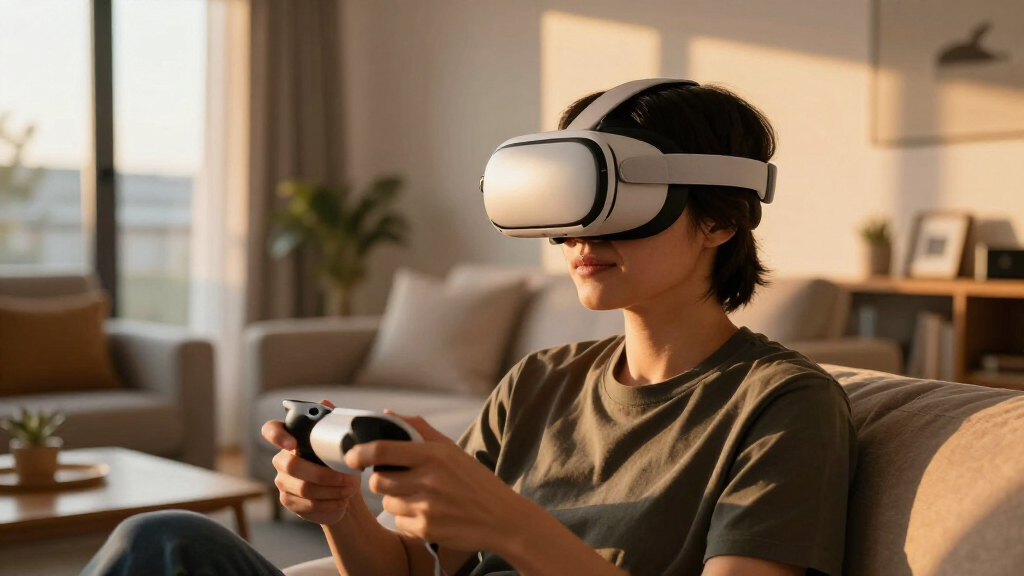
VR headset with 207Hz refresh rate
As an affiliate, we earn on qualifying purchases.
As an affiliate, we earn on qualifying purchases.
Official Confirmation and Future Firmware Support
It is not yet clear whether Meta will officially support the 207Hz standard and 240Hz developer mode in future firmware updates. The current support appears to be community-driven, with no official statement from Meta confirming these features. The stability, safety, and long-term availability of the 240Hz mode remain uncertain, as it is primarily accessible through unofficial methods.
As an affiliate, we earn on qualifying purchases.
Potential Firmware Updates and Community Testing
Meta is likely to evaluate community feedback and testing results before deciding on official support. Future firmware updates could include official support for 207Hz, and possibly the 240Hz developer mode, making these features more accessible and stable for end users. Developers and enthusiasts will continue to test these modes, and official announcements may clarify their availability and safety in the coming weeks.
As an affiliate, we earn on qualifying purchases.
Key Questions
What is the significance of the 207Hz refresh rate support?
The 207Hz refresh rate can improve visual smoothness and reduce latency, enhancing immersion and comfort in VR experiences.
Can all users access the 240Hz developer mode now?
No, the 240Hz developer mode currently requires unofficial methods and is intended for developers testing hardware capabilities. It is not officially supported for general consumers.
Will Meta officially support these features?
It is not yet confirmed. Meta has not announced official support, but future firmware updates may include these features if community testing proves successful.
Are there risks in enabling the 240Hz developer mode?
Yes, since it is an unofficial and experimental mode, there may be stability, safety, or hardware risks. Users should proceed with caution and understand that it is intended for development purposes.
How does this development compare to previous VR headsets?
Previous models like the Quest 2 supported up to 120Hz, with some unofficial hacks going higher. The 207Hz support on Quest 3 represents a significant step forward in VR refresh rates.
Source: r/virtualreality
Halloween Picks
halloween
As an affiliate, we earn on qualifying purchases.