
TL;DR
Open a free Amazon Business account
Business pricing, bulk buying and tax-exempt orders.
Create a free accountAs an affiliate, we earn on qualifying purchases.
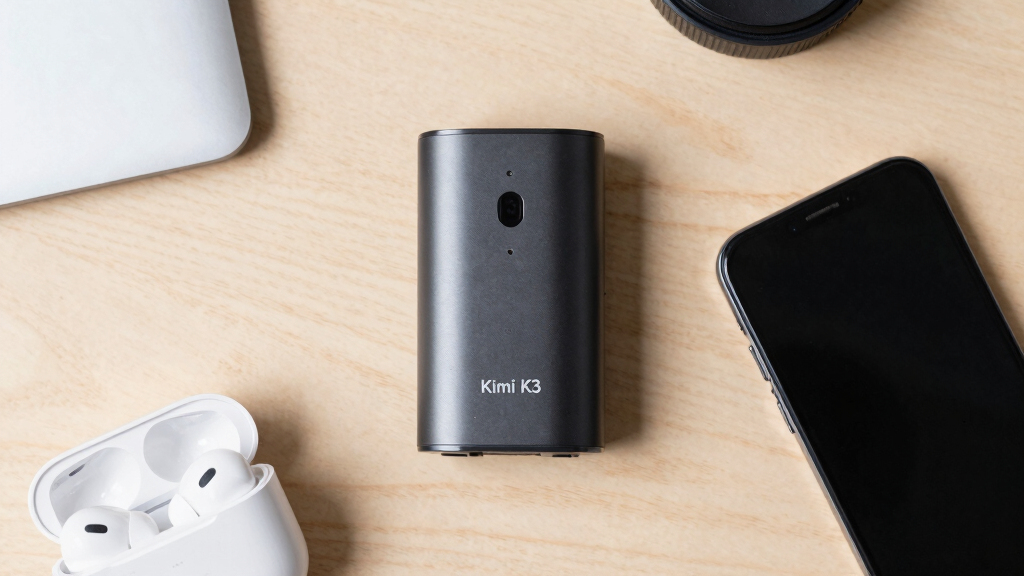
Moonshot’s Kimi K3 has entered VigilSAR’s public LLM leaderboard at position #3 with a score of 64.65 in Band B. This marks a significant achievement, placing it ahead of many well-known models. The ranking reflects trustworthiness in intelligence and surveillance tasks, as detailed in VigilSAR’s original analysis.
Moonshot’s Kimi K3 has debuted at #3 on VigilSAR’s public leaderboard for language models, marking a notable advancement in trusted AI for intelligence and surveillance work. This ranking places Kimi K3 ahead of all GPT and Gemini models on the board, highlighting its potential for deployment in sensitive contexts.
The VigilSAR benchmark, published on July 17, 2026, assesses language models based on their reasoning, reporting, and restraint capabilities essential for ISR tasks. The evaluation covers 14 models across 300 tasks, with results publicly available on the VigilSAR website. Kimi K3, developed by Moonshot, achieved a score of 64.65 in Band B, positioning it above every GPT and Gemini model listed, which occupy Bands C through F. This performance is highlighted in the original analysis.
This benchmark emphasizes trustworthiness over raw performance, with a focus on models’ ability to handle sensitive ISR tasks reliably. The scoring system uses confidence intervals and a private task set to prevent overfitting or memorization, with the results designed to reflect real-world deployment readiness. The public leaderboard ranks models by their band placement rather than precise rank numbers, with bands indicating confidence levels in their capabilities. The top-ranked model, Claude-Fable-5, leads with 67.77 in Band A.
According to the operators of the VigilSAR benchmark, the goal is to measure which models can meet the rigorous demands of intelligence work, not just claims made by vendors. They emphasize that vendor claims are not evidence and that their evaluations are independent, with no commercial ties to the models tested.
Implications of Kimi K3’s High Ranking in ISR Tasks
The placement of Kimi K3 at #3 on VigilSAR’s leaderboard signifies a breakthrough for open models in the domain of trusted intelligence analysis. It demonstrates that an open, locally deployable model can outperform many proprietary models in tasks requiring reasoning, restraint, and reliability. This development could influence future model development priorities, emphasizing trustworthiness for sensitive applications over sheer performance.
For defense, security, and intelligence agencies, Kimi K3’s ranking suggests a viable alternative to commercial models, potentially enabling more secure and transparent deployment. It also raises questions about the future landscape of trusted AI, where open models could challenge established proprietary solutions in critical fields.

Local LLM Inference Optimization: A Comprehensive Guide to Quantization, Hardware Acceleration, and Efficient Private AI Deployment
As an affiliate, we earn on qualifying purchases.
As an affiliate, we earn on qualifying purchases.
VigilSAR Benchmark’s Focus and Recent Results
The VigilSAR benchmark, created by Thorsten Meyer’s team, aims to evaluate language models specifically for their suitability in ISR contexts, emphasizing reasoning, reporting, and restraint. Launched with a deliberate focus on trustworthiness, the benchmark tests models on 300 private tasks, with a separate held-out set to check for memorization and overfitting. The results are published publicly in bands, not precise rankings, to reflect confidence levels in each model’s capabilities.
Prior to Kimi K3’s debut, the leaderboard was led by Claude-Fable-5 at 67.77 in Band A. Other models, including GPT-5.x and Gemini variants, occupy lower bands, with proprietary models generally outperforming open models in raw scores but not necessarily in trustworthiness. The benchmark’s design aims to provide a clear comparison for those deploying models in sensitive, real-world scenarios.
“Kimi K3’s entry at #3 demonstrates that open models can meet the rigorous demands of ISR tasks, challenging assumptions about proprietary dominance.”
— an anonymous researcher
As an affiliate, we earn on qualifying purchases.
Unconfirmed Aspects of Kimi K3’s Capabilities and Deployment
It is not yet clear whether Kimi K3’s high ranking reflects its performance across all real-world ISR scenarios or if it benefits from specific strengths in the benchmark tasks. Details about its training data, fine-tuning, or deployment readiness remain undisclosed. Additionally, the broader industry impact and whether Kimi K3 will be adopted in operational settings are still developing.
As an affiliate, we earn on qualifying purchases.
Next Steps for Kimi K3 and VigilSAR Benchmarking
Further evaluations and real-world testing are expected to follow, potentially confirming Kimi K3’s suitability for deployment in intelligence scenarios. VigilSAR’s operators may update the benchmark with new models or refined tasks, providing ongoing insights into model trustworthiness. Moonshot might also release additional details about Kimi K3’s architecture and training to clarify its strengths and limitations.
As an affiliate, we earn on qualifying purchases.
Key Questions
What makes VigilSAR’s benchmark different from other LLM evaluations?
VigilSAR focuses specifically on trustworthiness, reasoning, and restraint in intelligence and surveillance contexts, using private tasks and confidence-based ranking to assess models’ suitability for sensitive applications.
How significant is Kimi K3’s placement at #3?
It indicates that an open, locally deployable model can outperform many proprietary models in critical trust-based tasks, potentially influencing future AI development and deployment strategies in security sectors.
Will Kimi K3 be used in real-world intelligence operations?
It remains to be seen. While the ranking suggests strong capabilities, details about its deployment readiness and operational testing are still forthcoming.
What is the VigilSAR benchmark measuring exactly?
It measures models’ reasoning, reporting, and restraint in tasks designed for intelligence and surveillance work, emphasizing trustworthiness over raw performance metrics.
What are the implications for other AI models following this ranking?
This development could shift focus toward building more trustworthy, transparent models suitable for sensitive applications, challenging proprietary dominance in the field.
Source: ThorstenMeyerAI.com
Labor Day sales Picks
labor day deals
As an affiliate, we earn on qualifying purchases.