TL;DR

Get the latest gadgets delivered free with Prime
- Fast, free delivery on millions of items
- Prime Video, Amazon Music and more included
- Member-only deals all year
SpaceXAI plans to use Nvidia Vera CPUs for AI workloads on Earth and in space, including a satellite system. Deployment timelines and technical details remain undisclosed, with future testing crucial.
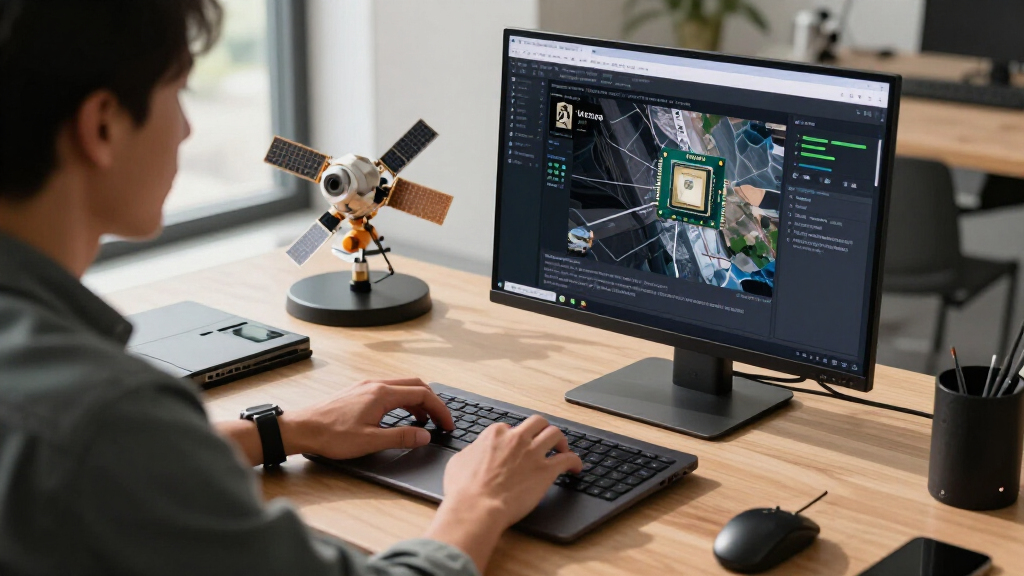
SpaceXAI has revealed plans to deploy standalone Nvidia Vera CPUs for its Grok AI workloads and an optimized Vera Rubin NVL72 system in space with a Starmind satellite. The company has not provided specific timelines, technical configurations, or performance data, but the announcement signals a strategic move to integrate AI hardware both on Earth and in orbit, highlighting a new frontier in space-based AI infrastructure.
According to SpaceXAI, the company intends to use Vera CPUs independently for Grok’s agentic workloads, which involve multi-step task execution, tool coordination, and state management. This shift toward CPU-based processing is discussed in the original analysis.
Separately, SpaceXAI plans to adapt the Vera Rubin NVL72 system for orbital deployment, specifically with the Starmind satellite. The announcement suggests modifications for space conditions—such as power, cooling, and radiation resilience—but no detailed design or testing results have been shared. It remains unclear whether the hardware will be fully integrated into the satellite or operate as a separate processing node.
These developments indicate a broader strategy to extend AI processing capabilities into space, potentially reducing ground-based processing loads and enabling onboard decision-making. For more context, see the original analysis.
Implications of Space-Based AI Hardware Deployment
This initiative could mark a significant step in integrating AI hardware into space infrastructure, enabling real-time processing and decision-making directly in orbit. If successful, it might reduce latency, improve autonomy for spacecraft, and expand AI applications beyond terrestrial limits. The move also reflects a strategic shift for SpaceXAI towards distributed AI systems that leverage space assets, potentially opening new markets and operational paradigms for satellite-based AI services.
However, the practical benefits depend on hardware resilience, power efficiency, and communication protocols in space. The absence of performance data and testing results means the full impact remains speculative until further technical validation occurs.
As an affiliate, we earn on qualifying purchases.
Background on Nvidia Vera and SpaceXAI’s Space Initiatives
Nvidia’s Vera CPU and Rubin accelerator architecture are designed to support high-performance AI workloads, with Vera planned as a versatile CPU platform for agentic AI systems. SpaceXAI’s announcement extends this hardware roadmap into space applications, a relatively unexplored domain for such architectures. Previously, satellite AI processing has relied heavily on specialized hardware or ground-based data centers, but the trend toward onboard and orbital computing is gaining momentum.
SpaceXAI’s move aligns with broader industry trends toward deploying AI systems in space, driven by the need for faster decision-making, reduced latency, and autonomous operations. The company’s plans for Vera-based systems in orbit follow other space-focused AI initiatives, but specific technical milestones or operational tests have not yet been disclosed.
Prior to this announcement, there has been limited public information about Nvidia’s Vera Rubin NVL72 being adapted for space, making SpaceXAI’s plans notable as an early attempt to operationalize such hardware in orbit.
“Our deployment of Vera CPUs for Grok will enhance agentic AI capabilities, enabling more autonomous and efficient operations.”
— SpaceXAI spokesperson
As an affiliate, we earn on qualifying purchases.
Unresolved Details on Hardware Deployment and Performance
Many key aspects remain unclear, including the specific hardware configurations, deployment timelines, and operational testing results. SpaceXAI has not disclosed whether the Vera CPUs will be operational in existing data centers or dedicated facilities, nor the number of units involved. For the orbital system, details about power consumption, thermal management, radiation shielding, and integration level are absent. It is also unknown whether the NVL72 configuration has undergone in-orbit testing or remains in development.
Until these details are clarified through technical disclosures or testing data, the actual readiness and performance of these systems in space remain uncertain.
space-grade Nvidia Vera Rubin NVL72
As an affiliate, we earn on qualifying purchases.
As an affiliate, we earn on qualifying purchases.
Next Steps in Hardware Validation and Deployment Timeline
Future developments will hinge on the release of technical specifications, including hardware design, power and thermal management strategies, and integration plans for both ground and space systems. SpaceXAI is expected to publish testing results, performance benchmarks, and deployment schedules as projects advance. Monitoring upcoming announcements about satellite launches, hardware testing, and in-orbit performance data will be crucial for assessing progress.
Additional validation efforts, including ground-based simulations and in-orbit experiments, are likely to be key milestones before full operational deployment. Stakeholders and industry observers will be watching for concrete timelines and technical reports to confirm the feasibility and advantages of this innovative approach.
AI hardware for space applications
As an affiliate, we earn on qualifying purchases.
As an affiliate, we earn on qualifying purchases.
Key Questions
What is the significance of using Nvidia Vera CPUs in space?
Using Nvidia Vera CPUs in space could enable onboard AI processing, reduce latency, and support autonomous decision-making for satellites and spacecraft, potentially transforming space operations.
Are the Vera Rubin NVL72 systems already in orbit?
No, there are no publicly available details confirming that the NVL72 systems have been launched or tested in orbit. The plans remain at the announcement stage.
What challenges might SpaceXAI face deploying AI hardware in space?
Key challenges include ensuring hardware resilience against radiation, managing power and thermal constraints, and validating performance in the space environment through testing before operational deployment.
When might we see these systems operational in space?
Specific timelines have not been disclosed. Future announcements regarding satellite launches, hardware testing, and in-orbit validation will clarify the schedule.
How does this development compare to existing space AI systems?
Current space AI solutions typically rely on specialized hardware or ground processing. The deployment of general-purpose Nvidia Vera CPUs represents a move toward more flexible, onboard AI capabilities.
Source: ThorstenMeyerAI.com
Halloween Picks
halloween
As an affiliate, we earn on qualifying purchases.