TL;DR

Get the latest gadgets delivered free — and shop member deals
- Fast, free delivery on millions of items
- Access to Prime Big Deal Days deals on October 6–7
- Prime Video, Amazon Music and more included
Australia has expanded bans on VR smart glasses in public spaces, aiming to prevent safety and privacy issues akin to recent US incidents. The move reflects government concerns over technology misuse.
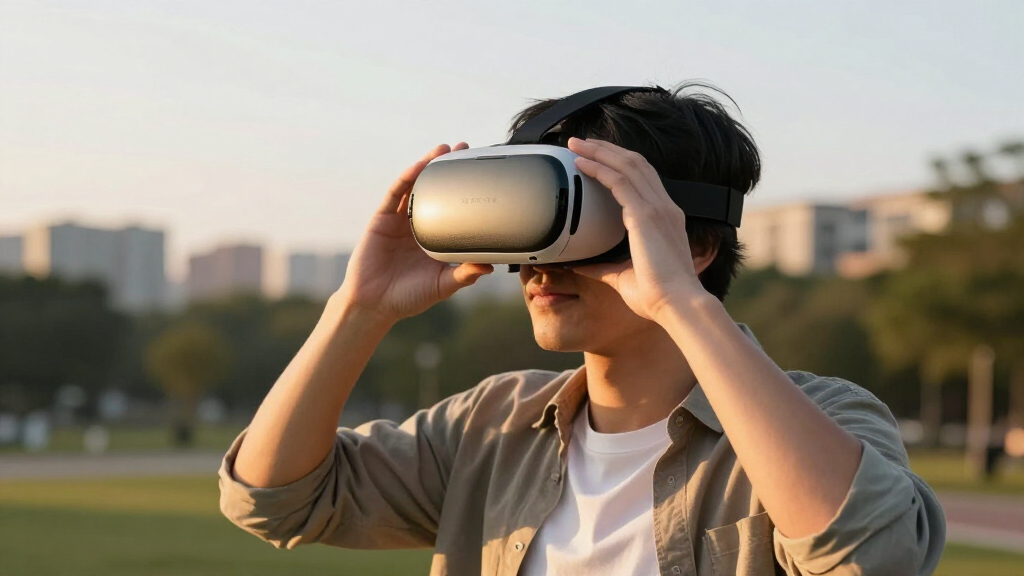
Australia has extended its restrictions on the use of virtual reality (VR) smart glasses in public spaces, citing concerns over safety and privacy issues that have emerged in the United States. The government’s new measures aim to regulate the deployment of such technology in Australian public areas.
The Australian government announced that it will prohibit the use of certain VR smart glasses in designated public zones, including city streets, transportation hubs, and government buildings. This decision follows recent incidents in the US where VR devices were used to record or disrupt public safety, raising concerns about potential misuse and security breaches. Officials say the restrictions are designed to mitigate risks associated with the technology, such as unauthorized recording, distraction-related accidents, and privacy violations.
Authorities have clarified that the bans are targeted at specific types of VR devices equipped with recording capabilities or augmented reality features that could be exploited for malicious purposes. The restrictions are part of a broader effort to regulate emerging technologies and ensure public safety. The Australian Communications and Media Authority (ACMA) and other agencies are involved in enforcing the bans, which took effect immediately and will be monitored for effectiveness.
Industry experts note that the restrictions are unprecedented in Australia for VR devices, though similar measures have been discussed in other countries. The government has also indicated that it may consider further regulations as the technology evolves and new use cases emerge, emphasizing a cautious approach to innovation.
Implications for VR Technology and Public Safety in Australia
This move reflects Australia’s approach to managing potential risks associated with VR smart glasses in public spaces. By restricting their use in certain areas, the government aims to address concerns related to incidents reported in the US, where VR devices have been used for recording or causing disruptions. The restrictions could influence how VR technology is adopted and integrated into daily life in Australia, potentially guiding future regulations and industry practices. Additionally, the policy underscores ongoing discussions about the regulation of emerging digital tools to balance safety and technological advancement.
VR smart glasses with recording capabilities
As an affiliate, we earn on qualifying purchases.
As an affiliate, we earn on qualifying purchases.
Background of VR Restrictions and US Incidents
Over the past year, US authorities and law enforcement agencies have reported several incidents involving VR smart glasses, including unauthorized recordings in public spaces and disruptions during public events. These incidents have prompted discussions about privacy, security, and the regulation of immersive technologies. In response, some US states and cities have introduced or proposed restrictions on VR device usage in specific areas. Australia’s government has expressed concern that similar issues could arise domestically if the technology is not carefully managed. The new restrictions are part of a broader trend of governments reviewing digital safety measures amid rapid technological development.
Until now, Australia has maintained relatively permissive policies toward VR devices, but recent incidents in the US have prompted a reassessment. The government’s approach appears to be preventative, aiming to address potential risks before they develop into larger safety or privacy issues.
As an affiliate, we earn on qualifying purchases.
Unclear Scope and Enforcement of the VR Restrictions
Details regarding the scope of enforcement, specific device categories affected, and compliance mechanisms are still being developed. Information about penalties for violations and the timeline for review or adjustments has not yet been finalized. Experts have also noted that future technological advancements could influence the effectiveness of these restrictions or necessitate additional regulations.
As an affiliate, we earn on qualifying purchases.
Next Steps in Australian VR Policy and Industry Response
Australian authorities plan to monitor the impact of the restrictions over the coming months, with potential adjustments based on incident reports and technological changes. Industry stakeholders may seek clarification or advocate for regulations that support innovation while ensuring safety. The government may also consider extending oversight to other immersive technologies, such as augmented reality glasses or mixed reality devices, to establish comprehensive safety measures. Public awareness campaigns could be introduced to inform users about permitted and prohibited uses.
As an affiliate, we earn on qualifying purchases.
Key Questions
What types of VR devices are affected by the restrictions?
The restrictions primarily target VR smart glasses equipped with recording capabilities or augmented reality features that could be exploited for malicious purposes, though exact device specifications are still being clarified by authorities.
Are these restrictions permanent or temporary?
The current restrictions are in effect immediately and are subject to review based on technological developments and incident reports. It is not yet clear if they will become permanent or be adjusted over time.
How will compliance be enforced in public areas?
Enforcement will likely involve cooperation between law enforcement agencies and technology providers, with penalties for violations. Details are still being finalized and communicated by authorities.
Could these restrictions impact innovation in VR technology in Australia?
There are concerns among industry stakeholders that restrictions could slow the development or adoption of new VR applications. However, authorities emphasize that safety and privacy are priorities, and regulations may evolve to balance innovation with security.
Will similar restrictions be considered in other countries?
It is possible, especially as incidents in the US have raised international awareness. Several countries are reviewing their policies on immersive technology regulation, but Australia is among the first to implement such restrictions proactively.
Source: rss
Fall Picks
fall essentials
As an affiliate, we earn on qualifying purchases.