

TL;DR
In a Nov. 25, 2026 post, Thorsten Meyer says he replaced several software subscriptions with tools he built using Claude and Codex coding agents. He describes connecting seven tools so they can pass work between them, while acknowledging that maintenance, security review and dependence on Anthropic and OpenAI now fall to him.
Meyer says he pays for several Claude and Codex subscriptions, and uses the coding agents to build tools tailored to his business. He describes the agents as working inside software projects: they read and write code, run tests and report results. Meyer sets tasks and reviews the output. His characterization of the systems as comparable to senior developers is his own assessment, based on his experience.

Get the latest gadgets delivered free with Prime
- Fast, free delivery on millions of items
- Prime Video, Amazon Music and more included
- Member-only deals all year
The article traces one piece of work across seven of Meyer’s tools: a project tracker, tool guides, a transcription service, a PDF tool, a 3D model library, a publishing tool and an analytics service. Meyer says the tools provide written guides and standard interfaces that allow agents to learn what they do and interact with them. For this article’s workflow, he says people set the goal and check the result, while agents handle the handoffs.
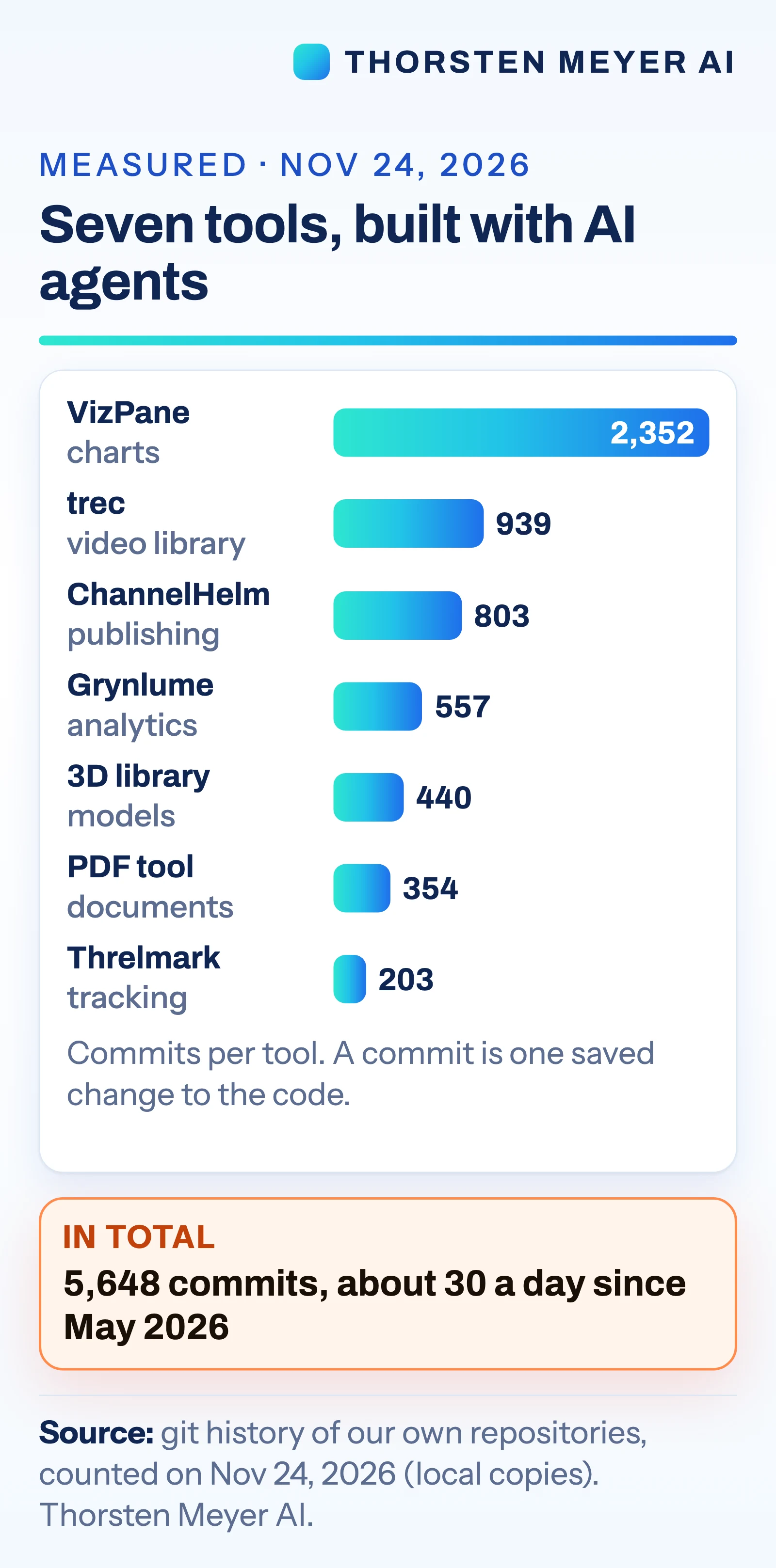
Meyer reports that seven tools in his repositories had 5,648 commits and 2,128 test files as of Nov. 24, 2026. Those figures describe activity in his own repositories; the post provides no comparison baseline or independent audit. He says he pays separately for AI models used to generate voices, images and video clips, and identifies security, maintenance and review as costs of operating his own tools.
Small Firms Can Build Narrow Tools
Meyer’s account illustrates how coding agents can make custom software more accessible to people who know a workflow but do not write code themselves. For a solo worker or small business, a tool designed around one organization’s needs may replace some general-purpose subscriptions. Meyer argues that specifying what a tool should do and checking whether it works are becoming more valuable skills.
The approach also moves work that a software vendor would normally handle onto the operator. Meyer says he now takes responsibility for keeping tools maintained, reviewing changes and managing security. He also says he depends heavily on Anthropic and OpenAI for the coding agents. His experience is one person’s account and does not establish that the model will suit other businesses or reduce their overall costs.
Products Worth Considering

Bose QuietComfort Ultra Earbuds (2nd Gen), Wireless Noise-Cancelling Earbuds, Black

LG UltraGear 27GX700A-B 27-Inch QHD OLED Gaming Monitor

Samsung Odyssey G55C 32-Inch QHD 1000R Curved Gaming Monitor
As an affiliate, we earn on qualifying purchases.
From Rented Apps to Connected Tools
Meyer frames the shift against the subscription software model, commonly called software as a service. He cites the U.S. National Institute of Standards and Technology’s definition, which describes users accessing a provider’s applications over cloud infrastructure while the provider manages the underlying systems. He compares renting several services—each with its own account, rules and bill—to using separate desks in someone else’s building.
In Meyer’s workflow, the coding agents work within project files and follow notes that record rules, plans and prior work. He says those notes help compensate for agents not retaining business knowledge automatically between sessions. To make tools usable by agents, Meyer describes giving each one a readable guide and a standard interface. The post accompanies a video about the same workflow and says its narration uses an AI voice clone of Meyer.
“The scarce part is no longer the code. It is knowing exactly what you need, and checking that you got it.”
— Thorsten Meyer
Costs and Security Remain Unmeasured
The post does not provide a full cost comparison between Meyer’s former subscriptions and his current setup, including the time spent building and maintaining tools or the per-use charges for generating media. It also does not report an independent security assessment, uptime figures or results from users outside Meyer’s own business.
The reported commit and test-file counts are limited to seven of Meyer’s repositories and are not a measure of software quality or reliability on their own. It is also unclear how the tools handle failures in handoffs, what safeguards are in place for sensitive information, or how much human review each task requires.
Workflow Details Set the Next Test
Meyer’s post is a written companion to a video that explains the tools and follows a job through the workflow. Further evidence about the approach would come from published cost and maintenance records, security reviews and examples of how the tools perform across different jobs. The article does not announce a product launch or a timetable for such disclosures.
For now, Meyer’s account describes an operating practice rather than a tested template for other firms. Readers considering a similar setup would need to judge whether the time and responsibility of owning custom tools fit their needs; Meyer says renting software remains a reasonable choice for people who do not want to build.
Key Questions
What changed in Meyer’s software setup?
Meyer says he replaced rented analytics, project tracking, PDF and video recording services with tools he built using Claude and Codex coding agents.
How do the tools work together?
Meyer says each tool has a written guide and a standard interface, allowing agents to find out what it does and pass work along. People set the goal and review results.
What do the reported repository figures mean?
Meyer reports 5,648 commits and 2,128 test files across seven of his tools as of Nov. 24, 2026. The post gives no comparison baseline or independent verification.
Does Meyer say the approach is cheaper?
He says his software bill is now for Claude and Codex subscriptions, with separate per-use charges for AI media models. He does not provide a complete cost comparison that includes building and maintaining the tools.
What responsibilities come with building the tools?
Meyer says maintenance, security and review are now his responsibility, and that his workflow depends heavily on Anthropic and OpenAI.
Source: Thorsten Meyer AI