
📊 Full opportunity report: DDR5 Now, DDR6 Soon: A Buyer’s Field Guide on ThorstenMeyerAI.com — validation score, market gap, and execution plan.

Get the latest gadgets delivered free with Prime
- Fast, free delivery on millions of items
- Prime Video, Amazon Music and more included
- Member-only deals all year
TL;DR
DDR5 memory remains the recommended choice for 2026 builds, with DDR6 not expected for mainstream use until 2027. Prices for DDR5 are unlikely to drop soon, so buying now is advised for most users.
DDR5 memory is the recommended choice for most PC builds in 2026, as prices remain high and DDR6 is not yet available for mainstream consumers. Industry sources confirm that DDR6 will not be ready for widespread adoption until 2027, with initial enterprise and server deployments in 2026–27.
Market forecasts indicate that DDR5-6000 with CL30 timings remains the sweet spot for mainstream desktop and gaming PCs, offering optimal performance at a reasonable price. Higher-speed kits like DDR5-8000 are considered unnecessary for most users, given the limited real-world gains.
Current pricing for DDR4 and DDR5 has converged, with DDR4 now costing roughly the same or more per gigabyte, making DDR4 a poor choice for new builds. Experts advise building on DDR5, not DDR4, to future-proof systems.
DDR6, which promises significant bandwidth improvements through architectural changes, is not backward compatible and will require new CPUs, chipsets, and modules. Its rollout is staged, starting with enterprise and AI servers in 2026–27, followed by desktops and laptops in 2027, with broad availability not expected until 2030.
Most buyers in 2026 should not wait for DDR6, as early adopters will face higher prices, limited capacities, and immature technology. Instead, a well-specced DDR5 system now will outperform early DDR6 systems in 2027 and cost less.
DDR5 now, DDR6 soon
A buyer’s field guide. The 20-year instinct — wait for prices to drop, or wait for the next generation — is broken this cycle. Buy the DDR5 you actually need now; don’t wait for DDR6. Here’s the reasoning.
Driven to end-of-life, production slashed. Same money, dead-end socket. Leave a working DDR4 box alone — but never start a new build on DDR4 to “save.”
A framework, not a gamble. Buy the DDR5 you need now, at the sweet spot, in the capacity you’ll actually use — don’t buy DDR4, don’t wait for DDR6. The two costliest mistakes in this market are the ones that feel prudent: waiting for a price drop that isn’t coming, and waiting for a next-gen part that launches dearer than what’s on the shelf. Next: The SSD Squeeze.
Why DDR5 Remains the Best Choice for 2026 Builds
For most consumers, purchasing DDR5 now ensures compatibility with current and near-future platforms, avoiding the premium and limited options associated with DDR6’s early stages. Delaying upgrades to wait for DDR6 would mean missing out on two years of platform improvements and paying a premium for unproven technology.
Building on DDR5 also aligns with industry forecasts and manufacturer roadmaps, which indicate DDR6 will only become mainstream around 2027–30. Therefore, most users will benefit more from investing in DDR5 now rather than waiting for an uncertain and costly DDR6 debut.
As an affiliate, we earn on qualifying purchases.
Current Market Conditions and Future DDR Memory Developments
Memory prices surged in 2026 due to supply shortages and increased demand, leading to historically high costs for DDR5 modules. Despite expectations, prices have not decreased significantly, and forecasts suggest that meaningful relief may not occur until 2028.
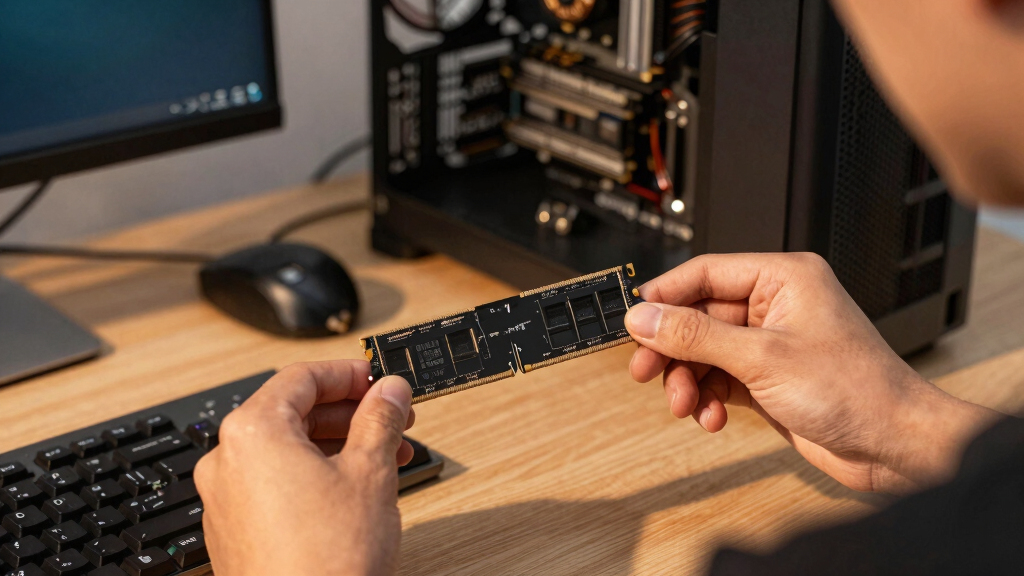
Industry sources, including JEDEC standards and manufacturer statements, confirm DDR6’s development is progressing but will not be commercially available for mainstream systems before 2027. DDR6 introduces a new architecture with four 24-bit sub-channels, higher speeds (up to 17,600 MT/s), and a new physical form factor, CAMM2.
Historically, new memory standards like DDR4 and DDR5 took several years to reach mass adoption, with DDR6 expected to follow a similar timeline, reaching broad availability around 2030.
“DDR6 offers impressive bandwidth improvements but requires a new platform and will not be backward compatible with DDR5.”
— Memory industry representative
As an affiliate, we earn on qualifying purchases.
Uncertainties Surrounding DDR6 Adoption and Pricing
While DDR6 standards are finalized and compatible modules are beginning to appear, widespread adoption remains uncertain until 2027–30. Early DDR6 modules may face stability, capacity, and pricing challenges, and the actual performance gains for typical users are still to be proven.
It is also unclear how quickly OEMs will transition to DDR6 and whether early models will be cost-effective compared to well-built DDR5 systems.
As an affiliate, we earn on qualifying purchases.
Upcoming Milestones for DDR Memory Standards and Market Entry
In the near term, consumers should monitor JEDEC announcements and motherboard compatibility lists for validation of DDR6 modules. The first DDR6-compatible CPUs and chipsets are expected in late 2026, with initial enterprise deployments and later mainstream adoption in 2027.
For most users, the priority remains purchasing a reliable, well-priced DDR5 system now, with attention to upcoming reviews and platform updates as DDR6 begins to mature.
As an affiliate, we earn on qualifying purchases.
Key Questions
Should I wait for DDR6 before upgrading my PC?
No. DDR6 will not be suitable for mainstream builds until 2027 at the earliest, and waiting would delay your upgrade by two or more years while paying a premium for early-stage technology.
Is DDR5 still a good choice in 2026?
Yes. DDR5-6000 with CL30 timings remains the optimal balance of price and performance for most users, and it will be compatible with upcoming platforms through 2028.
Will DDR4 be a viable option in 2026?
No. DDR4 is reaching end-of-life, and building on DDR4 now would mean investing in outdated technology with no future upgrades.
What are the main advantages of DDR6 over DDR5?
DDR6 offers higher speeds, increased bandwidth, and a new architecture that can better support data-intensive workloads like AI and scientific computing. However, these benefits are mainly relevant for specialized applications and high-end workstations.
When will DDR6 become affordable and widely available?
Most industry experts expect DDR6 to reach mainstream affordability around 2030, following a gradual rollout starting with enterprise and high-end platforms.
Source: ThorstenMeyerAI.com
Halloween Picks
halloween
As an affiliate, we earn on qualifying purchases.