
TL;DR
Open a free Amazon Business account
Business pricing, bulk buying and tax-exempt orders.
Create a free accountAs an affiliate, we earn on qualifying purchases.
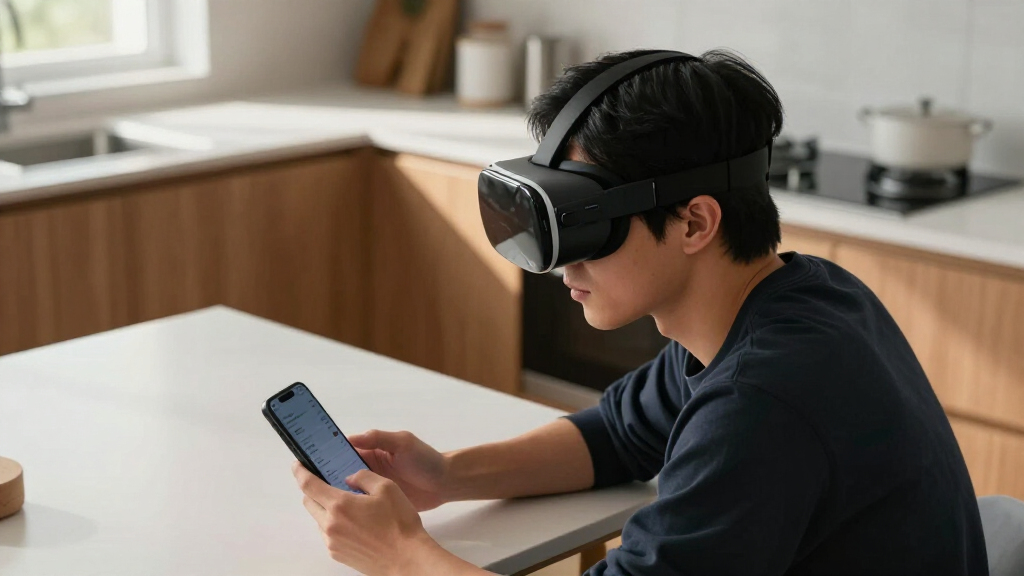
Meta’s new VR smart glasses are under scrutiny after reports suggest they may collect extensive user data. Experts and users are questioning potential privacy risks. The company has not yet addressed these concerns publicly.
Meta’s new VR smart glasses are facing scrutiny after reports emerged that they may collect extensive user data, including sensitive information, raising concerns about privacy risks for users.
According to reports from bluesky, Meta’s latest VR smart glasses are capable of recording and transmitting a variety of user data, including eye movements, facial expressions, and environmental audio. While Meta has not officially confirmed the extent of data collection, privacy advocates and experts have raised alarms about potential misuse and insufficient safeguards.
Meta has stated that user privacy is a priority and that data collection practices comply with applicable laws. However, critics argue that the lack of detailed disclosures creates uncertainty about how user data is stored, used, or shared with third parties. The company has not provided specific details on the data policies related to these glasses as of now.
Are Meta’s VR Smart Glasses Putting Your Privacy at Risk?
Reports suggest Meta’s latest glasses may capture sensitive biometric and environmental data. The potential is significant—but the exact collection, storage, and sharing practices remain unconfirmed.
A sensor-rich view of everyday life
Reports referenced in the developing story describe several possible streams of personal data. These capabilities should not be treated as confirmed collection practices until Meta provides device-specific disclosures or independent testing verifies them.
Eye movements
Gaze direction and attention patterns could reveal interests, reactions, and interaction behavior.
Facial expressions
Expression data could expose emotional responses or help infer user state and intent.
Ambient audio
Microphones may capture conversations, locations, and people who never agreed to participate.
Usage patterns
Movement, timing, interactions, and device habits could contribute to detailed behavioral profiles.
Potential capability is not proof of current use
The most important distinction is between what the hardware may be able to sense and what Meta actually collects, retains, analyzes, or shares. Public answers remain incomplete.
| Claim or question | Reported | Officially detailed | Independent verification | Current reading |
|---|---|---|---|---|
| Eye-movement data may be collected | ✓ | ✗ | ✗ | Possible, unconfirmed |
| Facial-expression data may be captured | ✓ | ✗ | ✗ | Possible, unconfirmed |
| Environmental audio may be transmitted | ✓ | ✗ | ✗ | Material privacy concern |
| Practices comply with applicable laws | ✓ | ~ | ~ | Company position |
| Third-party sharing is fully disclosed | ✗ | ✗ | ✗ | Unknown |
Legend: ✓ reported or stated · ✗ not established · ~ partial, qualified, or unresolved
Where the privacy risk could concentrate
Illustrative risk levels based on data sensitivity and uncertainty—not measured probabilities.
Biometric records can be especially sensitive because compromised passwords can be changed; physical and behavioral characteristics often cannot.
How observation can become exposure
The unresolved policy questions sit between each stage: what activates collection, whether consent is meaningful, how long records persist, and which organizations can access them.
Sense
👁 Cameras, microphones, and motion sensors observe the wearer and surrounding environment.
Infer
⚙ Signals may be translated into gaze, expression, behavior, place, or attention insights.
Store
🔒 Records may remain on-device, move to cloud systems, or persist under unclear retention rules.
Share
↗ Data could potentially support services, advertising, analytics, vendors, or legal requests.
What users still need to know
Clear, device-specific answers would allow buyers, researchers, and regulators to evaluate the actual risk rather than relying on capability claims and speculation.
What is collected by default?
Users need a complete list of sensor inputs, derived inferences, diagnostic records, and account-linked behaviors.
Where is processing performed?
On-device processing can reduce exposure, while cloud transmission creates additional access and security considerations.
How long is data retained?
Retention periods, deletion controls, backups, and exceptions should be disclosed in plain language.
Who else receives access?
Vendor, advertiser, developer, researcher, and law-enforcement access all require transparent boundaries.
How are bystanders protected?
People near the wearer may be recorded without owning the device, accepting its terms, or recognizing when sensors are active.
What cautious users can do now
Until more detail is available, treat the glasses as a connected camera-and-microphone system with unresolved biometric and environmental data practices.
Wait for specifics
Review the final privacy notice, sensor permissions, retention terms, and independent testing before extensive use.
Limit permissions
Disable unnecessary recording, cloud synchronization, personalization, location, and sharing controls where possible.
Respect the room
Avoid use in private homes, workplaces, medical settings, or sensitive conversations without explicit consent.
Credible concern. Incomplete evidence.
The potential privacy risk is real because of the sensitivity and reach of wearable sensor data. But reports alone do not establish exactly what Meta collects or how it is used. The responsible conclusion is caution—not certainty—until detailed disclosures, independent verification, and regulatory review provide firmer answers.
Potential Privacy Risks from Meta’s VR Glasses
This development matters because VR devices are increasingly integrated into daily life, and the collection of detailed biometric and environmental data could lead to privacy breaches or misuse. If the reports are accurate, users may be unaware of the extent of their data being captured, stored, or shared, raising concerns about surveillance and data security.
VR smart glasses privacy screen protector
As an affiliate, we earn on qualifying purchases.
As an affiliate, we earn on qualifying purchases.
Background on VR Privacy and Meta’s Data Practices
Meta has been a major player in virtual reality with its Oculus line and has announced new smart glasses aimed at expanding its AR/VR ecosystem. Previous concerns about privacy have centered on Meta’s social media platforms, but the company has emphasized privacy protections in its hardware products. The current reports mark a new focus on potential biometric and environmental data collection via VR devices, which has not been fully transparent.
“The lack of clear privacy disclosures around these glasses is concerning, especially given the types of data they can potentially collect.”
— an anonymous researcher
As an affiliate, we earn on qualifying purchases.
Extent and Transparency of Data Collection Still Unclear
It is not yet confirmed exactly what data Meta’s glasses are collecting or how it is being used. Meta has not provided detailed disclosures, and independent verification is lacking. The scope of data sharing with third parties remains unknown, and regulatory responses are still pending.
As an affiliate, we earn on qualifying purchases.
Investigations and Clarifications Expected Soon
Regulators and privacy groups are likely to scrutinize Meta’s practices further. Meta may release more detailed privacy policies or clarifications in response to mounting concerns. Users should stay informed about updates and exercise caution until more transparency is provided.
VR headset environmental audio blocker
As an affiliate, we earn on qualifying purchases.
As an affiliate, we earn on qualifying purchases.
Key Questions
What kind of data do Meta’s VR smart glasses collect?
Reports suggest they can collect biometric data such as eye movements, facial expressions, environmental audio, and possibly other user behaviors, but official details are not yet confirmed.
Are Meta’s privacy practices compliant with laws?
Meta states that its practices comply with applicable laws, but critics argue that the lack of transparency raises questions about user consent and data security.
Has Meta responded to these privacy concerns?
Meta has not issued specific responses to these reports but maintains that privacy is a priority. Further clarification is expected as investigations continue.
Could this lead to regulatory action?
Potentially, especially if authorities find that data collection practices violate privacy laws or lack transparency. Ongoing investigations are likely.
What should users do now?
Users should monitor official updates from Meta and consider privacy implications before using the devices extensively until more information is available.
Source: bluesky
Baby shower & registry season Picks
baby registry must-haves
As an affiliate, we earn on qualifying purchases.