
TL;DR

Get the latest gadgets delivered free — and shop member deals
- Fast, free delivery on millions of items
- Access to Prime Big Deal Days deals on October 6–7
- Prime Video, Amazon Music and more included
A Thorsten Meyer AI comparison identifies eight studio condenser microphones for voice recording, streaming and AI-assisted production. The RØDE NT1 Signature Series leads the introductory recommendation, but the report also gives an overall versatility designation to the AKG P120, leaving no single winner across every use case.
A new 2026 microphone comparison from Thorsten Meyer AI has ranked eight studio condenser models for recording, streaming and content-production setups, naming the RØDE NT1 Signature Series as its leading general recommendation while assigning other models to budget, professional and flexible-connectivity categories. The findings matter for creators feeding speech and music into AI-assisted audio tools, where the quality of the original recording can affect later editing, transcription and processing.
The comparison covers microphones from seven brands: the AKG P120, MAONO A04 Gen2, Audio-Technica AT2035, an unnamed XLR desktop kit, Audio-Technica AT2020, RØDE NT1 Signature Series, Shure SM4 and Mackie EM-91C. All eight are presented as condenser microphones, although their connections, accessories, sound-pressure limits and intended users vary.
The source describes the RØDE NT1 Signature Series as the top choice for overall performance, citing low self-noise and a warm sound. It identifies the Audio-Technica AT2035 as a versatile mid-range option with a shock mount, high-pass filter and attenuation pad, while the Shure SM4 is positioned as a durable recording model offering vocal clarity and a maximum sound-pressure level of 140 dB.
The AKG P120 receives a separate “best overall” designation for versatile studio and live use. The listed specifications include a cardioid pickup pattern, a 20 Hz to 20 kHz bandwidth, a 150 dB maximum sound-pressure level and a 19 dB-A equivalent noise level. The report says it can record loud sources without distortion, though it requires phantom power and does not provide USB connectivity.
8 Studio Condenser Microphones Revolutionizing AI Audio
A use-case comparison for voice recording, streaming and AI-assisted production—where cleaner source audio can mean less repair work downstream.
Three standouts, three different reasons
The comparison separates broad performance, studio flexibility and connection convenience. Its overlapping awards are best interpreted by intended use—not as a universal podium.
RØDE NT1 Signature Series
Highlighted for low self-noise, warm sound and strong overall performance across general recording applications.
01AKG P120
Positioned for both studio and live scenarios, with a 150 dB maximum SPL and familiar cardioid operation.
02MAONO A04 Gen2
USB and XLR connectivity makes it the bridge between direct-to-computer creation and expandable studio hardware.
03Eight microphones, eight setup profiles
These models span beginners, project studios and professional recording. Most use a cardioid pattern to prioritize sound arriving from the front.
AKG P120
High-SPL versatility with 20 Hz–20 kHz bandwidth and 19 dB-A equivalent noise level.
MAONO A04 Gen2
Dual connection modes suit creators moving between simple computer rigs and studio interfaces.
Audio-Technica AT2035
A versatile package with shock mount, high-pass filter and attenuation pad.
Unnamed XLR Kit
Desktop stand, pop filter and shock mount target entry-level podcasting and streaming.
Audio-Technica AT2020
Selected for home and project studios seeking a recognized entry point into XLR recording.
RØDE NT1 Signature
Low self-noise and a warm tonal profile underpin the report’s leading recommendation.
Shure SM4
Presented as a durable recording model with vocal clarity and substantial SPL capacity.
Mackie EM-91C
Targets home and smaller recording spaces with a shock mount and XLR cable supplied.
Clean inputs shape AI results
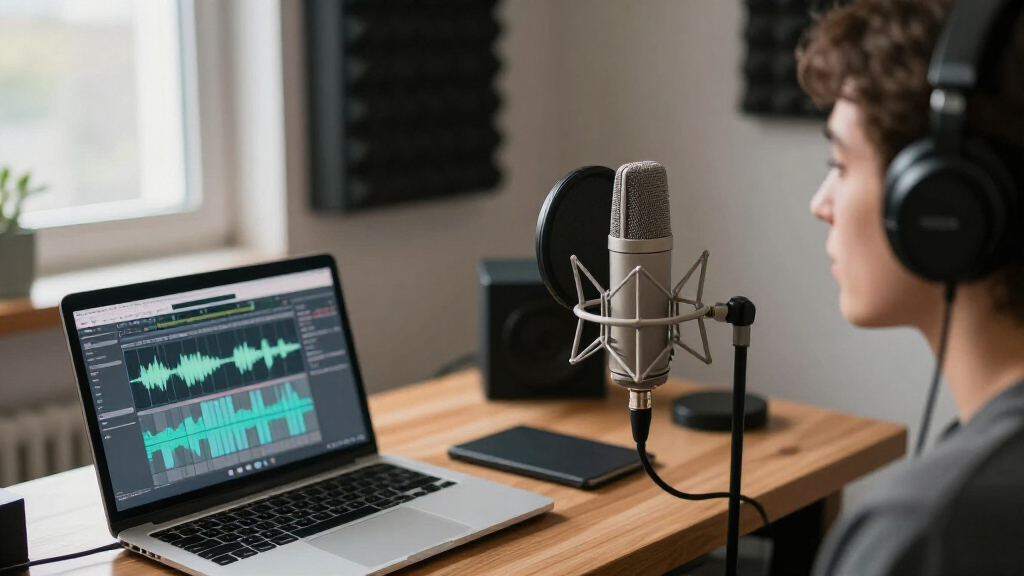
AI tools can transform audio, but every workflow still begins with the physical capture. Noise, distortion and room reflections enter the chain before software can respond.
Low self-noise can preserve quieter detail, while adequate maximum SPL can help prevent distortion before transcription, voice processing or music tools begin their work.
Match the microphone to the workflow
Feature availability is not the same as proven sound quality. Accessories and connectivity can simplify a setup, but acoustics, placement and preamp quality remain decisive.
| Model | Primary use | USB | XLR | Included / highlighted feature | Report position |
|---|---|---|---|---|---|
| RØDE NT1 Signature | General recording | ✗ | ✓ | Low self-noise; warm sound | Leading recommendation |
| AKG P120 | Studio + live | ✗ | ✓ | 150 dB max SPL | Versatility designation |
| MAONO A04 Gen2 | Hybrid creator setup | ✓ | ✓ | Up to 192 kHz / 24-bit | Flexible value |
| Audio-Technica AT2035 | Mid-range studio | ✗ | ✓ | Shock mount, HPF and pad | Versatile mid-range |
| Shure SM4 | Vocals + recording | ✗ | ✓ | 140 dB max SPL; durability | Robust recording model |
| Audio-Technica AT2020 | Home/project studio | ✗ | ✓ | Entry-level studio focus | Budget studio pick |
| Mackie EM-91C | Small recording spaces | ✗ | ✓ | Shock mount + XLR cable | Home/small-studio option |
| Unnamed XLR Kit | Podcasting + streaming | ✗ | ✓ | Stand, pop filter, shock mount | ~ Identity unverified |
✓ Listed support ✗ Not listed ~ Incomplete information. XLR operation commonly requires an interface and 48-volt phantom power; confirm requirements before purchase.
Headroom for louder sources
Maximum sound-pressure handling can reduce the risk of overload when recording loud voices or instruments. The supplied material gives comparable figures for only two models.
What the ranking does not prove
No controlled test chain
The supplied material does not describe matched rooms, preamps, placement, gain settings or a shared listening panel.
No AI-task benchmark
No evidence shows a direct improvement to transcription accuracy, cleanup quality or generated output from any one model.
Incomplete identification
The unnamed XLR desktop kit cannot be fully evaluated without a manufacturer, model number and verified specifications.
Treat the list as a use-case guide
The strongest next step is a matched listening test: identical voice or instrument, room, placement and recording chain, followed by the same AI transcription or cleanup process.
Capture quality matters. “AI-ready” hardware is not established.
These are conventional condenser microphones feeding AI-assisted workflows—not microphones with a demonstrated AI-specific recording technology.
Clean Inputs Shape AI Results
AI noise removal, transcription, voice processing and music tools can modify recordings, but they do not remove the value of a clean source signal. Low self-noise can help retain quiet vocal detail, while sufficient maximum sound-pressure handling can reduce distortion when recording loud voices or instruments. Microphone choice may also affect how much corrective work is needed before material enters an AI production workflow.
The comparison highlights a practical split between XLR and USB connections. XLR models can work with replaceable interfaces, preamps and other studio equipment, but many require 48-volt phantom power. The MAONO A04 Gen2 supports both XLR and USB and is listed with recording of up to 192 kHz at 24 bits, making it the report’s flexible value choice for creators moving between computers and studio hardware.
RØDE NT1 Signature Series condenser microphone
As an affiliate, we earn on qualifying purchases.
As an affiliate, we earn on qualifying purchases.
Eight Models Cover Different Setups
The ranking spans several price and experience levels rather than measuring microphones for one identical job. The Audio-Technica AT2020 is selected for budget home and project studios, while the Mackie EM-91C, supplied with a shock mount and XLR cable, targets smaller recording spaces. An unnamed XLR kit with a desktop stand, pop filter and shock mount is aimed at podcasting and streaming beginners.
Most listed models use a cardioid pickup pattern, which focuses primarily on sound arriving from the front. That can help limit room sound, but results still depend on microphone placement, acoustics, preamp quality and the performer. Accessories such as shock mounts and pop filters can reduce handling noise and vocal plosives, though their inclusion does not by itself establish better sound quality.
“This microphone is well-suited for users who need a robust, versatile condenser for both studio and live scenarios without extra features they won’t use.”
— Thorsten Meyer AI review of the AKG P120
best condenser microphone for AI audio recording
As an affiliate, we earn on qualifying purchases.
As an affiliate, we earn on qualifying purchases.
Testing Gaps Limit Direct Comparisons
The supplied material does not describe a controlled testing method, listening panel, shared recording chain or measured AI-task performance. It is also unclear whether all specifications were independently checked or taken from manufacturer listings. Claims about warmth, clarity and professional quality should be treated as the publisher’s evaluations, not universal findings.
The source also uses two overlapping overall labels: it calls the RØDE NT1 Signature Series the top general choice, while naming the AKG P120 best overall for versatile studio and live use. The unnamed XLR kit cannot be fully evaluated without a manufacturer and model number. No evidence in the supplied text shows that any microphone directly improves an AI model or introduces a new AI-specific recording technology.
studio microphone for streaming and podcasting
As an affiliate, we earn on qualifying purchases.
As an affiliate, we earn on qualifying purchases.
Independent Tests Must Verify Rankings
Buyers can next compare current prices, included accessories and interface requirements, then check independent noise, frequency-response and spoken-word tests recorded under matched conditions. For AI audio work, the most useful follow-up would be side-by-side source recordings processed through the same transcription, cleanup or voice system. Until those results are available, the ranking is best read as a shopping guide by use case, not a definitive performance benchmark.
professional vocal condenser microphone
As an affiliate, we earn on qualifying purchases.
As an affiliate, we earn on qualifying purchases.
Key Questions
Which microphone leads the 2026 comparison?
The RØDE NT1 Signature Series leads the introductory recommendation for overall performance. The report separately names the AKG P120 best overall for versatile studio and live use, so the result depends on the intended application.
Are these microphones built specifically for AI?
No AI-specific hardware feature is identified. These are conventional condenser microphones that can capture source audio for transcription, cleanup, voice processing and other AI-assisted workflows.
Which model supports both USB and XLR?
The MAONO A04 Gen2 supports USB and XLR connections. The comparison lists recording at up to 192 kHz and 24 bits, although XLR operation may require phantom power and separate studio equipment.
Which options target budget studios?
The report selects the Audio-Technica AT2020 for home and project studios and the Mackie EM-91C for home and small-studio use. Final cost can rise if an XLR interface, phantom-power supply, stand or cable is not included.
Does the ranking prove better AI output?
No. The supplied report provides no controlled AI benchmarks or matched transcription tests. It links microphone characteristics to recording quality, but any effect on AI-generated results remains unverified.
Source: Thorsten Meyer AI
Evergreen bestsellers Picks
bestsellers
As an affiliate, we earn on qualifying purchases.