
TL;DR

Get the latest gadgets delivered free with Prime
- Fast, free delivery on millions of items
- Prime Video, Amazon Music and more included
- Member-only deals all year
Diraq says its eight-qubit silicon spin quantum computer is operating at an Equinix data center in Sydney, a deployment the company describes as the first of its kind in a commercial data center. The system uses less than 20 kilowatts and occupies 170 square feet; Diraq targets up to 256 qubits in the same deployment within a year, but that upgrade and the technology’s practical applications remain unproven.
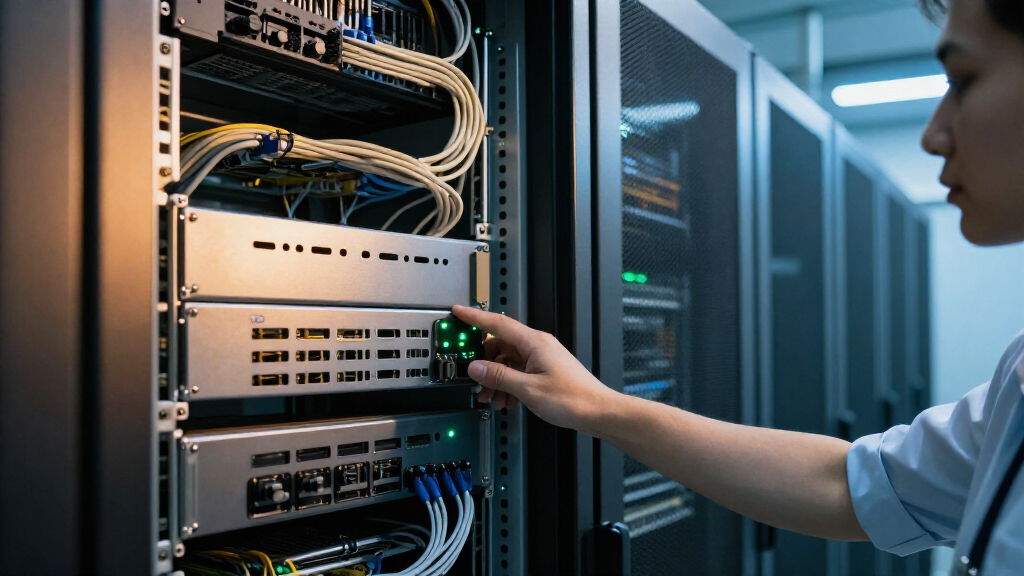
Diraq says it has installed an eight-qubit silicon spin quantum computer at an Equinix data center in Sydney, Australia, placing the system inside commercial computing infrastructure used by businesses. The company calls it the first commercial data center deployment of a silicon spin quantum computer; its current footprint is 170 square feet and its power draw is under 20 kilowatts.
The system is now operating at Equinix’s Sydney facility, according to Diraq. It uses silicon spin qubits, a design the company says can be made using semiconductor manufacturing processes already used for conventional computer chips. Diraq’s stated approach is to increase computing capacity by upgrading the quantum processor while making relatively few changes to the surrounding data center infrastructure.
The installed computer currently has eight qubits. Diraq is targeting an expansion to as many as 256 qubits within a year, in the same deployed system. That is a company target, not a completed upgrade or a demonstration of a commercially useful quantum application. Diraq says a future utility-scale system could use about 300 kilowatts and occupy as little as 50 square feet; those figures are projections rather than measurements of the Sydney installation.
The deployment was announced alongside Diraq’s Quantum at Work report, which discusses possible uses across medicine, energy, materials, climate and transport. The company’s analysis says a 10-percentage-point improvement in clinical trial success rates could save about US$600 million per medicine. That estimate is a modeled scenario, not a savings result from the installed computer. The report’s analysis draws on a 2010 drug-development cost study and FDA approval data, according to the supplied material.
Quantum Hardware Enters Data Center Operations
The deployment matters as a test of whether quantum hardware can be housed alongside existing enterprise computing equipment rather than requiring a standalone facility. If Diraq’s design can scale as intended, its claimed use of established chip manufacturing methods and comparatively compact equipment could make installation and upgrades easier for data center operators. The Sydney system establishes that the hardware has been placed in a commercial facility; it does not establish that it can yet deliver useful business results.
For customers, the distinction is between infrastructure readiness and computational value. A quantum computer inside a data center could eventually be connected with conventional computing resources, but the announcement does not identify customer workloads being run or results achieved. Diraq’s medicine figures describe potential economic effects if future quantum tools improve drug research outcomes, not demonstrated benefits from this eight-qubit system.
The company also presents the system’s power and footprint as a way to limit data center expansion. Its current figures—under 20 kilowatts and 170 square feet—are specific to the installed machine. Comparisons with future AI infrastructure and projected utility-scale quantum systems should be treated as company estimates, not independent measurements or verified operating comparisons.
Products Worth Considering

Bose QuietComfort Wireless Noise-Cancelling Over-Ear Headphones, Twilight Blue

Apple AirPods Pro (1st Generation) with MagSafe Charging Case

Jackery Solar Generator 1000 V2 with 100W Solar Panel, 1024Wh LiFePO4 Battery
As an affiliate, we earn on qualifying purchases.
From Chip Design to Commercial Facility
Quantum computers use quantum states to perform certain kinds of calculations differently from conventional computers. Qubits are the basic units of this hardware, but a qubit count alone does not show how reliably a device computes or whether it can outperform conventional systems on a useful task. The announcement provides the Sydney machine’s current count, but not a performance benchmark or application result.
Diraq’s pitch is that silicon spin technology can draw on manufacturing methods developed for the semiconductor industry. The company says this gives it a route to scaling processors while retaining a relatively small footprint. Whether that manufacturing advantage translates into reliable, useful systems at larger sizes remains to be shown.
Diraq also reports that it recently advanced to Stage C of DARPA’s Quantum Benchmarking Initiative, which it describes as the program’s final stage, and signed a US$38 million letter of intent with the U.S. Department of Commerce under the CHIPS and Science Act. These are separate developments cited by the company; neither is evidence that the newly installed machine has achieved utility-scale performance.
““Our silicon spin approach is what puts that within reach in five years, not decades.””
— Andrew Dzurak, Diraq CEO and founder
Performance and Applications Remain Unreported
Diraq’s announcement does not provide independent verification of its “first” designation, detailed operating data, or a benchmark showing the Sydney computer’s performance. It also does not report a customer application, a commercial workload, or a task on which this eight-qubit system outperformed conventional computing. The system’s live installation is confirmed by the company’s announcement, while its practical utility is not established by the information provided.
The planned increase to 256 qubits is a target for the next year; the announcement does not specify interim milestones, reliability measures or what performance the larger system is expected to achieve. It is also unclear how the projected utility-scale power and floor-space figures will be measured, or whether the estimate of about US$600 million in drug-development savings could be realized in practice. Diraq’s report presents that figure as modeled analysis tied to a hypothetical 10-percentage-point improvement in trial success rates.
Diraq’s 256-Qubit Target
The next stated milestone is Diraq’s plan to upgrade the Sydney deployment to as many as 256 qubits within a year. The company has not supplied a detailed public schedule in the source material, so the timing and intermediate steps remain uncertain. Progress will be clearer when Diraq reports whether the upgrade has been completed and publishes performance information for the expanded system.
Further evidence will also be needed to assess whether the machine can support useful workloads alongside conventional data center computing. Diraq’s Quantum at Work report sets out potential applications and economic scenarios, but the announcement does not say that the installed computer is being used for drug discovery or other named tasks. The company’s next updates can establish whether the deployment moves from an infrastructure milestone to demonstrated computing results.
Key Questions
Where did Diraq install the quantum computer?
Diraq says the eight-qubit system is operating at Equinix’s data center in Sydney, Australia.
How large and power-intensive is the installed system?
Diraq reports that the current installation occupies 170 square feet and uses less than 20 kilowatts. The company’s figures for future utility-scale systems are projections, not measurements of this machine.
Has Diraq shown that the system can improve drug development?
No such result is reported. The estimate of about US$600 million saved per medicine is a modeled scenario based on a hypothetical 10-percentage-point increase in clinical trial success rates, not an outcome demonstrated by the installed computer.
What does Diraq plan to do next?
Diraq is targeting an upgrade to as many as 256 qubits within a year. The company has not yet reported that the upgrade is complete or provided benchmark results for it.
Source: thequantuminsider.com