
TL;DR

Get the latest gadgets delivered free with Prime
- Fast, free delivery on millions of items
- Prime Video, Amazon Music and more included
- Member-only deals all year
Siemens is making a strategic shift to prioritize AI applications on the factory floor, leveraging proprietary industrial data and a partnership with NVIDIA to build an ‘Industrial AI Operating System.’ This move aims to reshape manufacturing, but results and deployment timelines remain uncertain.
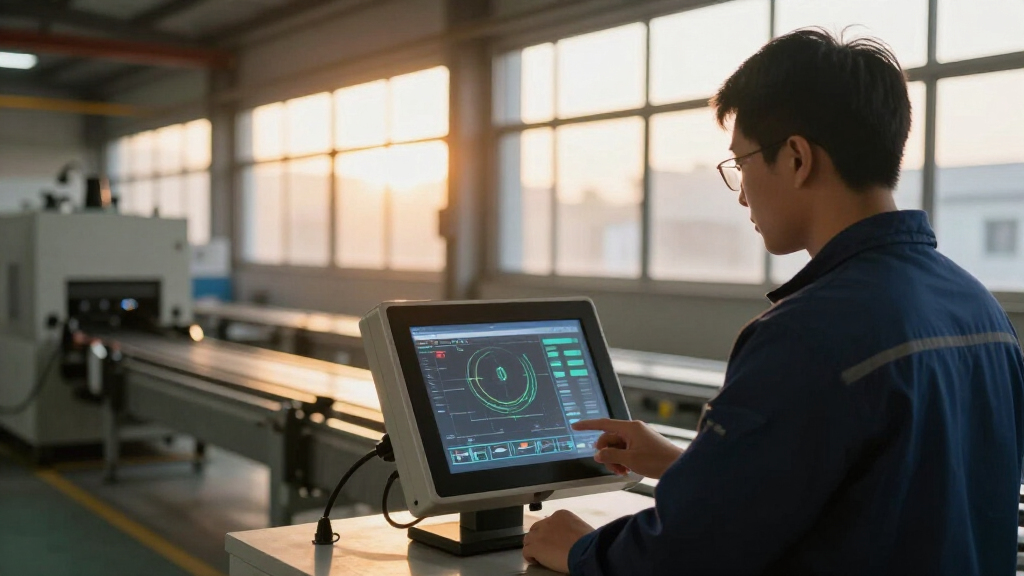
Siemens has revealed a strategic focus on applying artificial intelligence to factory operations, emphasizing physical AI over chatbots or language models. The company announced a partnership with NVIDIA to develop an Industrial AI Operating System designed to embed AI across the entire industrial lifecycle, from design to supply chain management.
The core of Siemens’ new approach is the Industrial Foundation Model (IFM), a specialized AI designed to process and contextualize 3D models, 2D drawings, and sensor data to optimize engineering and automation processes. Siemens first announced the IFM at Hannover Messe 2025, asserting it owns proprietary industrial data that gives it an advantage in training such models.
The partnership with NVIDIA aims to accelerate this vision by providing GPU-accelerated simulation capabilities, physics-based AI models, and generative digital twins. Siemens plans to launch its first fully AI-driven, adaptive manufacturing site at its Erlangen factory in Germany in 2026, with further digital twin tools like Digital Twin Composer expected to follow. Early industry users include PepsiCo, which is simulating facility upgrades.
Implications of Siemens’ Industrial AI Focus
This move signifies a major shift in industrial AI, emphasizing the factory floor as the primary domain for AI-driven value creation. Siemens’ focus on proprietary data and domain expertise positions it uniquely in the manufacturing sector, potentially enabling more efficient, autonomous factories. However, reliance on NVIDIA’s infrastructure raises questions about technological sovereignty and the pace of adoption given the long sales cycles in industrial markets.
industrial AI software for manufacturing
As an affiliate, we earn on qualifying purchases.
As an affiliate, we earn on qualifying purchases.
Background of Siemens’ Industrial AI Strategy
Since announcing the Industrial Foundation Model at Hannover Messe 2025, Siemens has been positioning itself as a leader in physical AI. Its longstanding relationships with industrial clients like PepsiCo and Audi provide a foundation for deploying AI tools tailored to specific manufacturing processes. The company’s partnership with NVIDIA, announced at CES 2026, aims to accelerate development and deployment of AI across its portfolio, marking a strategic pivot from traditional automation to AI-enabled manufacturing.
“Industrial AI is no longer a feature; it’s a force that will reshape the next century.”
— Roland Busch, Siemens CEO
As an affiliate, we earn on qualifying purchases.
Unconfirmed Aspects of Siemens’ Industrial AI Ambitions
While Siemens has announced its plans and partnerships, specific details about performance metrics, deployment timelines, and hardware configurations remain undisclosed. The effectiveness of the AI models in real-world factory environments and the speed of adoption across the industrial base are still uncertain. Additionally, Siemens’ heavy reliance on NVIDIA’s infrastructure raises questions about independence and long-term sovereignty in AI development.
GPU-accelerated industrial AI platform
As an affiliate, we earn on qualifying purchases.
As an affiliate, we earn on qualifying purchases.
Upcoming Milestones and Deployment Expectations
Siemens plans to launch its first fully AI-driven factory in Erlangen in 2026, serving as a blueprint for global replication. The company will also introduce tools like Digital Twin Composer and expand its industrial copilots across supply chains. Industry observers should watch for performance validations and real-world case studies emerging in the second half of 2026, which will clarify the practical impact of Siemens’ physical AI strategy.
factory automation sensors and hardware
As an affiliate, we earn on qualifying purchases.
As an affiliate, we earn on qualifying purchases.
Key Questions
What is Siemens’ Industrial Foundation Model?
The Industrial Foundation Model (IFM) is Siemens’ specialized AI designed to process industrial data such as 3D models, drawings, and sensor telemetry to optimize manufacturing and engineering processes.
How does Siemens’ partnership with NVIDIA support its AI goals?
The partnership provides GPU-accelerated simulation, physics-based AI models, and generative digital twins, enabling Siemens to develop and deploy AI across the industrial lifecycle more rapidly and effectively.
What are the risks or limitations of Siemens’ approach?
Dependence on NVIDIA’s infrastructure and the lack of publicly available performance data pose risks. Long sales cycles in industrial markets may also slow adoption, delaying measurable benefits.
Will Siemens’ industrial AI be applicable outside manufacturing?
While primarily focused on manufacturing, Siemens’ AI applications could extend to other sectors like supply chain management and infrastructure, leveraging its domain expertise.
When can we expect to see the first results from Siemens’ AI initiatives?
The first fully AI-driven factory is slated to launch in 2026, with further tools and pilot projects following in the same year. Performance validations are expected later in 2026.
Source: ThorstenMeyerAI.com
Halloween Picks
halloween
As an affiliate, we earn on qualifying purchases.