📊 Full opportunity report: Job Simulations For Students: Explore Work Before Choosing A Path on IdeaNavigator AI — validation score, market gap, and execution plan.

Get the latest gadgets delivered free with Prime
- Fast, free delivery on millions of items
- Prime Video, Amazon Music and more included
- Member-only deals all year
TL;DR
Indiana’s new diploma framework allows some required work-based-learning hours to include simulated experiences, creating a potential opening for job-simulation programs. A proposed pilot would test five simulations in three early-adopting districts, but no pilot results, district commitments or statewide acceptance figures are reported.
Indiana’s new high-school diploma framework permits certain required work-based-learning hours to include simulated experiences, prompting a proposal to test job simulations with students in three districts that opted in early. The proposal, published by IdeaNavigator AI, does not report that the pilot is underway. It also leaves unclear how participating districts would decide whether simulation hours qualify toward diploma seals.
IdeaNavigator AI’s proposal is aimed at district career and technical education (CTE) or work-based-learning coordinators, who arrange placements and document student hours. It describes a shortage of local employers willing to host teenagers, particularly in rural communities and in white-collar fields, as a barrier to direct career exposure. The proposal does not provide data establishing those conditions as a quantified statewide finding.
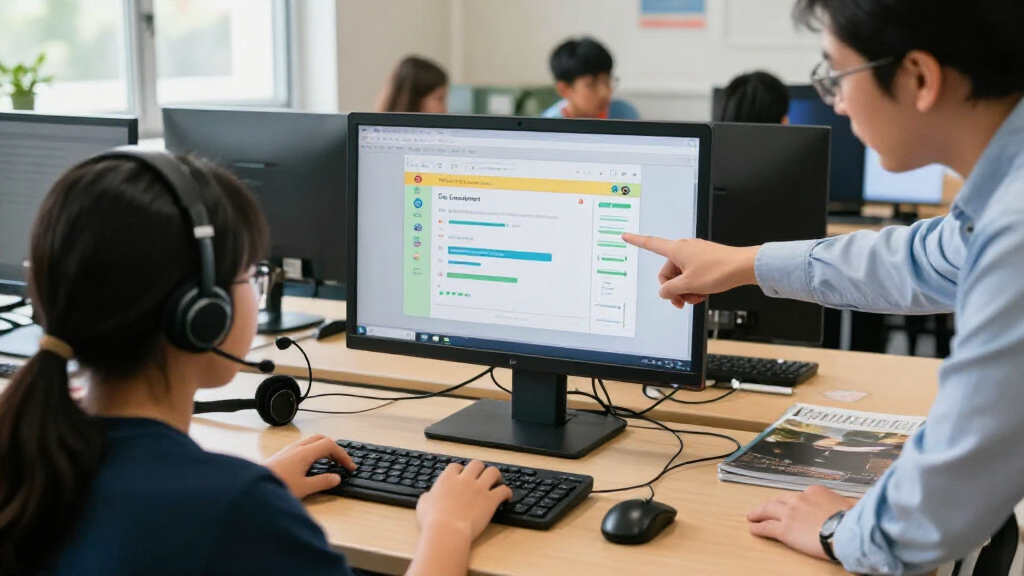
The proposal’s suggested first version would offer 20 role-based simulations, with examples including medical assistant, HVAC technician, bookkeeper, logistics coordinator and paralegal. Students would complete tasks using work-related files, then receive a short review from a local employer, either live or asynchronously. The service would also provide coordinators with hour logs, rubric scores and an exportable training plan.
For an initial test, IdeaNavigator AI recommends approaching three Indiana districts that opted into the new diploma early and offering a free, one-semester pilot of five simulations. Each simulation would be reviewed by a local employer. The proposed measures are whether districts accept the hours toward diploma seals, how many students complete the work and whether coordinators commit funding for the following school year. The proposal reports no participation agreements, results or pricing.
Job Simulations for Students Explore Work Before Choosing a Path
Indiana’s new diploma framework allows some work-based-learning hours to include simulated experiences. A proposed pilot would test whether districts accept those hours for diploma seals.
What students would try
Role-based tasks could offer a look at work that may be hard to access through local placements.
Medical assistant
Complete work-related tasks using files based on the role.
HVAC technician
Explore job tasks before choosing a course or pathway.
Bookkeeper
Practice role-based tasks, then receive a short employer review.
Logistics coordinator or paralegal
The proposal includes both as additional simulation examples.
How the proposed pilot would work
The one-semester test is a proposal; no district commitments or launch are reported.
Offer a free pilot to three districts that opted into the new diploma early.
Students use task files, with local employers reviewing each simulation live or asynchronously.
Coordinators record hours, rubric scores and training-plan documentation.
What would determine success
The proposal measures both credit eligibility and whether schools see enough value to continue.
What is established—and what remains open
- Approved in December 2024; applies to the class of 2029.
- Districts could opt in beginning in the 2025–26 school year.
- Some required hours may include simulated experiences.
- Whether districts accept specific simulations for seal credit.
- What review and documentation state requirements will require.
- No pilot results, participation agreements or pricing are reported.
Testing Simulations for Diploma Credit
If districts accept simulation hours, students could gain structured exposure to jobs that are difficult to access through local placements. This could matter most where employers have limited capacity to host students or where the work is less suited to a conventional high-school placement. Simulations may also give students a chance to try tasks before choosing a course of study, apprenticeship or diploma pathway.
For coordinators, a documented workflow could reduce some of the effort involved in recording hours and preparing training plans. But administrative convenience is not the same as credit eligibility: the proposal’s key test is whether districts accept the experiences under state requirements and whether employer review satisfies the relevant standards. The proposed pilot’s budget test would also show whether schools see enough value to pay for the service after a free trial.
Products Worth Considering

Jackery Explorer 300 Portable Power Station with SolarSaga 100W Solar Panel

Samsung Galaxy Tab S7 11-inch Android Tablet 128GB Wi‑Fi with S Pen Mystic Black

LG UltraGear 32GX850A-B 32-inch 4K UHD OLED Gaming Monitor
As an affiliate, we earn on qualifying purchases.
Indiana’s New Diploma Requirements
According to the Indiana Department of Education information summarized in IdeaNavigator AI’s proposal, Indiana approved a new diploma framework in December 2024. The framework applies to the class of 2029, and districts could opt in beginning in the 2025-26 school year. As described in the proposal, two diploma seals require 75 or 150 hours of work-based learning, and qualifying hours may include simulated experiences.
The state announcement cited in IdeaNavigator AI’s proposal says the Indiana Department of Education launched a Digital Resource Hub on October 6, 2026. The hub includes a training-plan template for schools to use for each student in qualifying work-based learning. IdeaNavigator AI cites that template as a practical reason to build an export feature into the simulations. The proposal also says the state defines work-based learning as involving sustained interaction with industry professionals; on that basis, it recommends employer review rather than relying on self-paced videos alone.
IdeaNavigator AI proposes an annual district license priced per enrolled high-school student, with paid add-ons for simulations developed alongside local employers. This is a suggested business model, not evidence of existing customers or revenue.
Credit Rules and Pilot Results
IdeaNavigator AI’s proposal does not identify districts that have agreed to take part, employers who would review student work or a launch date for a pilot. It also reports no completion rates, costs, student outcomes or district budget commitments. The suggested three-district test is a validation plan, not a confirmed program.
Although the diploma framework allows some hours to include simulated experiences, the proposal does not specify the process for approving a particular simulation. It is not clear from the information provided whether districts or state officials would review each activity, what documentation they would require, or how much interaction with an industry professional would be sufficient. The number of districts opting into the diploma early is also not provided.
Districts Would Test Five Simulations
IdeaNavigator AI proposes contacting three early-adopting Indiana districts and offering a one-semester pilot covering five simulations. Each would need a local employer to review student work, while coordinators would track completed hours, rubric scores and training-plan documentation. The central measure would be whether districts count the hours toward the relevant seals.
A further decision point would come at the end of the semester: whether students completed the activities and whether district coordinators would allocate money for the next school year. Until districts, employers and state requirements are confirmed, the plan remains a proposed test rather than an established option for students.
Source: IdeaNavigator AI
Key Questions
Can simulated work count toward Indiana diploma hours?
The IdeaNavigator AI proposal says Indiana’s new diploma framework allows required work-based-learning hours to include simulated experiences for two seals. The details provided do not establish how a specific simulation must be approved or how many hours a district will accept.
Has a student simulation pilot started?
No pilot is reported as underway in the IdeaNavigator AI proposal. The proposed test would approach three districts that opted into the diploma early and offer a free one-semester pilot of five simulations.
What would students do in the simulations?
The proposal describes activities using task files based on roles such as medical assistant, HVAC technician, bookkeeper, logistics coordinator and paralegal. A local employer would review student work in a short live or asynchronous check-in.
How would the pilot judge whether the idea works?
The proposal’s measures are the hours districts accept toward diploma seals, student completion rates and whether coordinators commit funding for the next school year. It reports no results.
Source: IdeaNavigator AI