

TL;DR
U.S. officials issued a new licensing rule on Nov. 16, 2026, covering certain advanced AI chips sent to data centers serving China-headquartered companies. Analysts have warned that China could respond with tighter rare-earth controls, but Beijing has announced no such move; a wider package of Chinese measures remains paused until Jan. 10, 2027.
The rule was issued by the Commerce Department’s Bureau of Industry and Security (BIS). It covers data centers that provide access to more than 12 million aggregate TPP for companies headquartered in China, Macau or other specified locations. BIS said the rule is intended to prevent restrictions on sensitive U.S. technology from being bypassed through remote computing arrangements in third-country data centers. The rule sets a licensing requirement; the source material does not establish how many applications will be affected or how BIS will decide them.

Get the latest gadgets delivered free with Prime
- Fast, free delivery on millions of items
- Prime Video, Amazon Music and more included
- Member-only deals all year
China already requires licences for exports of seven medium and heavy rare earths and related items under measures that took effect on April 4, 2025. These include samarium, gadolinium, terbium, dysprosium, lutetium, scandium and yttrium, as well as magnets containing terbium or dysprosium. Separately, six broader measures announced in October 2025 were suspended. China extended that suspension on Nov. 9, 2026, through Jan. 10, 2027.
The paused package covers five additional rare earths, controls on rare-earth technology and equipment, and a provision reaching certain products made abroad with at least 0.1% Chinese rare-earth content. The source material also reports that three U.S. committee chairs want four chip-related bills included in the annual defense bill. That is a legislative push, not an enacted law.
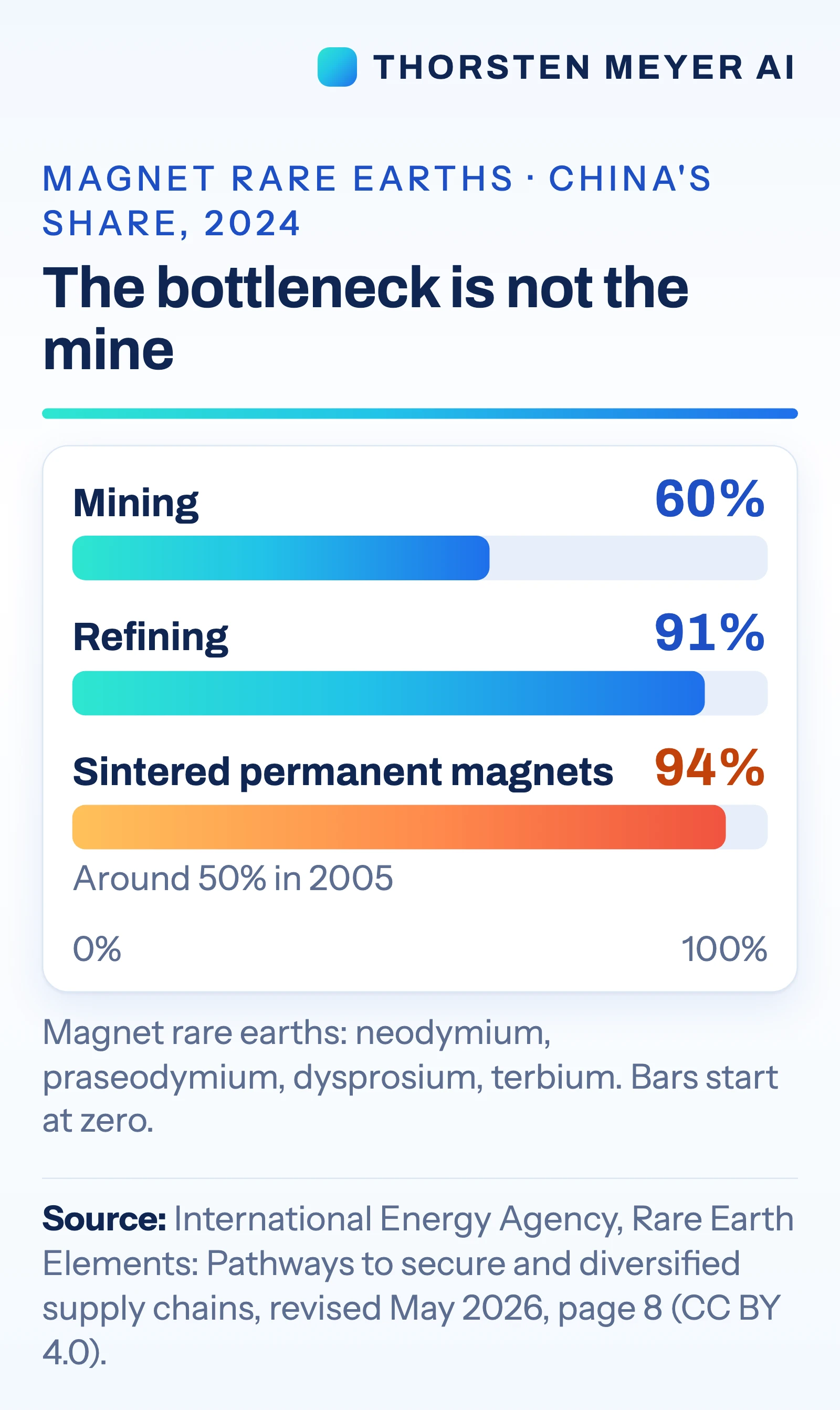
Rare Earths in the Supply Chain
The prospect of wider rare-earth controls matters because these materials feed into permanent magnets used in electric vehicles, defense systems and data-center hardware. The International Energy Agency reported that China accounted in 2024 for 60% of mined magnet rare earths, 91% of refining and 94% of sintered permanent-magnet production. Those figures describe different stages of the supply chain, and show why a change in export rules could affect manufacturers beyond the chip sector.
For companies, the immediate issue is exposure and timing, not a confirmed Chinese retaliation. The broader Chinese package is suspended through a stated date, while U.S. licensing requirements are now in place. Businesses that rely on rare-earth magnets or components containing Chinese-origin rare earths may need to identify where those materials enter their products and supplier networks before the pause expires.
Products Worth Considering

Logitech MX Mechanical Wireless Illuminated Keyboard, Tactile Quiet, Graphite

Bose Smart Dolby Atmos Soundbar with Alexa, A.I. Dialogue Mode, and Bluetooth, Black

Sony WH-1000XM6 Wireless Noise-Cancelling Headphones (Black)
As an affiliate, we earn on qualifying purchases.
Two Sets of Export Controls
China introduced licensing requirements for seven rare earths and related items on April 4, 2025. On Oct. 9, 2025, it announced six additional measures. Those wider measures were suspended in November 2025 and, according to a Nov. 9, 2026 notice from China’s Ministry of Commerce and customs administration, remain suspended until Jan. 10, 2027. The notices are Chinese-language documents; the dates and descriptions here follow the supplied English translation.
On the U.S. side, the latest development is BIS’s Nov. 16 interim final rule on advanced AI chips and remote data-center access. Analysts’ warnings about possible Chinese action were reported by Seoul Economic Daily, citing the South China Morning Post. China’s foreign ministry has said it “opposes abuse of export control measures”, but that general position is not an announcement of new rare-earth restrictions.
No Retaliation Announced
China has not announced that it will tighten rare-earth controls in response to the U.S. rule or the Nvidia episode. The reported warning comes from analysts, and the source material does not establish whether Beijing is considering a specific action. It is also unclear whether China will extend the suspension of its October 2025 package beyond Jan. 10, 2027, or how U.S. agencies will apply the new licensing rule to individual data centers and chip shipments.
Watch the January Deadline
The next date identified in the Chinese notice is Jan. 10, 2027, when the suspension of the six wider measures is scheduled to end unless China extends it or takes another step. Companies with exposed supply chains can map rare-earth magnets and Chinese-origin inputs across their products and suppliers while the pause remains in effect. In Washington, the proposed chip bills may advance through Congress, but their status will depend on legislative action.
Key Questions
Has China announced new rare-earth restrictions in response to the U.S. chip rule?
No. The source material says China has announced no such step. The possibility was raised by analysts quoted in media reports.
What does the U.S. rule require?
The Nov. 16 BIS rule requires a licence before certain advanced AI chips are sent to data centers that provide more than 12 million aggregate TPP of computing power to companies headquartered in China, Macau or other specified locations.
Which Chinese rare-earth controls are already in effect?
Since April 4, 2025, exports of seven named medium and heavy rare earths and related items, including certain magnets, require a licence from China’s Ministry of Commerce.
When could China’s wider package return?
The six measures announced in October 2025 are suspended through Jan. 10, 2027. Whether China extends the pause is not yet clear.
Source: Thorsten Meyer AI