📊 Full opportunity report: How Cofounder Matching Connects Founders By Work Style on IdeaNavigator AI — validation score, market gap, and execution plan.

Get the latest gadgets delivered free with Prime
- Fast, free delivery on millions of items
- Prime Video, Amazon Music and more included
- Member-only deals all year
TL;DR

IdeaNavigator AI has outlined a proposed cofounder-matching product that would assess decision-making, conflict, risk appetite and pace alongside founders’ skills and interests. Its suggested test is to offer reports to 200 existing early-stage pairs and compare the results with partnership survival after 12 months; no validation results are provided.
IdeaNavigator AI has outlined a proposed cofounder-matching service that would pair founders using work-style factors such as decision speed, conflict handling, risk appetite and expectations about working hours. The proposal is framed as an early product opportunity, not as a launched or validated service, and suggests testing compatibility reports with 200 existing early-stage pairs before claiming that the approach predicts whether partnerships last.
The proposed product would add a work-style assessment to existing founder-profile matching, which IdeaNavigator AI says commonly emphasizes skills and interest in a startup idea. Profiles would cover four areas: decision-making, conflict, risk and pace. A resulting match would show areas of compatibility as well as likely points of friction, rather than presenting a single score as proof that two people will work well together.
The concept also includes structured trial-project templates. These would give prospective cofounders a way to work together on a limited project and observe how they handle decisions, disagreements and workload before making a longer-term commitment. The proposal does not specify the assessment questions, scoring method, validation standard or how a trial project would be structured.
For its initial validation, IdeaNavigator AI proposes offering compatibility reports to 200 existing early-stage cofounder pairs and comparing their scores with whether the partnerships remain intact after 12 months. The proposal gives that as a test plan, not a completed study: it provides no results, sample recruitment details, definition of partnership survival or evidence that compatibility scores have predictive value. It also suggests a premium matching subscription and paid reports for existing pairs as possible revenue sources.
Founder services · Product proposal
How Cofounder Matching Connects Founders By Work Style
IdeaNavigator AI proposes adding work-style compatibility to founder matching—then testing whether those insights relate to partnership survival. The concept is a hypothesis, not a launched or validated service.
01 / The assessment concept
Four ways of working to explore
Profiles would add work-style factors to matching that IdeaNavigator AI says often emphasizes skills and shared interest in a startup idea.
Decision-making
How quickly founders decide, and how they weigh evidence before acting.
Disagreement
How partners raise concerns, resolve tension and move forward together.
Risk appetite
How each founder approaches uncertainty, experiments and potential losses.
Work rhythm
Expectations about pace, workload and working hours.
02 / What a match might show
A map for conversation, not a verdict
The proposal describes a view of compatibility and friction, not a single score that proves whether a partnership will work.
Where habits may fit
Similar expectations or complementary approaches could give founders useful topics to discuss as they divide responsibilities and plan their work.
Where expectations may differ
Differences can prompt early conversations. A flagged mismatch alone does not show that a pair will fail; founders may be able to manage it.
03 / Proposed validation path
Test the idea before making claims
The suggested pilot compares compatibility reports with what happens to existing early-stage partnerships over time.
Recruit pairs
Offer reports to 200 existing early-stage cofounder pairs.
Map work styles
Assess decision-making, conflict, risk and pace.
Follow up
Check partnership status at the 12-month mark.
Report findings
Explain selection, scoring and what “survival” means.
04 / What the evidence can say
Important limits to keep in view
A 12-month comparison could offer an initial signal. On its own, it would not show that the tool caused partnerships to last or break up.
Why test work style?
Shared skills and interest in an idea may not reveal differences in pace, risk or conflict handling. A limited trial project could let prospective cofounders observe how they work together.
What remains unknown?
The proposal does not detail the questions, trial-project structure, product availability, pricing or whether customers would receive guidance beyond a compatibility map.
05 / Questions founders may ask
What this proposal does—and does not—establish
Clear explanations of what a score means would matter if a product is developed, since it could affect sensitive decisions about trust and commitment.
Is the service available now?
The proposal does not say it has launched. It describes a possible product and validation test, with no release date provided.
What would the assessment cover?
Decision-making, conflict handling, risk appetite and pace. The questions and scoring method are not provided.
How would the pilot work?
Give reports to 200 existing early-stage pairs, then compare scores with partnership status after 12 months. No results are available.
Can a score predict success?
No predictive ability has been established. Compatibility scores would need testing before they could be treated as reliable indicators.
Testing Compatibility Before Commitment
The proposal addresses a consequential choice for people starting companies: who to build with. A matching tool that surfaces differences in working habits could give prospective partners topics to discuss before dividing responsibilities, committing time or forming a business. A trial project could make those differences visible through shared work rather than relying only on profile answers or an initial conversation.
But the idea’s practical value depends on evidence that the assessment measures meaningful differences and helps founders make better decisions. A report that identifies friction is not, by itself, evidence that a pairing will fail; some differences may be manageable, while similar preferences do not guarantee a successful working relationship. The proposed 12-month follow-up could provide an initial signal, but it would not by itself establish that the tool caused partnerships to last or break up.
For founders, the distinction matters because compatibility products could influence sensitive decisions about trust, commitment and company formation. Clear explanations of what a score means—and does not mean—would be important if the service is developed. For prospective buyers, the current proposal offers a product hypothesis and validation plan, not a demonstrated way to avoid founder conflict.
Products Worth Considering

Bose QuietComfort Headphones (2nd Gen), Wireless Over-Ear Noise-Cancelling Headphones, Hazelnut Taupe
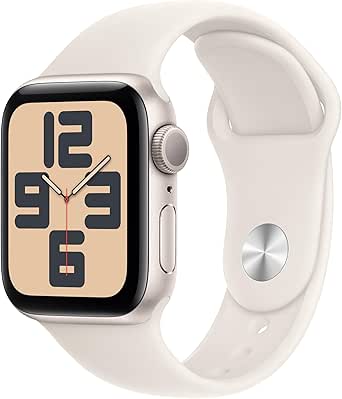
Apple Watch SE (2nd Gen) GPS 40mm with Starlight Aluminum Case and Sport Band (S/M)

Apple Watch Series 8 GPS, 41mm, Midnight Aluminum Case with Midnight Sport Band (S/M)
As an affiliate, we earn on qualifying purchases.
A Proposed Layer on Founder Search
IdeaNavigator AI places the concept in the founder-services and startup-formation market. It argues that structured cofounder search has become more familiar through YC’s matching platform, and identifies work style as a possible differentiator from matching based on skills and shared interest in an idea. The material does not provide usage figures, market-size estimates or evidence about how well current platforms handle compatibility.
The proposal’s premise is that partnerships can encounter strain over decision speed, conflict, risk tolerance and hours expectations, even when founders have complementary skills or like the same business idea. Those are presented as reasons to test a separate compatibility layer. The material does not establish that work-style collisions are the leading cause of startup failure or quantify how often they lead to cofounder breakups.
Evidence Behind the Compatibility Scores
No assessment has been validated in the information provided, and no results show that its scores correlate with partnership survival. Details remain unspecified about how founders would be recruited, what counts as a partnership continuing, how the team would account for factors such as company progress or changing circumstances, and whether the proposed 200 pairs would represent a wider founder population.
It is also unclear whether the product exists, when a pilot might begin, how much a subscription or report would cost, and whether founders would receive guidance or only a compatibility map. The suggestion that founder breakups are a leading startup killer is not supported here with data. Until the proposal is tested and its methods and results are disclosed, claims about prediction or reduced breakup risk remain unconfirmed.
A 12-Month Pilot to Evaluate
The next stated step is a proposed test involving 200 existing early-stage pairs, with compatibility reports compared against partnership status at the 12-month mark. Any meaningful report of results would need to explain how pairs were selected, how scores were generated and what counted as a surviving partnership. Those details would help readers judge whether an observed relationship is informative or could reflect other differences between the founders.
No launch date, pilot schedule or publication plan is given. Until those are announced, the concept remains at the proposal stage. The key development to watch is whether IdeaNavigator AI carries out the study and reports its methods and findings, rather than whether it begins selling matching or compatibility reports.
Source: IdeaNavigator AI
Key Questions
Is the work-style cofounder-matching service available now?
The proposal does not say that the service has launched. It describes a possible product and a suggested validation test, with no release date provided.
What work styles would the proposed assessment cover?
The suggested assessment would examine decision-making, conflict handling, risk appetite and pace. The proposal does not provide its questions or scoring method.
How would the proposed pilot test whether matching works?
IdeaNavigator AI suggests giving reports to 200 existing early-stage pairs and comparing compatibility scores with whether the partnerships remain intact after 12 months. No results are available in the proposal.
Would a compatibility score show that a cofounder partnership will succeed?
No such predictive ability has been established. The proposal says matches could flag compatibility and possible friction, but the assessment would need testing before its scores could be treated as reliable indicators of outcomes.
Source: IdeaNavigator AI