
🔍 Read the full analysis: Steal This Lighting Idea: Held Light In “OORT — Comet Vigil For P/2043 K1 Vesper” on ThorstenMeyerAI.com

Get the latest gadgets delivered free with Prime
- Fast, free delivery on millions of items
- Prime Video, Amazon Music and more included
- Member-only deals all year
TL;DR
OORT — Comet Vigil for P/2043 K1 Vesper is an AI-built online artwork about a fictional observatory watching a fictional comet. Its star trails accumulate during a visit, while scrolling and other controls alter simulated astronomical displays; the site makes clear that no comet observation or discovery is taking place.
OORT — Comet Vigil for P/2043 K1 Vesper, an AI-built online exhibition room, uses accumulating star trails and interactive observatory-style displays to make visitors’ time on the page part of the artwork, as explored in the original analysis. Its central subject, P/2043 K1 Vesper, is fictional; the site presents a simulated vigil, not a real comet observation.
The room’s signature feature is a canvas field of seeded stars whose curved trails grow as time passes. According to the supplied description, the same local sky can resume when a visitor returns, with elapsed time stored in the browser. The animation stops when the page is hidden, and a still version is provided for people who have enabled reduced motion.
A second display uses scrolling to move the imagined comet through an inline SVG orbit diagram. Its ion tail points away from the sun, while its dust tail curves along the fictional orbit; the two paths change in step with a shared progress value. A range control adjusts a simulated defocus view and a related brightness estimate.
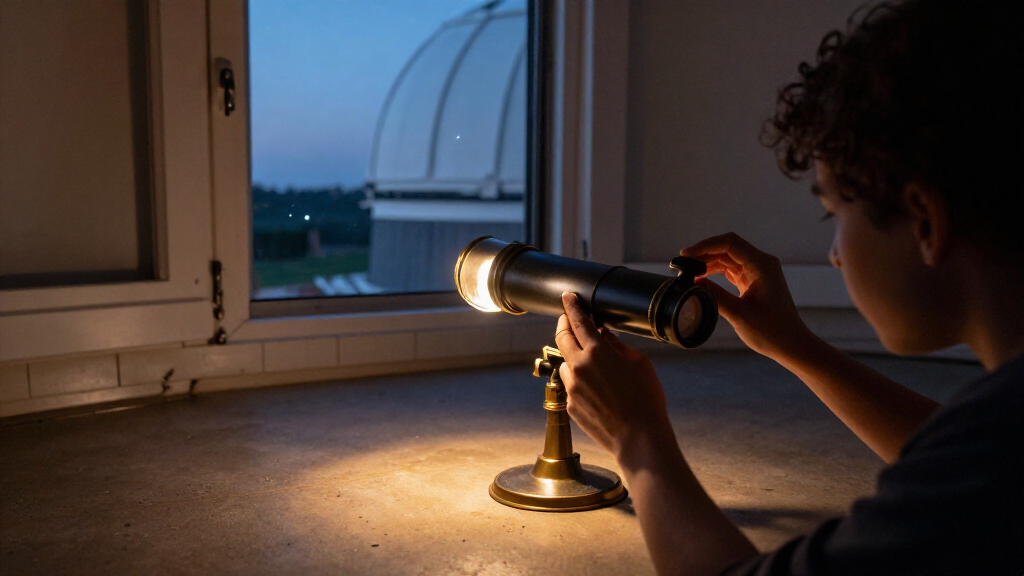
Visitors can also hold a control to open a simulated shutter. The website records a timestamp, but does not represent the action as an actual sighting: the comet remains unseen and in transit within the fiction. Dark backgrounds, cyan and amber accents, and logbook-style typography give the page the visual language of an observatory.
FABLE/175 · Room 170 · Digital artwork
Steal This Lighting Idea: Held Light in “OORT — Comet Vigil for P/2043 K1 Vesper”
A fictional observatory turns a visitor’s time into the artwork: seeded stars gather long trails, a scrolling orbit shifts, and a shutter records a moment inside the fiction.
“Your visit recorded in star trails.”
Art-direction briefP/2043 K1 Vesper and its observatory are fictional. The site presents a simulated vigil, not a real observation or discovery.
How the page holds light
The visual idea is simple: let duration leave a trace. Several small interactions make the simulated observatory feel active while keeping its fictional status explicit.
Star trails lengthen
A seeded canvas sky draws curved trails over time. According to the supplied description, local elapsed time can be saved in the browser so the sky resumes on a return visit.
Scrolling steers the orbit
Scroll progress moves the imagined comet through an inline SVG diagram. Its ion tail points away from the sun; its dust tail curves along the fictional orbit.
A shutter marks a moment
Holding a control opens a simulated shutter and records a timestamp. The interaction does not claim a sighting: the comet remains unseen within the fiction.
One visit, four stages
The page turns ordinary browser actions into an observatory-style sequence, paced by the visitor rather than by a fixed presentation.
Enter the sky
A field of seeded stars establishes the room’s atmosphere.
Stay awhile
Curved trails accumulate, making time visible on the canvas.
Scroll the orbit
The comet position and two tail paths change with progress.
Log the vigil
A held shutter control timestamps a fictional observation.
Interaction as atmosphere
Controls borrow the language of astronomy to build mood. Their outputs belong to the artwork’s imagined scene, not a verified sky.
Measured gestures, imagined data
A range control adjusts a simulated defocus view and a related brightness estimate. Scrolling updates the diagram; holding the shutter creates a timestamp.
The dark palette, restrained highlights, and logbook-style typography make these actions feel archival and patient.
Inside FABLE/175
OORT is described as one room in a larger collection of AI-built exhibition pieces. The supplied account outlines a creative brief and a multi-pass review process.
A fictional comet vigil, observatory palette, and long-exposure trails set the direction.
The room is attributed to an art-direction brief by Claude Fable 5 and the FABLE/175 pipeline.
The source describes build and self-critique, external critique, then art-direction review; it provides no independent review records.
“The page makes duration part of the artwork instead of treating it as time spent before the content.”OORT exhibition description
What the fiction does not verify
Realistic interface details can look authoritative. The supplied account draws a clear line between the exhibition’s invented provenance and astronomical evidence.
No real comet record
The source identifies P/2043 K1 Vesper, its observing community, timeline, and logs as fictional. It provides no evidence that the comet exists.
Invented historical detail
A supposed last sighting in 1608 appears as creative provenance in the brief, not as a confirmed observation.
Local state, as described
Elapsed time is said to be stored in the visitor’s browser. The source does not say visit records are sent to a server.
Testing not independently shown
Responsive and accessibility goals are described, including keyboard focus, reduced motion, and pausing when a tab is hidden. Independent test evidence is not supplied.
Questions visitors may ask
Keep the artwork’s interactive language in view while exploring its fictional observatory.
Is P/2043 K1 Vesper real?
No. The exhibition description identifies the comet and observatory as fictional.
What changes during a visit?
Star trails grow over time, and the description says local elapsed time can be preserved for a return visit.
Does the shutter capture a real observation?
No. It simulates a shutter and timestamps an action within the artwork.
Where can readers explore?
The supplied source points to the live OORT room and the wider FABLE/175 exhibition hub.
How the Page Makes Time Visible
OORT treats duration as an active part of visiting rather than as time spent waiting for content to load. The growing star trails provide a visible record of that duration, while the saved local state gives a return visit continuity. That makes a basic browser behavior—the time a page remains open—part of the work’s subject.
The design also draws a boundary between an evocative simulation and a factual astronomical report. Its controls borrow the gestures and vocabulary of observation, but the site identifies the comet and observatory as invented. That distinction matters for readers encountering realistic-looking coordinates, brightness estimates or logs: these elements belong to an AI-built fictional exhibition, not verified astronomical data.
For visitors, the work offers an example of how code can shape an artwork’s pacing and interaction without relying on photographic assets. The trails, orbit paths and interface are described as being produced with browser-based visual techniques, making the site both an exhibition and a demonstration of time-based web design.
As an affiliate, we earn on qualifying purchases.
Inside the FABLE/175 Exhibition
The supplied material identifies OORT as room 170 of 175 in the FABLE/175 collection of AI-built exhibition pieces. It says the room was created from an art-direction brief attributed to Claude Fable 5 and executed through the FABLE/175 pipeline. The live room is hosted at the Netlify address given in the source, alongside a design guide and a link to the wider exhibition.
The original brief called for a fictional comet vigil, an observatory-inspired palette and long-exposure star trails. It also specified implementation and accessibility goals, including responsive layouts, keyboard focus styling, reduced-motion support and pausing animation when a tab is hidden. The supplied account describes a three-pass process—initial build and self-critique, external critique, then art-direction review—but does not provide independent documentation of the review or testing.
“The page makes duration part of the artwork instead of treating it as time spent before the content.”
— OORT exhibition description
As an affiliate, we earn on qualifying purchases.
What the Fiction Does Not Verify
The source describes the comet, its observing community, its orbital timeline and the observatory logs as fictional. It does not provide real astronomical records or evidence that P/2043 K1 Vesper exists. Details such as a supposed last sighting in 1608 appear in the creative brief as invented provenance, not as a confirmed historical observation.
The supplied material also does not independently establish how the site performs across devices, whether every accessibility target was tested, or how the claimed three-pass critique was documented. Its description of saved elapsed time refers to local browser storage; it does not say that visit records are transmitted to a server. Readers should treat the interaction as a described feature of the artwork, not as evidence of external tracking or scientific measurement.
As an affiliate, we earn on qualifying purchases.
Visit the Room and Its Guide
The OORT room is presented as live at the Netlify site listed in the source, with a design guide describing its visual and technical approach. Visitors can explore the changing sky and scroll-controlled orbit, keeping in mind that the astronomical scenario is invented. The source also directs readers to the FABLE/175 hub to browse the collection’s other rooms.
No future launch, update or real-world comet observation is announced in the material. The next step described is for visitors to experience the room itself and consult its accompanying guide; any changes to the site or further details about the production process remain unreported.
As an affiliate, we earn on qualifying purchases.
Key Questions
Is P/2043 K1 Vesper a real comet?
No. The supplied exhibition description identifies P/2043 K1 Vesper as fictional, as is the observatory and its imagined observing community.
What changes while someone stays on the page?
A seeded field of stars draws longer curved trails over time. The description says the local sky’s elapsed time is preserved so it can resume when a visitor returns.
Does the shutter control capture a real observation?
No. It opens a simulated shutter and records a timestamp as part of the artwork. The site’s fiction says the comet remains unseen and in transit.
How does the orbit display respond to visitors?
Scrolling advances the comet through an inline SVG diagram, changing its position and the depicted tails. The source says the ion tail points away from the sun and the dust tail curves along the imagined orbit.
Where can readers see OORT?
The supplied source links to the live room at fable-25-830.netlify.app/sites/oort/ and to the FABLE/175 exhibition hub. The room is identified as number 170 in a collection of 175.
Source: ThorstenMeyerAI.com
Halloween Picks
halloween
As an affiliate, we earn on qualifying purchases.