
🔍 Read the full analysis: A Personal Image Test For Jev’s AI Vision on ThorstenMeyerAI.com

Get the latest gadgets delivered free with Prime
- Fast, free delivery on millions of items
- Prime Video, Amazon Music and more included
- Member-only deals all year
TL;DR
TypeSafe added opt-in image input and a bounding-box response type to Jev, its structured decision model, in the October 14 release of Jev 1.14. A test by Thorsten Meyer using 30 images from his site found strong product-image matching, while the source material’s account of results for news images is cut off. TypeSafe says the image features remain too inconsistent for production use.
TypeSafe added opt-in image input and a new bounding-box output to Jev, its structured decision model, in a release published October 14, 2026. The next day, Thorsten Meyer tested Jev 1.14 and its predecessor on 30 featured images from ThorstenMeyerAI.com, reporting strong results on product photos but cautioning that his small, site-specific test does not establish production reliability.
Jev is designed to answer typed questions about supplied information, such as yes-or-no questions with probabilities, choices from a list, and scores on a scale. Before this release, those questions were text-based. TypeSafe says image input can now be used in the request’s state, a question’s instructions, or criteria for possible answers. The feature requires the explicit header TypeSafe-Danger-Zone-Images: true, and TypeSafe says it works with both jev-1.13.0 and jev-1.14.0.
Jev 1.14 also introduces a box response type, which returns one bounding box and a confidence score for a described target. TypeSafe restricts the new capabilities behind opt-in headers, saying image support and other experimental functions have too much “jaggedness” for it to recommend them in production. Image requests accept PNG and JPEG stills within specified dimensions and file-size limits; the source says WebP and HEIC images must first be converted.
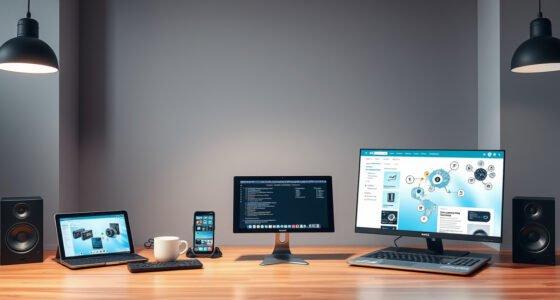
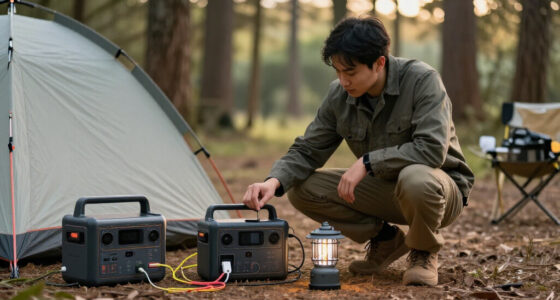
Meyer tested the 30 most recent featured images on his site: 10 product roundups, 15 news posts and five essays. For each, he asked whether it fit its own headline, a randomly chosen other headline and an unrelated headline about repotting a monstera plant. Product images also received a multiple-choice identification question. Meyer says he ran the test on both model versions, for about 60 requests overall.
Jev 1.14 · images + box
Jev can see now. Here is what 30 of my images showed.
I asked about every featured image three times: does it fit its own headline, a random other post’s headline, an off-topic headline? Both Jev versions, about 60 requests.
Does this image fit the headline?
Median “yes” probability on Jev 1.14, by kind of post
- Product roundups10 images0.760.061.13: 0.79 / 0.05
- News posts15 images0.330.161.13: 0.51 / 0.25
- My essays5 images0.510.161.13: 0.62 / 0.33
Off-topic headline (“How to Repot a Monstera Plant”): never above 0.10 on either version, 60 of 60 rejected.
Why news is weak: almost all news images show the same scene, people at desks looking at monitors. Jev could not tell them apart, and it was right not to.
1.14 is stricter than 1.13
Same 30 images, same questions
| Result | 1.14 | 1.13 |
|---|---|---|
| Fits own headline (≥ 0.5) | 15/30 | 23/30 |
| Fits a wrong headline (≥ 0.5) | 1/30 | 4/30 |
| Own beats random other (AUC) | 0.91 | 0.89 |
| Names the product (10 options) | 9/10 | 10/10 |
1.14’s one product miss: mesh system read as “Wi-Fi 7 router”, confidence 0.60. Re-tune thresholds before jev-latest moves.
What shipped on Oct 14
- headerImagesin state, instructions or criteria · 1.13 + 1.14 ·
TypeSafe-Danger-Zone-Images - 1.14 onlyBox typeone bounding box + confidence. 6 of 6 clear targets boxed (0.66–0.90); an absent bicycle still got a box (0.03)
- headerLong context64k / 32k → 262k tokens, slower and less accurate
- opt-inHelp find weaknessesqueries used for testing, not training
now: jev-preview = 1.14~Oct 21: jev-latest → 1.14notice: 60 days (1.13), 30 days (1.14)
Source: own test on October 15, 2026. 30 featured images from ThorstenMeyerAI.com (10 product roundups, 15 news posts, 5 essays), JPEG at up to 1,568 px, jev-1.14.0 and jev-1.13.0 with the image header. Bars show medians. AUC = probability that an image’s own headline scores higher than a random other headline. Features, prices and limits: TypeSafe blog post “Jev 1.14” and docs.typesafe.ai, as of October 15, 2026.
Powered by Thorsten Meyer AI
What the Product-Photo Scores Show
For the 10 product images, Meyer reports that Jev 1.14 separated matching headlines from mismatches in his test. The model gave each image’s own headline a score from 0.65 to 0.89, with a median of 0.76. A randomly selected different headline scored no higher than 0.18, with a median of 0.06; the unrelated plant headline scored no higher than 0.10.
On product identification, Jev 1.14 selected the right item in nine of 10 cases. Meyer described the miss as understandable: a mesh Wi-Fi photograph showed both an antenna-equipped router and a cylindrical mesh unit, and the model labeled it a Wi-Fi 7 router with 0.60 confidence. He said all correct answers had confidence scores of at least 0.77. Jev 1.13 identified all 10 correctly, but two of those answers had confidence below 0.5. These observations suggest confidence may help flag uncertain outputs in this particular test; they do not show how well that approach would work across other images or tasks.
The practical relevance is that image questions can be put into the same structured request format as text questions, potentially making visual checks easier to automate. But the evidence here comes from one publisher’s small collection, and the results are not an independent benchmark. TypeSafe itself advises against relying on the new functions in production.
As an affiliate, we earn on qualifying purchases.
How TypeSafe Is Gating Image Input
In its October 14 release, TypeSafe framed the opt-in controls as a way to let developers experiment while leaving existing production behavior unchanged by default. Image input is enabled with a dedicated danger-zone header. The bounding-box feature is available only on Jev 1.14, while image input also works on version 1.13. TypeSafe’s post described the current model as having been multimodal already, though image support had not previously been exposed to users in this way.
The release also adds an optional longer-context setting. The stated defaults are 64,000 tokens per request and 32,000 per question; a separate header raises both limits to 262,000 tokens. TypeSafe cautions that reliability declines with longer inputs and advises against using the larger limits without a reason. The model itself is available as jev-preview, with jev-latest scheduled to move to it about a week after release. The source describes TypeSafe’s internal estimates as comparisons only with open-weight models and warns that they may favor Jev, recommending that users run their own evaluations.
“There is still way too much jaggedness for us to vouch for these for production use cases.”
— TypeSafe, in its Jev 1.14 release post, as quoted by Thorsten Meyer
image recognition software for e-commerce
As an affiliate, we earn on qualifying purchases.
As an affiliate, we earn on qualifying purchases.
Limits of the Image Test
The supplied account ends just as Meyer begins discussing the 15 news images. It says, “News images: Jev was right, my images weren’t,” but provides no supporting scores, examples or explanation. Those results cannot be reported in detail from the available material, and the test’s overall performance across news images remains unclear.
The test covers only 30 images from one website and does not establish performance on other publishers’ images, image types or real-world workloads. The source does not provide the full request data, an independent review, or a larger validation set. TypeSafe has also said it cannot yet vouch for production use. Its claims about model behavior and feature availability are company statements, while the image-test results are Meyer’s own reported observations.
bounding box object detection camera
As an affiliate, we earn on qualifying purchases.
As an affiliate, we earn on qualifying purchases.
Jev Rollout and Further Testing
TypeSafe said jev-preview was available with the release and planned to move jev-latest to version 1.14 about a week later, around October 21, 2026. The company’s stated deprecation notice is 60 days for version 1.13.0 and 30 days for version 1.14.0; it said a formal policy was still to come.
For developers, the immediate next step is to test image inputs against their own representative data and account for the documented format, size and request limits. Meyer’s report does not state that TypeSafe has changed its production warning or that the publisher plans a follow-up test. Broader results, particularly the missing account of news-image performance, remain necessary to judge how consistently Jev handles visual matching beyond this small trial.
AI image matching for product photos
As an affiliate, we earn on qualifying purchases.
As an affiliate, we earn on qualifying purchases.
Key Questions
What changed in Jev 1.14?
TypeSafe added opt-in image input and a new box response type that returns one bounding box with a confidence score. The image feature also works with Jev 1.13.0, according to TypeSafe.
How did Jev perform on product images?
In Thorsten Meyer’s test of 10 product photos, Jev 1.14 matched each photo to its own headline with reported scores from 0.65 to 0.89 and identified the product correctly in nine cases. This is a small, publisher-run test, not a general benchmark.
Does TypeSafe recommend using image support in production?
No. TypeSafe said the new features remain too inconsistent for it to vouch for production use and placed them behind an explicit opt-in header.
What happened in the news-image portion of the test?
The available source begins a section saying Jev was right while the publisher’s news images were not, but it cuts off before giving results or examples. The details and scores are therefore unknown from the material provided.
Which image formats does Jev accept?
The source lists PNG and JPEG still images, subject to stated dimension and file-size limits. It says WebP and HEIC files need to be converted first.
Source: ThorstenMeyerAI.com
Fall Picks
fall essentials
As an affiliate, we earn on qualifying purchases.